– May 30, 2026 22 พฤษภาคม 2569
– 30 พฤษภาคม 2569
Part 1: Project Details ส่วนที่ 1 รายละเอียดการดำเนินงาน
Objectives วัตถุประสงค์โครงการ
สามารถเขียนเป็นภาษาอังกฤษเชิงทางการสำหรับใช้เป็น **Objectives** ของโครงการได้ดังนี้
1. To Develop Community-Based Mushroom Propagation Skills and Occupations
2. To Promote and Develop Value-Added Mushroom Product Processing
3. To Develop Branding and Packaging for Mushroom Products and Expand Distribution through Online and Offline Channels toward Souvenir Product Markets
4. To Address Waste Management Issues Arising from Spent Mushroom Substrate
1. เพื่อพัฒนาอาชีพการขยายพันธุ์เห็ดในชุมชน
2. เพื่อส่งเสริมและพัฒนาการแปรรูปผลิตภัณฑ์จากเห็ด
3. เพื่อพัฒนาตราสินค้า บรรจุภัณฑ์ผลิตภัณฑ์จากเห็ด และจัดจำหน่ายผ่านช่องทางทั้งออนไลน์และออฟไลน์สู่สินค้าของฝาก
4. เพื่อแก้ปัญหาขยะที่เกิดจากก้อนเชื้อเห็ดเก่าเหลือทิ้ง
Main Activities กิจกรรมหลัก
Upstream Phase: Planning and Production Process Development**
1. Preparatory Planning Meeting, Community Context Survey, and Stakeholder Engagement
2. Workshop on Community-Based Mushroom Propagation and Production Skills Development
Midstream Phase: Value-Added Activities and Product Development
1. Workshop on Mushroom Product Processing and Value Addition
2. Product Testing and Quality Control
Downstream Phase: Marketing, Environmental Management, and Project Evaluation
1. Workshop on Branding, Packaging, and Online–Offline Marketing for Mushroom Products and Souvenir Development
2. Workshop on Waste Management and Utilization of Spent Mushroom Substrate
3. Project Evaluation, Lesson Learned, and Final Results Reporting
กระบวนการ
ระยะต้นน้ำ การประชุมวางแผนและกระบวนการผลิต
1. การประชุมวางแผนเตรียมการ ลงพื้นที่สำรวจบริบทชุมชนและชี้แจงทำความเข้าใจร่วมกับคนในชุมชน เพื่อกำหนดเป้าหมายการดำเนินงานร่วมกัน
2. กิจกรรมเชิงปฏิบัติการพัฒนาอาชีพการขยายพันธุ์เห็ดในชุมชน โดยจัดอบรมให้ความรู้และฝึกปฏิบัติจริงในการทำก้อนเชื้อเห็ดและการดูแลโรงเรือนเพื่อผลิตวัตถุดิบ
ระยะกลางน้ำ การจัดกิจกรรมสร้างมูลค่าเพิ่มและพัฒนาผลิตภัณฑ์
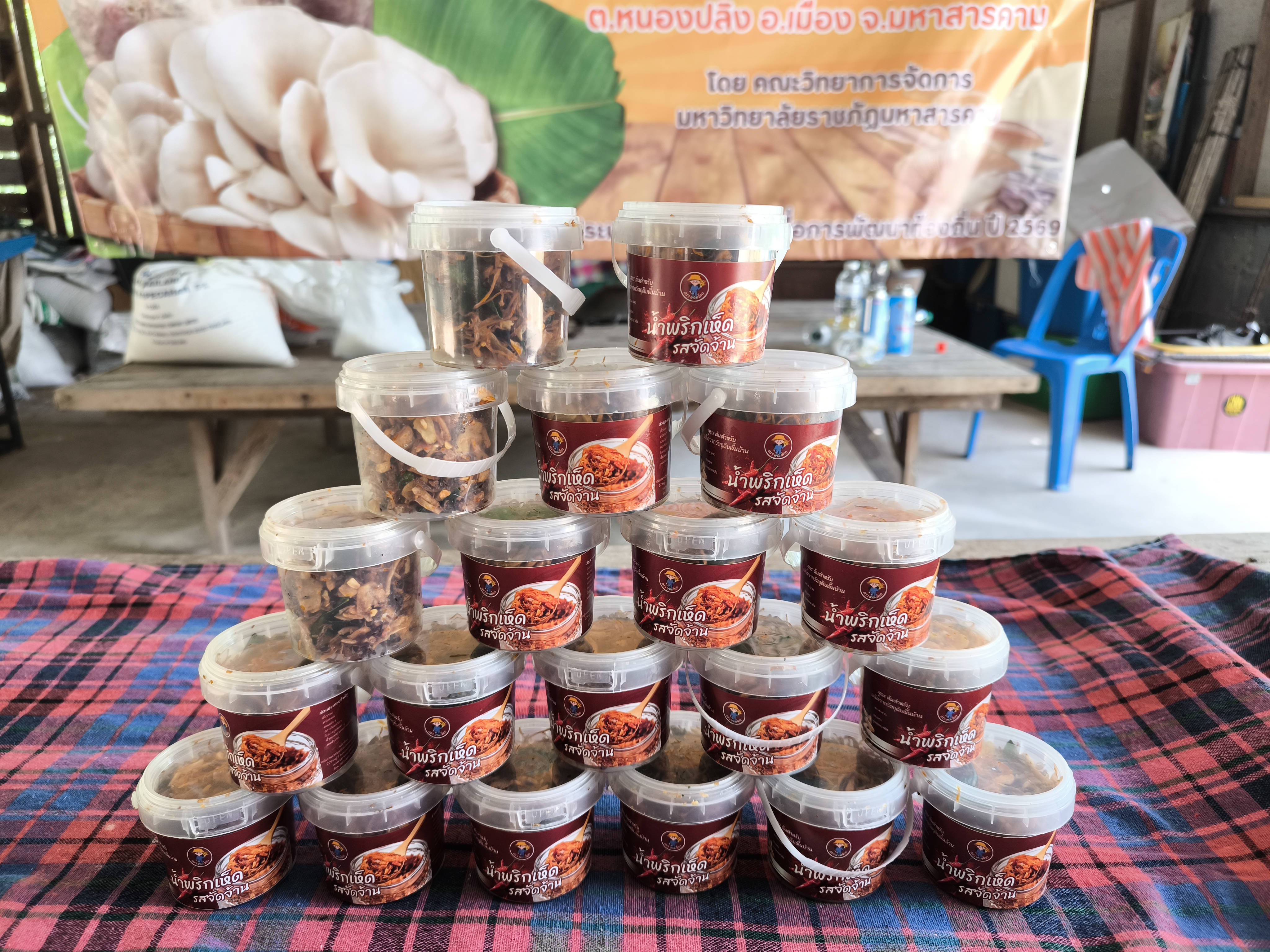
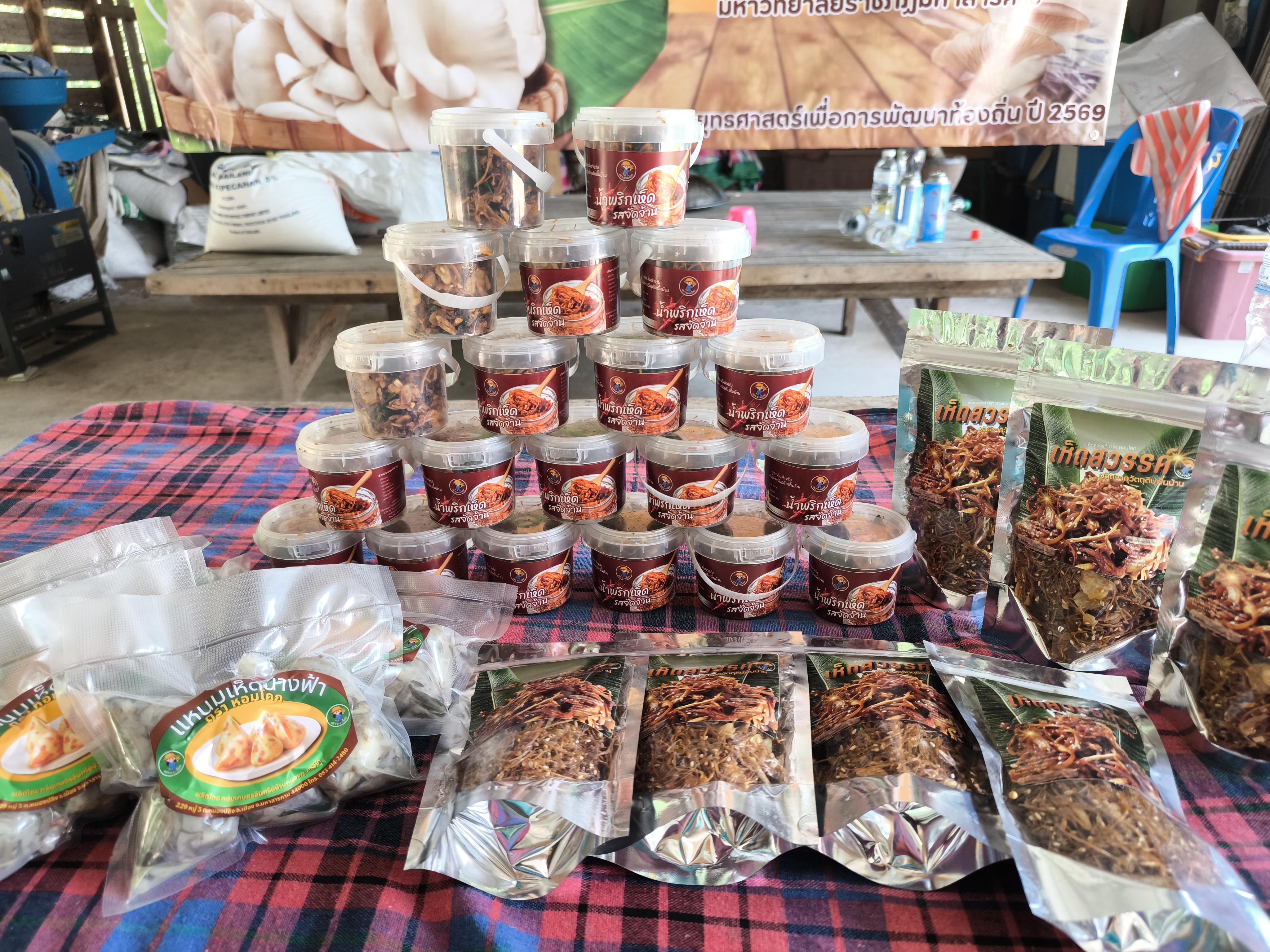
1. กิจกรรมเชิงปฏิบัติการส่งเสริมและพัฒนาการแปรรูปผลิตภัณฑ์จากเห็ด โดยนำผลผลิตเห็ดสดมาฝึกปฏิบัติการแปรรูปเพื่อยืดอายุการเก็บรักษาและเพิ่มมูลค่า
2. การทดสอบและควบคุมคุณภาพผลิตภัณฑ์ โดยนำผลิตภัณฑ์ที่ได้มาทดสอบรสชาติและปรับปรุงสูตรให้ได้มาตรฐาน สะอาด และปลอดภัยก่อนนำสู่ตลาด
ระยะปลายน้ำ การทำการตลาด การจัดการสิ่งแวดล้อม และสรุปรายงานผลลัพธ์
1. กิจกรรมเชิงปฏิบัติการพัฒนาตราสินค้า บรรจุภัณฑ์ผลิตภัณฑ์จากเห็ด และจัดจำหน่ายผ่านช่องทางทั้งออนไลน์และออฟไลน์สู่สินค้าของฝาก
2. กิจกรรมเชิงปฏิบัติการแก้ปัญหาขยะที่เกิดจากก้อนเชื้อเห็ดเก่าเหลือทิ้ง โดยนำก้อนเชื้อเห็ดที่หมดสภาพมาบริหารจัดการอย่างถูกวิธีเช่นการทำปุ๋ยหมักเพื่อลดขยะในชุมชน
3. การประเมินและสรุปรายงานผลลัพธ์โครงการ โดยติดตามผลการดำเนินงาน ถอดบทเรียนความสำเร็จ และจัดทำรูปเล่มรายงานสรุปผลลัพธ์ทั้งหมด
Part 2: Outcomes & Impact ส่วนที่ 2 ผลลัพธ์และผลกระทบ
Outcomes ผลลัพธ์ที่เกิดขึ้น
1. Community members gain knowledge and understanding of learning and living together in the community, participating in community development, strengthening unity and cooperation, and applying the principles of a sufficiency-oriented way of life.
2. Local residents receive training and capacity development aimed at improving their quality of life and strengthening the community’s social well-being. They gain knowledge, understanding, practical skills, and the ability to work collaboratively through group processes.
3. Community members are able to apply the knowledge gained to develop supplementary occupations and increase household income through mushroom cultivation and mushroom propagation within the community.
4. Community members gain knowledge and skills in applying locally produced mushrooms as ingredients for healthy food preparation, contributing to a better quality of life and creating opportunities for further development into supplementary occupations and income-generating activities.
5. Local residents are provided with knowledge and capacity development in managing and addressing waste generated from spent mushroom substrate and discarded mushroom cultivation bags.
1. ประชาชนมีความรู้และความเข้าใจใน เรียนรู้และใช้ชีวิตอยู่ในชุมชน ร่วมมือพัฒนาชุมชน สร้างความรักสามัคคี และการใช้ชีวิตอย่างพอเพียง
2. ประชาชนในพื้นที่ ได้รับการส่งเสริมอบรมและยกระดับคุณภาพชีวิตและสังคมของชุมชน ให้มีความรู้ ความเข้าใจ มีทักษะปฏิบัติและการทำงานร่วมกันด้วยกระบวนการกลุ่ม
3. สามารถนำความรู้ที่ได้ไปพัฒนาอาชีพเสริมเพิ่มรายได้ โดยการเพาะปลูกเห็ดในชุมชน การขยายพันธุ์เห็ดในชุมชน
4. ประชาชนได้รับความรู้ในการประยุกต์ใช้วัตถุดิบจากเห็นมาประกอบอาหารเพื่อสุขภาพ ทำให้มีคุณภาพชีวิตที่ดี และสามารถนำมาต่อยอดสู่การประกอบอาชีพเสริมได้
5. ประชาชนในพื้นที่ ได้รับการส่งเสริมและพัฒนาความรู้ในการจัดการแก้ปัญหาขยะที่เกิดจากก้อนเชื้อเห็ดเก่าเหลือทิ้ง
Community & Social Impact ผลกระทบต่อชุมชน/สังคม
1. **Development of a Strong and Sustainable Data-Driven Community Enterprise Management Model:**
The Ban Nong Khu–Ban Si Wilai Organic Agriculture Learning Center will strengthen its systematic community enterprise management capacity through an intelligent information database that categorizes year-round mushroom supply and demand. This will help prevent oversupply, enhance management efficiency, and transform the community into a district- and provincial-level model learning center for high-value and safe agriculture.
2. **Promotion of a Circular Economy and Strengthening of Local Food Security in Nong Pling Subdistrict:**
A **New Value Chain** will be created through the local propagation, production, and processing of safe, chemical-free mushrooms. This will strengthen community food self-reliance, create supplementary employment opportunities, reduce labor migration, and generate wider circulation of income within the local grassroots economy.
3. **Community and Environmental Revitalization toward a Low-Carbon Community:**
Ban Nong Khu–Ban Si Wilai Community will be able to address pollution and reduce accumulated waste from spent mushroom substrate, previously associated with plant diseases and fungal contamination, by **100%**. This will support the transition toward a **Zero-Waste Community Model** and contribute to a sustainable green economy that is environmentally friendly and supportive of local ecosystems and community forests.
1. ชุมชนมีต้นแบบระบบการบริหารจัดการกลุ่มวิสาหกิจบนฐานข้อมูลที่เข้มแข็งและยั่งยืน (Data-Driven Community): ศูนย์การเรียนรู้เกษตรอินทรีย์บ้านหนองคู-บ้านศรีวิไล มีขีดความสามารถการบริหารกลุ่มที่เป็นระบบ มีฐานข้อมูลสารสนเทศอัจฉริยะที่ช่วยจัดหมวดหมู่อุปทานและอุปสงค์ของเห็ดตลอดปี ช่วยป้องกันภาวะผลผลิตล้นตลาด และยกระดับขีดความสามารถของชุมชนดั้งเดิมสู่การเป็นต้นแบบแหล่งเรียนรู้เกษตรปลอดภัยมูลค่าสูงระดับอำเภอและจังหวัด
2. เกิดการกระตุ้นระบบเศรษฐกิจหมุนเวียนและสร้างความมั่นคงทางอาหารภายในตำบลหนองปลิง: เกิดห่วงโซ่คุณค่าใหม่ (New Value Chain) จากการขยายพันธุ์และการแปรรูปเห็ดที่ปลอดภัยไร้สารเคมีในท้องถิ่น นำไปสู่การพึ่งพาตนเองด้านอาหารของคนในชุมชน ลดปัญหาการย้ายถิ่นฐานของแรงงานเนื่องจากมีอาชีพเสริมรองรับในภูมิลำเนา และสร้างเม็ดเงินหมุนเวียนภายในเศรษฐกิจฐานรากได้อย่างทั่วถึง
3. สังคมและสิ่งแวดล้อมในชุมชนได้รับการฟื้นฟูสู่วิถีชุมชนคาร์บอนต่ำ: ชุมชนบ้านหนองคู-บ้านศรีวิไล สามารถแก้ไขปัญหามลพิษและลดขยะสะสมจากก้อนเชื้อเห็ดเก่าเหลือทิ้งที่เคยเป็นแหล่งเพาะโรคพืชและเชื้อราลงได้ 100% เปลี่ยนผ่านสู่การเป็นชุมชนต้นแบบที่ปล่อยของเสียเป็นศูนย์ (Zero Waste) บรรลุตามปณิธานเศรษฐกิจสีเขียวที่เป็นมิตรต่อระบบนิเวศและป่าชุมชนอย่างยั่งยืน
Student & Staff Participation การมีส่วนร่วมของนักศึกษา/บุคลากร
1. **Achievement of Rajabhat University Strategic Indicators for Local Development:**
The Faculty of Management Science and Rajabhat Maha Sarakham University will be able to effectively achieve strategic indicators related to grassroots economic development and area-based innovation under the **Bio-Circular-Green Economy (BCG) Model**. The project will also strengthen the role and image of the university as a **“University for Local Development”**, in alignment with the **Sustainable Development Goals (SDGs)**.
2. **Enhancement of Teaching and Learning Quality and Development of Students as “Social Engineers”:**
The Faculty will establish a **Best Practice** model for **Active Learning** by integrating real-world community problems and authentic local datasets from the **Data Warehouse** into courses such as **Business Intelligence, Digital Marketing, and Accounting**. This approach will enhance students’ analytical thinking, community engagement, teamwork, and public-mindedness in accordance with the university’s **Social Engineer** identity.
3. **Development of Valuable Academic Outputs and Area-Based Research:**
The project team will synthesize knowledge, data analytics technologies, and experimental outcomes from environmental waste management into academic outputs, including research or academic service articles. At least **one article** will be prepared for submission to a national academic journal indexed in the **Thai-Journal Citation Index (TCI)**, thereby strengthening the academic capacity of both the Faculty and the University.
1. หน่วยงานสามารถขับเคลื่อนและบรรลุผลสัมฤทธิ์ตามตัวชี้วัดแผนยุทธศาสตร์มหาวิทยาลัยราชภัฏเพื่อการพัฒนาท้องถิ่น: คณะวิทยาการจัดการและมหาวิทยาลัยราชภัฏมหาสารคาม สามารถตอบสนองต่อตัวชี้วัดการยกระดับเศรษฐกิจฐานรากและการขับเคลื่อนนวัตกรรมเชิงพื้นที่ (BCG Model) ได้อย่างเป็นรูปธรรม ส่งเสริมบทบาทและภาพลักษณ์ของสถาบันอุดมศึกษาในการเป็น "ที่พึ่งของท้องถิ่น" ที่สอดรับกับกรอบนโยบายการพัฒนาที่ยั่งยืน (SDGs)
2. เกิดการยกระดับคุณภาพการจัดการเรียนการสอนและหล่อหลอมคุณลักษณะ "วิศวกรสังคม" ให้แก่นักศึกษา: คณะวิชาได้รับแนวทางปฏิบัติที่ดี (Best Practice) ในการจัดกิจกรรมการเรียนรู้เชิงรุก (Active Learning) ที่บูรณาการโจทย์ปัญหาและชุดข้อมูลดิบจริงจากพื้นที่ (Data Warehouse) เข้ากับรายวิชาธุรกิจอัจฉริยะ (Business Intelligence) รายวิชาการตลาดดิจิทัล และรายวิชาการบัญชี ทำให้นักศึกษามีทักษะการคิดเชิงวิเคราะห์ การทำงานร่วมกับชุมชน และมีจิตสาธารณะตามอัตลักษณ์วิศวกรสังคม
3. เกิดการสร้างสรรค์ผลงานทางวิชาการและงานวิจัยเชิงพื้นที่ที่ทรงคุณค่า คณะผู้รับผิดชอบโครงการสามารถนำชุดองค์ความรู้ เทคโนโลยีการวิเคราะห์ข้อมูล และผลลัพธ์เชิงทดลองจากการจัดการขยะสิ่งแวดล้อมมาถอดบทเรียนเพื่อผลิตเป็นบทความวิจัยหรือบริการวิชาการที่พร้อมสำหรับการส่งตีพิมพ์เผยแพร่ในวารสารวิชาการระดับชาติ (ฐานข้อมูล TCI) อย่างน้อย 1 บทความ เป็นการเพิ่มพูนศักยภาพทางวิชาการให้แก่คณะและมหาวิทยาลัย
Project Continuity ความต่อเนื่องของโครงการ
1. Development toward a Smart Mushroom Farm and IoT Technology Integration:
The project plans to expand collaboration with the Faculty of Information Technology or the Faculty of Engineering to introduce Internet of Things (IoT) technologies, such as temperature and humidity sensors and automated irrigation systems, into mushroom cultivation houses. These technologies will be integrated with the existing Business Intelligence (BI) Dashboard to improve the accuracy of environmental monitoring and control for off-season mushroom production, while also reducing the labor burden on elderly farmers.
2. Upgrading the Group into a Legally Registered Community Enterprise with Certified Product Standards:
The project aims to support and mentor the farmer group in formally registering as a community enterprise. Coordination will also be undertaken with the District Agricultural Office and the Provincial Public Health Office to pursue Good Agricultural Practices (GAP) certification for fresh mushrooms, as well as Thai FDA or Thai Community Product Standards (TCPS) certification for plant-based processed mushroom products. These certifications will help strengthen consumer confidence and expand opportunities for market access through modern trade channels and provincial souvenir distribution centers.
3. Expansion of Collaborative Networks toward the “Nong Pling Model”:
The project plans to transfer the BI dashboard system and knowledge manuals on converting spent mushroom substrate waste into biomass energy to the Nong Pling Subdistrict Administrative Organization. These resources will serve as a central database to support integration into the five-year local development plan, enabling budget allocation for community equipment and infrastructure. The model will also be expanded through training and knowledge transfer to eight villages in Nong Pling Subdistrict, with the goal of establishing a strong and sustainable organic mushroom supply chain at the subdistrict level.
1. การยกระดับสู่โรงเรือนเพาะเห็ดอัจฉริยะ (Smart Mushroom Farm) และเทคโนโลยี IOT: มีแผนที่จะต่อยอดความร่วมมือกับคณะเทคโนโลยีสารสนเทศหรือคณะวิศวกรรมศาสตร์ ในการนำระบบอินเทอร์เน็ตสรรพสิ่ง (IoT) เช่น เซนเซอร์วัดอุณหภูมิ ความชื้น และระบบรดน้ำอัตโนมัติ เข้ามาติดตั้งในโรงเรือนเพาะเลี้ยงเห็ด เพื่อให้สอดรับกับฐานข้อมูลระบบธุรกิจอัจฉริยะ (BI Dashboard) ที่มีอยู่เดิม ช่วยให้การจัดเก็บและควบคุมสภาพแวดล้อมเพื่อผลิตเห็ดนอกฤดูกาลมีความแม่นยำและประหยัดแรงงานของเกษตรกรสูงอายุมากขึ้น
2. การยกระดับกลุ่มสู่ "วิสาหกิจชุมชน" ที่ถูกต้องตามกฎหมายและการันตีมาตรฐานสินค้า: มุ่งเป้าหมายในการเป็นพี่เลี่ยงผลักดันให้กลุ่มเกษตรกรเกิดการรวมตัวจดทะเบียนเป็นวิสาหกิจชุมชนอย่างเป็นทางการ พร้อมทั้งประสานงานกับสำนักงานเกษตรอำเภอและสำนักงานสาธารณสุขจังหวัด เพื่อตรวจประเมินและขอรับรองมาตรฐานการปฏิบัติทางการเกษตรที่ดี (GAP) สำหรับเห็ดสด และมาตรฐาน อย. หรือ มผช. สำหรับผลิตภัณฑ์เห็ดแปรรูปทดแทนเนื้อสัตว์ (Plant-based) เพื่อสร้างความเชื่อมั่นและขยายโอกาสในการนำสินค้าเข้าสู่โมเดิร์นเทรด (Modern Trade) และศูนย์กระจายสินค้าของฝากระดับจังหวัด
3. การสร้างเครือข่ายความร่วมมือขยายผลสู่ "หนองปลิงโมเดล": วางแผนที่จะโอนย้ายระบบแดชบอร์ดข้อมูล (BI Tools) และคู่มือองค์ความรู้การแปรรูปขยะก้อนเชื้อเห็ดสู่พลังงานชีวมวลให้แก่องค์การบริหารส่วนตำบลหนองปลิง เพื่อใช้เป็นฐานข้อมูลกลางในการบรรจุเข้าสู่แผนพัฒนาท้องถิ่นระยะ 5 ปี เพื่อให้เกิดการจัดสรรงบประมาณสนับสนุนครุภัณฑ์ชุมชน และขยายผลการจัดอบรมกระจายองค์ความรู้นี้ไปยังหมู่บ้านอื่น ๆ ในตำบลหนองปลิงรวม 8 หมู่บ้าน เพื่อสร้างห่วงโซ่อุปทานเห็ดอินทรีย์ที่เข้มแข็งและยั่งยืนในระดับตำบล
Part 3: Challenges & Suggestions ส่วนที่ 3 ปัญหาอุปสรรค/ข้อเสนอแนะ
Problems & Obstacles ปัญหา/อุปสรรค
1. Challenges Related to Environmental Variability and Mushroom Spawn Production Inputs:
During Activity 1, the workshop on community-based mushroom propagation and production skills development, the weather conditions in Maha Sarakham Province were characterized by high temperatures and humidity. These conditions directly affected temperature control in the community’s traditional open mushroom cultivation houses. In addition, some batches of rubberwood sawdust purchased from local markets contained excessive moisture. Without appropriate adjustment of supplementary nutrients and substrate composition, these conditions may slow mycelial growth and increase the risk of fungal contamination.
2. Challenges Related to Infrastructure and Transportation of Processed Food Products:
Community members still lack large-scale equipment and machinery required for processing activities under Activities 2 and 3, such as industrial-grade vacuum sealers and standardized solar drying systems. As a result, the production of fermented mushroom products and mushroom floss still relies mainly on manual labor and household-scale equipment. This limits the consistency of packaging and the community’s capacity for large-volume production to meet wholesale orders. In addition, the community is located relatively far from the city center and major distribution hubs. This creates transportation constraints for certain fresh processed products, such as fermented mushrooms, as extended delivery times may cause excessive fermentation and result in an overly sour taste before the products reach consumers.
1. ปัญหาด้านความผันผวนของสภาพแวดล้อมทางกายภาพและปัจจัยการผลิตก้อนเชื้อเห็ด ในกิจกรรมที่ 1 ซึ่งเป็นกิจกรรมอบรมเชิงปฏิบัติการพัฒนาอาชีพการขยายพันธุ์เห็ดในชุมชน พบว่าสภาพอากาศในพื้นที่จังหวัดมหาสารคามในช่วงที่มีการจัดกิจกรรมมีความร้อนชื้นและอุณหภูมิภายนอกค่อนข้างสูง ซึ่งมีผลกระทบโดยตรงต่อการควบคุมอุณหภูมิในโรงเรือนเปิดแบบดั้งเดิมของชุมชน นอกจากนี้ วัตถุดิบหลักอย่างขี้เลื่อยไม้ยางพาราที่จัดซื้อในท้องตลาดบางล็อตมีความชื้นสูงเกินไป ซึ่งหากไม่ได้รับการปรับสัดส่วนอาหารรองอย่างเหมาะสม อาจส่งผลให้อัตราการเดินของเส้นใยเห็ดเกิดความล่าช้า หรือเพิ่มความเสี่ยงต่อการติดเชื้อราฝังตัวได้ง่ายขึ้น
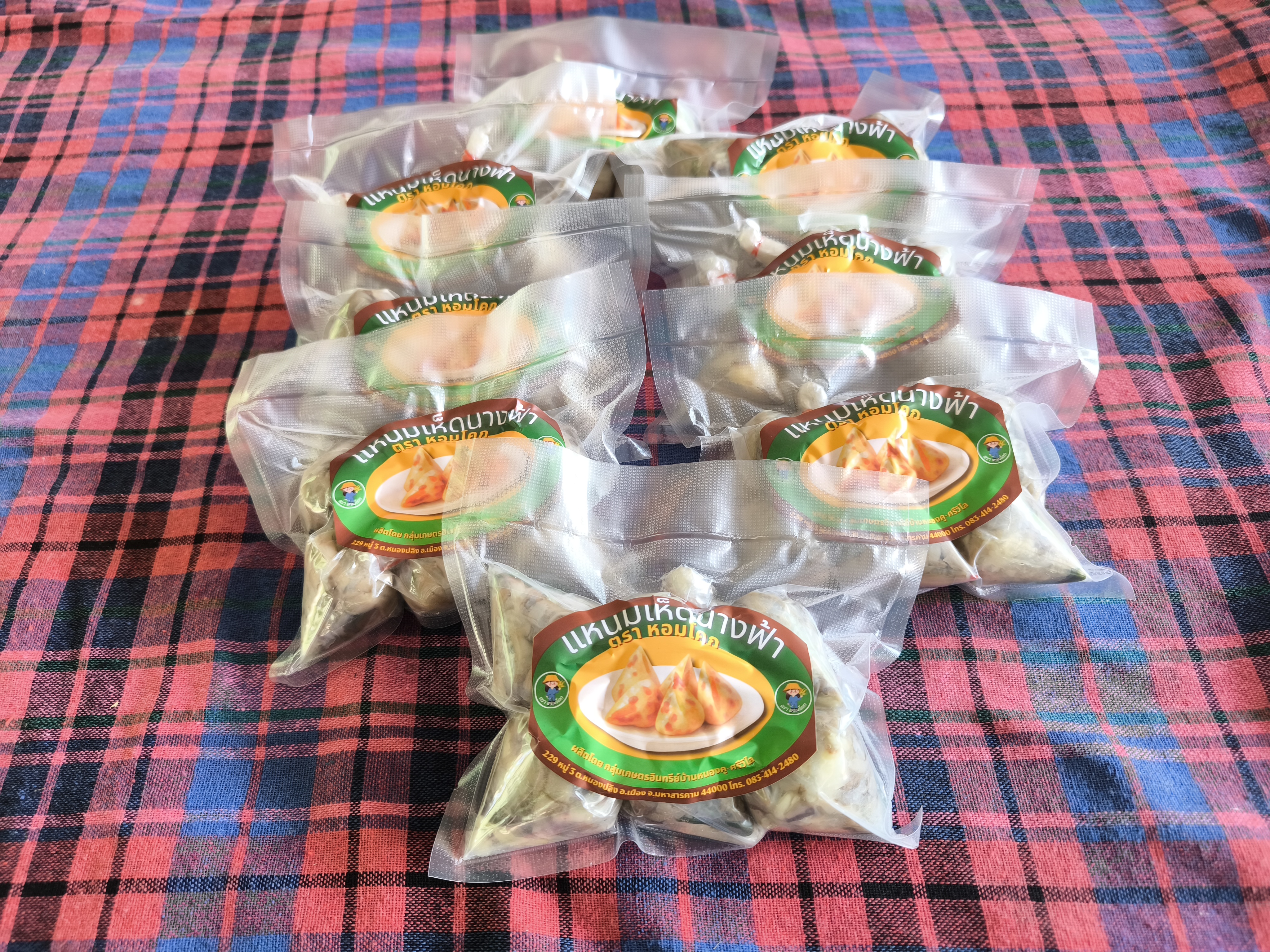
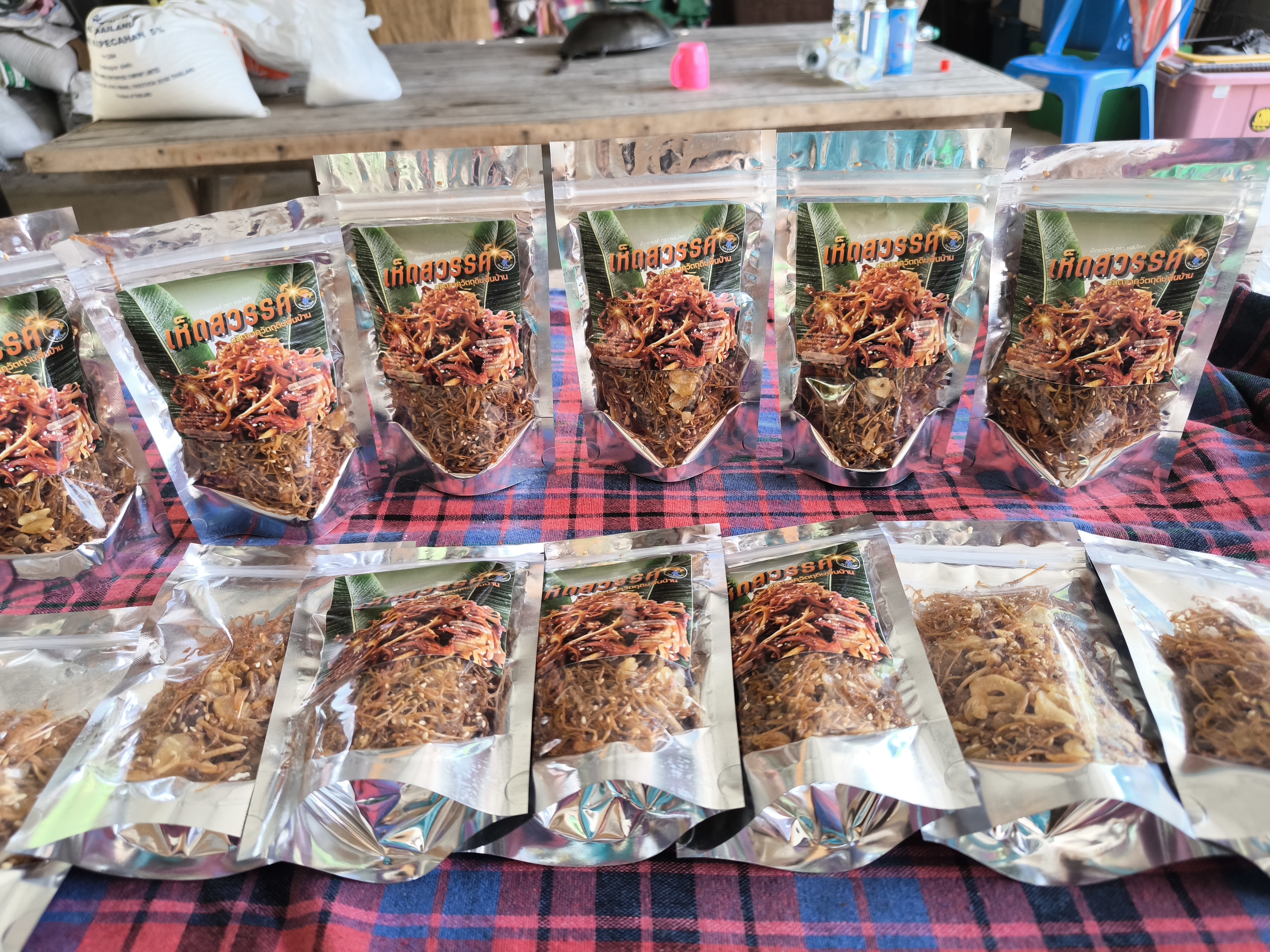
2. ปัญหาด้านโครงสร้างพื้นฐานและการขนส่งสินค้าประเภทอาหารแปรรูป สมาชิกในกลุ่มยังขาดครุภัณฑ์และเครื่องจักรขนาดใหญ่ที่ใช้สำหรับกระบวนการแปรรูปในกิจกรรมที่ 2 และ 3 เช่น เครื่องซีลสุญญากาศระดับอุตสาหกรรม หรือตู้อบแห้งพลังงานแสงอาทิตย์ที่ได้มาตรฐานโรงงาน ทำให้การผลิตแหนมเห็ดและเห็ดหยองยังต้องพึ่งพาแรงงานคนและอุปกรณ์ครัวเรือนเป็นหลัก ซึ่งเป็นอุปสรรคต่อการควบคุมความสม่ำเสมอของบรรจุภัณฑ์ และการผลิตในปริมาณมากเพื่อรองรับออเดอร์ขายส่ง ประกอบกับที่ตั้งของชุมชนอยู่ห่างจากตัวเมืองและศูนย์กระจายสินค้า ทำให้อาหารแปรรูปสดบางประเภท เช่น แหนมเห็ด มีข้อจำกัดเรื่องระยะเวลาการขนส่งที่อาจส่งผลต่อรสชาติที่เปรี้ยวเกินไปก่อนถึงมือผู้บริโภค
Improvement Guidelines แนวทางการปรับปรุง
1. Improvement of Mushroom Substrate Formulation and Installation of a Misting System in Cultivation Houses:
To address problems related to excessive moisture in sawdust and high ambient temperatures, the lead trainer, Assistant Professor Dr. Sitthichok Phanphithak, advised farmers to adjust the substrate formulation by reducing the amount of added water and increasing the proportion of lime to regulate pH levels and create conditions less favorable for green mold growth. Local knowledge was also integrated with technical practices through the installation of a simple misting system inside the mushroom cultivation houses and the addition of another layer of shade netting to reduce heat. As a result, the survival rate of premium mushroom substrate bags produced under Activity 1 remained high and met the project target.
2. Utilization of Environmental Materials from Activity 4 and Coordination of Temperature-Controlled Transportation:
The project team applied circular economy principles to reduce production costs by introducing a biomass briquette machine to convert spent mushroom substrate into fuel briquettes. This provided the community with a low-cost source of thermal energy for sterilizing new batches of mushroom substrate, reducing expenditure on cooking gas and allowing the savings to be used to purchase additional small vacuum sealing machines. In terms of logistics, the digital marketing team also facilitated business matching between the farmer group and local private logistics providers offering temperature-controlled delivery services. The community was further encouraged to adopt a pre-order system through its online page, enabling better production planning and same-day shipment of fermented mushroom products, thereby reducing unsold inventory, product deterioration, and spoilage.
1. การปรับปรุงสูตรอาหารก้อนเชื้อและการเพิ่มระบบพ่นหมอกในโรงเรือน: ในส่วนของปัญหาความชื้นของขี้เลื่อยและสภาพอากาศที่ร้อน วิทยากรหลัก ผู้ช่วยศาสตราจารย์ ดร.สิทธิโชค พรรค์พิทักษ์ ได้ให้คำแนะนำแก่เกษตรกรในการปรับอัตราส่วนผสม โดยการลดปริมาณการพรมน้ำลงและเพิ่มส่วนผสมของปูนขาวเพื่อควบคุมค่าความเป็นกรดเป็นด่างไม่ให้เอื้อต่อการเติบโตของราเขียว พร้อมทั้งบูรณาการภูมิปัญญาท้องถิ่นร่วมกับชาวบ้านในการจัดทำระบบพ่นหมอกน้ำอย่างง่ายภายในโรงเรือนเพาะเลี้ยง และการนำสแลน กรองแสงมาคลุมทับเพิ่มอีกหนึ่งชั้นเพื่อลดทอนอุณหภูมิหน้างาน ส่งผลให้อัตราการรอดชีวิตของก้อนเชื้อเห็ดพรีเมียมในกิจกรรมที่ 1 คงสถิติที่สูงตามเป้าหมาย
2. การใช้วัสดุสิ่งแวดล้อมจากกิจกรรมที่ 4 และประสานระบบขนส่งขนส่งควบคุมอุณหภูมิ: คณะทำงานได้นำแนวคิดเศรษฐกิจหมุนเวียนเข้ามาช่วยบรรเทาต้นทุน โดยการจัดหาเครื่องอัดแท่งพลังงานชีวมวลจากเศษก้อนเชื้อเห็ดเก่าเข้ามาช่วยผลิตแท่งเชื้อเพลิง ทำให้ชุมชนมีพลังงานความร้อนฟรีสำหรับใช้ในการนึ่งฆ่าเชื้อก้อนเชื้อล็อตใหม่ ช่วยชดเชยต้นทุนค่าแก๊สและนำเงินส่วนที่ประหยัดได้ไปจัดซื้อเครื่องซีลสุญญากาศขนาดเล็กเพิ่มขึ้น นอกจากนี้ ในด้านการขนส่ง คณะทำงานด้านการตลาดดิจิทัลได้ช่วยจับคู่ธุรกิจระหว่างกลุ่มเกษตรกรกับผู้ให้บริการขนส่งเอกชนในท้องถิ่นที่มีระบบเก็บความเย็น และแนะนำให้ชุมชนเน้นการเปิดรับคำสั่งซื้อล่วงหน้า (Pre-order) ผ่านช่องทางเพจออนไลน์ เพื่อให้สามารถวางแผนการผลิตและจัดส่งแหนมเห็ดได้ทันทีในวันผลิต ป้องกันสินค้าตกค้างและเน่าเสีย
Suggestions to University ข้อเสนอแนะต่อมหาวิทยาลัย
1. Recommendations for Partner Agencies and Local Administrative Organizations:
The Nong Pling Subdistrict Administrative Organization should take over and institutionalize this project by incorporating the intelligent data dashboard system and the model for converting spent mushroom substrate into biomass energy into its official five-year local development plan. This would enable budget allocation to support necessary infrastructure, such as the development of Smart Mushroom Farms equipped with automated temperature-control sensors, as well as higher-capacity fertilizer pelletizers and biomass briquette machines. These initiatives would provide concrete support for advancing Nong Pling Subdistrict toward a low-carbon society.
2. Recommendations for Farmer Groups and Community Enterprises:
The core members of the Ban Nong Khu–Ban Si Wilai Organic Agriculture Learning Center should maintain consistent discipline in recording raw data in the database even after the project has ended, so that the BI Dashboard remains complete, accurate, and reflective of actual business conditions. The group should also promptly compile the names of 50 members and proceed with formal registration as the Nong Pling Organic Mushroom Cultivation and Processing Community Enterprise with the Mueang Maha Sarakham District Agricultural Office. Formal registration would strengthen the group’s bargaining power, improve market access, and increase opportunities to obtain government benefits, low-interest financing, and revolving funds for future business expansion.
1. ข้อเสนอแนะต่อหน่วยงานภาคีและองค์กรปกครองส่วนท้องถิ่น: องค์การบริหารส่วนตำบลหนองปลิง ควรมารับช่วงต่อ (Take over) แผนงานโครงการนี้ โดยการนำระบบแผงควบคุมข้อมูลอัจฉริยะ และโมเดลการจัดการขยะก้อนเชื้อเห็ดสู่พลังงานชีวมวล บรรจุเข้าไว้ในแผนพัฒนาท้องถิ่นระยะ 5 ปี ขององค์กรปกครองส่วนท้องถิ่นอย่างเป็นทางการ เพื่อจัดสรรงบประมาณสนับสนุนกลุ่มในด้านโครงสร้างพื้นฐาน เช่น การสร้างโรงเรือนเพาะเห็ดอัจฉริยะ (Smart Farm) ที่ติดตั้งระบบเซนเซอร์ควบคุมอุณหภูมิอัตโนมัติ และการสนับสนุนเครื่องอัดปุ๋ยและเครื่องอัดแท่งเชื้อเพลิงที่มีกำลังผลิตสูงขึ้น เพื่อขับเคลื่อนตำบลหนองปลิงสู่สังคมคาร์บอนต่ำอย่างเป็นรูปธรรม
2. ข้อเสนอแนะต่อกลุ่มเกษตรกรและวิสาหกิจชุมชน: แกนนำกลุ่มศูนย์การเรียนรู้เกษตรอินทรีย์บ้านหนองคู-บ้านศรีวิไล ควรรักษาระเบียบวินัยในการบันทึกข้อมูลดิบลงในระบบฐานข้อมูลอย่างต่อเนื่อง แม้ว่าจะปิดโครงการไปแล้วก็ตาม เพื่อให้ฐานข้อมูล BI Dashboard มีความสมบูรณ์และสะท้อนความจริงทางธุรกิจ และควรรีบดำเนินการรวบรวมรายชื่อสมาชิกจำนวน 50 คนเพื่อจดทะเบียนขึ้นเป็น วิสาหกิจชุมชนกลุ่มเพาะเลี้ยงและแปรรูปเห็ดอินทรีย์ตำบลหนองปลิง กับสำนักงานเกษตรอำเภอเมืองมหาสารคาม เพื่อสร้างอำนาจต่อรองในการค้าขาย และเข้าถึงสิทธิประโยชน์ แหล่งเงินทุนดอกเบี้ยต่ำ หรือกองทุนหมุนเวียนของภาครัฐในการขยายกิจการในอนาคต