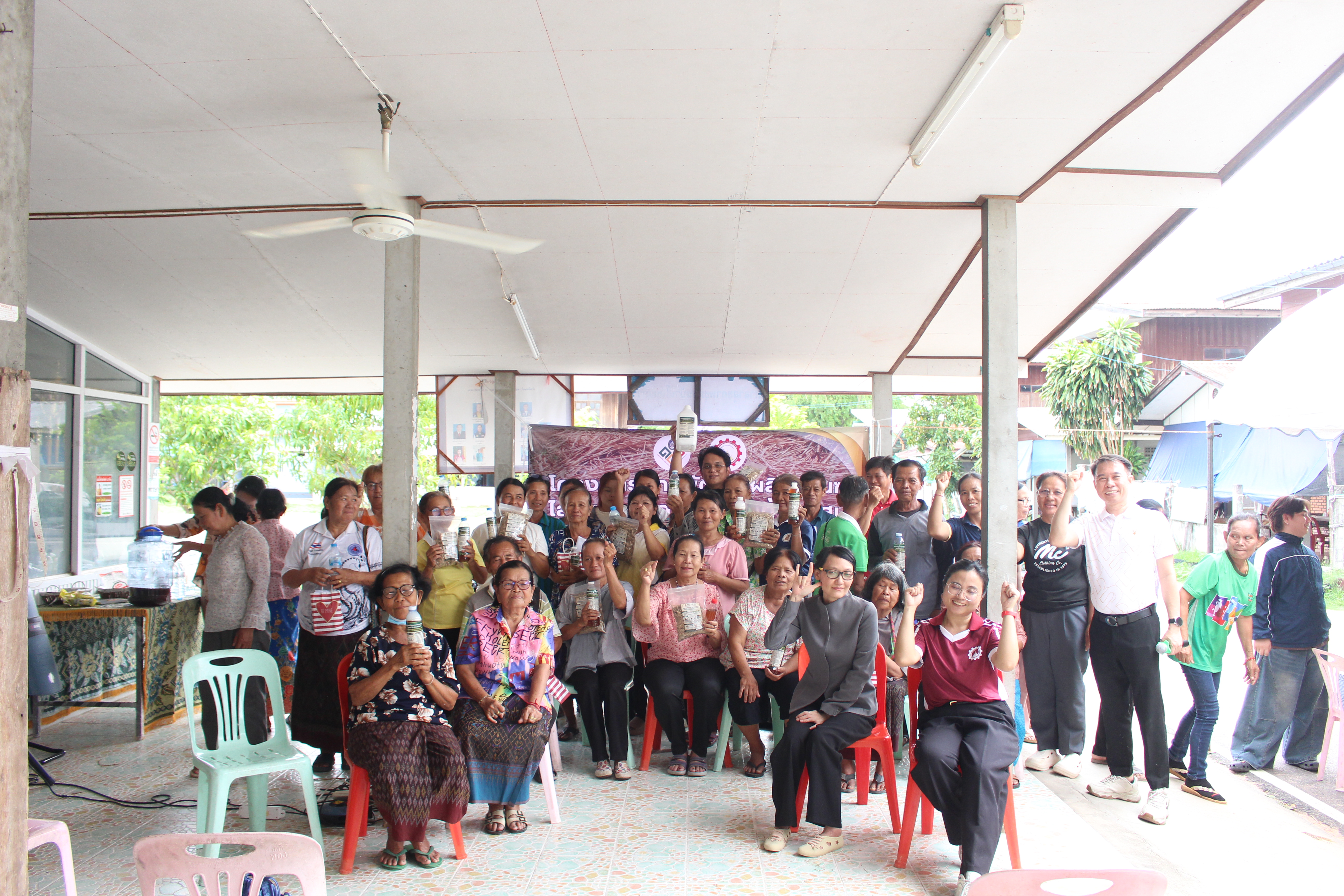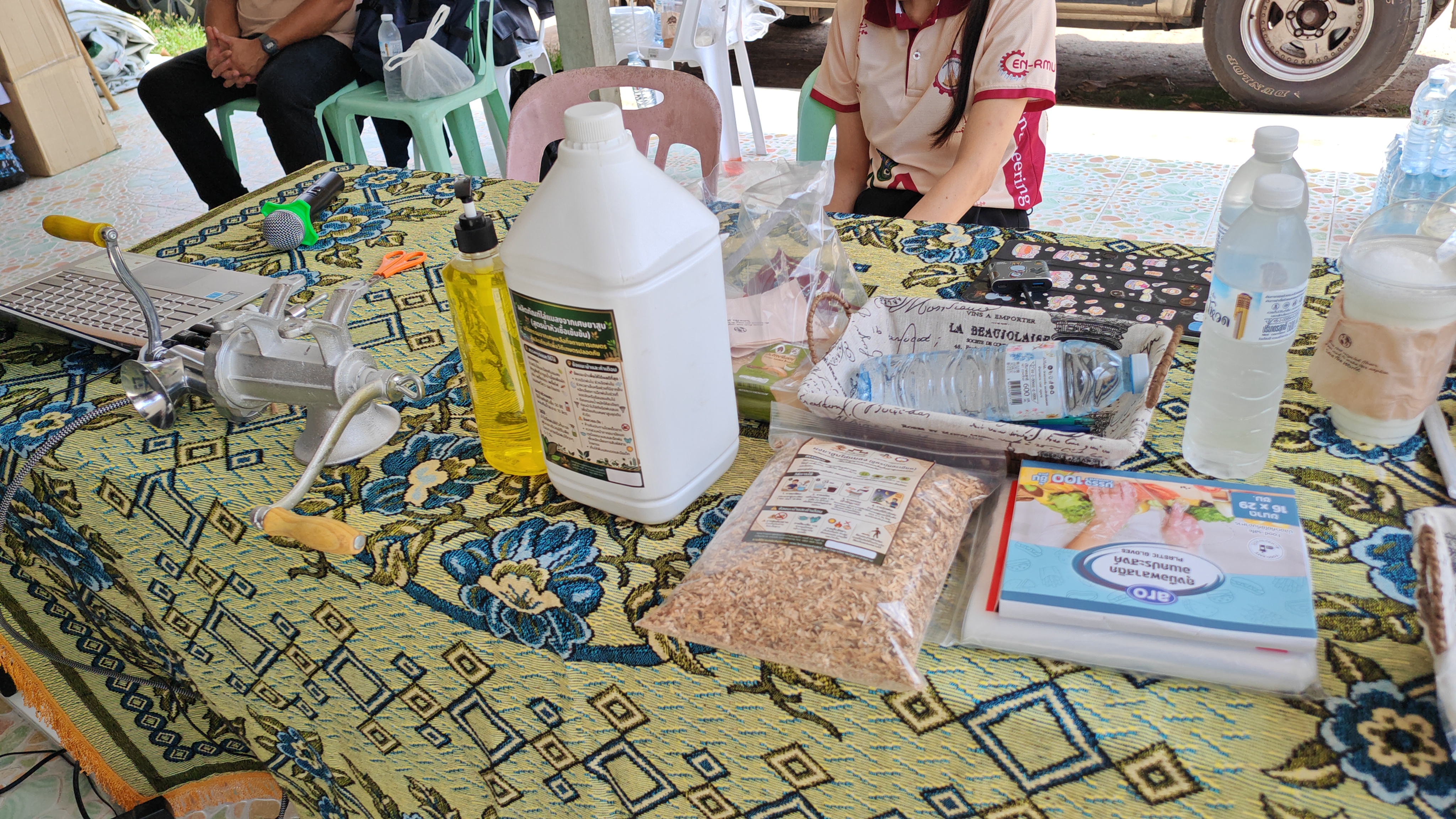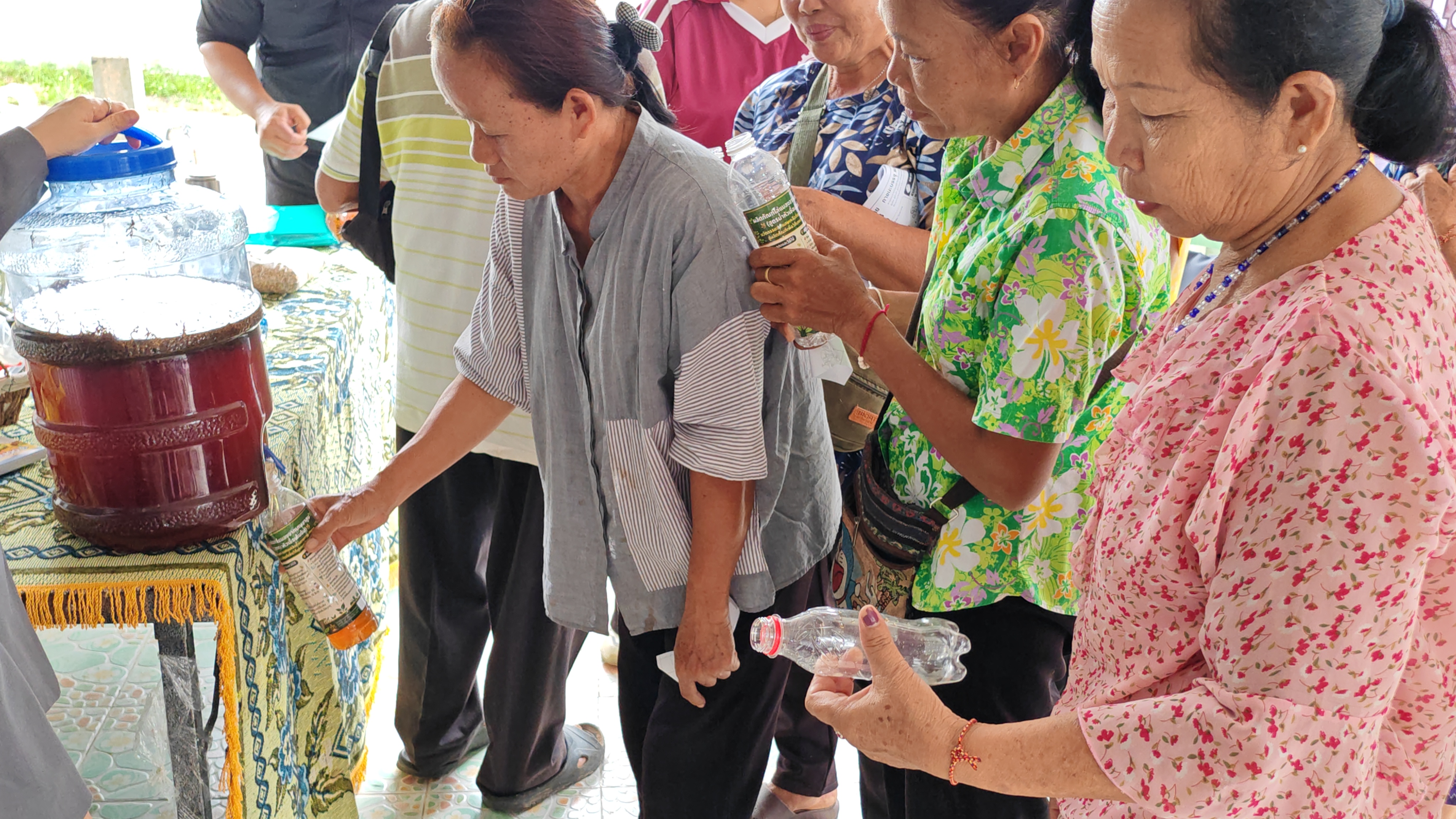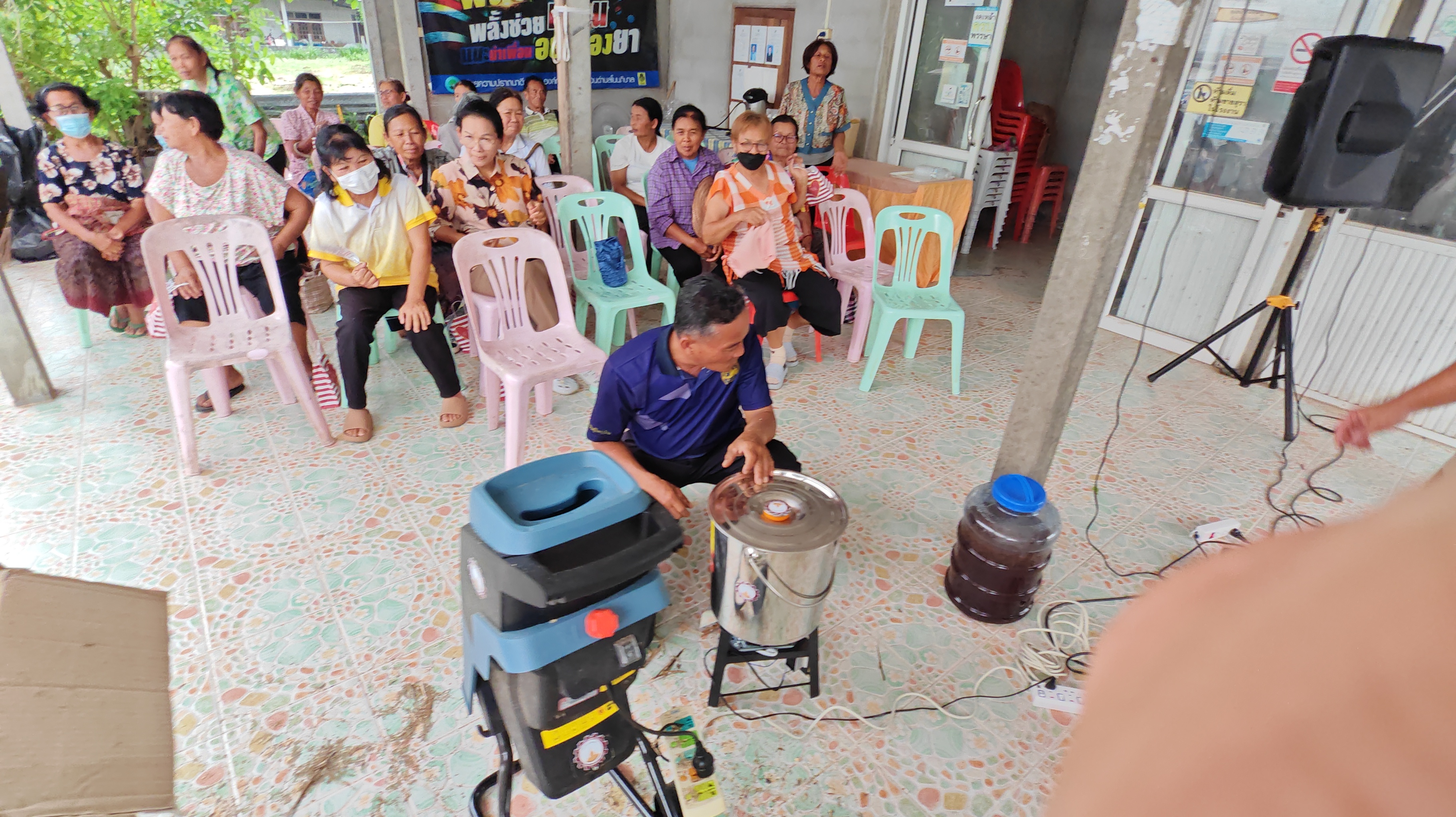
– April 7, 2026 30 มีนาคม 2569
– 7 เมษายน 2569
Part 1: Project Details ส่วนที่ 1 รายละเอียดการดำเนินงาน
Objectives วัตถุประสงค์โครงการ
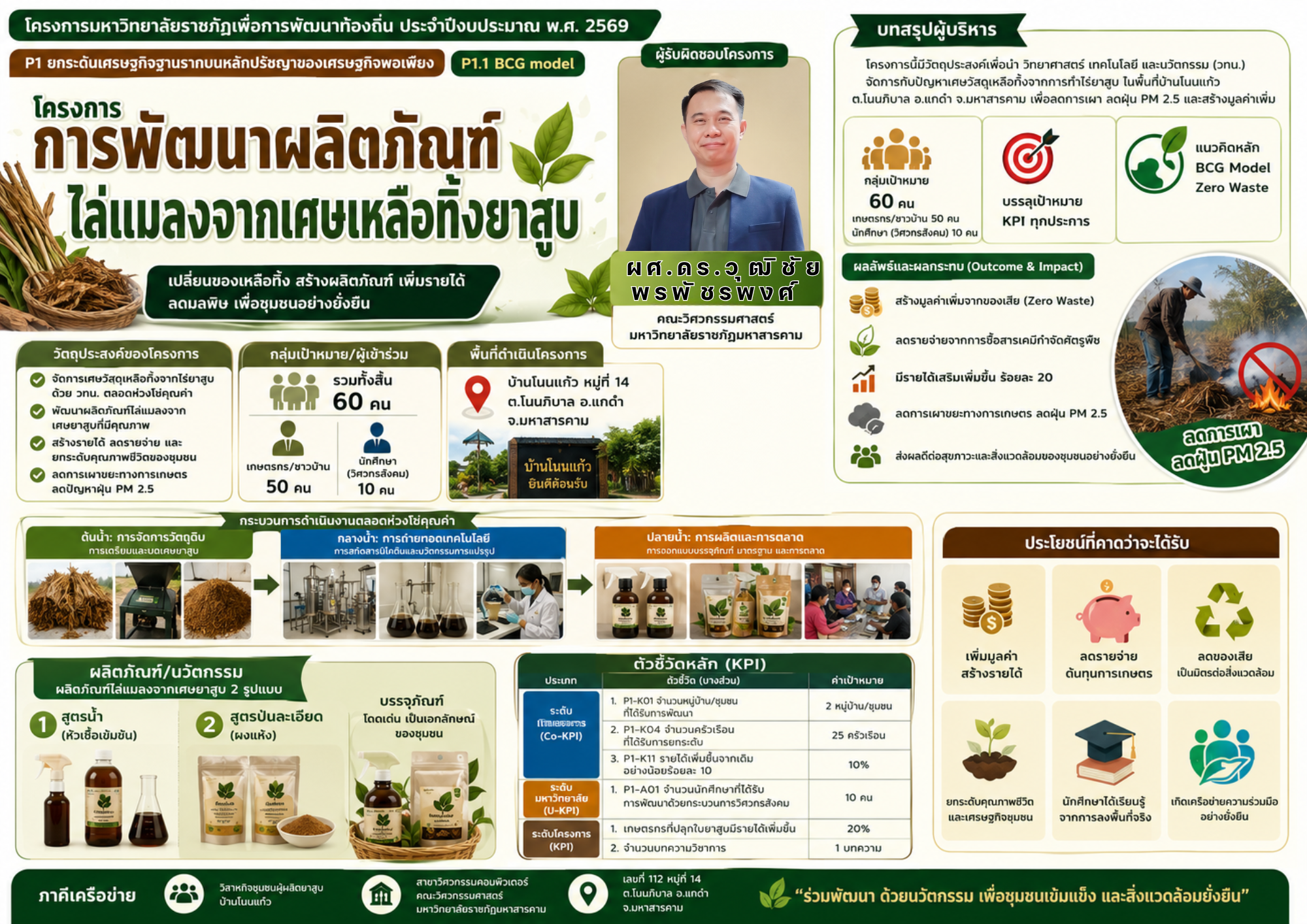
1. To study and develop an insect repellent product using tobacco waste (stems, stalks, and old leaves).
2. To design prototype packaging and marketing strategies for community-produced products.
3. To create jobs and increase income for villagers in the community.
4. To reduce burning, which is a cause of PM 2.5 dust.
1. เพื่อศึกษาและพัฒนาผลิตภัณฑ์ไล่แมลง โดยใช้เศษเหลือทิ้งยาสูบ (ลำต้น, ก้าน, ใบแก่)
2. เพื่อออกแบบบรรจุภัณฑ์ต้นแบบ และแนวทางการตลาดของผลิตภัณฑ์ที่ผลิตในชุมชน
3. เพื่อสร้างอาชีพและเพิ่มรายได้ให้ชาวบ้านในชุมชน
4. เพื่อลดการเผาอันเป็นสาเหตุของฝุ่น PM 2.5
Main Activities กิจกรรมหลัก
Upstream: Raw Material Management and Community Preparedness
1. Problem Analysis and Community Engagement
2. Tobacco Waste Management
Midstream: Technology Transfer and Processing Innovations
1. Safety Training
2. Processing of Insect Repellent Products
Downstream: Packaging Design, Standards, and Marketing
1. Branding and Packaging
2. Marketing and Distribution
ต้นน้ำ: การจัดการวัตถุดิบและการเตรียมความพร้อมชุมชน
1. การวิเคราะห์ปัญหาและสร้างการมีส่วนร่วม
2. การจัดการเศษเหลือทิ้งยาสูบ
กลางน้ำ: การถ่ายทอดเทคโนโลยีและนวัตกรรมการแปรรูป
1. การอบรมด้านความปลอดภัย
2. การแปรรูปผลิตภัณฑ์ไล่แมลง
ปลายน้ำ: การออกแบบบรรจุภัณฑ์ มาตรฐาน และการตลาด
1. การสร้างตราสินค้าและบรรจุภัณฑ์
2. การตลาดและการจำหน่าย
Part 2: Outcomes & Impact ส่วนที่ 2 ผลลัพธ์และผลกระทบ
Outcomes ผลลัพธ์ที่เกิดขึ้น
1. The community's income increases from selling products.
2. Reduces PM 2.5 dust pollution in the area (by utilizing tobacco waste that would otherwise be burned).
3. Reduces the amount of agricultural pesticides used in the community.
1. ชุมชนมีรายได้เพิ่มขึ้นจากการจำหน่ายผลิตภัณฑ์
2. ลดปัญหาฝุ่น PM 2.5 ในพื้นที่ (จากการนำเศษยาสูบที่ต้องเผาทิ้งมาใช้ประโยชน์)
3. ลดปริมาณการใช้สารเคมีกำจัดศัตรูพืชทางการเกษตรในชุมชน
Community & Social Impact ผลกระทบต่อชุมชน/สังคม
Economically, tobacco farmers have increased their income by adding value to waste materials.
Socially, strong community enterprise groups have been formed, and community relationships have improved through collaborative product development.
Environmentally, waste from agricultural scraps has been reduced, the use of chemicals in agricultural plots has decreased, and burning, a cause of PM 2.5 dust, has been reduced.
Educationally, students have been developed through the social engineering process, learning has taken place outside the classroom, and the community has gained more green spaces.
ด้านเศรษฐกิจ เกษตรกรที่ปลูกใบยาสูบมีรายได้เพิ่มขึ้นจากการนำวัสดุเหลือทิ้งมาสร้างมูลค่าเพิ่ม
ด้านสังคม เกิดการรวมกลุ่มวิสาหกิจชุมชนที่เข้มแข็ง และชุมชนมีความสัมพันธ์ที่ดีต่อกันจากการร่วมกันพัฒนาผลิตภัณฑ์
ด้านสิ่งแวดล้อม ลดปริมาณขยะจากเศษเหลือทิ้ง ลดการใช้สารเคมีในแปลงเกษตร และลดการเผาอันเป็นสาเหตุของฝุ่น PM 2.5
ด้านการศึกษา นักศึกษาได้รับการพัฒนาด้วยกระบวนการวิศวกรสังคม เกิดการเรียนรู้นอกห้องเรียน และชุมชนมีพื้นที่สีเขียวเพิ่มขึ้น
Student & Staff Participation การมีส่วนร่วมของนักศึกษา/บุคลากร
Students participating in the program developed skills through the "Social Engineering" process, acquiring problem-solving skills, communication skills, and the ability to work collaboratively with communities through real-world fieldwork. นักศึกษาที่เข้าร่วมโครงการได้รับการพัฒนาทักษะผ่านกระบวนการ "วิศวกรสังคม" ทำให้มีทักษะในการวิเคราะห์ปัญหา ทักษะการสื่อสาร และการทำงานร่วมกับชุมชนจากการลงพื้นที่ปฏิบัติงานจริง
Project Continuity ความต่อเนื่องของโครงการ
The project to develop insect repellent products from tobacco waste has a plan for continuity and scaling up in the next phase to ensure sustainability and project transferability in 4 main dimensions as follows:
1. Product Standardization: Promoting the community's tobacco insect repellent products (both concentrated extract and finely ground formulas) to undergo the Community Product Standard (CPS) certification process or other standards related to safe agriculture. This will certify quality, build consumer trust, and enhance competitiveness to expand the market to the national level.
2. Community Organization Sustainability and Marketing (Social Enterprise & Marketing): Building upon the management of the Ban Non Kaew tobacco grower community enterprise group to become a full-fledged "Social Enterprise" (SE). This will ensure fair income distribution, working capital, and long-term self-reliance, along with promoting in-depth online marketing (Digital Marketing) and connecting products with other organic farming networks in the province.
3. Research and Innovation Development (R&D and Innovation): Focusing on developing innovative products in new forms in collaboration with faculty and students, such as developing tobacco extract into a faster-dissolving water-tablet form. This includes supporting research to develop low-cost, small-scale machinery (such as tobacco shredders or grinders) suitable for the context of community enterprises, in order to increase production capacity and enable the application of this Circular Economy model to other types of agricultural waste in the area.
4. Project Handoff & Expansion Dimension: Create a knowledge transfer mechanism by upgrading Ban Non Kaew community to a "model learning community" that can transfer the technology of producing insect repellent from tobacco waste to nearby communities or farmer networks. There are also plans to prepare project proposals to request continuous funding support on other platforms of the Ministry of Higher Education, Science, Research and Innovation, such as the Business Economics (BCE) platform or the Science Village Incubation (SCI) platform, in order to upgrade the commercial production technology to a higher standard in the future.
การดำเนินโครงการพัฒนาผลิตภัณฑ์ไล่แมลงจากเศษเหลือทิ้งยาสูบ มีแผนการสร้างความต่อเนื่องและยกระดับการพัฒนาในระยะต่อไป (Scale-up) เพื่อให้เกิดความยั่งยืนและสามารถส่งต่อโครงการได้ใน 4 มิติหลัก ดังนี้
1. มิติด้านการยกระดับมาตรฐานผลิตภัณฑ์ (Product Standardization) ผลักดันผลิตภัณฑ์ยาสูบไล่แมลงของชุมชน (ทั้งสูตรน้ำสกัดเข้มข้นและสูตรป่นละเอียด) ให้เข้าสู่กระบวนการขอรับรองมาตรฐานผลิตภัณฑ์ชุมชน (มผช.) หรือมาตรฐานอื่น ๆ ที่เกี่ยวข้องกับการทำเกษตรปลอดภัย เพื่อเป็นการรับรองคุณภาพ สร้างความน่าเชื่อถือให้กับผู้บริโภค และยกระดับขีดความสามารถในการแข่งขันเพื่อขยายตลาดสู่ระดับประเทศ
2. มิติด้านความยั่งยืนขององค์กรชุมชนและการตลาด (Social Enterprise & Marketing) ต่อยอดการบริหารจัดการกลุ่มวิสาหกิจชุมชนผู้ปลูกยาสูบบ้านโนนแก้ว ให้ก้าวไปสู่การเป็น "ธุรกิจเพื่อสังคม" (Social Enterprise: SE) อย่างเต็มรูปแบบ เพื่อให้ชุมชนเกิดการจัดสรรรายได้ที่เป็นธรรม มีเงินทุนหมุนเวียน และสามารถพึ่งพาตนเองได้อย่างยั่งยืนในระยะยาว พร้อมทั้งส่งเสริมการตลาดออนไลน์เชิงลึก (Digital Marketing) และเชื่อมโยงผลิตภัณฑ์เข้ากับกลุ่มเครือข่ายเกษตรอินทรีย์อื่น ๆ ในจังหวัด
3. มิติด้านการวิจัยและการพัฒนานวัตกรรม (R&D and Innovation) มุ่งเน้นการต่อยอดนวัตกรรมผลิตภัณฑ์ในรูปแบบใหม่ ๆ ร่วมกับคณาจารย์และนักศึกษา เช่น การพัฒนาสารสกัดยาสูบให้อยู่ในรูปแบบอัดเม็ดที่สามารถละลายน้ำได้เร็วขึ้น รวมถึงการสนับสนุนงานวิจัยเพื่อพัฒนาเครื่องจักรกลขนาดเล็ก (เช่น เครื่องสับหรือเครื่องบดยาสูบ) ที่มีต้นทุนต่ำและเหมาะสมกับบริบทของวิสาหกิจชุมชน เพื่อเพิ่มกำลังการผลิต และสามารถนำโมเดลเศรษฐกิจหมุนเวียน (Circular Economy) นี้ไปปรับใช้กับเศษวัสดุเหลือทิ้งทางการเกษตรชนิดอ่ืน ๆ ในพื้นที่ได้
4. มิติด้านการส่งต่อโครงการและการขยายผล (Project Handoff & Expansion) สร้างกลไกการส่งต่อความรู้โดยยกระดับให้ชุมชนบ้านโนนแก้วเป็น "ชุมชนต้นแบบแห่งการเรียนรู้" ที่สามารถถ่ายทอดเทคโนโลยีการผลิตสารไล่แมลงจากเศษยาสูบไปยังชุมชนหรือเครือข่ายเกษตรกรใกล้เคียง รวมทั้งมีแผนในการจัดทำข้อเสนอโครงการเพื่อขอรับการสนับสนุนงบประมาณต่อเนื่องในแพลตฟอร์มอื่น ๆ ของกระทรวง อว. เช่น แพลตฟอร์มเพิ่มศักยภาพธุรกิจชุมชน (BCE) หรือ แพลตฟอร์มบ่มเพาะหมู่บ้านวิทยาศาสตร์ (SCI) เพื่อยกระดับเทคโนโลยีการผลิตเชิงพาณิชย์ให้ได้มาตรฐานสูงขึ้นในอนาคต
Part 3: Challenges & Suggestions ส่วนที่ 3 ปัญหาอุปสรรค/ข้อเสนอแนะ
Problems & Obstacles ปัญหา/อุปสรรค
According to the project plan, the online marketing channel for distributing products was to be MSK Marketplace (https://market.rmu.ac.th/), but the Seller system in MSK Marketplace is not working. ตามแผนของโครงการนี้ ใช้ช่องทางการตลาดออนไลน์สำหรับจัดจำหน่ายผลิตภัณฑ์ คือ MSK Marketplace (https://market.rmu.ac.th/) แต่ระบบ Seller ใน MSK Marketplace ใช้งานไม่ได้
Improvement Guidelines แนวทางการปรับปรุง
Initially, the project负责人 (project manager) reported the issue with the Seller system in MSK Marketplace to LINE @mskmarket and advised the community enterprise to sell their products at community markets in the meantime. เบื้องต้น ผู้รับผิดชอบโครงการได้แจ้งปัญหาไปยัง LINE @mskmarket เกี่ยวกับระบบ Seller ใน MSK Marketplace แล้ว และให้ทางวิสหกิจชุมชนนำสินค้าไปวางขายตามตลาดนัดชุมชนไปก่อน
Suggestions to University ข้อเสนอแนะต่อมหาวิทยาลัย
Based on the results and obstacles encountered during the project implementation, the project team has the following recommendations for future operations:
1. Regarding distribution and marketing channels: During the project, obstacles were encountered with the university's online marketing system (MSK Marketplace), which was unusable (a 403 Forbidden error occurred).
Therefore, it is recommended that the community and stakeholders increase promotional and distribution channels through other easily accessible social media platforms such as Facebook Page, LINE Official, or TikTok Shop, in conjunction with offline sales (onsite) at community markets and provincial trade shows, to ensure continuous access to the product target customer group.
2. Regarding product standardization: The community's liquid and finely powdered insect repellent products should be promoted to undergo the Community Product Standard (CPS) certification process or related standards for safe agriculture to build credibility, improve product quality, and enhance national competitiveness.
3. Regarding innovation and technology development: Research should be promoted to develop new product innovations, such as creating faster-dissolving water-based tablet formulations, as well as research and development of low-cost small-scale machinery (such as shredders or grinders) suitable for use at the community enterprise level. To increase production capacity.
4. Regarding the sustainability of the group (Social Enterprise), the management of the Ban Non Kaew community enterprise group should be monitored and further developed to become a full-fledged "social enterprise" in order to ensure fair income distribution, generate working capital, and achieve long-term self-reliance.
จากผลการดำเนินงานและปัญหาอุปสรรคที่พบระหว่างการจัดทำโครงการ คณะผู้จัดทำมีข้อเสนอแนะสำหรับการดำเนินงานในระยะต่อไป ดังนี้
1. ด้านช่องทางการจัดจำหน่ายและการตลาด เนื่องจากในระหว่างดำเนินโครงการพบอุปสรรคด้านระบบช่องทางการตลาดออนไลน์ของมหาวิทยาลัย (MSK Marketplace) ที่ไม่สามารถใช้งานได้ (เกิดข้อผิดพลาด 403 Forbidden)
จึงมีข้อเสนอแนะให้ชุมชนและผู้เกี่ยวข้อง เพิ่มช่องทางการโปรโมทและจัดจำหน่ายผ่านแพลตฟอร์มโซเชียลมีเดียอื่นๆ ที่เข้าถึงง่าย เช่น Facebook Page, LINE Official หรือ TikTok Shop ควบคู่ไปกับการวางจำหน่ายแบบออฟไลน์ (Onsite) ตามตลาดนัดชุมชนและงานจัดแสดงสินค้าของจังหวัด เพื่อให้สินค้าเข้าถึงกลุ่มลูกค้าได้อย่างต่อเนื่อง
2. ด้านการยกระดับมาตรฐานผลิตภัณฑ์ ควรผลักดันผลิตภัณฑ์ไล่แมลงสูตรน้ำและสูตรป่นละเอียดของชุมชน ให้เข้าสู่กระบวนการขอรับรองมาตรฐานผลิตภัณฑ์ชุมชน (มผช.) หรือมาตรฐานที่เกี่ยวข้องกับการเกษตรปลอดภัย เพื่อสร้างความน่าเชื่อถือ ยกระดับคุณภาพสินค้า และเพิ่มขีดความสามารถในการแข่งขันระดับประเทศ
3. ด้านการต่อยอดนวัตกรรมและเทคโนโลยี ควรมีการส่งเสริมงานวิจัยเพื่อพัฒนานวัตกรรมผลิตภัณฑ์ในรูปแบบใหม่ๆ เพิ่มเติม เช่น การทำสารสกัดรูปแบบอัดเม็ดที่สามารถละลายน้ำได้เร็วขึ้น รวมถึงการวิจัยและพัฒนาเครื่องจักรกลขนาดเล็ก (เช่น เครื่องสับหรือเครื่องบด) ที่มีต้นทุนต่ำและเหมาะสมกับการใช้งานในระดับวิสาหกิจชุมชน เพื่อเพิ่มกำลังการผลิต
4. ด้านความยั่งยืนของกลุ่ม (Social Enterprise) ควรมีการติดตามและต่อยอดการบริหารจัดการกลุ่มวิสาหกิจชุมชนบ้านโนนแก้ว ให้ก้าวไปสู่รูปแบบ "ธุรกิจเพื่อสังคม" (Social Enterprise) อย่างเต็มรูปแบบ เพื่อให้เกิดการจัดสรรรายได้ที่เป็นธรรม เกิดเงินทุนหมุนเวียน และพึ่งพาตนเองได้อย่างยั่งยืนในระยะยาว