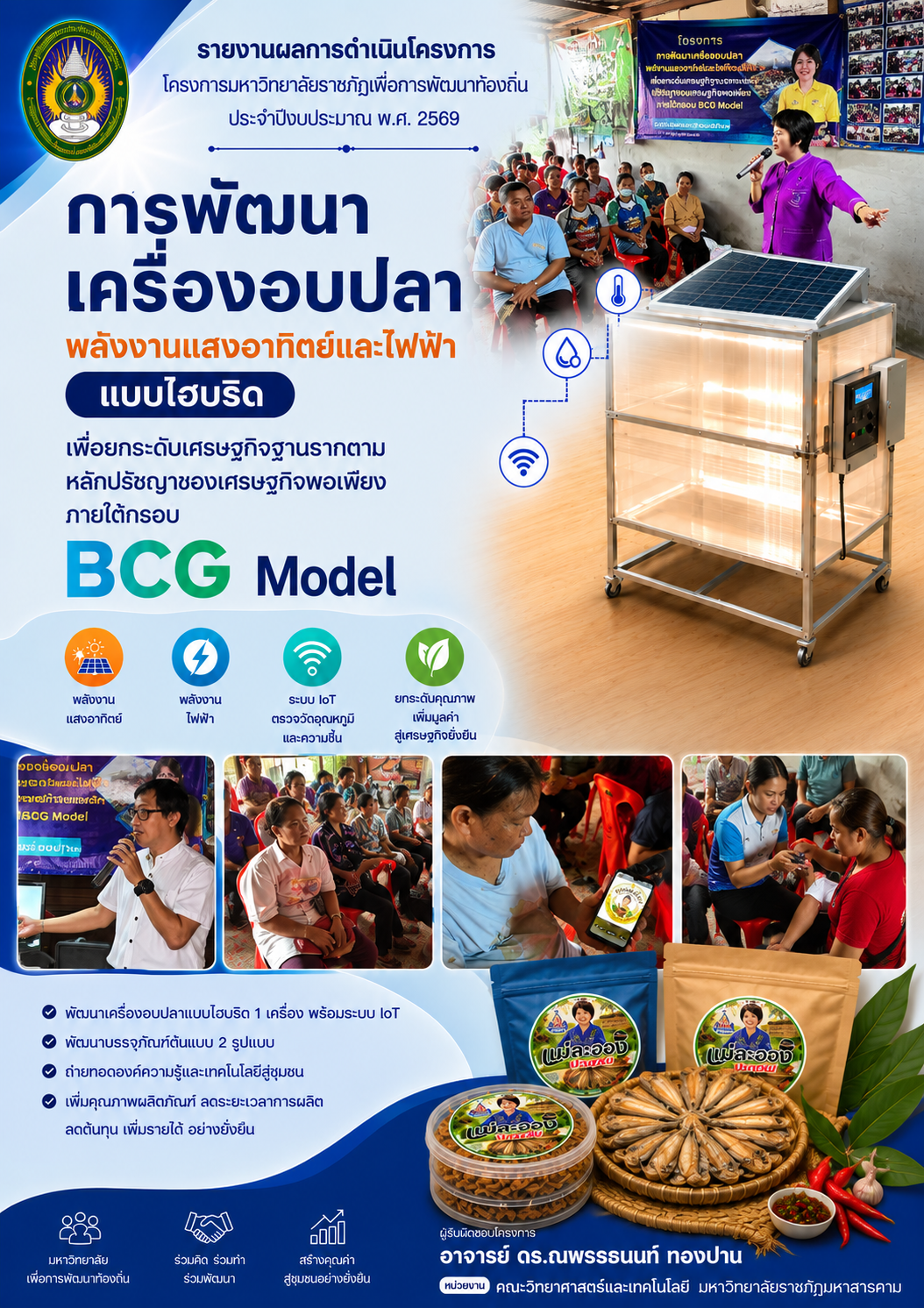
– July 31, 2026 1 ตุลาคม 2568
– 31 กรกฎาคม 2569
Part 1: Project Details ส่วนที่ 1 รายละเอียดการดำเนินงาน
Objectives วัตถุประสงค์โครงการ
### Project Objectives
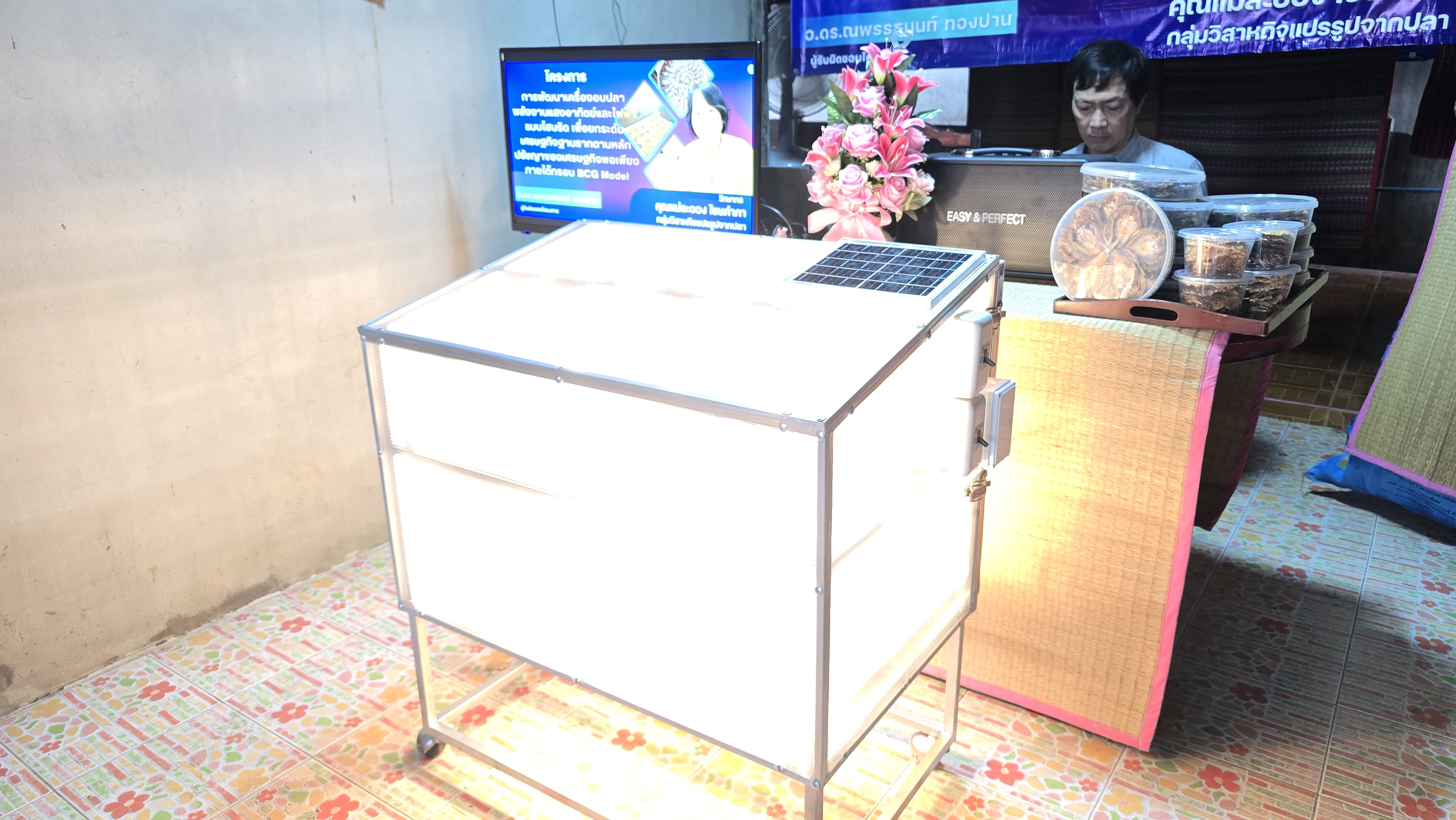
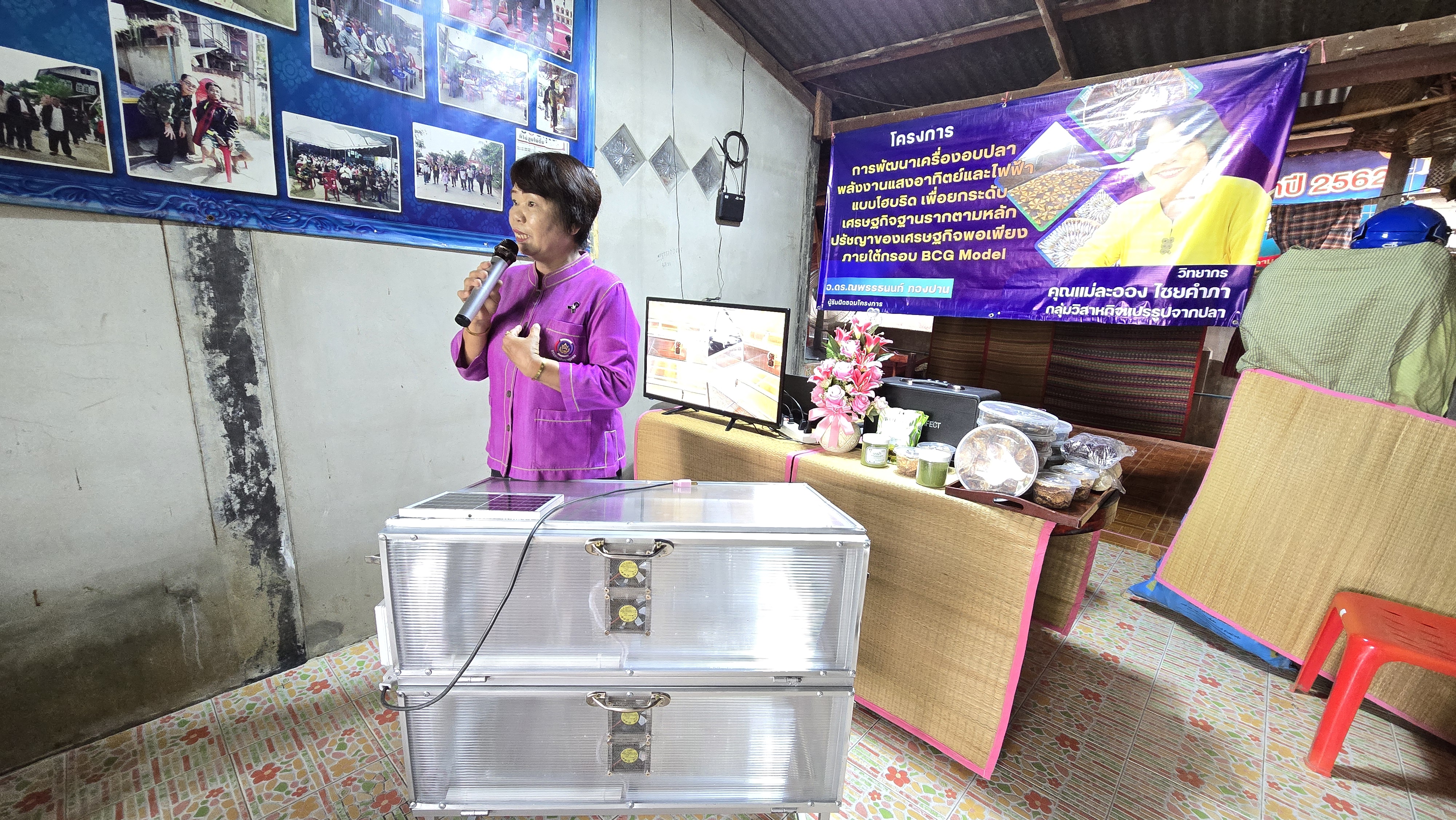
1. To design and develop a prototype hybrid fish drying system integrating solar and electrical energy, equipped with an intelligent Internet of Things (IoT) control system for real-time temperature and humidity monitoring and control, in order to overcome weather-related limitations and reduce product processing time.
2. To evaluate the operational performance of the developed system and transfer the technology to the Ban Tha Tum community, with an emphasis on improving product quality and consistency, reducing production costs, and enhancing income security within the grassroots economy in accordance with the Sufficiency Economy Philosophy and the BCG Economy Model.
3. To design a fish drying system and appropriate product packaging suited to the needs and context of the community, based on the Sufficiency Economy Philosophy, while promoting local identity under the framework of the BCG Economy Model.
4. To strengthen the technical and business management capabilities of the community in fish processing, enabling local producers to generate sustainable and recurring income.
1. เพื่อออกแบบและพัฒนาต้นแบบเครื่องอบปลาแห้งระบบไฮบริด (พลังงานแสงอาทิตย์ร่วมกับไฟฟ้า) ที่มีระบบควบคุมอัจฉริยะ (IoT) สำหรับตรวจวัดและควบคุมอุณหภูมิความชื้นแบบเรียลไทม์ เพื่อแก้ปัญหาข้อจำกัดด้านสภาพอากาศและลดระยะเวลาในการแปรรูปผลิตภัณฑ์
2. เพื่อประเมินประสิทธิภาพการใช้งานและถ่ายทอดเทคโนโลยีสู่ชุมชนบ้านท่าตูม มุ่งเน้นการยกระดับคุณภาพผลิตภัณฑ์ให้ได้มาตรฐานสม่ำเสมอ ลดต้นทุนการผลิต และสร้างความมั่นคงทางรายได้ให้กับเศรษฐกิจฐานรากตามหลักปรัชญาของเศรษฐกิจพอเพียงและโมเดล BCG
3. เพื่อออกแบบเครื่องอบและบรรจุภัณฑ์ที่เหมาะสมกับชุมชน โดยยึดหลักปรัชญาของเศรษฐกิจพอเพียง และสนับสนุนเอกลักษณ์ท้องถิ่นภายใต้กรอบ BCG Model
4. เพื่อเสริมสร้างศักยภาพชุมชนด้านเทคนิคและการจัดการธุรกิจแปรรูปปลาให้สามารถสร้างรายได้หมุนเวียนอย่างยั่งยืน
Main Activities กิจกรรมหลัก
### Upstream: Technology Development and Product Preparation
1. **Design and Development of an Innovative Hybrid Fish Drying System**
Design and develop a hybrid fish drying system integrating solar and electrical energy with appropriate technology for community-based fish processing.
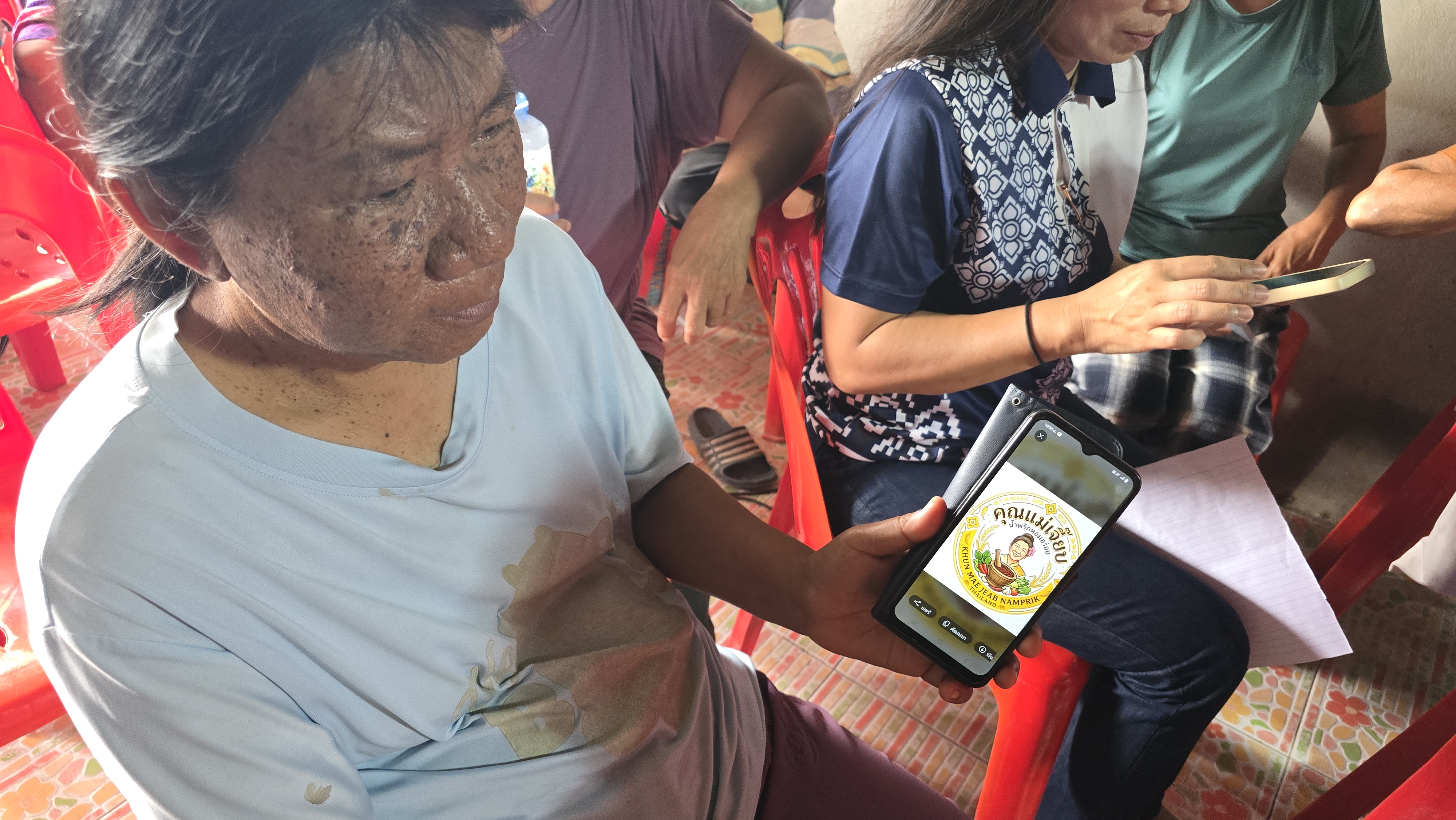
2. **Development of Product Identity and Prototype Packaging**
Develop a distinctive product identity and design prototype packaging that reflects the local identity of the Ban Tha Tum community and aligns with the BCG Economy Model.
### Midstream: Technology Transfer and Production Standards
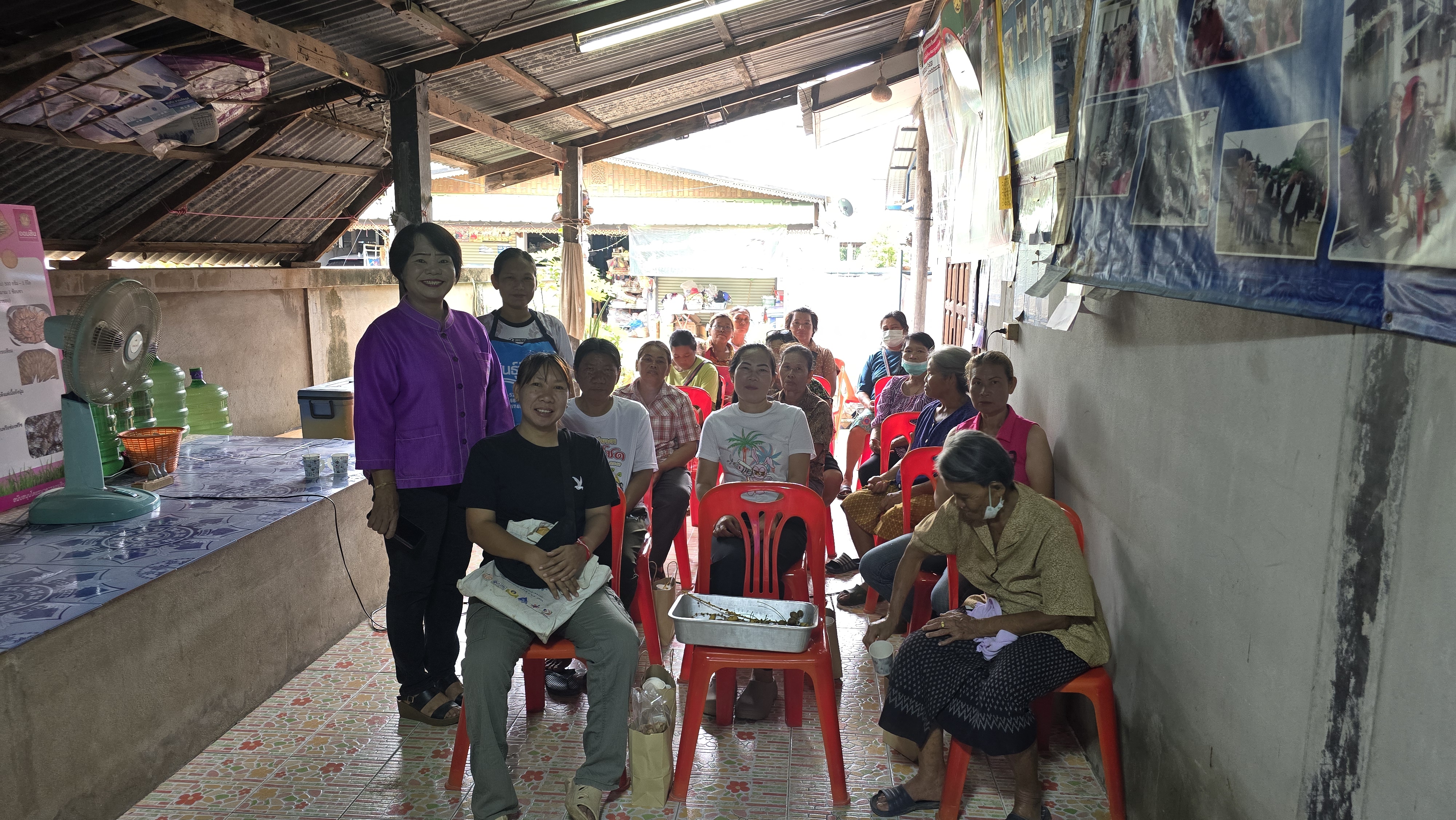
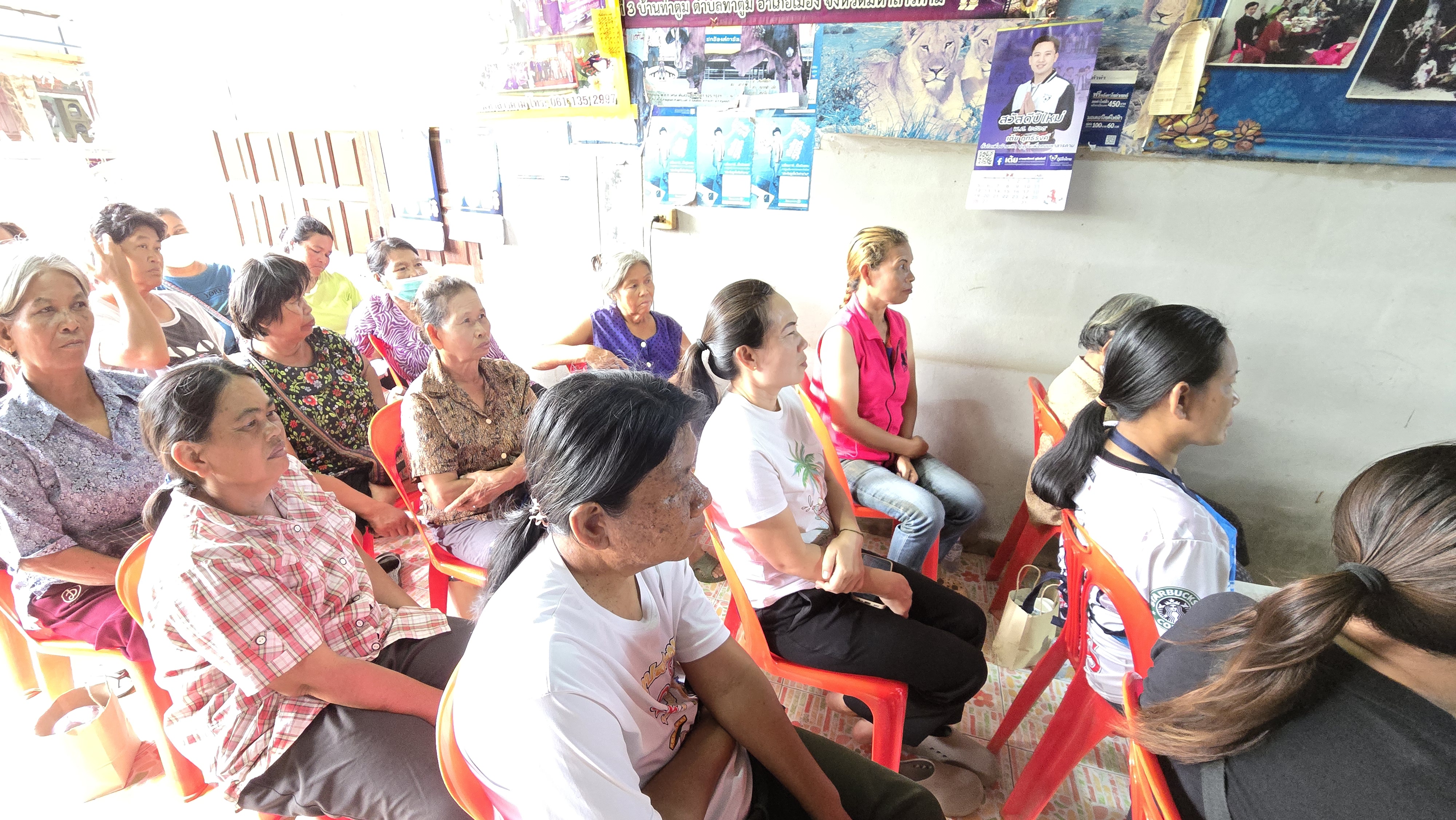
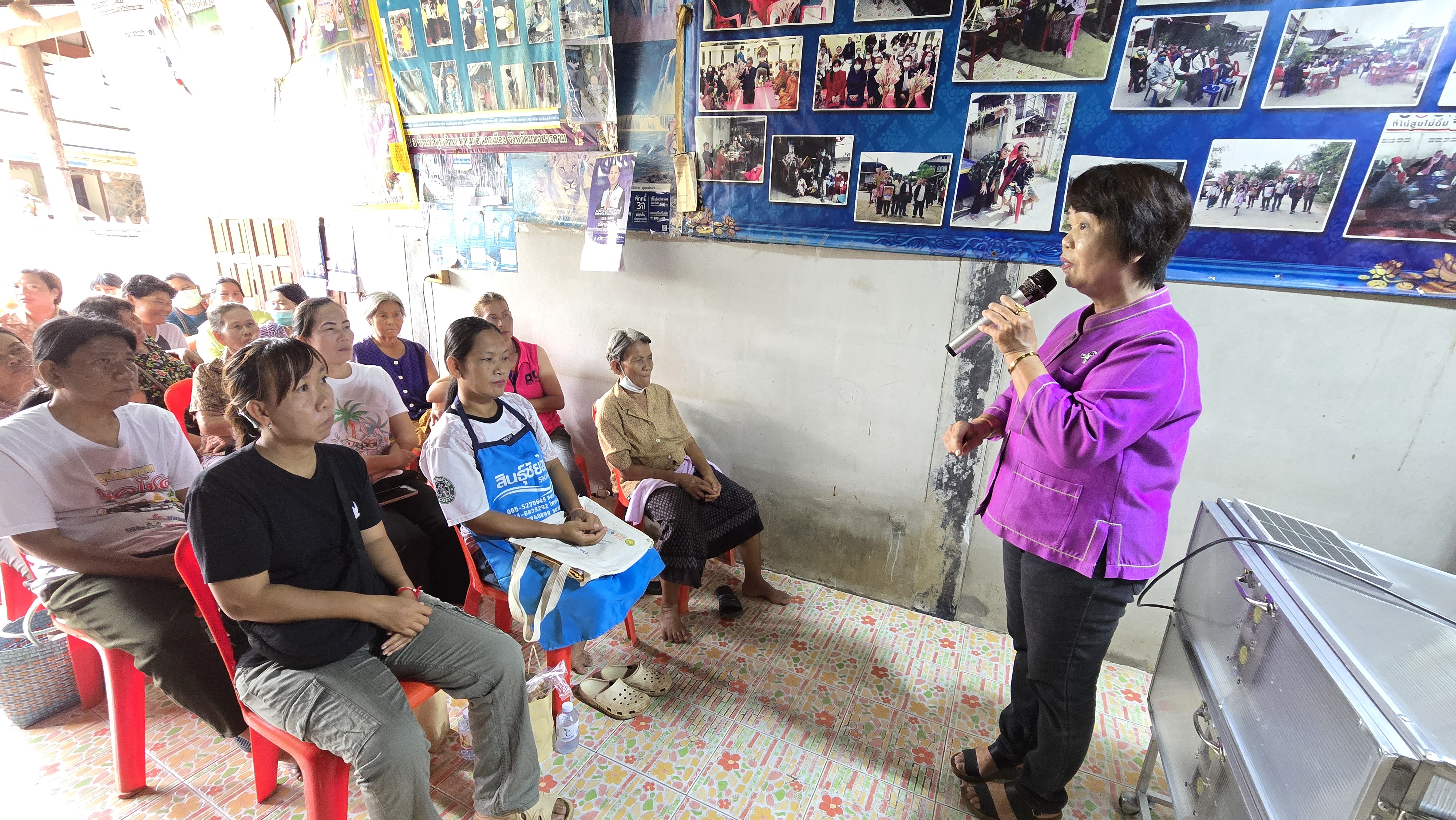
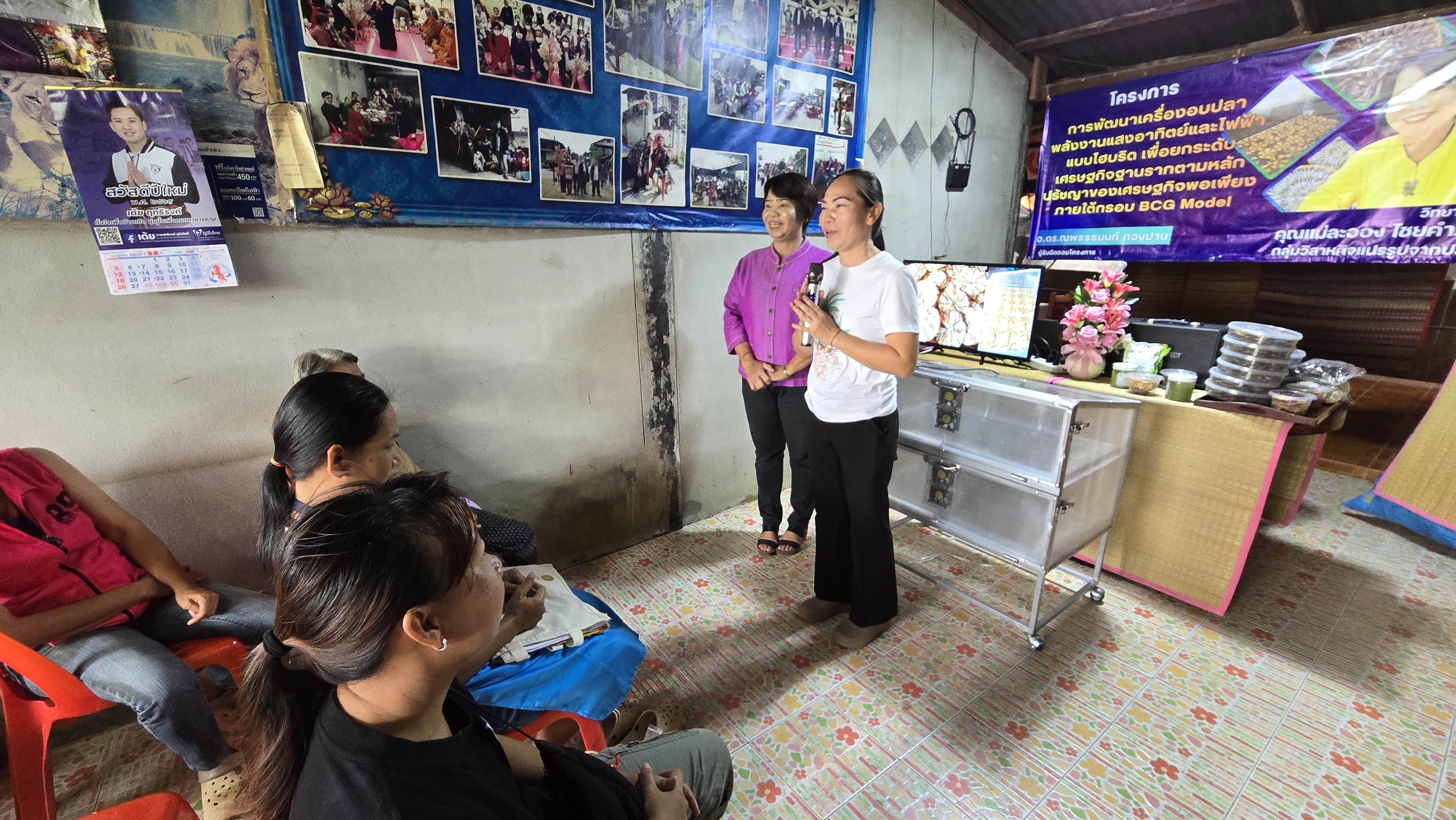
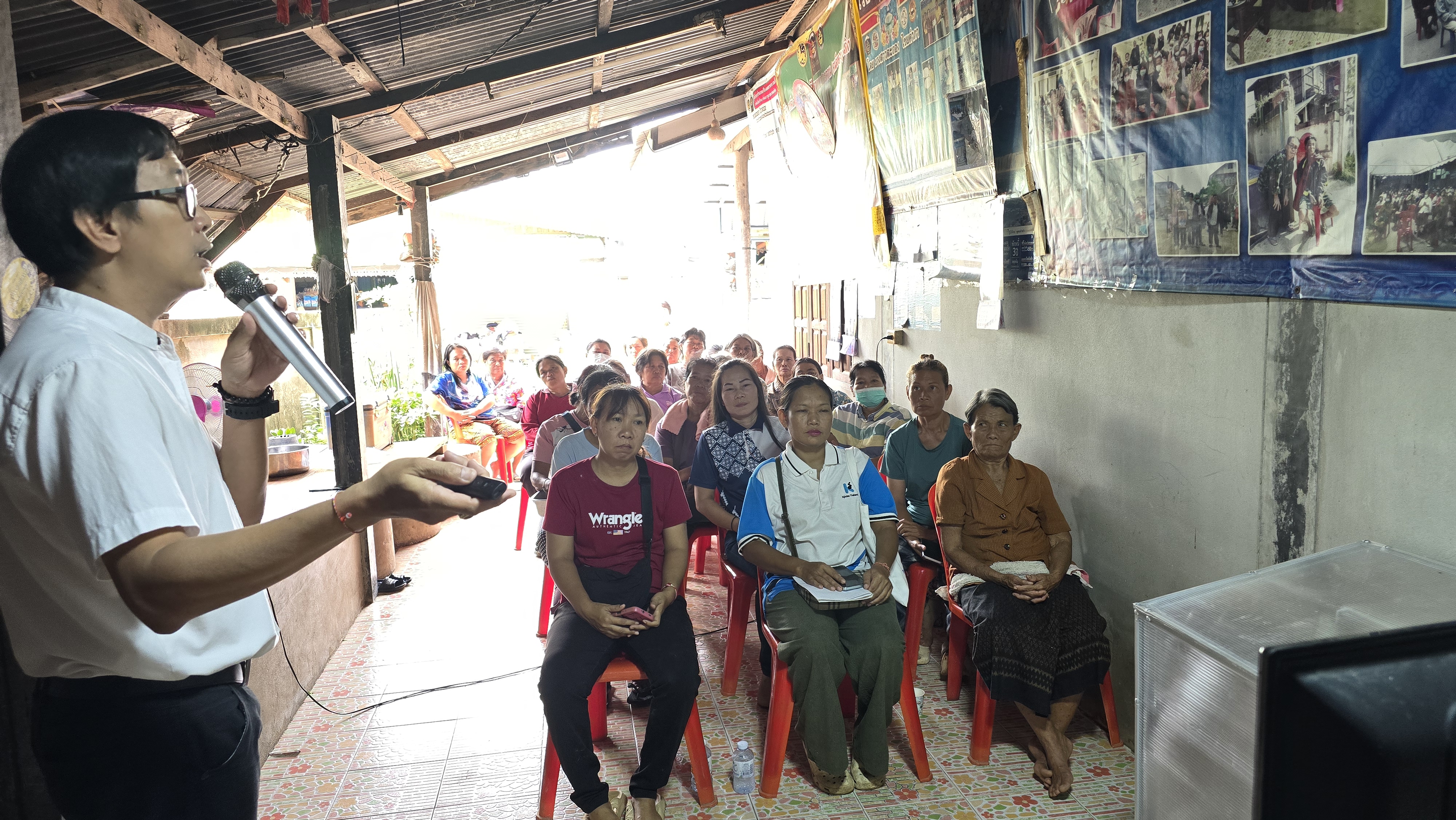
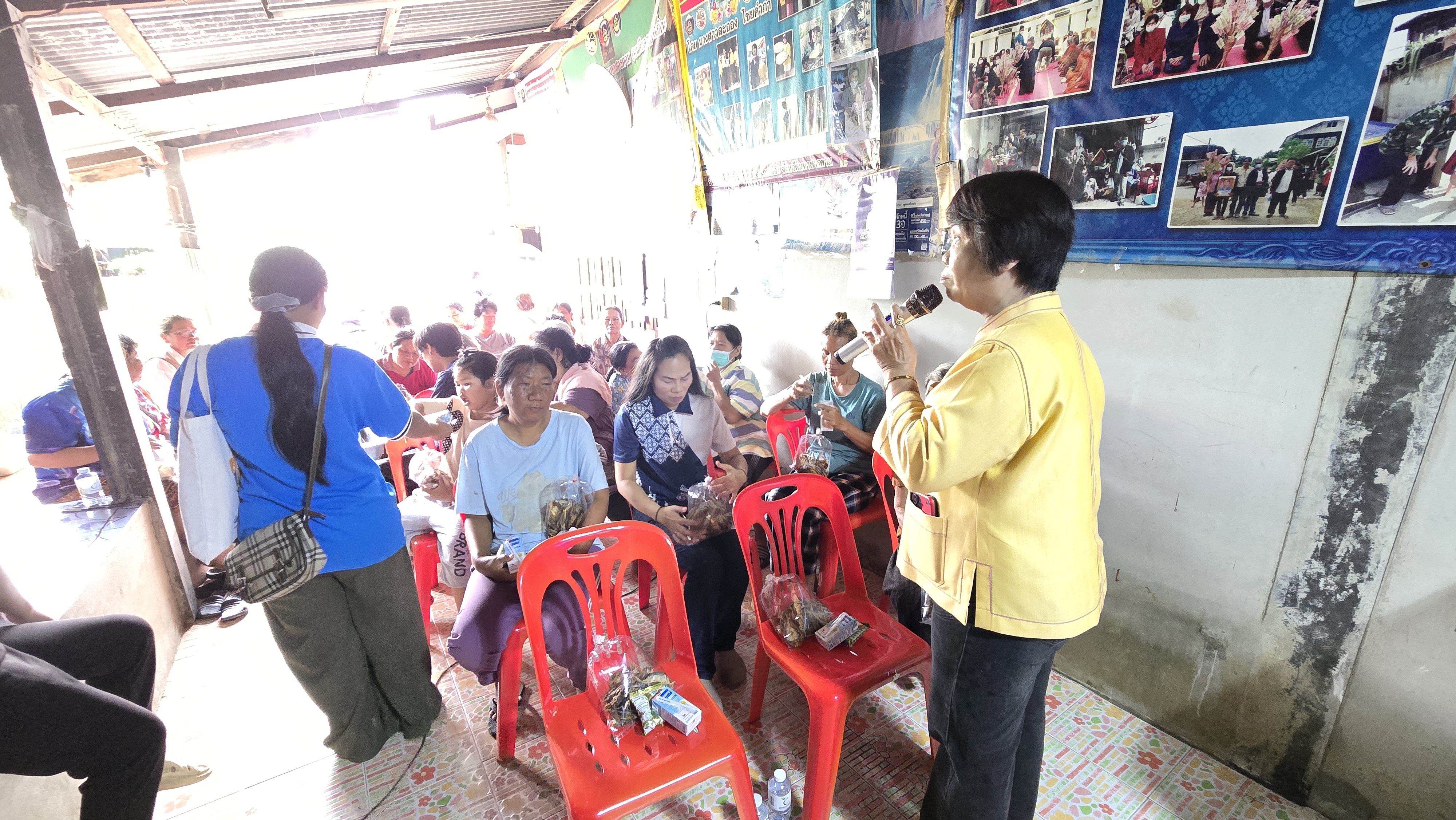
3. **Practical Workshop on “Enhancing Sun-Dried Fish Production through Hybrid Drying Innovation”**
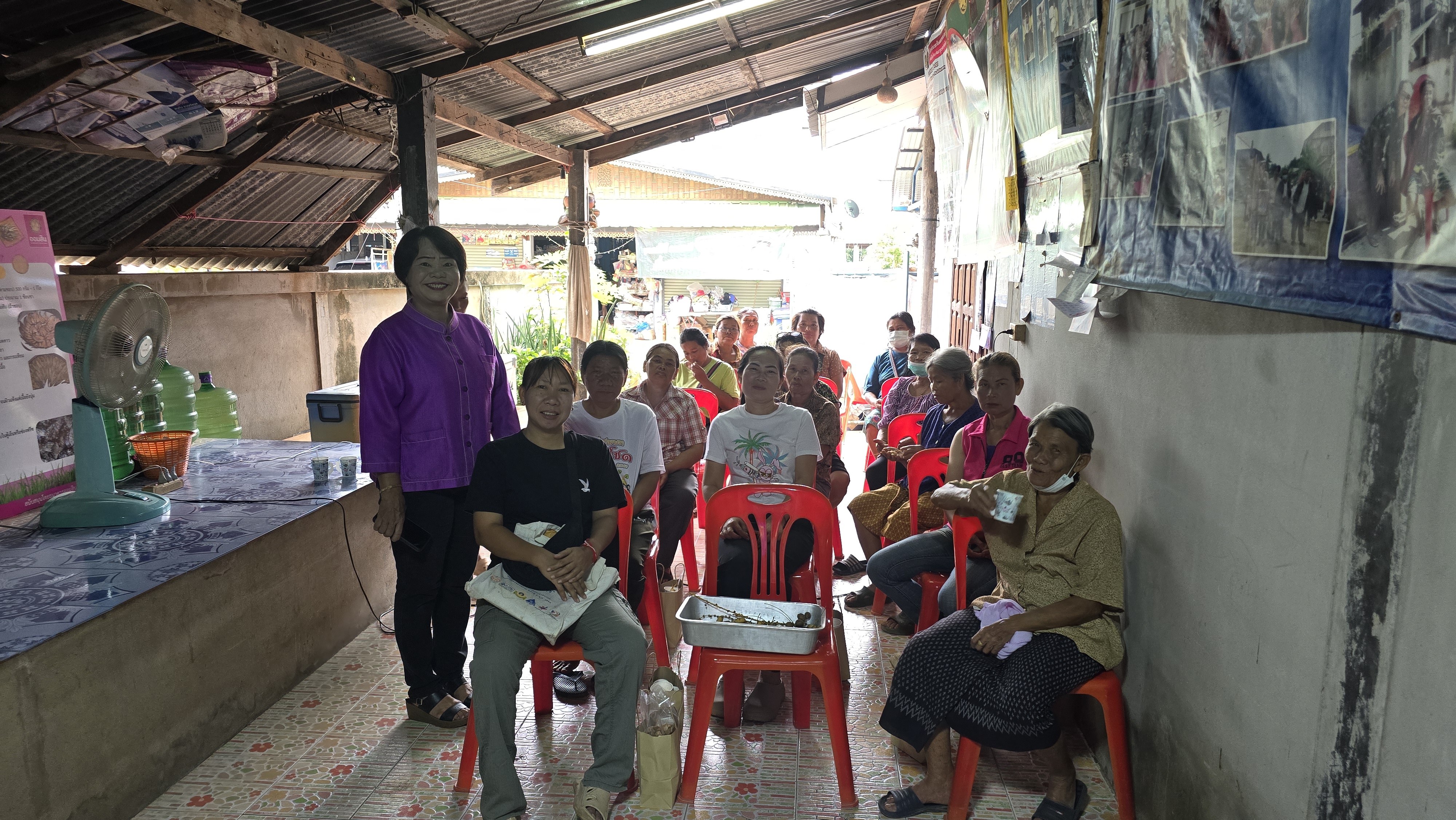
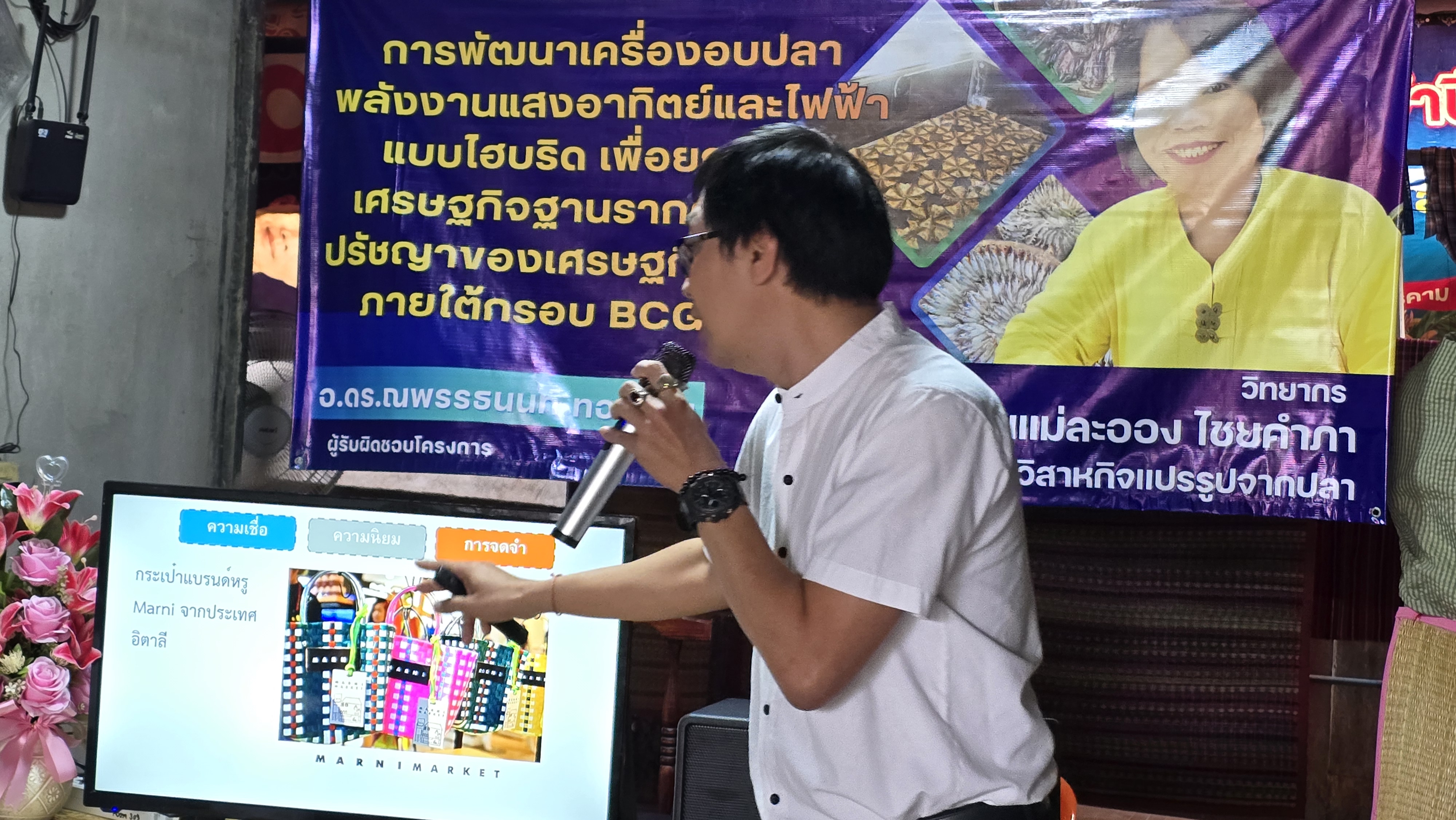
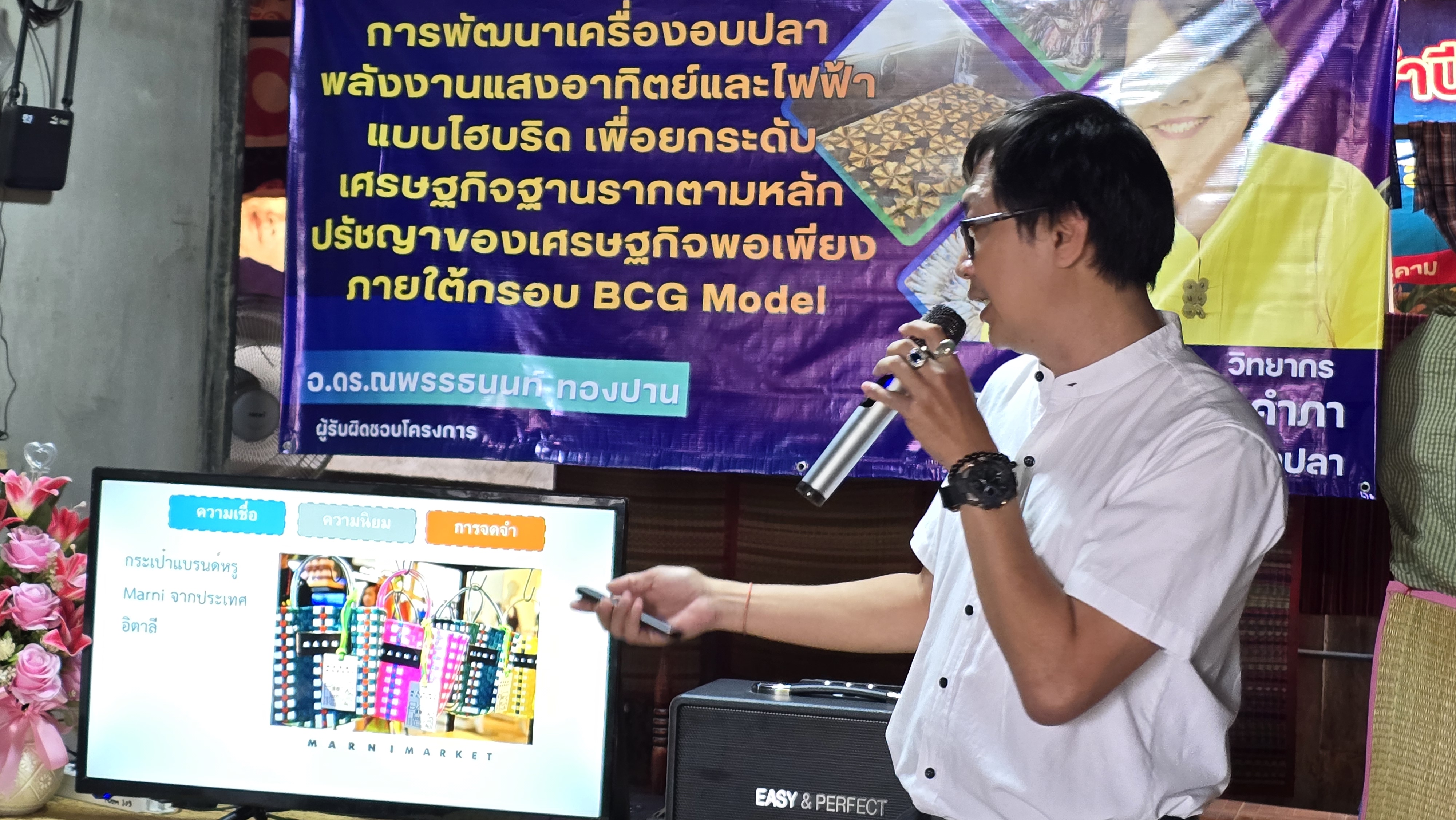
Conduct a hands-on workshop to transfer knowledge and technology related to the operation of the hybrid fish drying system, production processes, quality control, hygiene, and standardized fish processing practices.
### Downstream: Marketing and Product Distribution
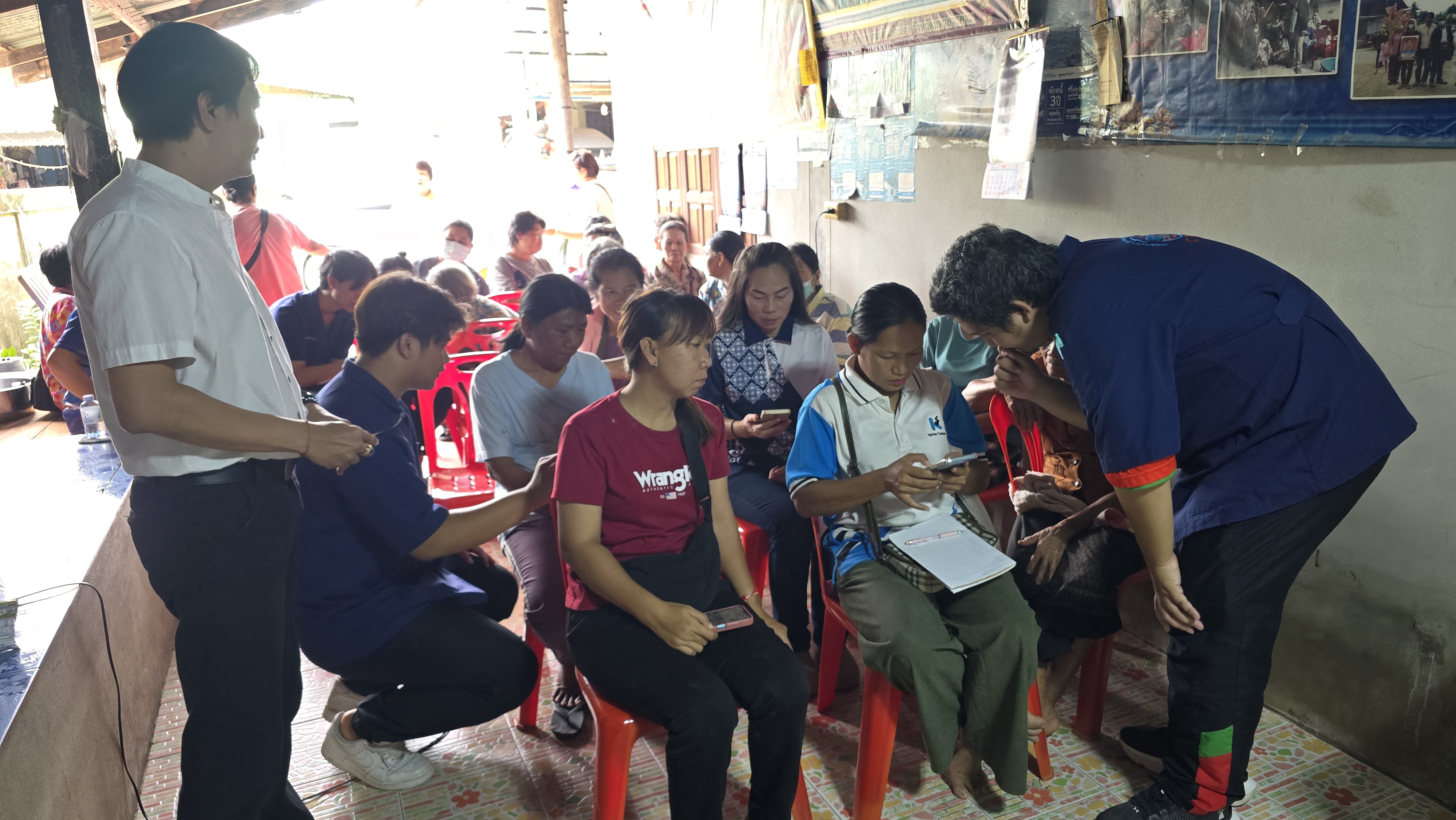
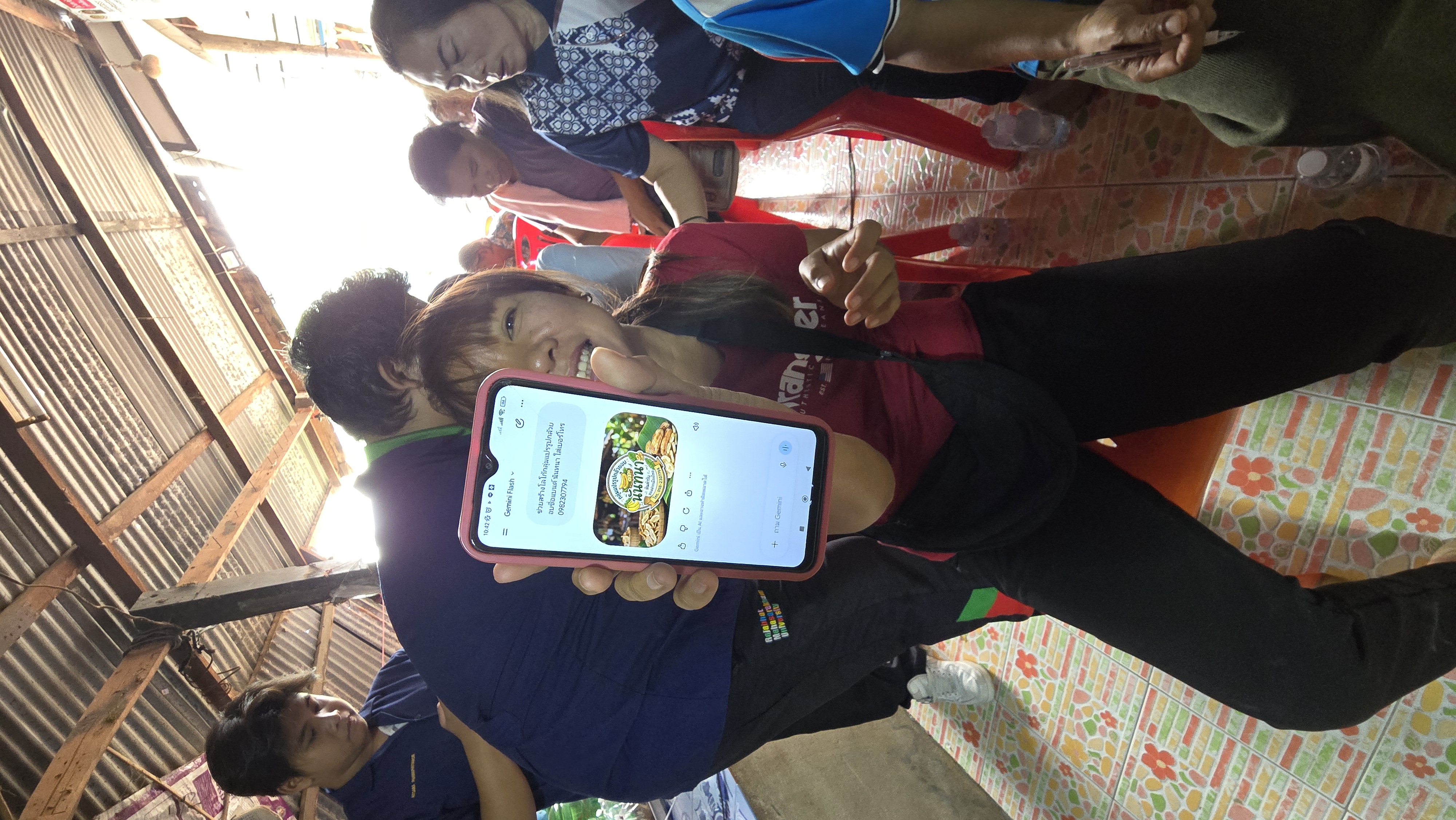
4. **Knowledge Transfer on Online Marketing and Product Photography**
Provide training on digital and online marketing, product photography, content creation, and the effective use of online platforms to promote and market community products.
5. **Pilot Sales of Products Produced Using the Hybrid Fish Drying System through Online and Offline Markets**
Conduct pilot sales of processed fish products produced using the developed hybrid drying system through both online and offline distribution channels to assess market acceptance and create income-generating opportunities for the community.
ต้นน้ำ การพัฒนาเทคโนโลยีและเตรียมความพร้อมผลิตภัณฑ์
1. การออกแบบและสร้างนวัตกรรมเครื่องอบปลาไฮบริด
2. การพัฒนาอัตลักษณ์และผลิตบรรจุภัณฑ์ต้นแบบ
กลางน้ำ การถ่ายทอดเทคโนโลยีและมาตรฐานการผลิต
1. การอบรมเชิงปฏิบัติการ “การยกระดับการผลิตปลาแดดเดียวด้วยนวัตกรรมไฮบริด”
ปลายน้ำ การตลาดและจำหน่ายผลิตภัณฑ์
1. ถ่ายทอดความรู้ด้านการตลาดออนไลน์และการถ่ายภาพสินค้า
2. ทดลองจำหน่ายผลิตภัณฑ์ที่ได้จากเครื่องอบผ่านตลาดออนไลน์/ออฟไลน์
Part 2: Outcomes & Impact ส่วนที่ 2 ผลลัพธ์และผลกระทบ
Outcomes ผลลัพธ์ที่เกิดขึ้น
### Outcomes
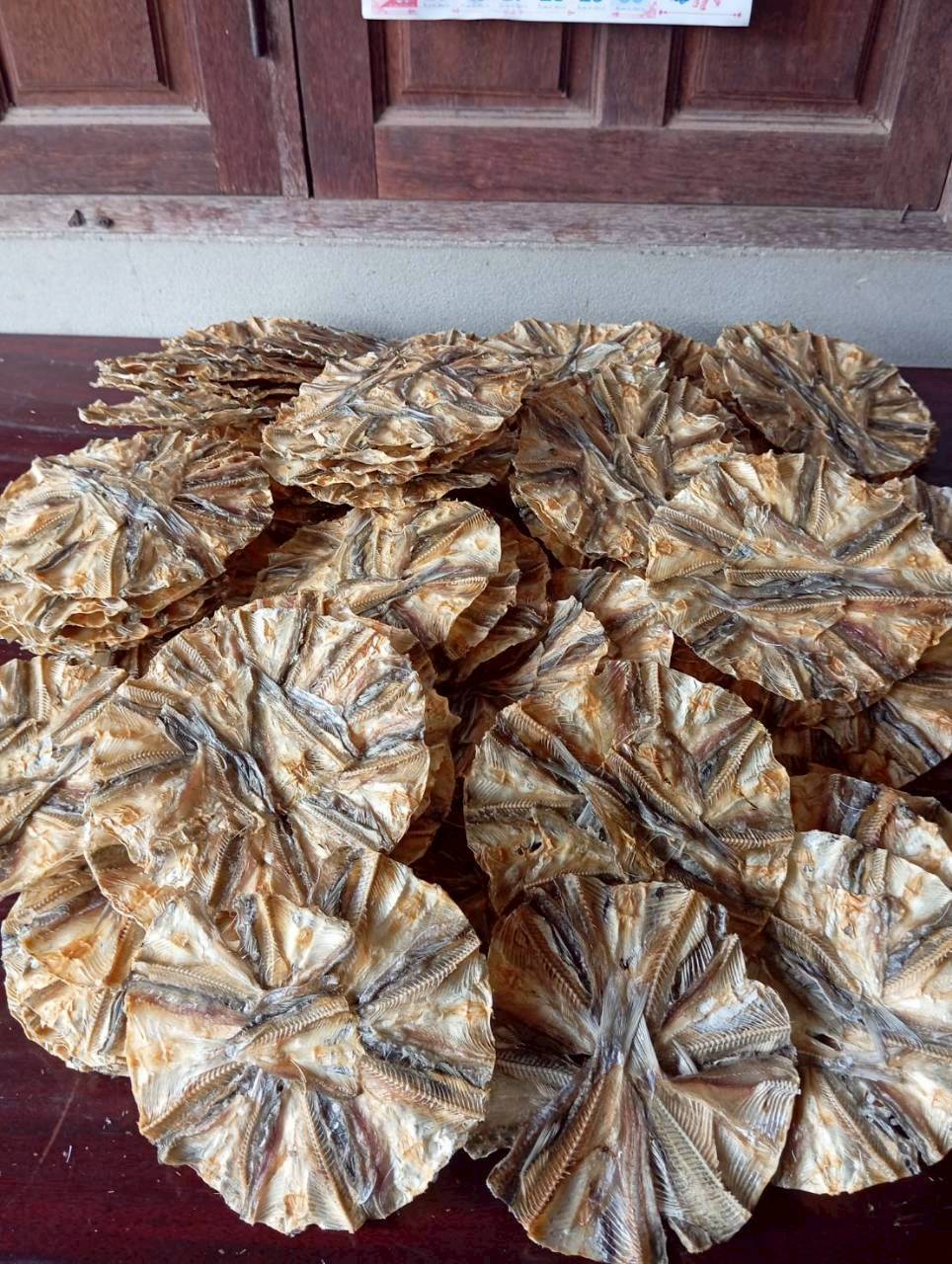
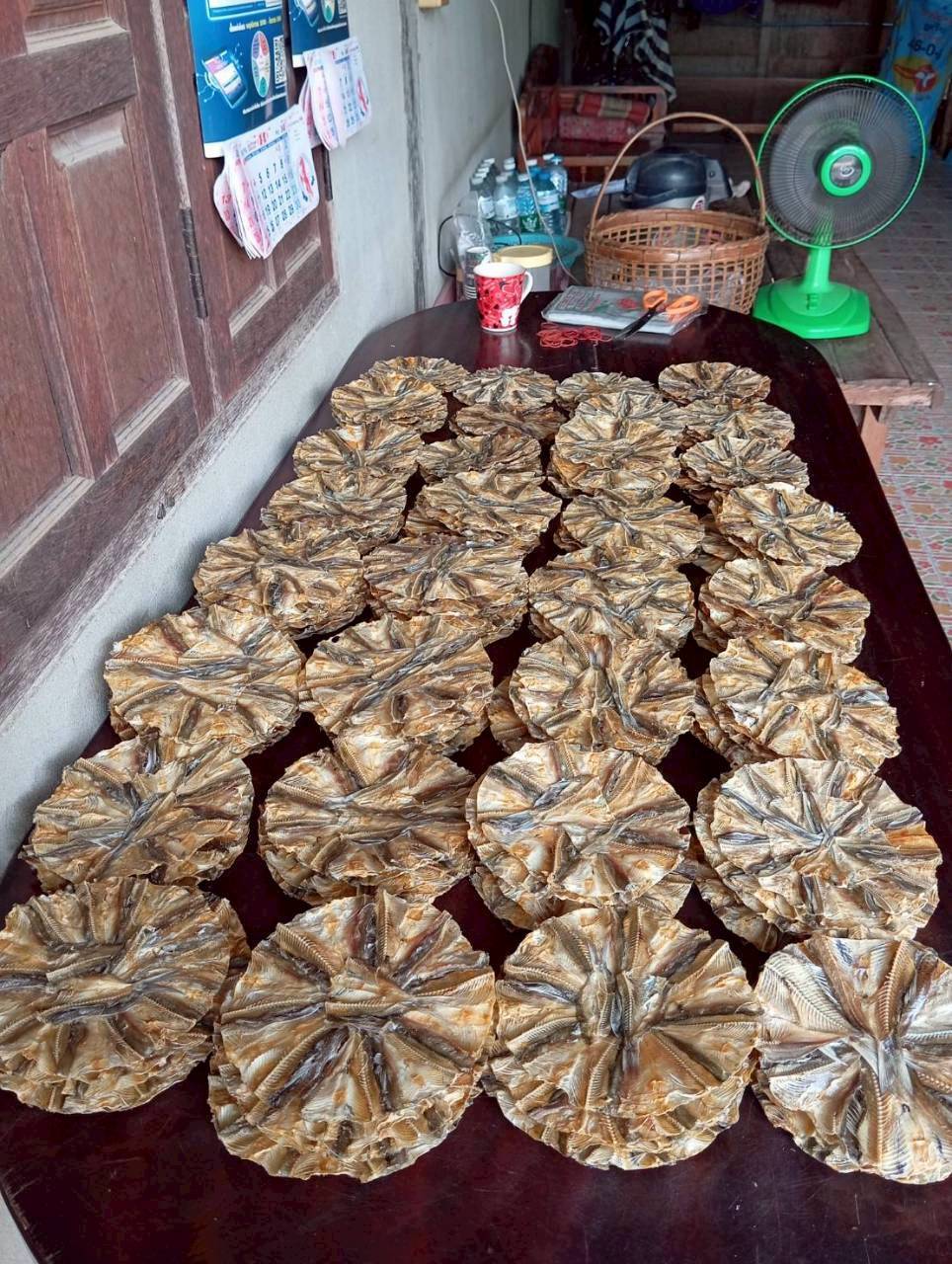
1. The community is able to produce **high-quality dried fish products that meet consistent quality standards**, with improved shelf life and enhanced food safety.
2. The community achieves an **increase in income of at least 20%** from the production and sales of processed fish products.
3. A **grassroots business model** is established that aligns with the **Sufficiency Economy Philosophy and the BCG Economy Model**, providing a foundation for sustainable community-based production, marketing, and income generation.
1. ชุมชนสามารถผลิตปลาอบคุณภาพสูงได้มาตรฐาน เพิ่มอายุการเก็บรักษาและความปลอดภัยของอาหาร
2. ชุมชนมีรายได้เพิ่มขึ้นจากการจำหน่ายผลิตภัณฑ์แปรรูปปลาอย่างน้อย 20%
3. เกิดต้นแบบธุรกิจฐานรากที่สอดคล้องกับหลักเศรษฐกิจพอเพียงและ BCG Model
Community & Social Impact ผลกระทบต่อชุมชน/สังคม
1. The community has access to **fish processing technology** that helps overcome weather-related limitations, reduce processing time, and improve the consistency and overall quality of processed fish products.
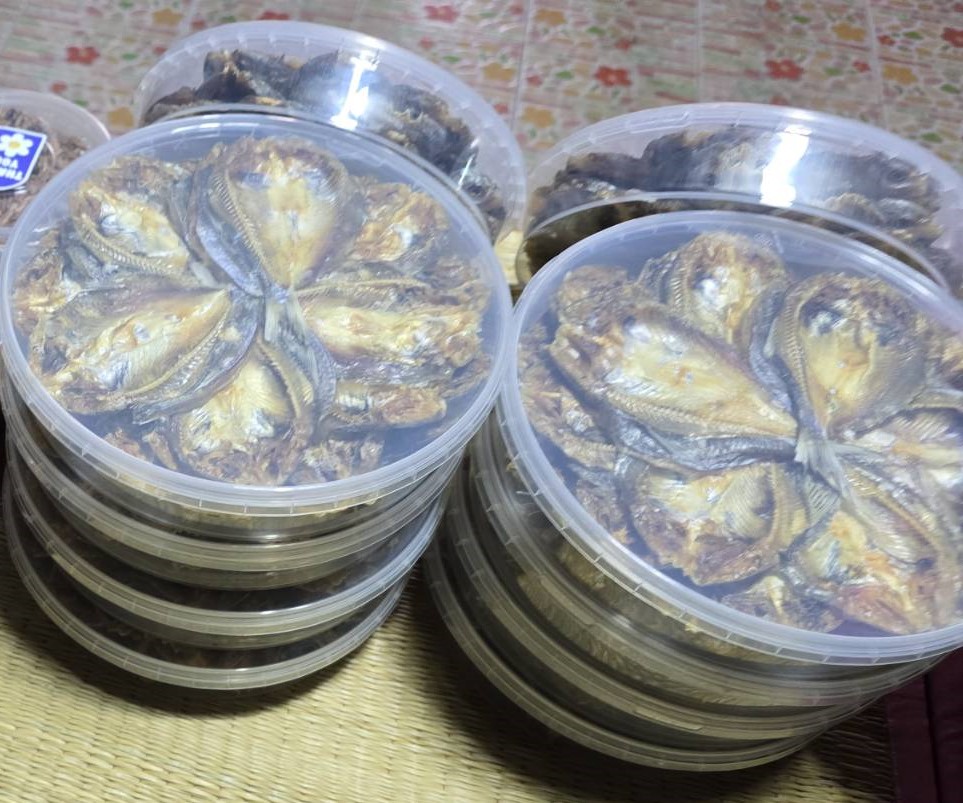
2. The community is able to **increase the value of processed fish products** through improvements in product quality, packaging, product identity, and marketing channels.
3. The community’s capacity for **self-reliance is strengthened** through reduced production costs and processing losses, together with the adoption of renewable energy in accordance with the **Sufficiency Economy Philosophy and the BCG Economy Model**.
1. ชุมชนมีเทคโนโลยีสำหรับการแปรรูปปลาที่ช่วยลดข้อจำกัดจากสภาพอากาศ ลดระยะเวลาการผลิต และช่วยให้ผลิตภัณฑ์มีคุณภาพสม่ำเสมอมากขึ้น
2. ชุมชนสามารถเพิ่มมูลค่าผลิตภัณฑ์แปรรูปจากปลา ผ่านการพัฒนาคุณภาพ บรรจุภัณฑ์ อัตลักษณ์ผลิตภัณฑ์ และช่องทางการตลาด
3. ชุมชนได้รับการเสริมสร้างศักยภาพในการพึ่งพาตนเอง ลดต้นทุนและการสูญเสียจากกระบวนการผลิต และนำพลังงานทดแทนมาใช้ตามแนวทางเศรษฐกิจพอเพียงและ BCG Model
Student & Staff Participation การมีส่วนร่วมของนักศึกษา/บุคลากร
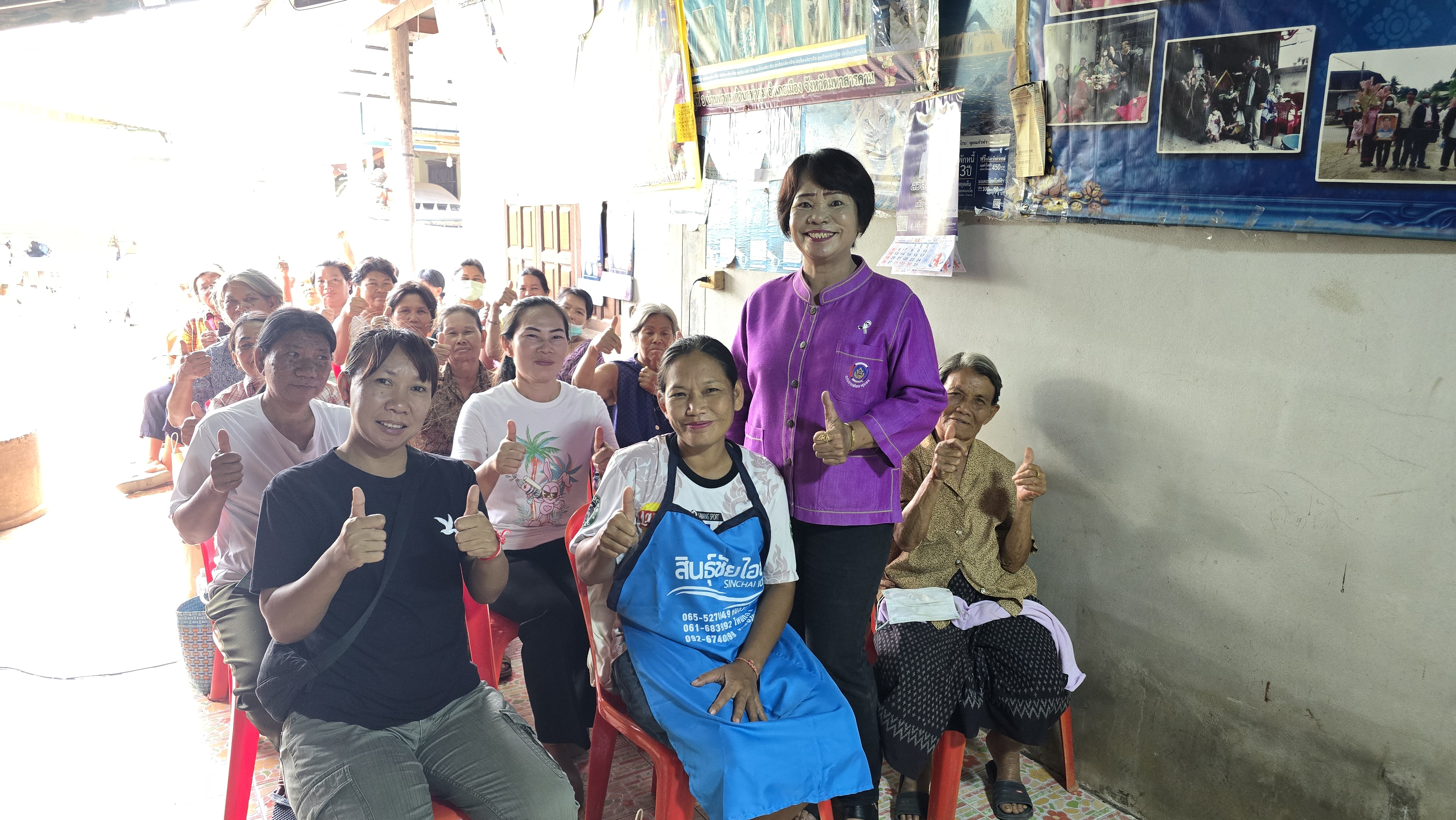
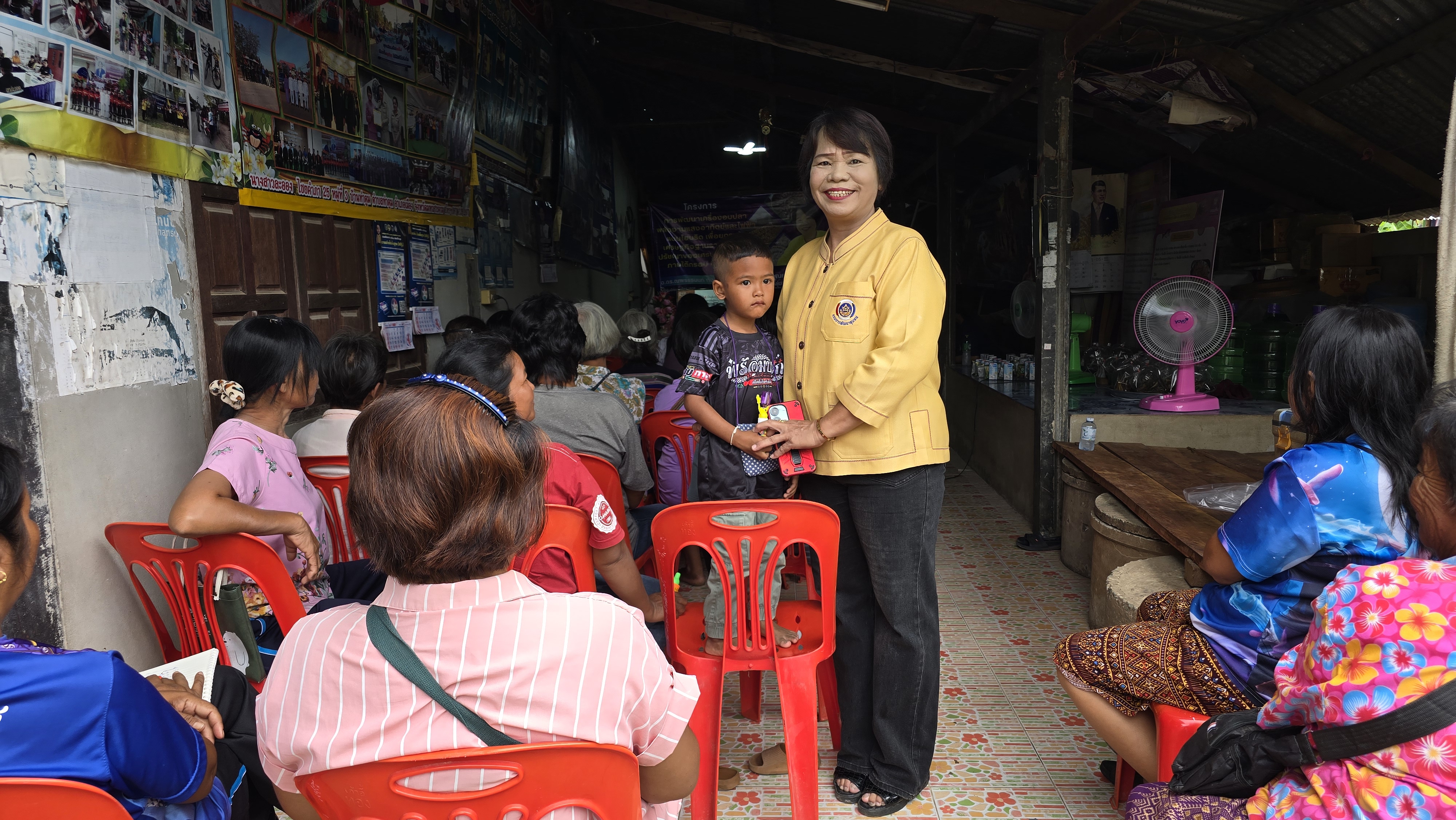
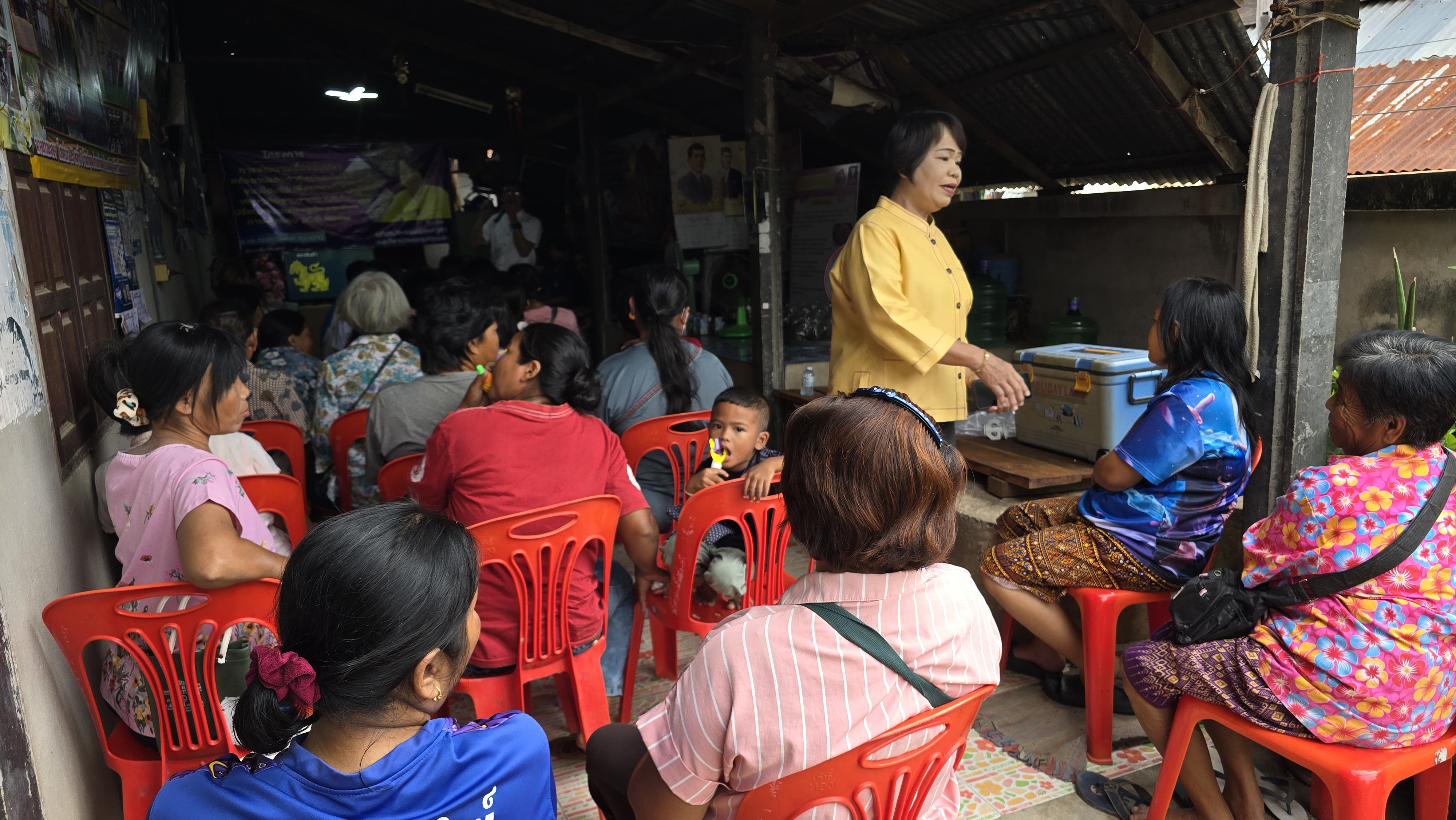
Students and staff actively participated in the project with the local community, including needs assessment, design and development of the hybrid solar-electric fish dryer, system testing and improvement, as well as knowledge transfer in technology, product development, packaging, and marketing. The activities enabled students and staff to apply academic knowledge to real-world community problems and promoted collaborative learning between the university and the community. โครงการเปิดโอกาสให้นักศึกษาและบุคลากรมีส่วนร่วมในการดำเนินงานร่วมกับชุมชน ตั้งแต่การศึกษาปัญหาและความต้องการ การออกแบบและพัฒนาเครื่องอบปลาพลังงานแสงอาทิตย์และไฟฟ้าแบบไฮบริด การทดสอบและปรับปรุงประสิทธิภาพ ตลอดจนการถ่ายทอดองค์ความรู้ด้านเทคโนโลยี การพัฒนาผลิตภัณฑ์ บรรจุภัณฑ์ และการตลาดให้แก่กลุ่มชุมชน ส่งผลให้นักศึกษาและบุคลากรได้ประยุกต์ใช้องค์ความรู้ในการแก้ปัญหาจริง และเกิดการเรียนรู้ร่วมกันระหว่างมหาวิทยาลัยกับชุมชน
Project Continuity ความต่อเนื่องของโครงการ
The project is designed for continuity by transferring the fish-drying technology and relevant knowledge to the community for practical use. Further activities will focus on improving product quality, packaging, and marketing channels. Follow-up monitoring will assess dryer performance, production efficiency, costs, income, and operational issues for further improvement. The project can also be extended to academic services, teaching and learning, and community-based research to strengthen local capacity and promote sustainable self-reliance. โครงการมีแนวทางดำเนินงานต่อเนื่องโดยส่งมอบเครื่องอบปลาและองค์ความรู้ให้ชุมชนสามารถนำไปใช้ในการผลิตจริง พร้อมส่งเสริมการพัฒนาคุณภาพผลิตภัณฑ์ บรรจุภัณฑ์ และช่องทางการตลาดอย่างต่อเนื่อง ในระยะต่อไปจะมีการติดตามผลการใช้งานเครื่องอบ ประสิทธิภาพการผลิต ต้นทุน รายได้ และปัญหาที่เกิดขึ้น เพื่อนำข้อมูลมาปรับปรุงเทคโนโลยีและกระบวนการผลิต รวมทั้งสามารถต่อยอดเป็นกิจกรรมบริการวิชาการ การเรียนการสอน และการวิจัยร่วมกับชุมชน เพื่อสร้างความเข้มแข็งและการพึ่งพาตนเองอย่างยั่งยืน
Part 3: Challenges & Suggestions ส่วนที่ 3 ปัญหาอุปสรรค/ข้อเสนอแนะ
Problems & Obstacles ปัญหา/อุปสรรค
### Problems and Limitations
The project implementation encountered limitations related to weather conditions and variations in solar irradiance at different times of the day, which affected the efficiency and stability of the solar energy system. In addition, during the initial stage, some participants were unfamiliar with the operation of the IoT system and the configuration of the hybrid fish dryer. Therefore, additional time was required for hands-on training and repeated practical trials to develop their operational skills and confidence.
Furthermore, maintaining appropriate temperature and humidity levels for different sizes and quantities of fish required adjustments to the system parameters to ensure optimal conditions for actual production. These adjustments were necessary to improve drying efficiency, maintain consistent product quality, and ensure that the developed system was suitable for practical application within the community.
การดำเนินโครงการพบข้อจำกัดด้านสภาพอากาศและความเข้มของแสงอาทิตย์ที่เปลี่ยนแปลงในแต่ละช่วงเวลา ส่งผลต่อประสิทธิภาพของระบบพลังงานแสงอาทิตย์ นอกจากนี้ ในระยะแรกผู้เข้าร่วมบางส่วนยังขาดความคุ้นเคยกับการใช้งานระบบ IoT และการตั้งค่าการทำงานของเครื่องอบ จึงต้องใช้เวลาในการฝึกปฏิบัติและทดลองใช้งานหลายครั้ง อีกทั้งการควบคุมอุณหภูมิและความชื้นให้เหมาะสมกับขนาดและปริมาณปลาที่แตกต่างกันจำเป็นต้องมีการปรับค่าระบบให้เหมาะสมกับการผลิตจริง
Improvement Guidelines แนวทางการปรับปรุง
### Solutions and Improvements
The control system of the hybrid fish dryer was improved to enable appropriate switching between solar and electrical energy sources according to operating conditions. Practical trials were conducted to establish standard operating parameters for temperature, humidity, and drying duration to ensure efficient and consistent performance under actual production conditions.
A user-friendly operation manual was also developed, and repeated hands-on training sessions were provided to the user group to strengthen their practical skills and confidence in operating the system. In addition, designated community members were assigned as local technology coordinators to oversee the system, conduct routine inspections, and perform basic troubleshooting independently. This approach aims to enhance the community’s capacity for self-reliance and ensure the sustainable use and maintenance of the developed technology.
ดำเนินการปรับปรุงระบบควบคุมเครื่องอบให้สามารถสลับการใช้พลังงานแสงอาทิตย์และพลังงานไฟฟ้าได้อย่างเหมาะสม พร้อมทดลองและกำหนดค่ามาตรฐานด้านอุณหภูมิ ความชื้น และระยะเวลาการอบสำหรับการใช้งานจริง จัดทำคู่มือการใช้งานระบบที่เข้าใจง่าย และฝึกปฏิบัติซ้ำให้แก่กลุ่มผู้ใช้งาน พร้อมทั้งกำหนดผู้รับผิดชอบหรือแกนนำด้านเทคโนโลยีภายในชุมชน เพื่อให้สามารถดูแล ตรวจสอบ และแก้ไขปัญหาเบื้องต้นได้ด้วยตนเอง
Suggestions to University ข้อเสนอแนะต่อมหาวิทยาลัย
### Recommendations
Continuous monitoring and evaluation of the hybrid fish drying system and IoT system should be conducted to collect long-term data on production efficiency, energy costs, product quality, and community income. The IoT system should also be further developed to enable historical data recording, storage, and analysis, which would support production planning, performance evaluation, and continuous improvement of the drying process.
In addition, efforts should be made to support the processed fish products in meeting relevant quality and food safety standards. Further development of packaging, product identity, and online marketing channels should also be promoted to increase product value and expand market opportunities.
Furthermore, the developed prototype and implementation model should be scaled up and transferred to other community enterprises or communities with similar contexts. This would contribute to the wider adoption of appropriate technology, strengthen grassroots economies, and promote sustainable development in accordance with the Sufficiency Economy Philosophy and the BCG Economy Model.
ควรมีการติดตามผลการใช้งานเครื่องอบปลาไฮบริดและระบบ IoT อย่างต่อเนื่อง เพื่อรวบรวมข้อมูลประสิทธิภาพการผลิต ต้นทุนพลังงาน คุณภาพผลิตภัณฑ์ และรายได้ของชุมชนในระยะยาว รวมทั้งควรพัฒนาระบบ IoT ให้สามารถบันทึกและวิเคราะห์ข้อมูลย้อนหลังได้ ส่งเสริมการพัฒนาผลิตภัณฑ์ให้เข้าสู่มาตรฐานที่เกี่ยวข้อง และพัฒนาบรรจุภัณฑ์และช่องทางการตลาดออนไลน์เพิ่มเติม เพื่อเพิ่มมูลค่าและขยายตลาด ตลอดจนควรนำต้นแบบไปขยายผลสู่กลุ่มวิสาหกิจหรือชุมชนอื่นที่มีบริบทใกล้เคียงกัน