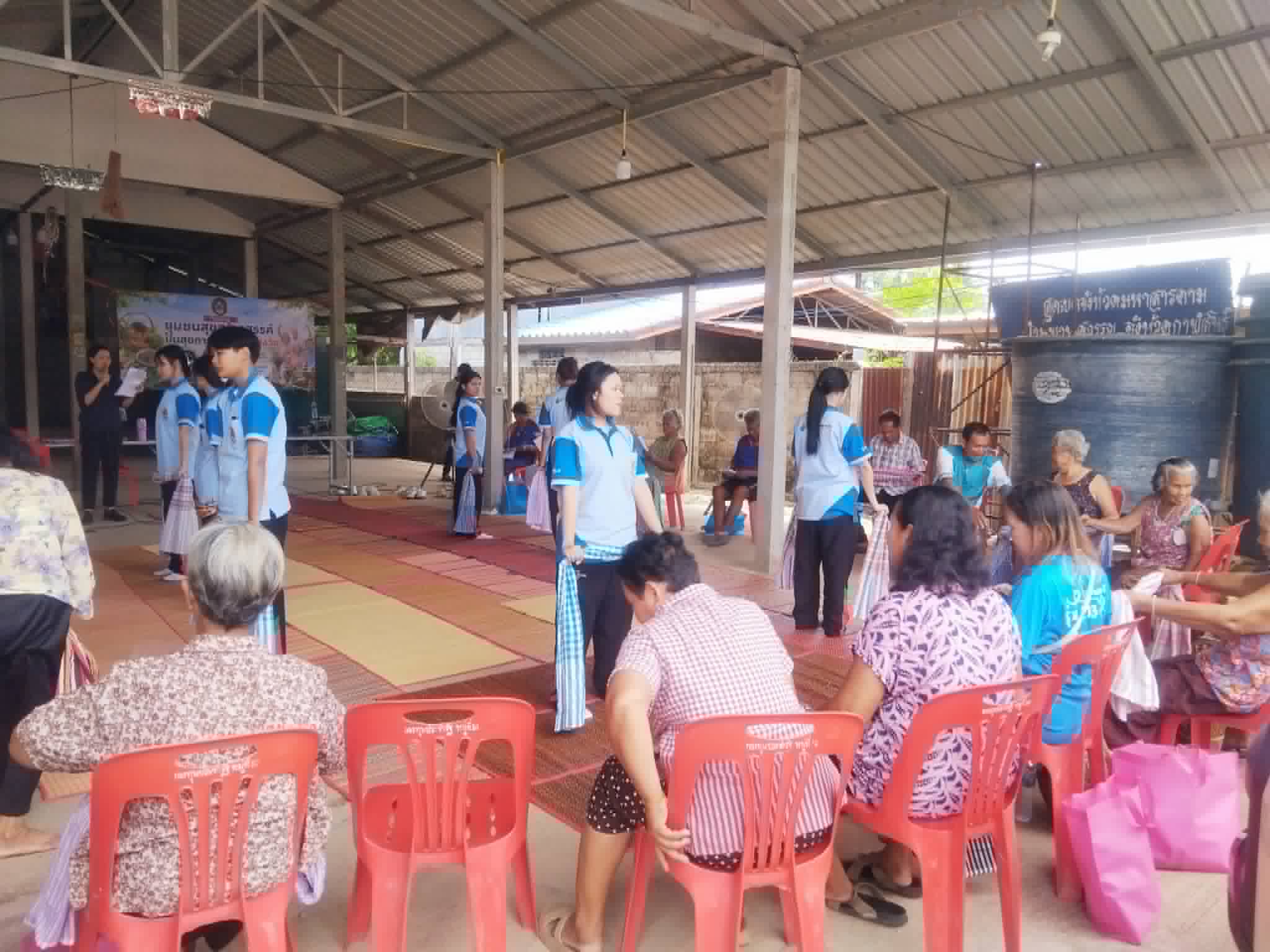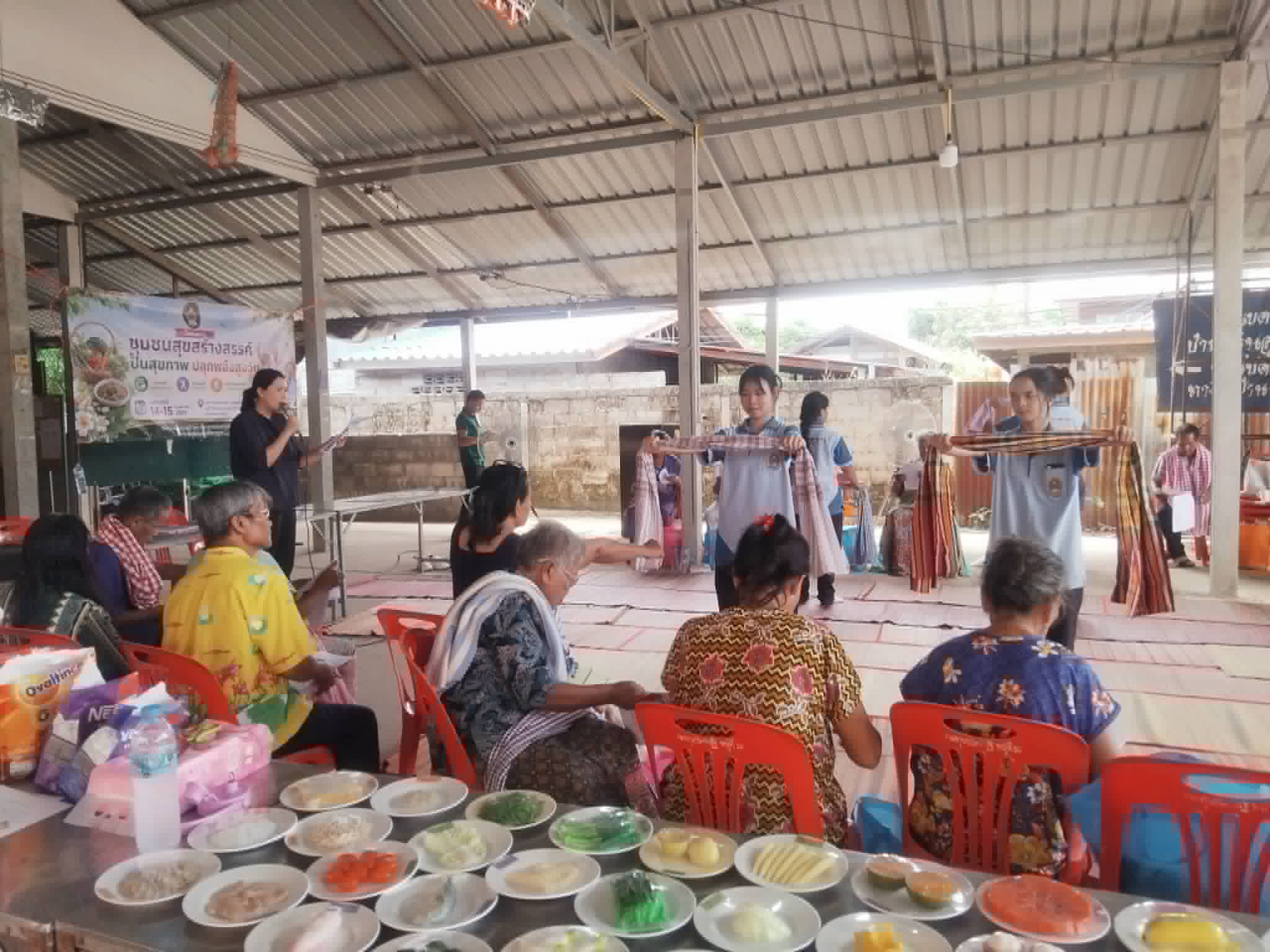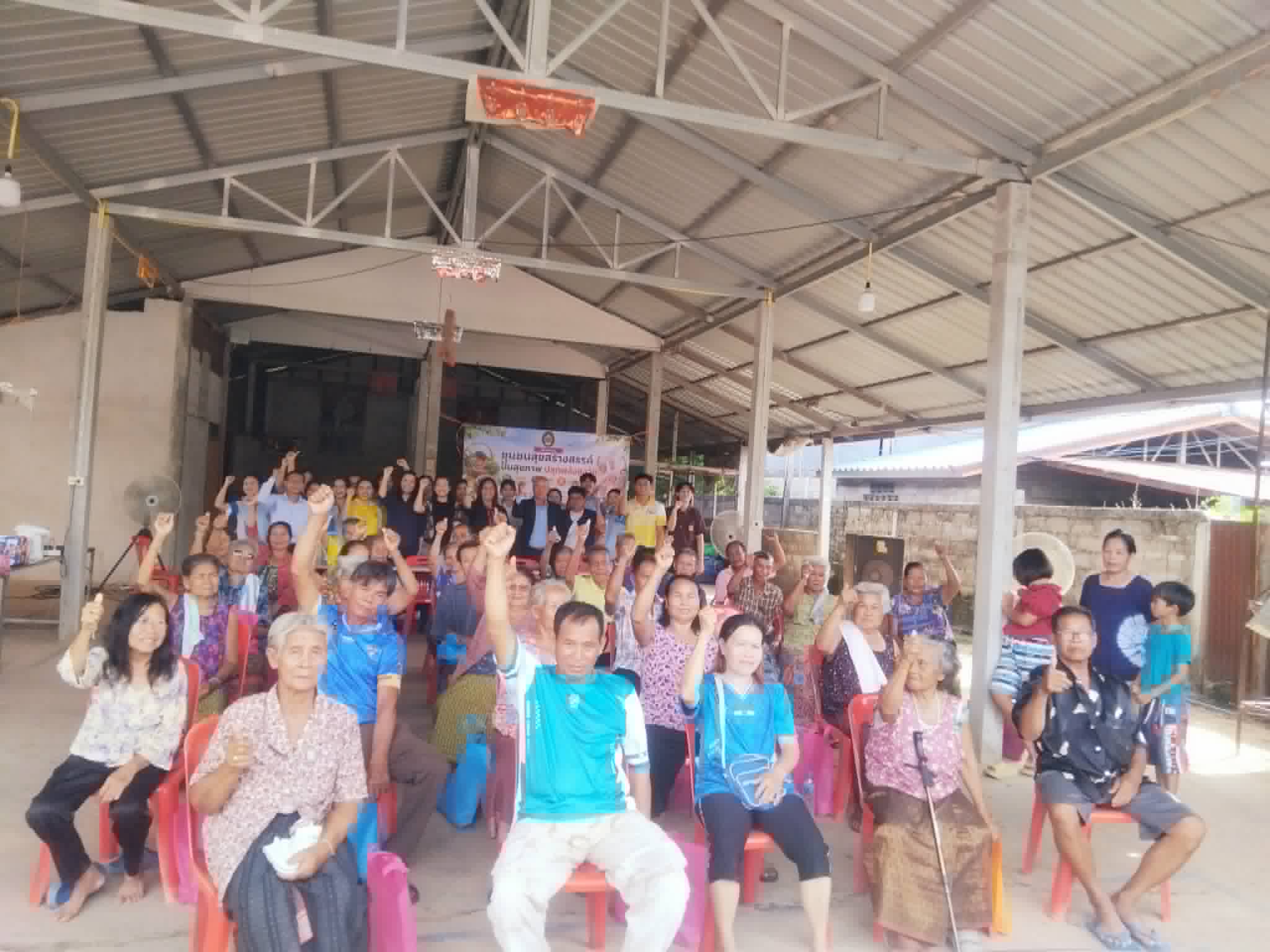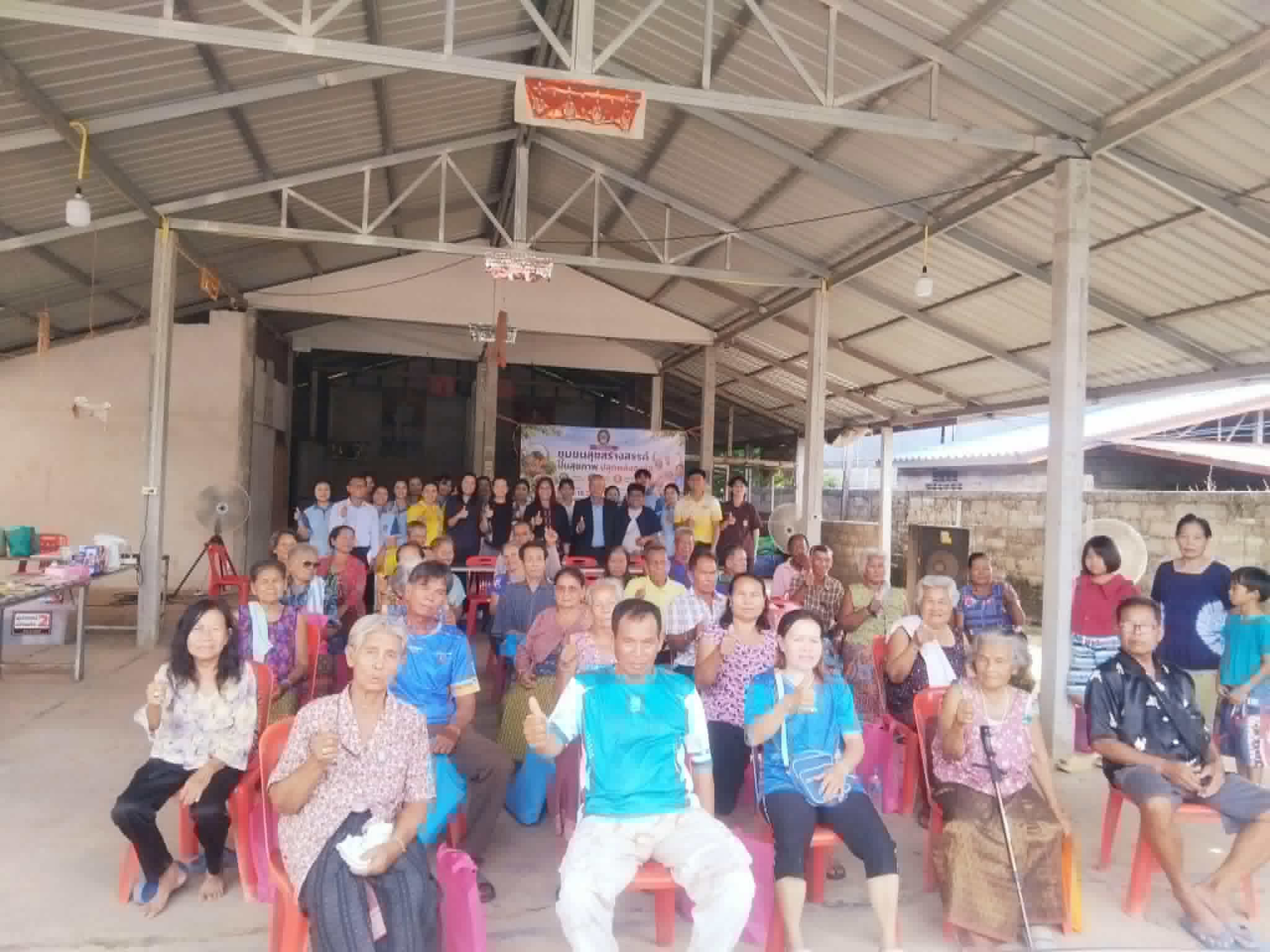
– May 15, 2026 14 พฤษภาคม 2569
– 15 พฤษภาคม 2569
Part 1: Project Details ส่วนที่ 1 รายละเอียดการดำเนินงาน
Objectives วัตถุประสงค์โครงการ
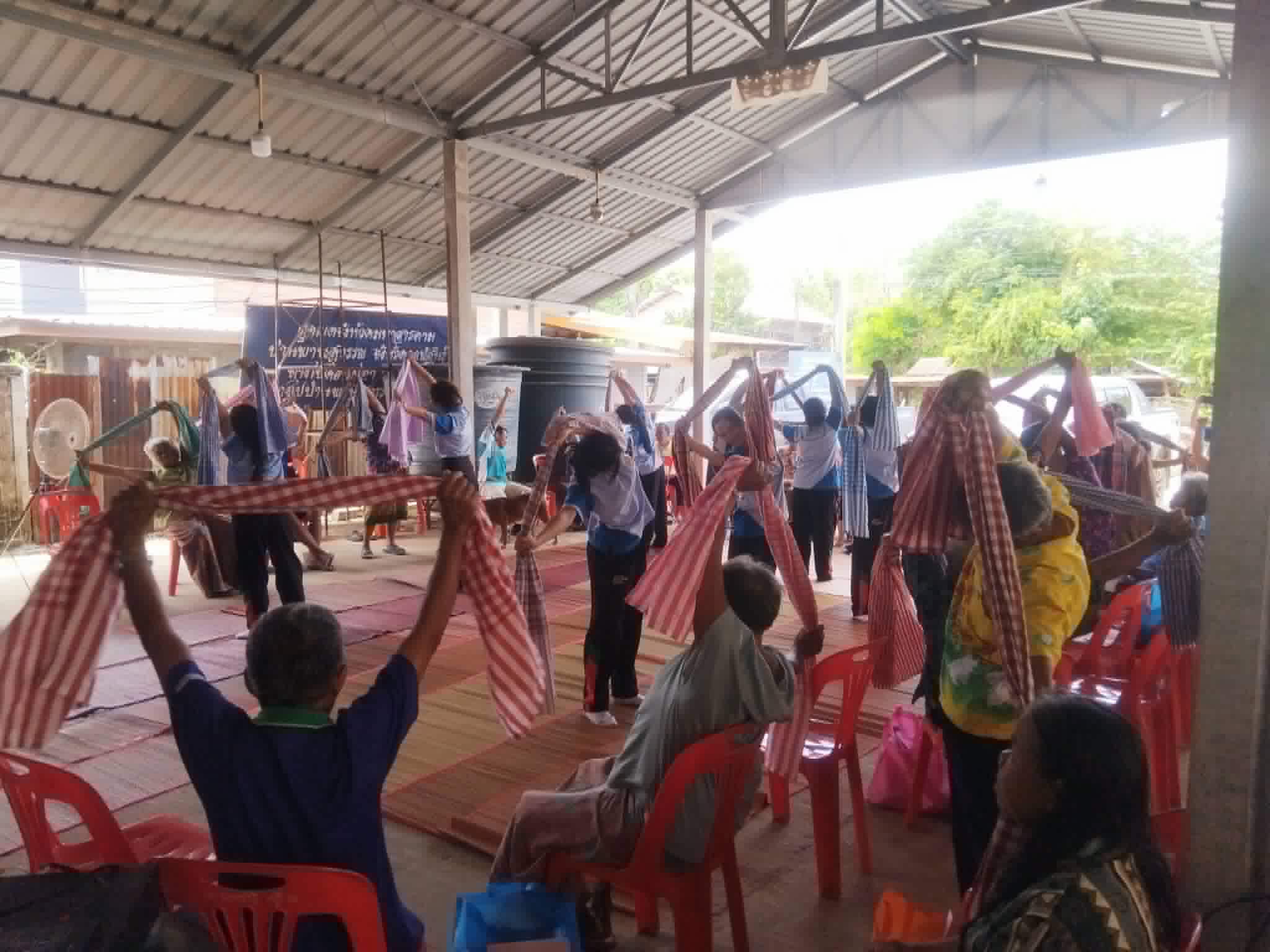
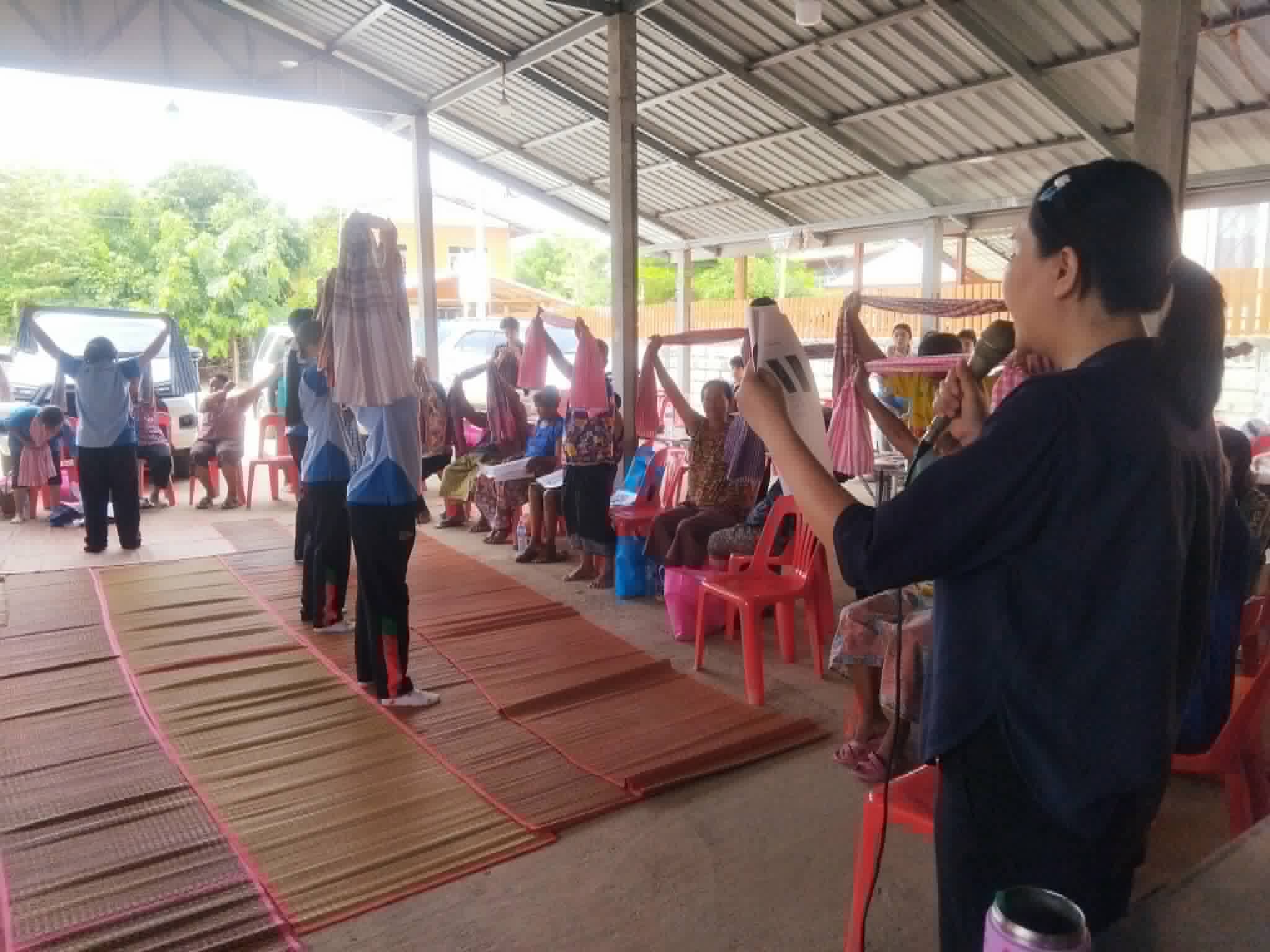
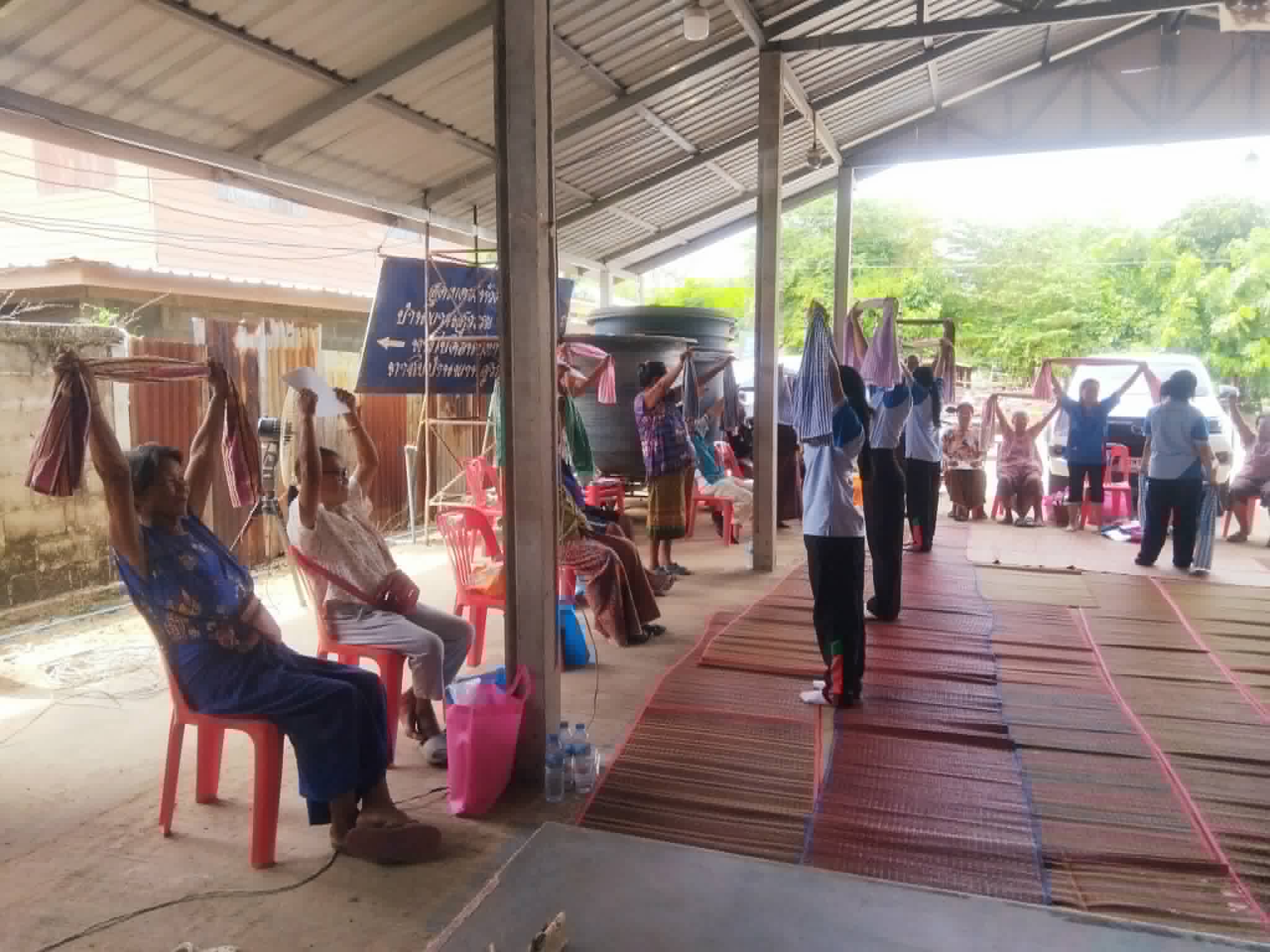
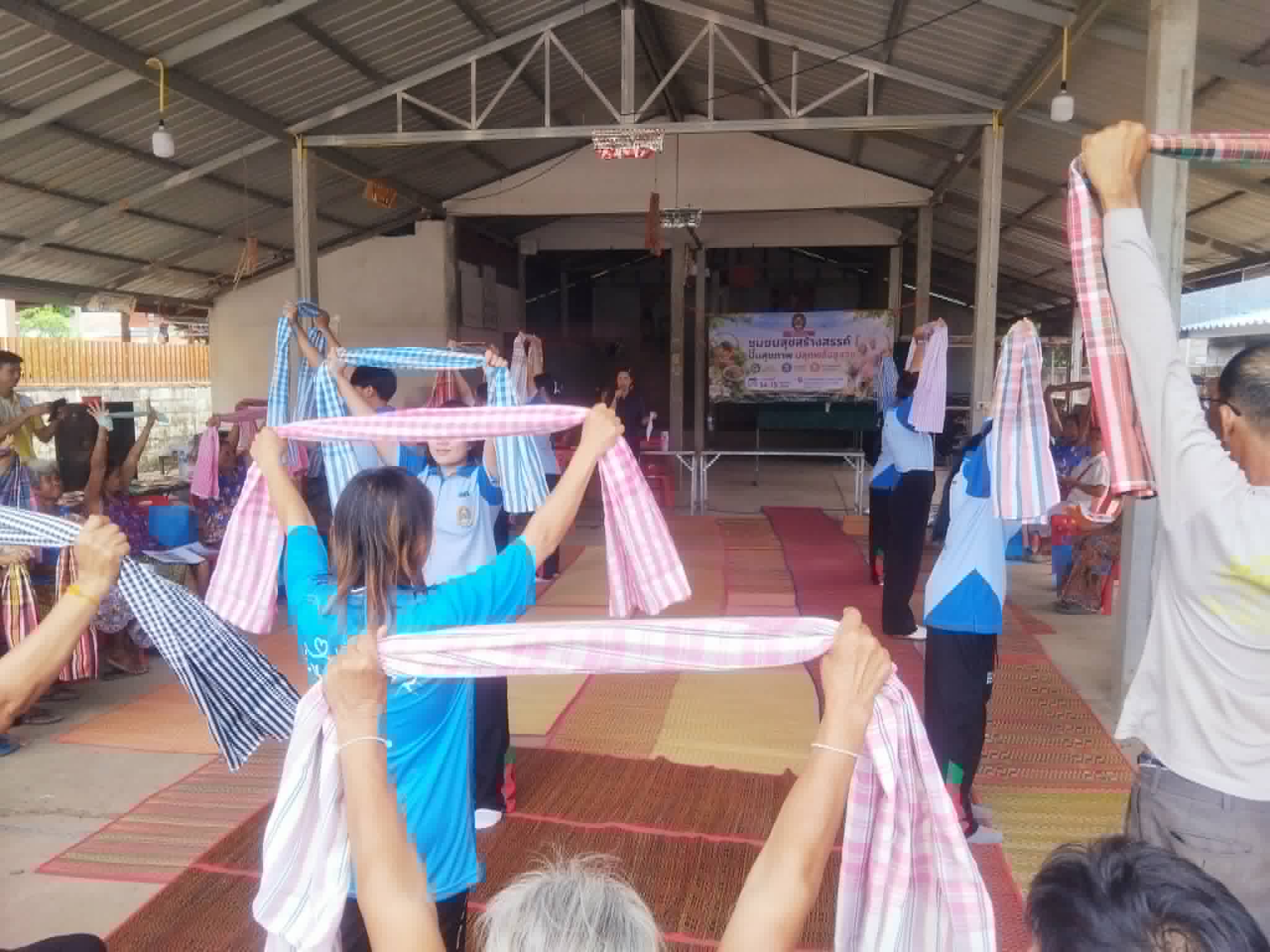
1. To promote the physical well-being of the elderly through exercise activities appropriate to the community context.
2. To promote the mental well-being of the elderly through creative activities and participation.
1. เพื่อเสริมสร้างสุขภาวะด้านร่างกายของผู้สูงอายุผ่านกิจกรรมการออกกำลังกายที่เหมาะสมกับบริบทชุมชน
2. เพื่อเสริมสร้างสุขภาวะด้านจิตใจของผู้สูงอายุผ่านกิจกรรมสร้างสรรค์และการมีส่วนร่วม
Main Activities กิจกรรมหลัก
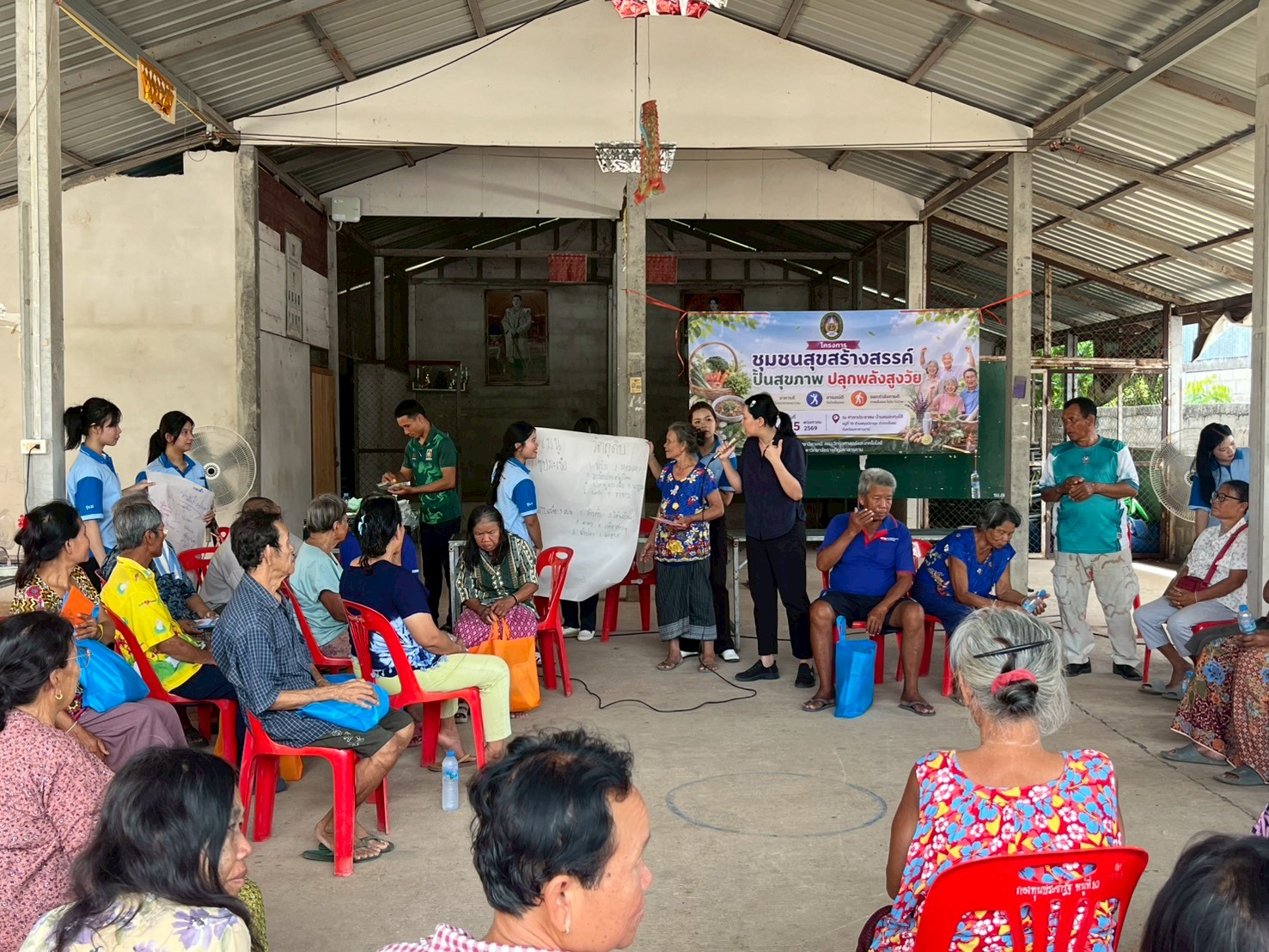
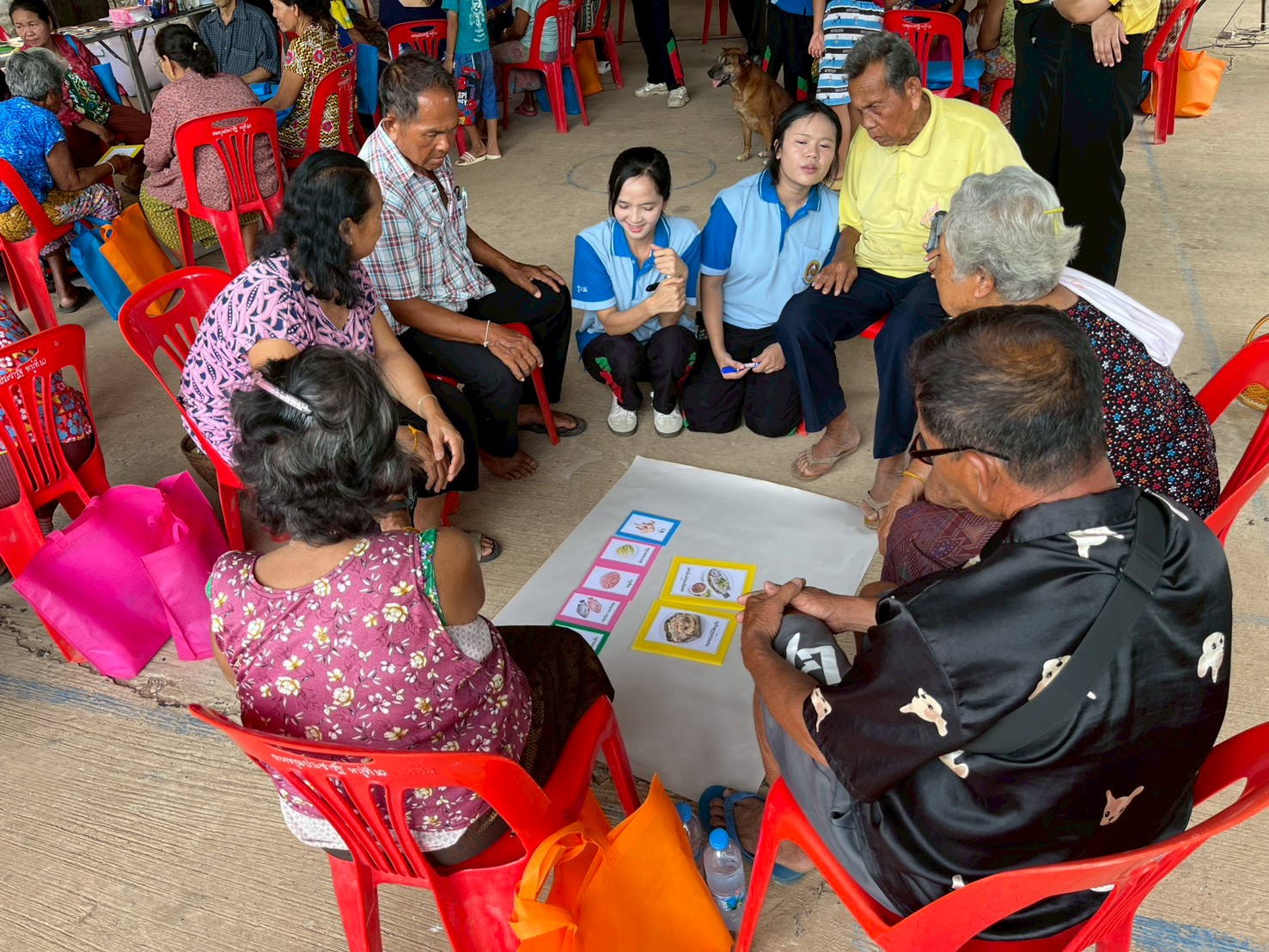
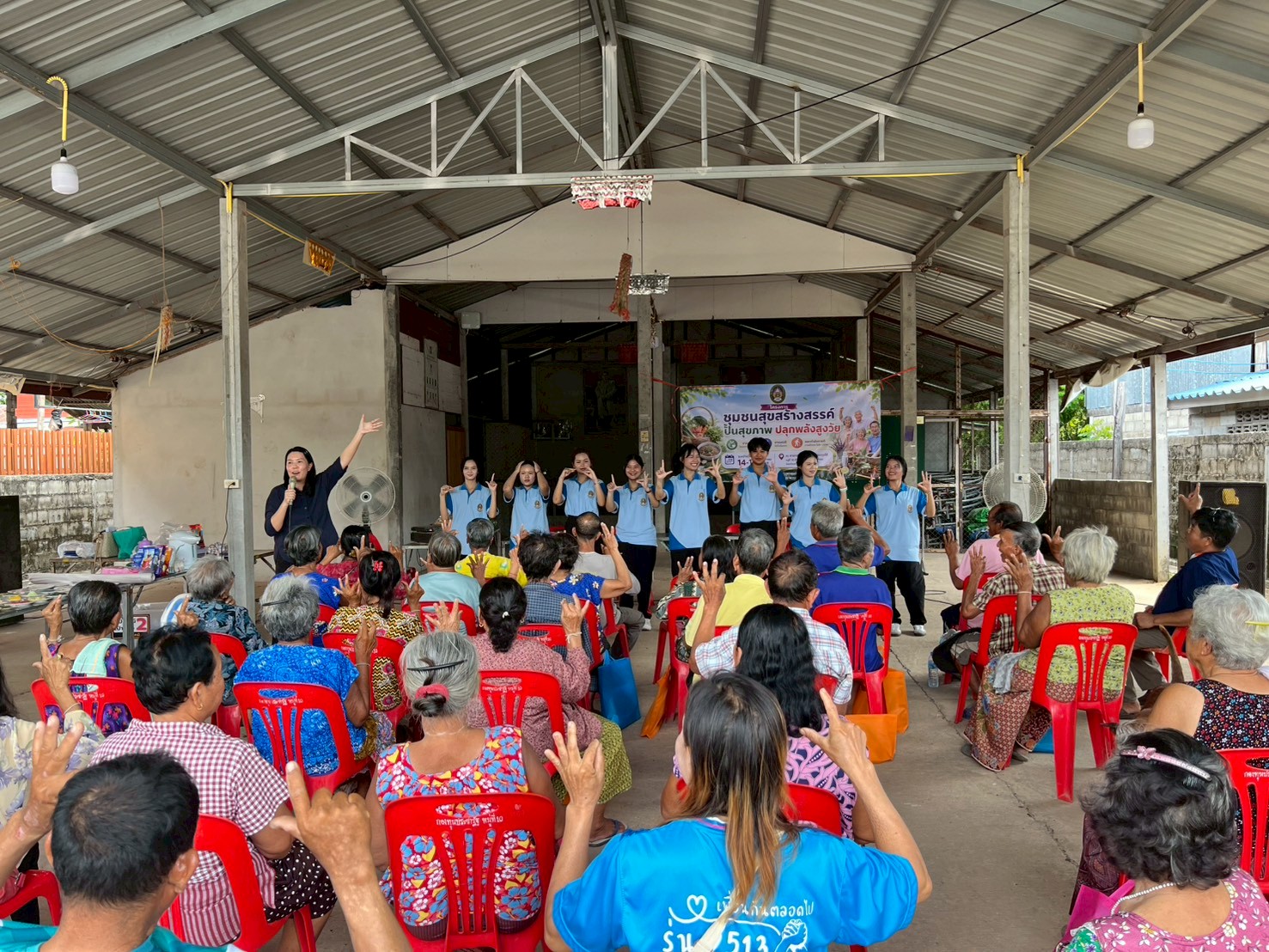
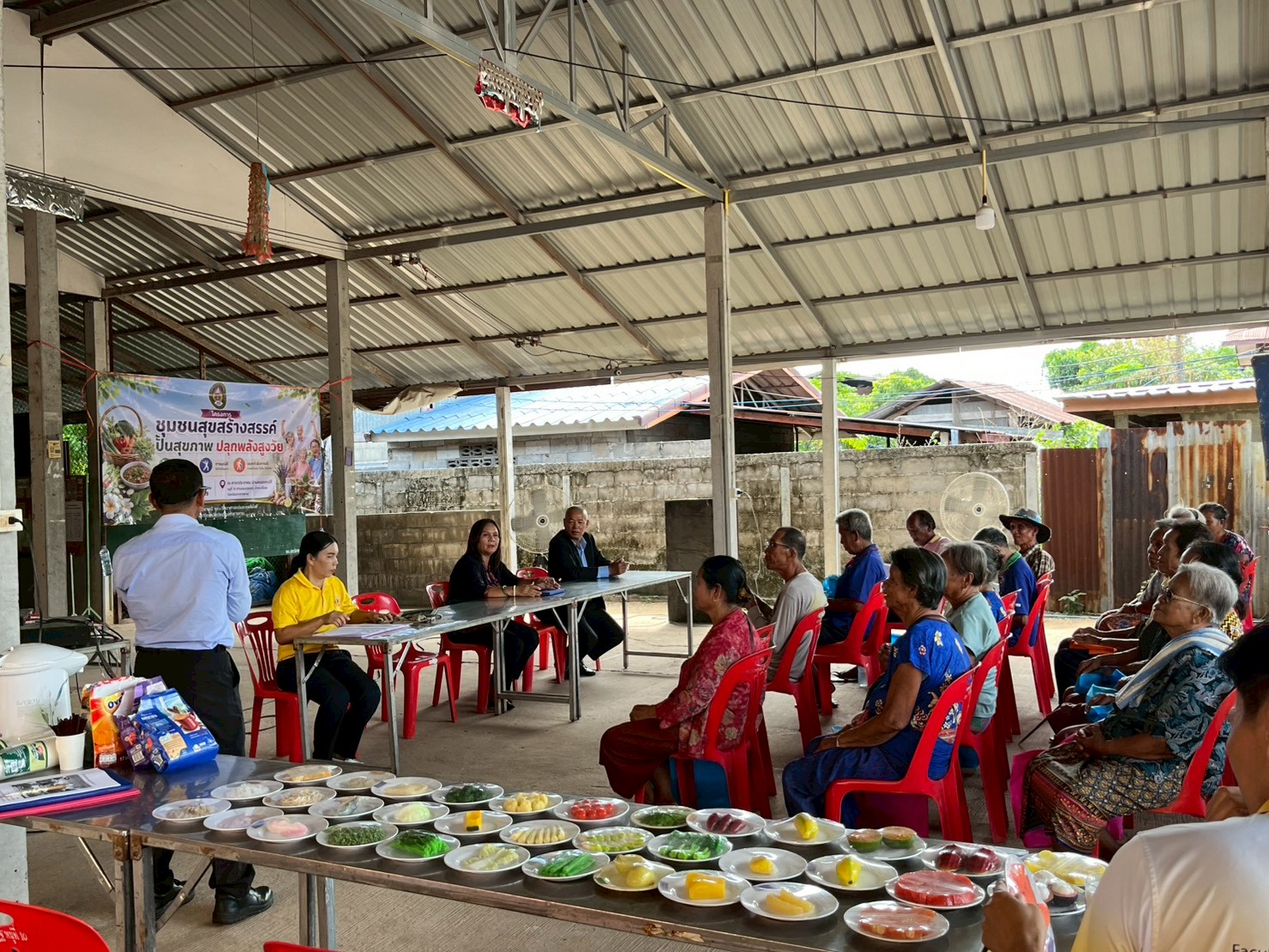
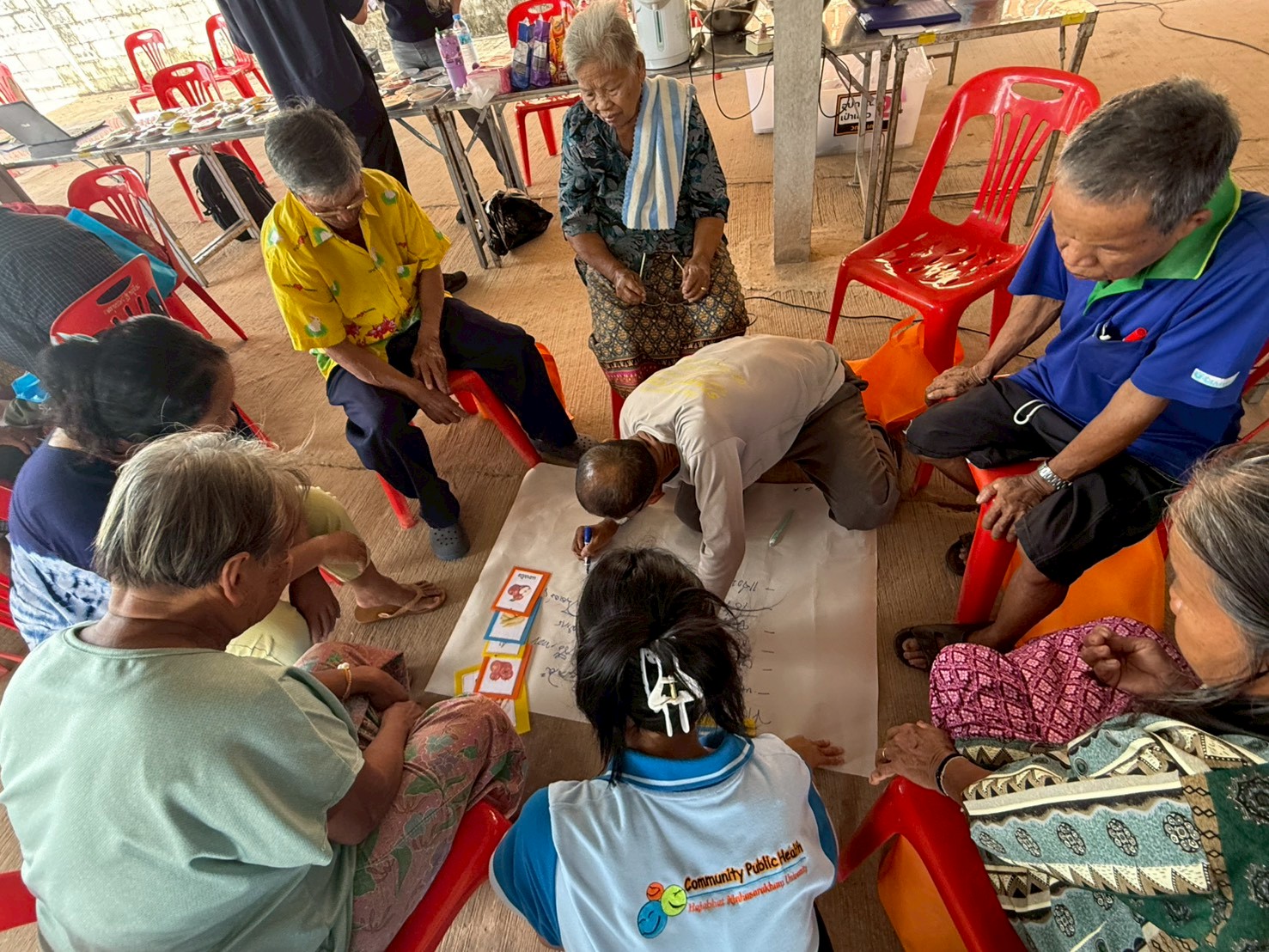
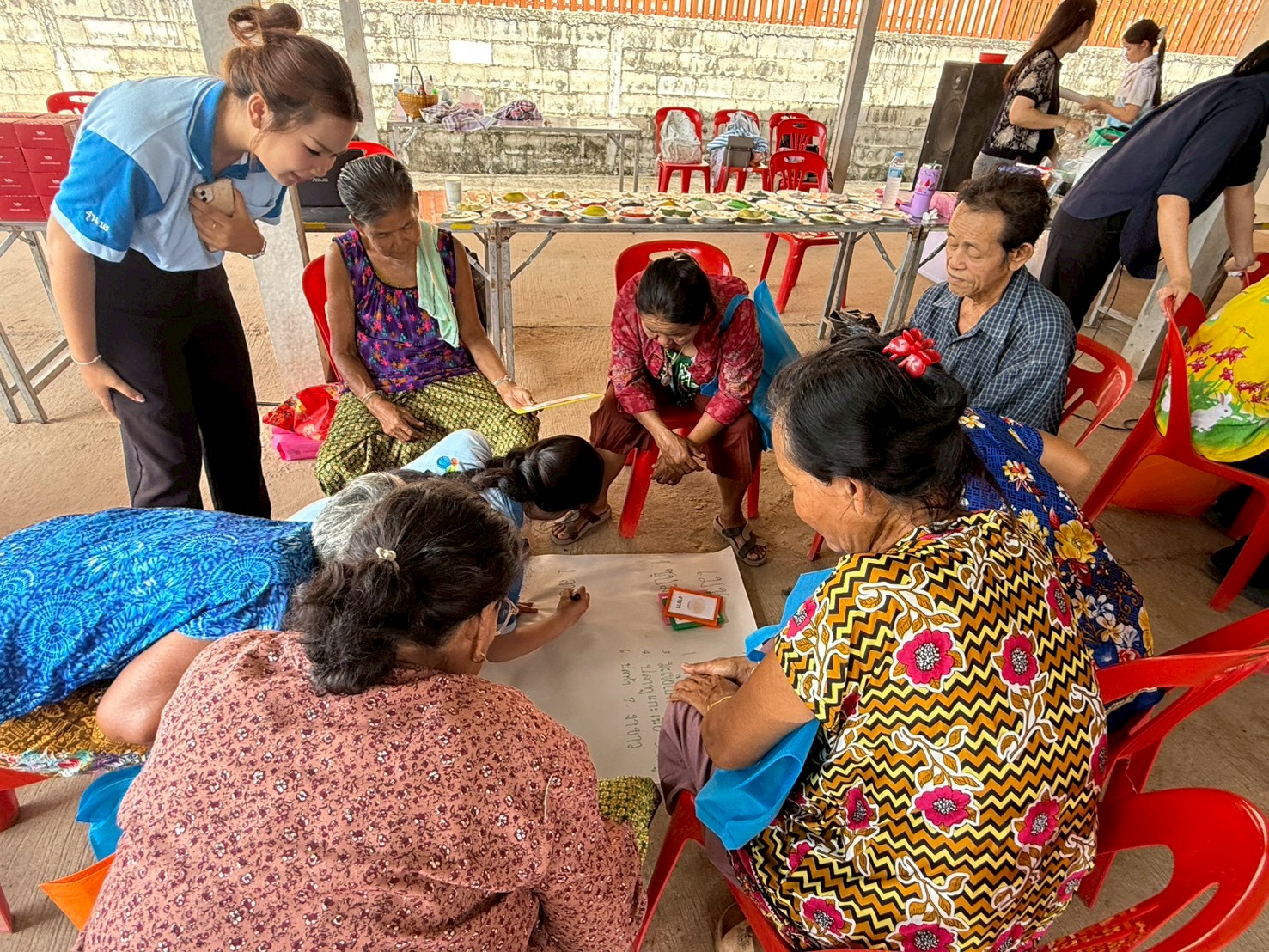
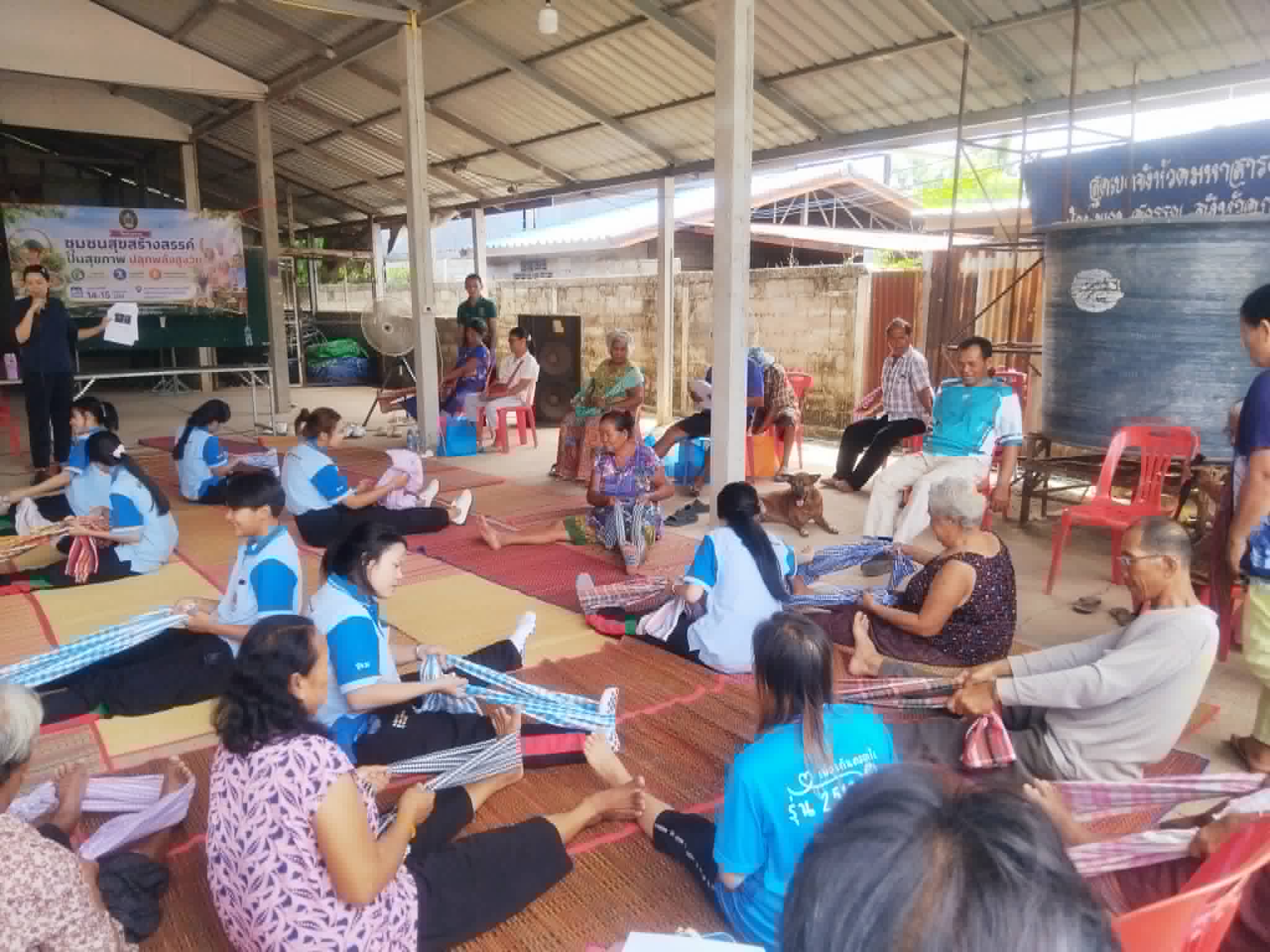
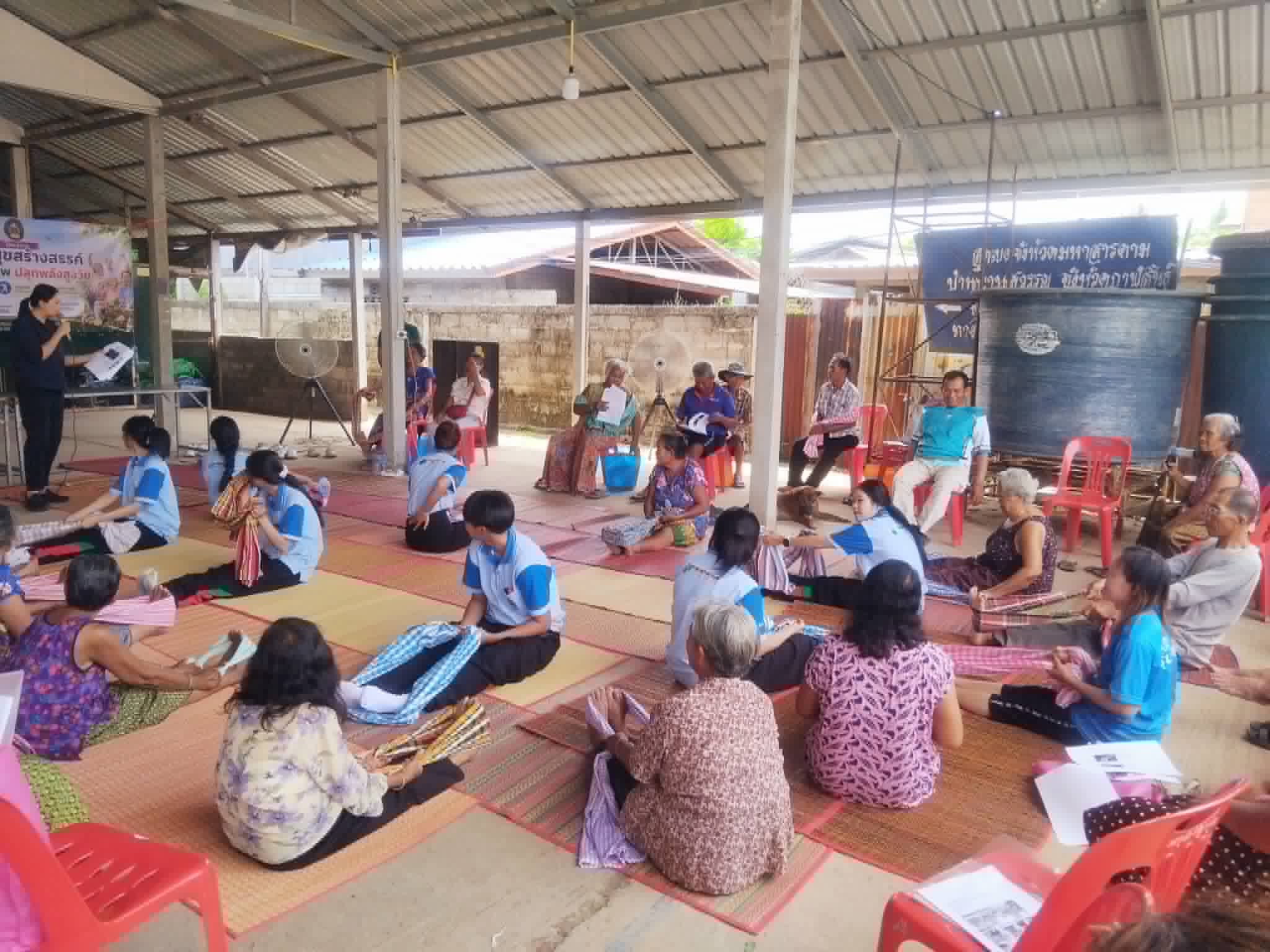
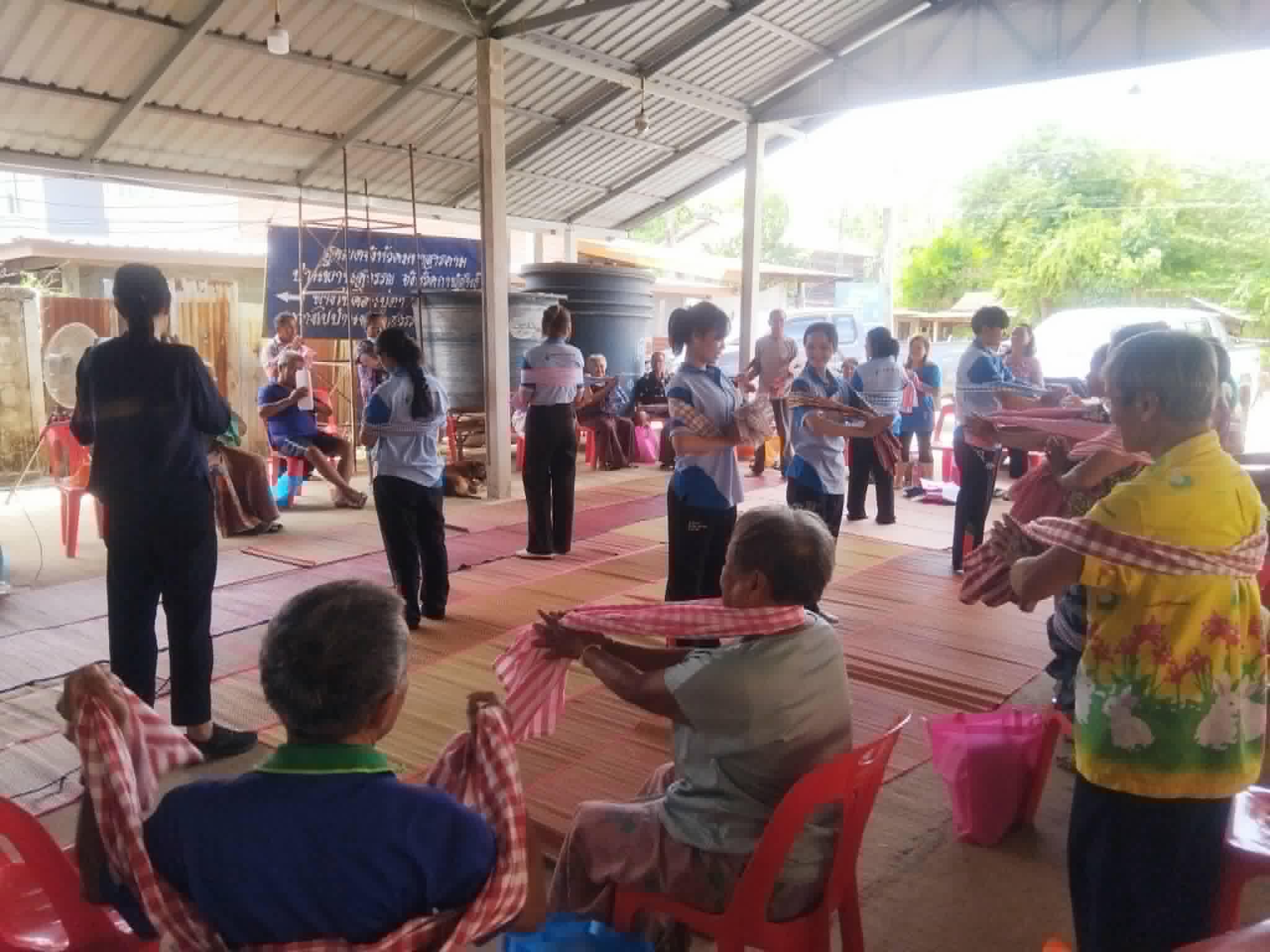
Activity 1: Workshop on the 3A Health Care Principles and Exercise Programs for the Elderly.
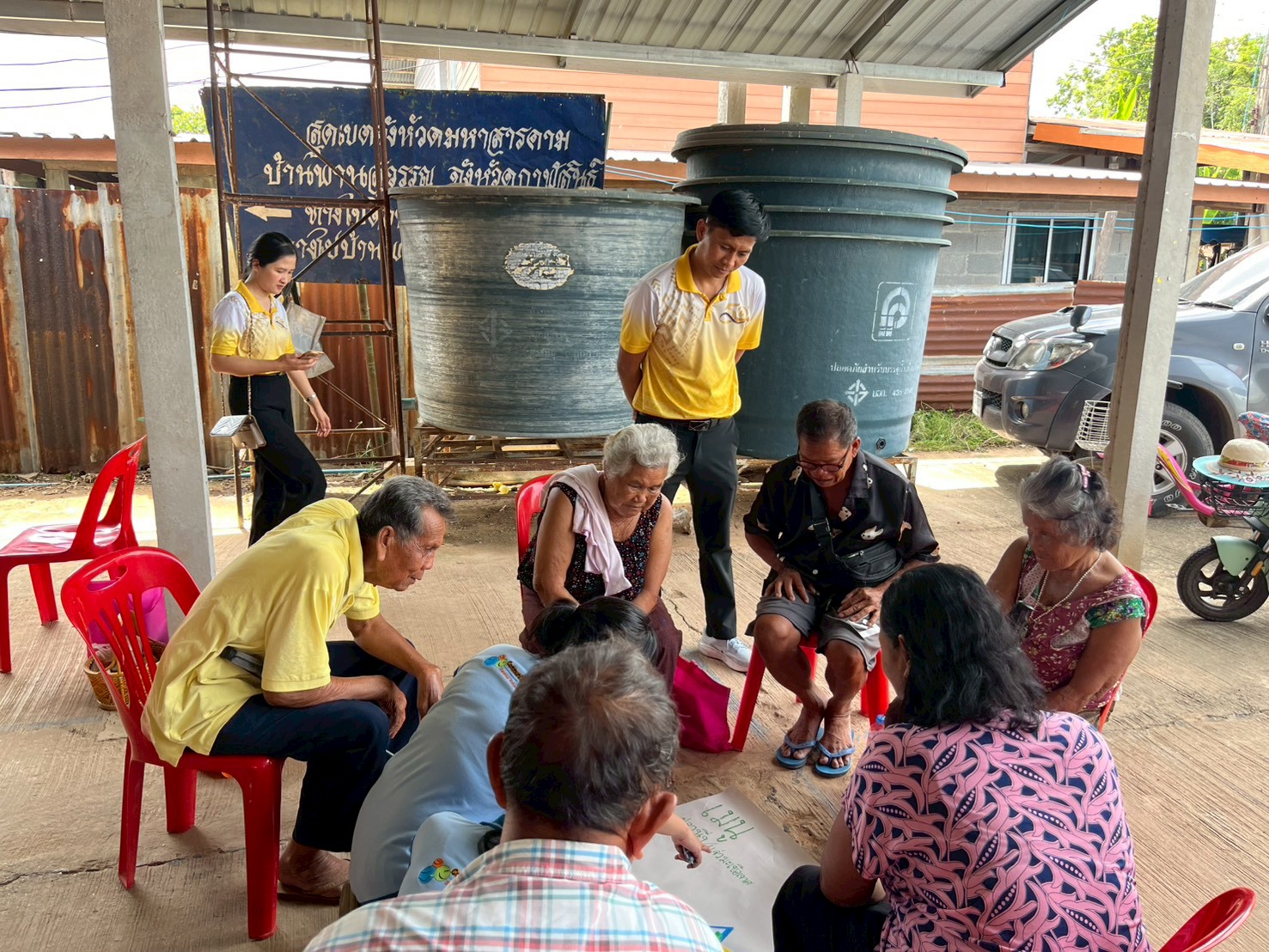
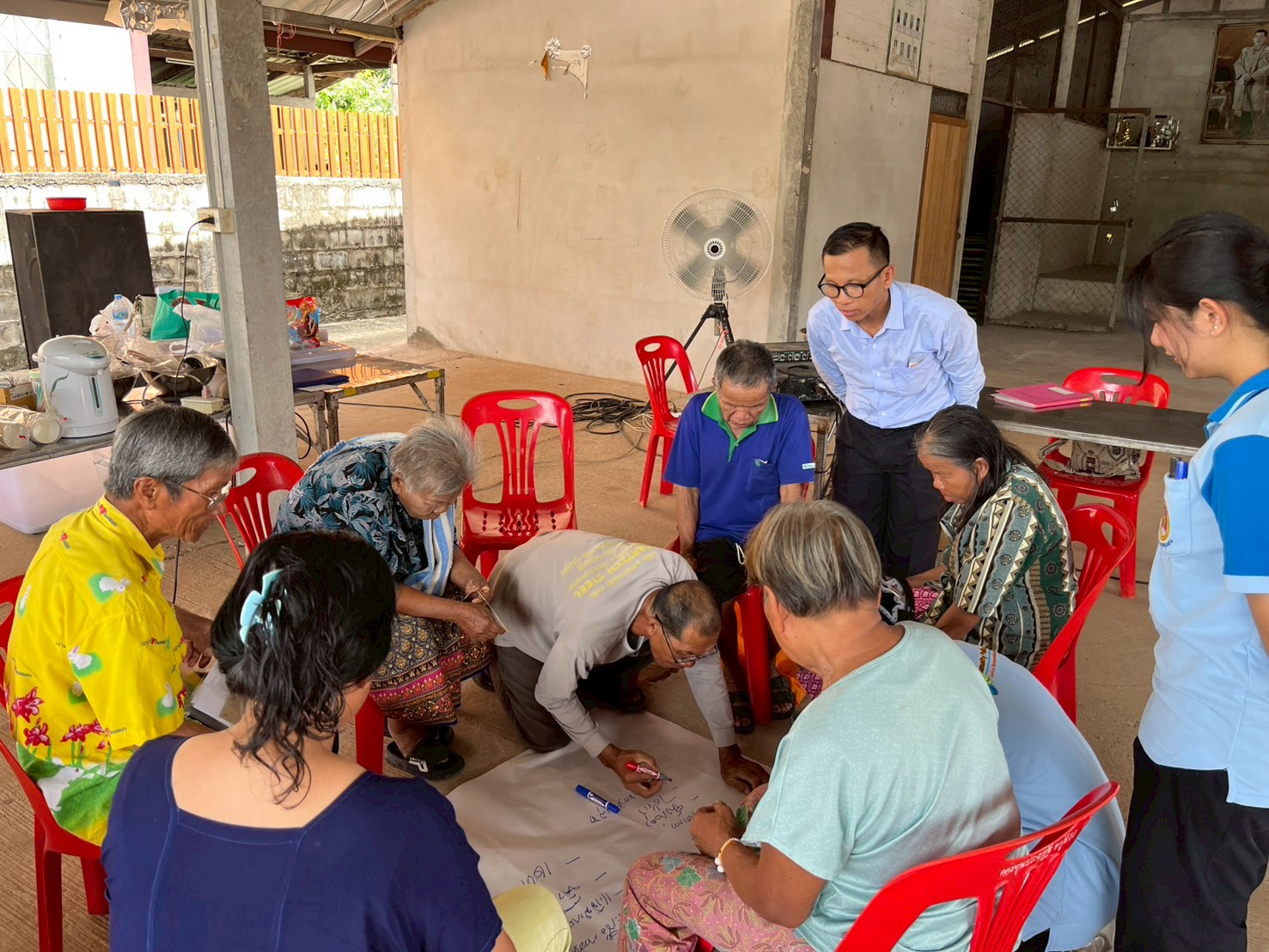
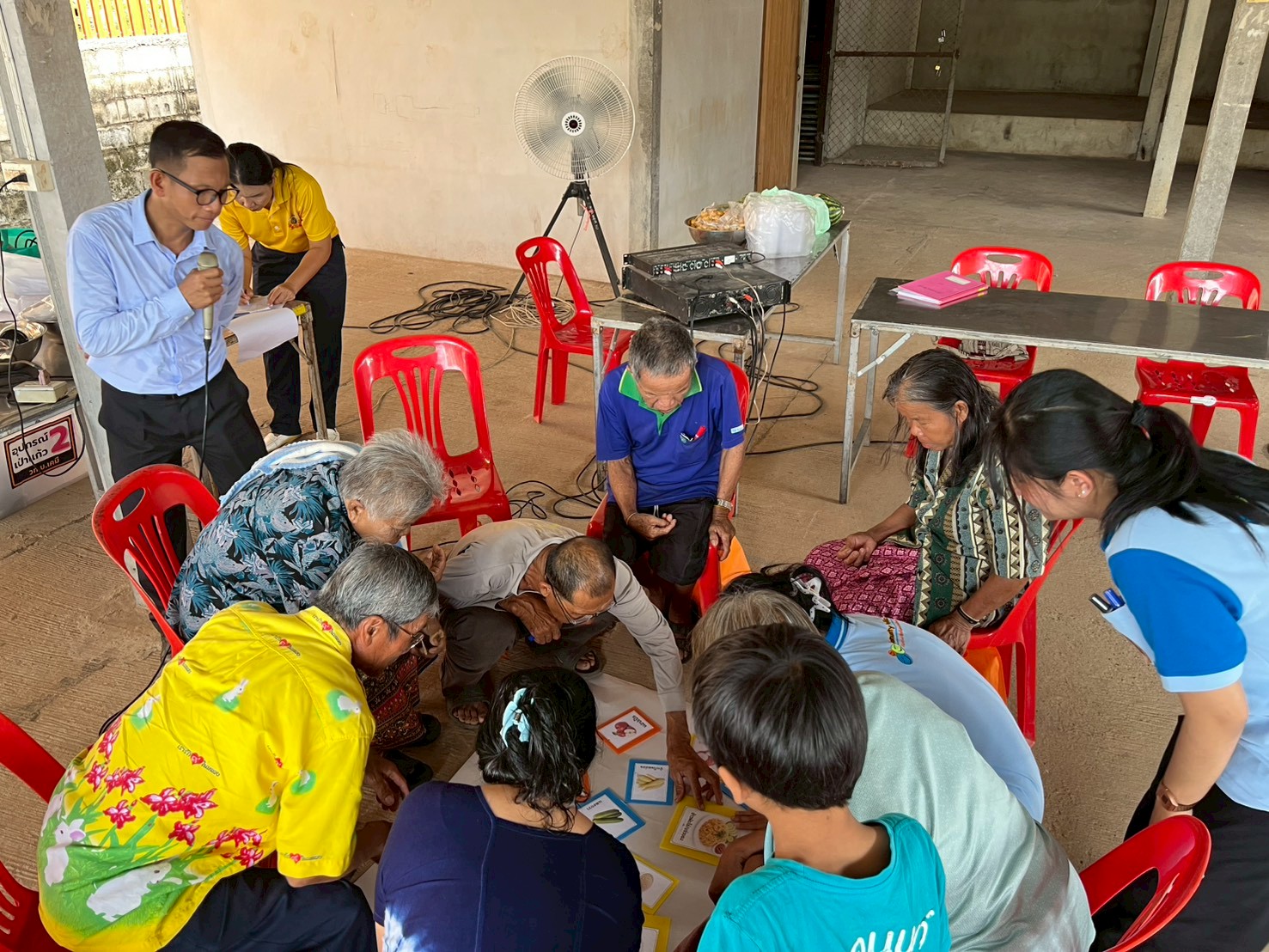
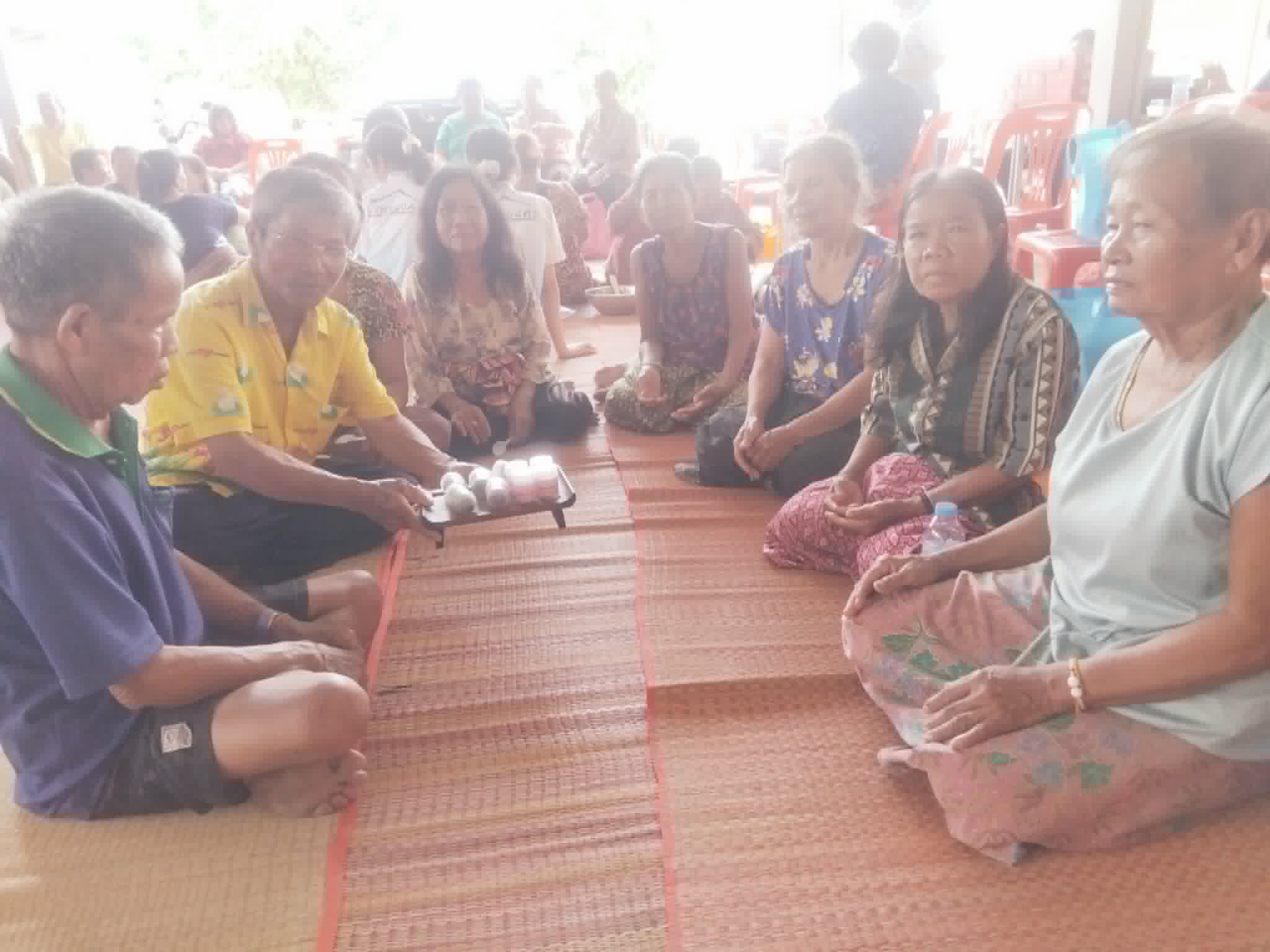
Activity 2: Workshop on Creative Activities for Mental Well-being.
กิจกรรมที่ 1 กิจกรรมอบรมเชิงปฏิบัติการ หลักการดูแลสุขภาพแบบ 3อ. และรูปแบบการออกกำลังกายของผู้สูงอายุ
กิจกรรมที่ 2 กิจกรรมอบรมเชิงปฏิบัติการ กิจกรรมสร้างสรรค์เพื่อสุขภาวะจิตใจ
Part 2: Outcomes & Impact ส่วนที่ 2 ผลลัพธ์และผลกระทบ
Outcomes ผลลัพธ์ที่เกิดขึ้น
1. Elderly participants in the project showed increased knowledge and understanding of health care based on the 3 A's (Food, Exercise, Emotion) and were able to apply this knowledge to modify their health behaviors in daily life.
2. The target group experienced improved physical health and mental well-being from participating in group activities and creating local wisdom together with the team and students.
1. ผู้สูงอายุที่เข้าร่วมโครงการมีระดับความรู้และความเข้าใจในการดูแลสุขภาพตามหลัก 3อ. (อาหาร ออกกำลังกาย อารมณ์) เพิ่มขึ้น และสามารถนำไปประยุกต์ใช้ในการปรับเปลี่ยนพฤติกรรมสุขภาพในชีวิตประจำวันได้
2. กลุ่มเป้าหมายมีสุขภาวะทางกายที่แข็งแรงขึ้น และมีสุขภาวะทางใจที่แจ่มใสจากการมีส่วนร่วมในกิจกรรมกลุ่มและการสร้างสรรค์ภูมิปัญญาท้องถิ่นร่วมกับทีมงานและนักศึกษา
Community & Social Impact ผลกระทบต่อชุมชน/สังคม
Senior citizens have opportunities to participate in creative activities together in the community, fostering knowledge exchange and strengthening relationships among community members. This results in a community-level elderly healthcare network, helping to reduce loneliness among the elderly and building a society of care and interdependence. ผู้สูงอายุมีโอกาสเข้าร่วมกิจกรรมสร้างสรรค์ร่วมกันในชุมชน เกิดการแลกเปลี่ยนเรียนรู้และเสริมสร้างความสัมพันธ์ระหว่างสมาชิกในชุมชน ส่งผลให้เกิดเครือข่ายการดูแลสุขภาพผู้สูงอายุในระดับชุมชน ช่วยลดปัญหาความโดดเดี่ยวของผู้สูงอายุ และเสริมสร้างสังคมแห่งการดูแลและการพึ่งพาอาศัยกัน
Student & Staff Participation การมีส่วนร่วมของนักศึกษา/บุคลากร
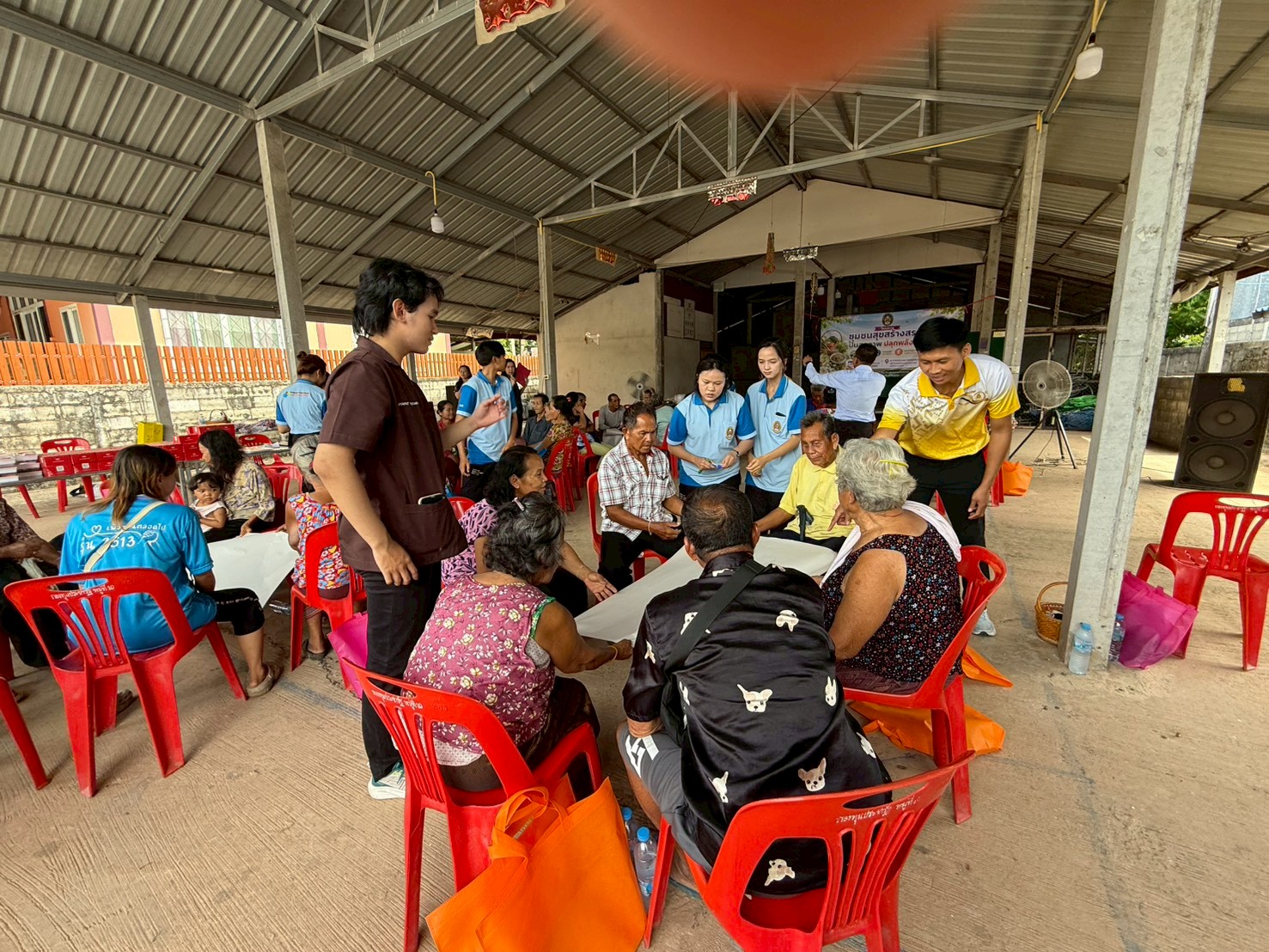
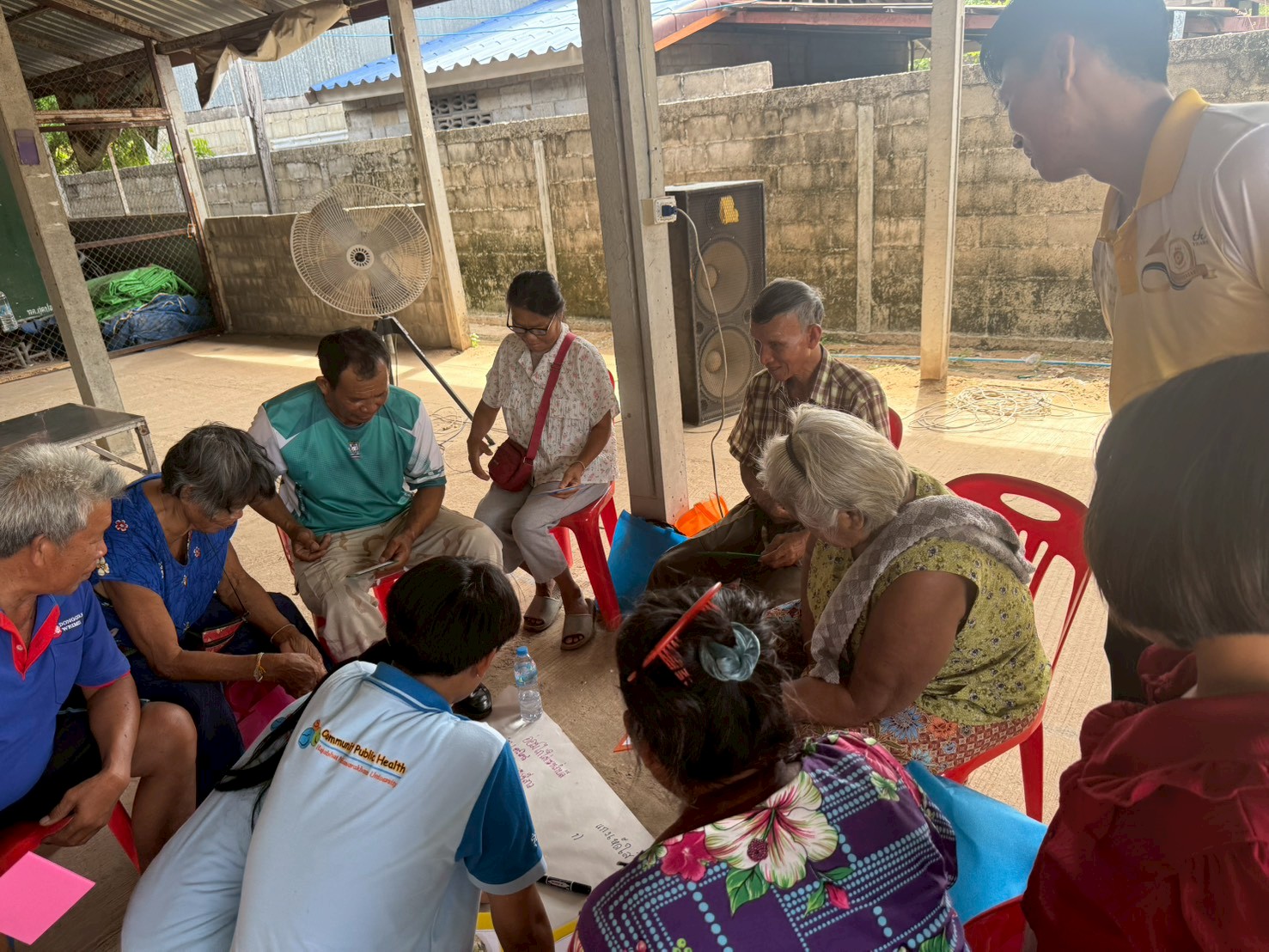
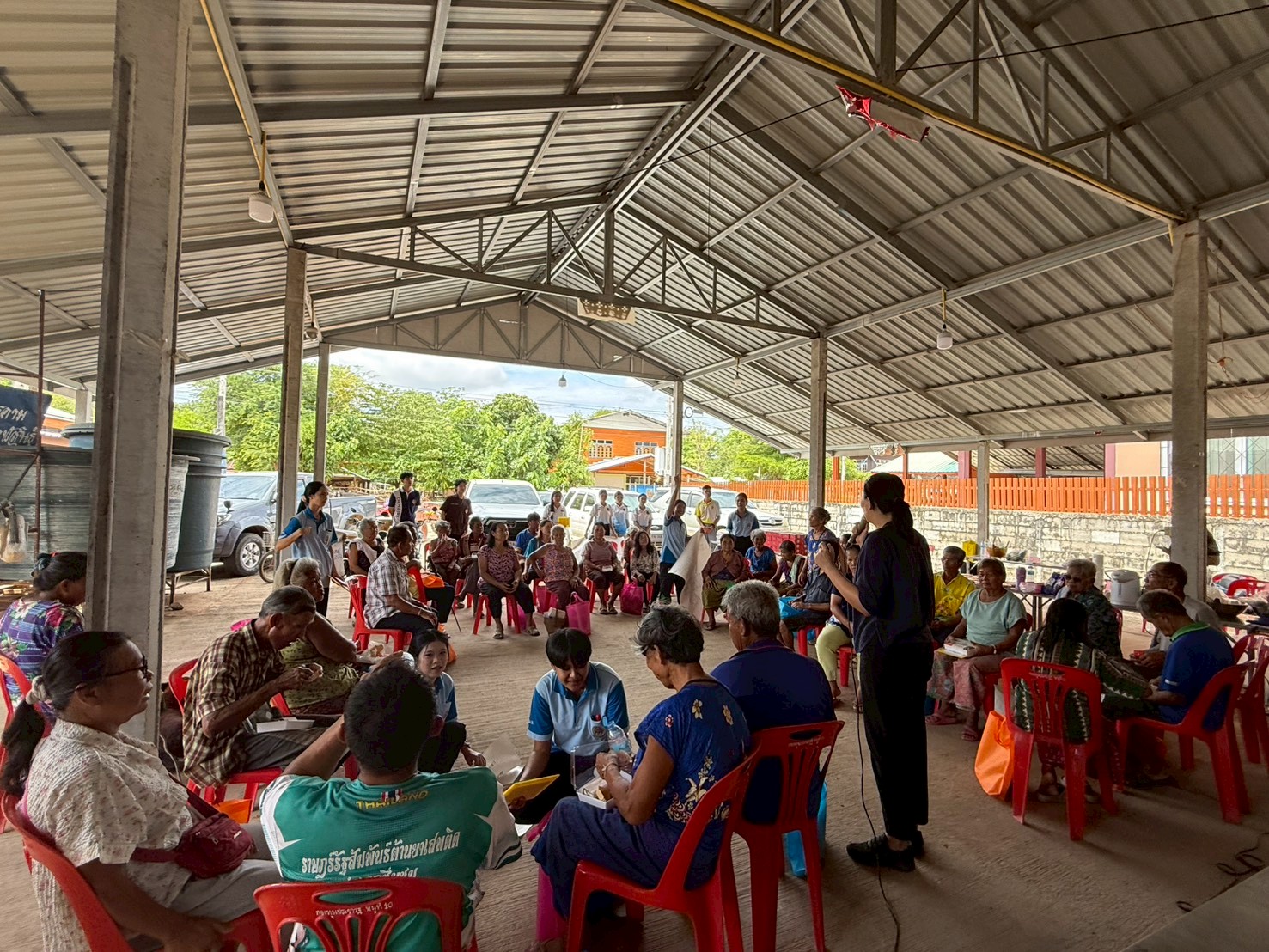
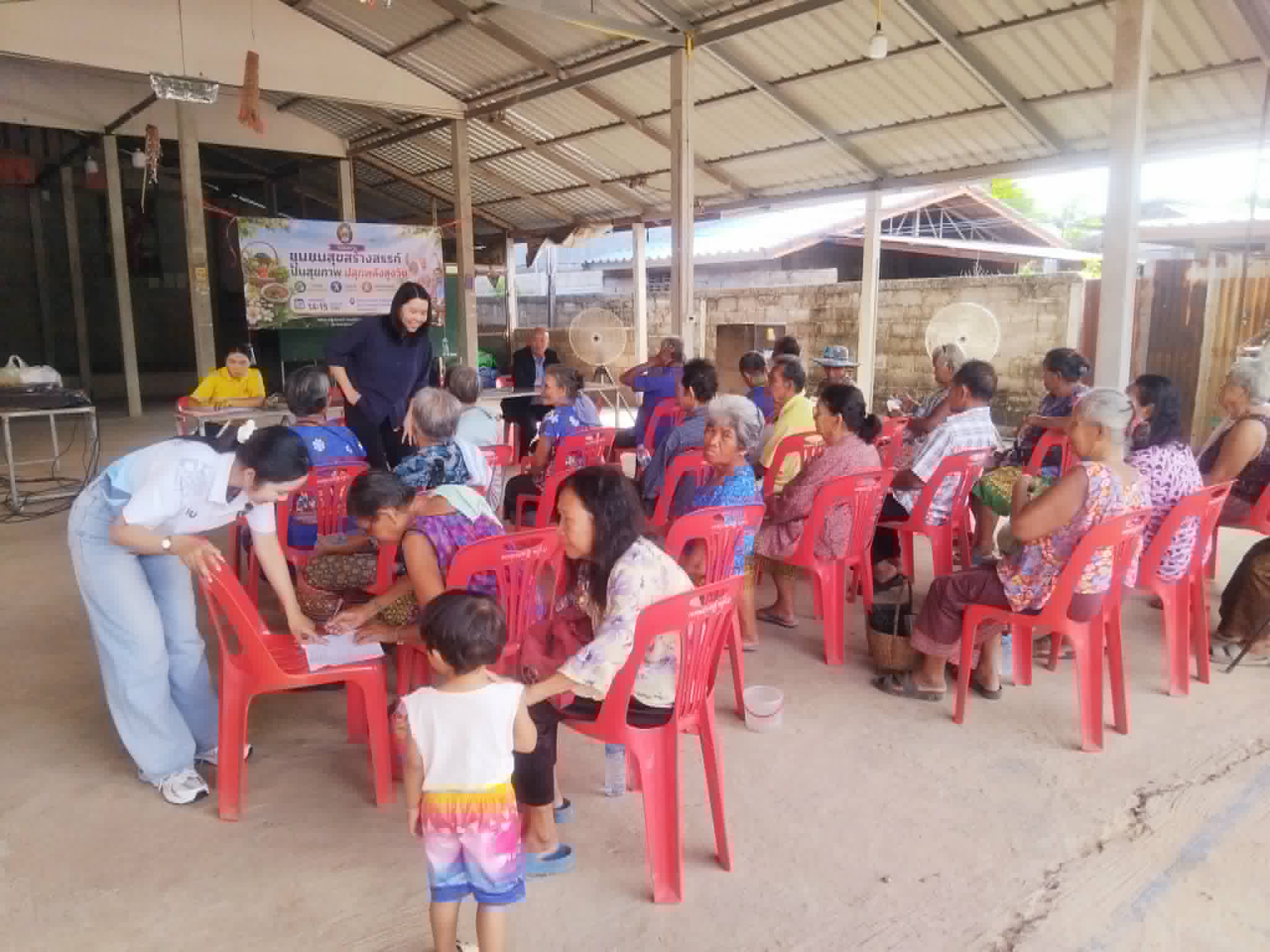
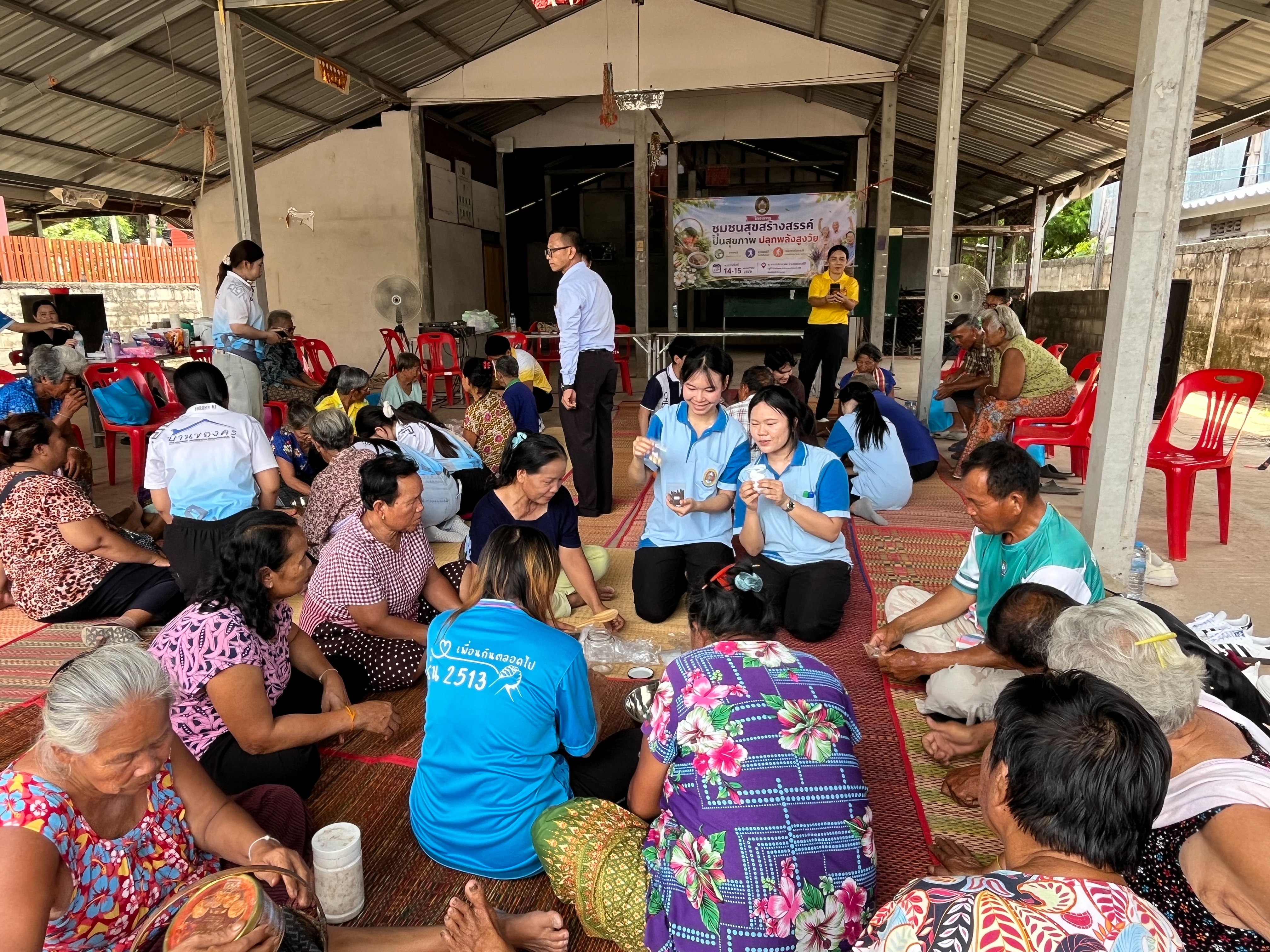
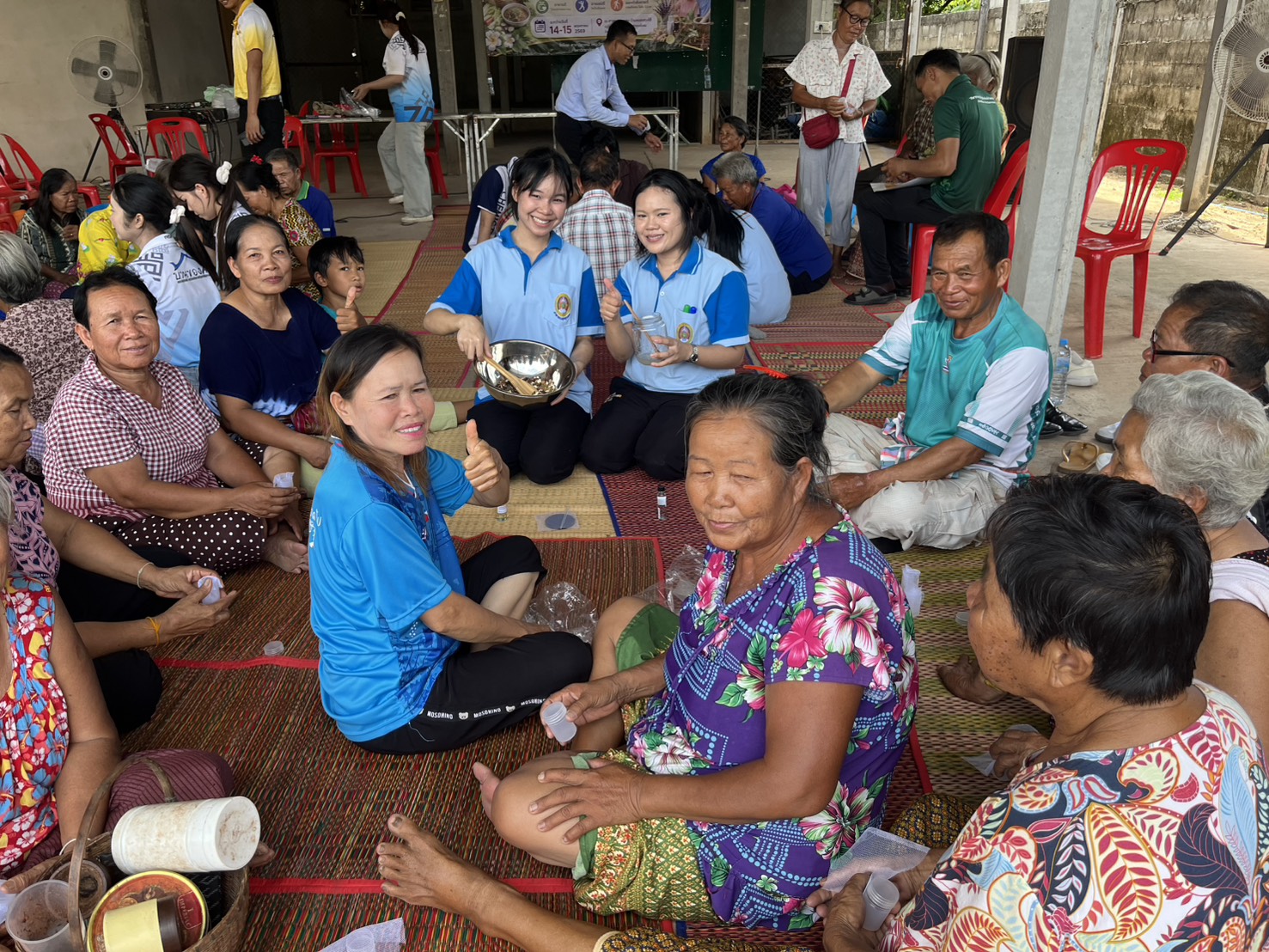
The project promoted the active participation of lecturers, staff members, and students in collaboration with the local community throughout the project implementation process, including preparation, activity organization, practical learning support, data collection, and project evaluation. A total of 12 lecturers and staff members and 20 students from the university participated in the activities alongside 35 older adults, resulting in a total of 67 project participants.
Roles of Students
1. Supporting the Preparation and Organization of Learning Activities
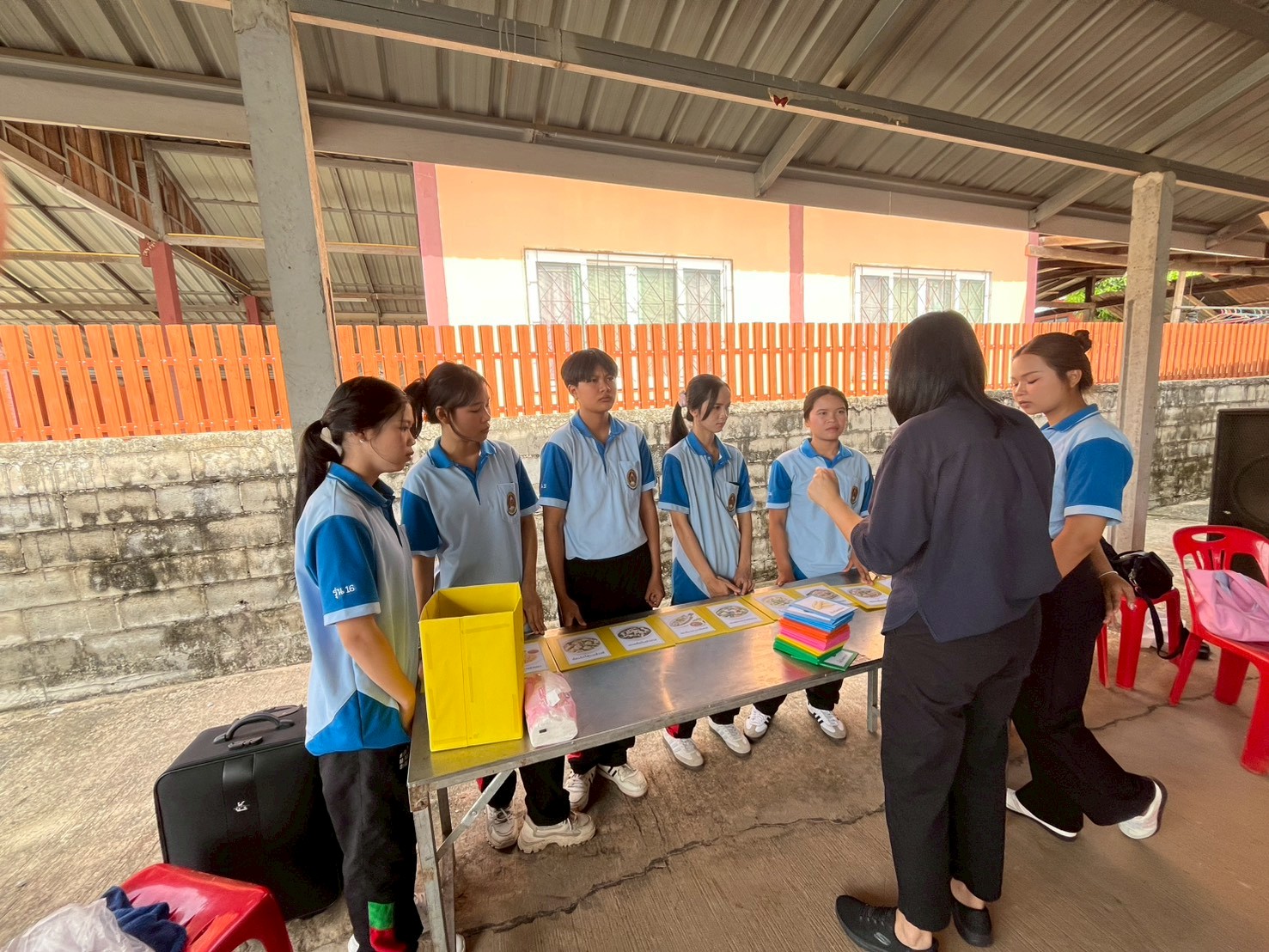
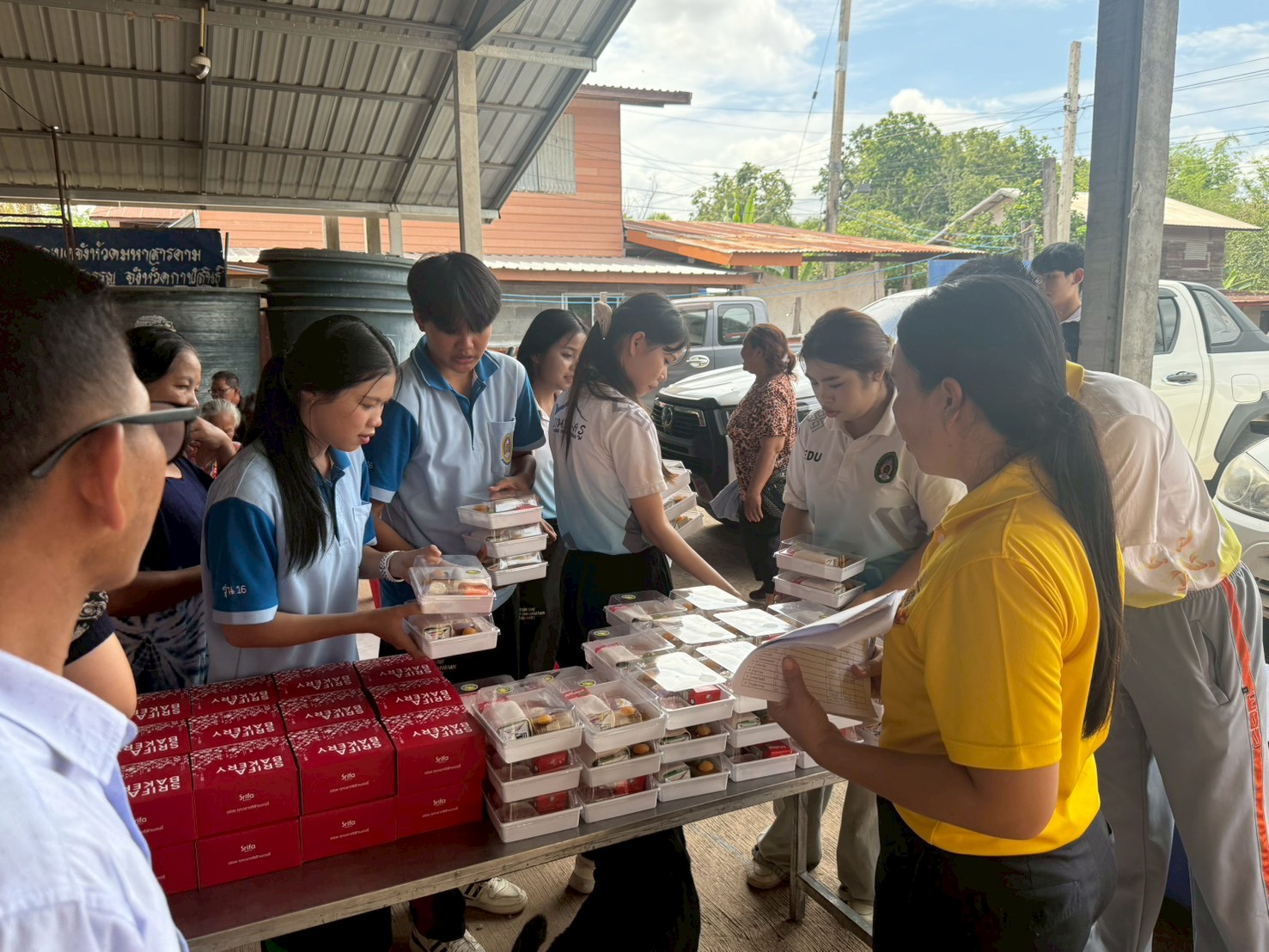
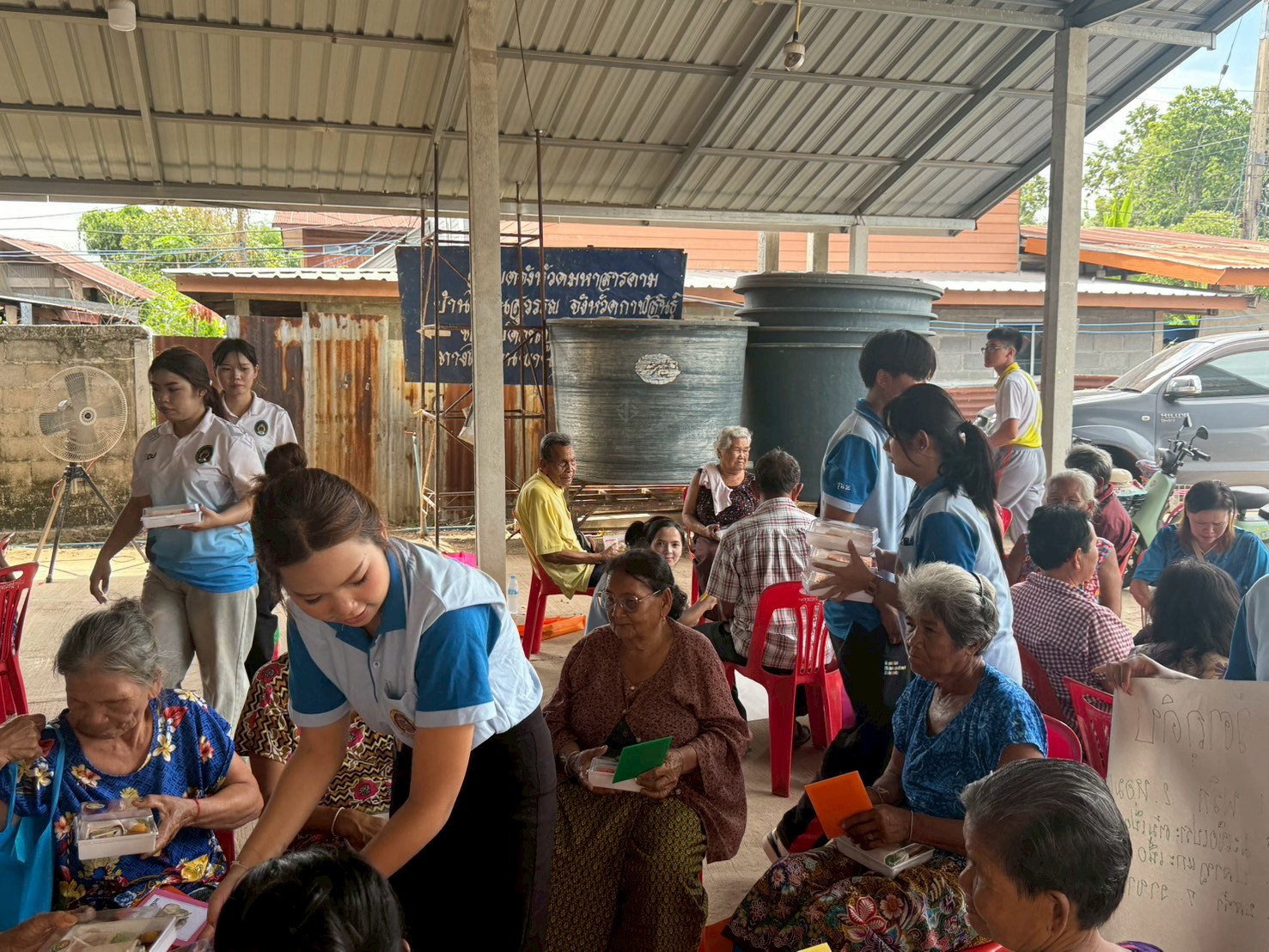
Students assisted in preparing the venue, materials, equipment, learning materials, and activity stations to ensure that they were appropriate and accessible for older adults.
2. Serving as Facilitators and Activity Station Assistants
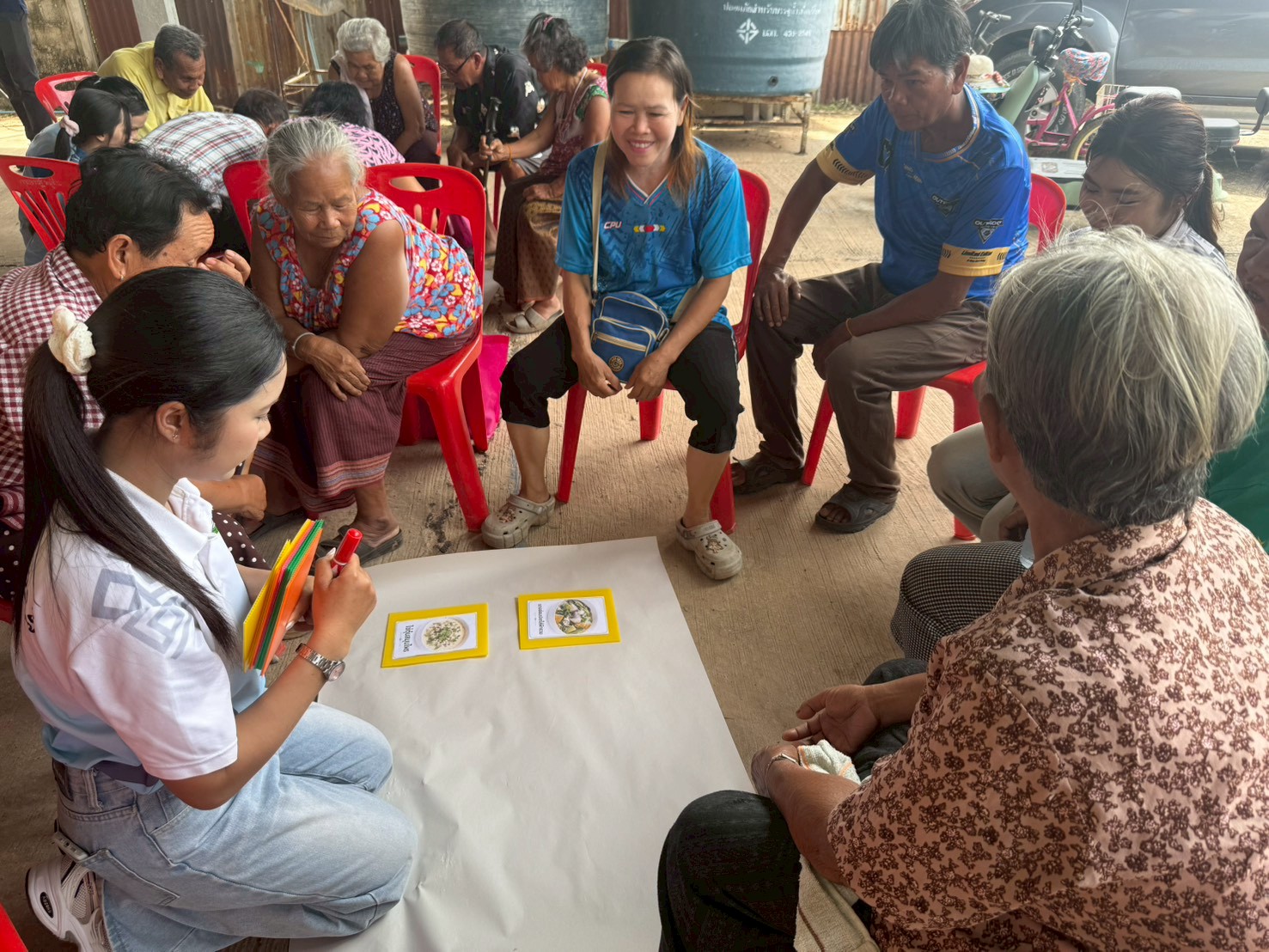
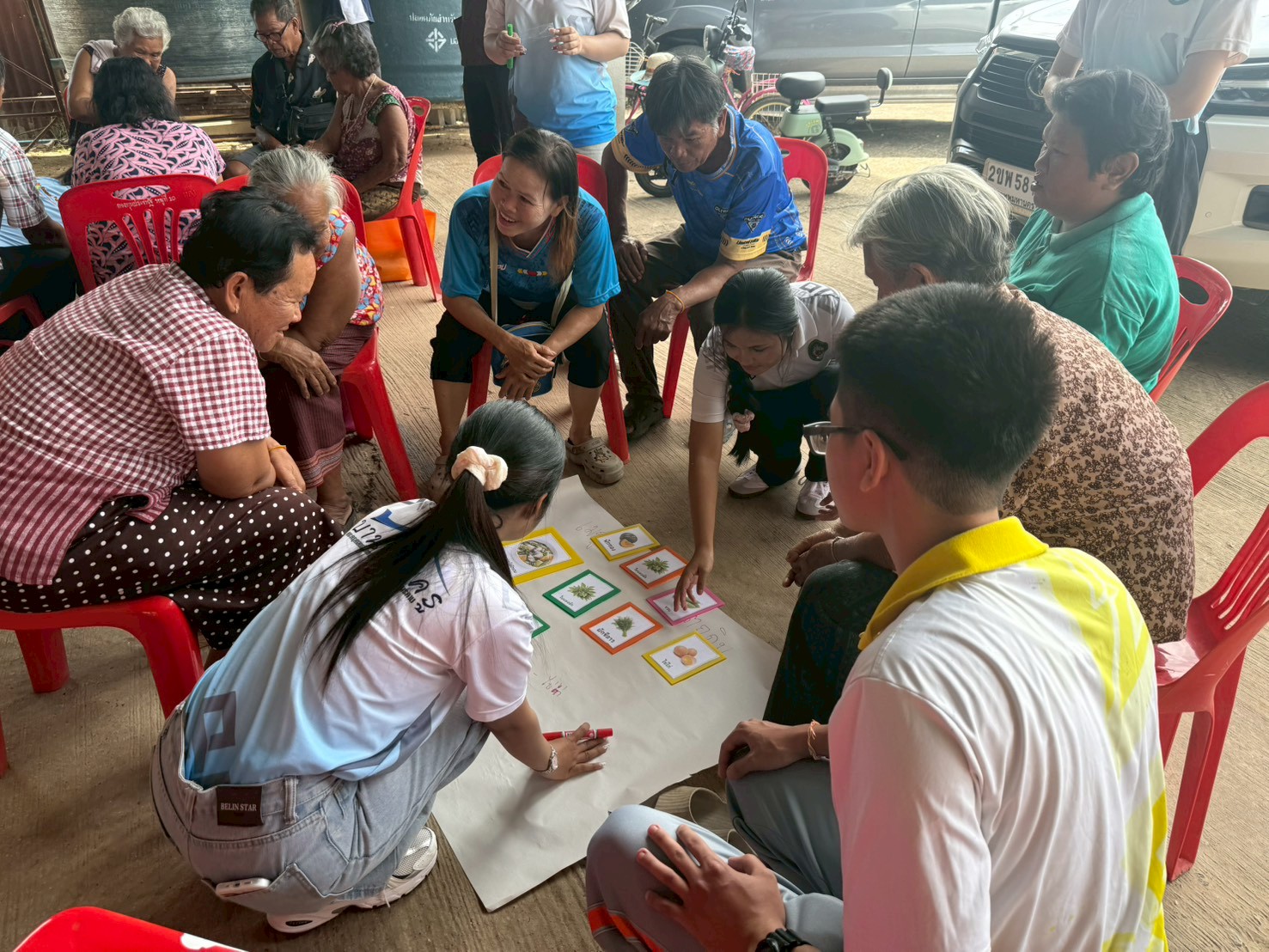
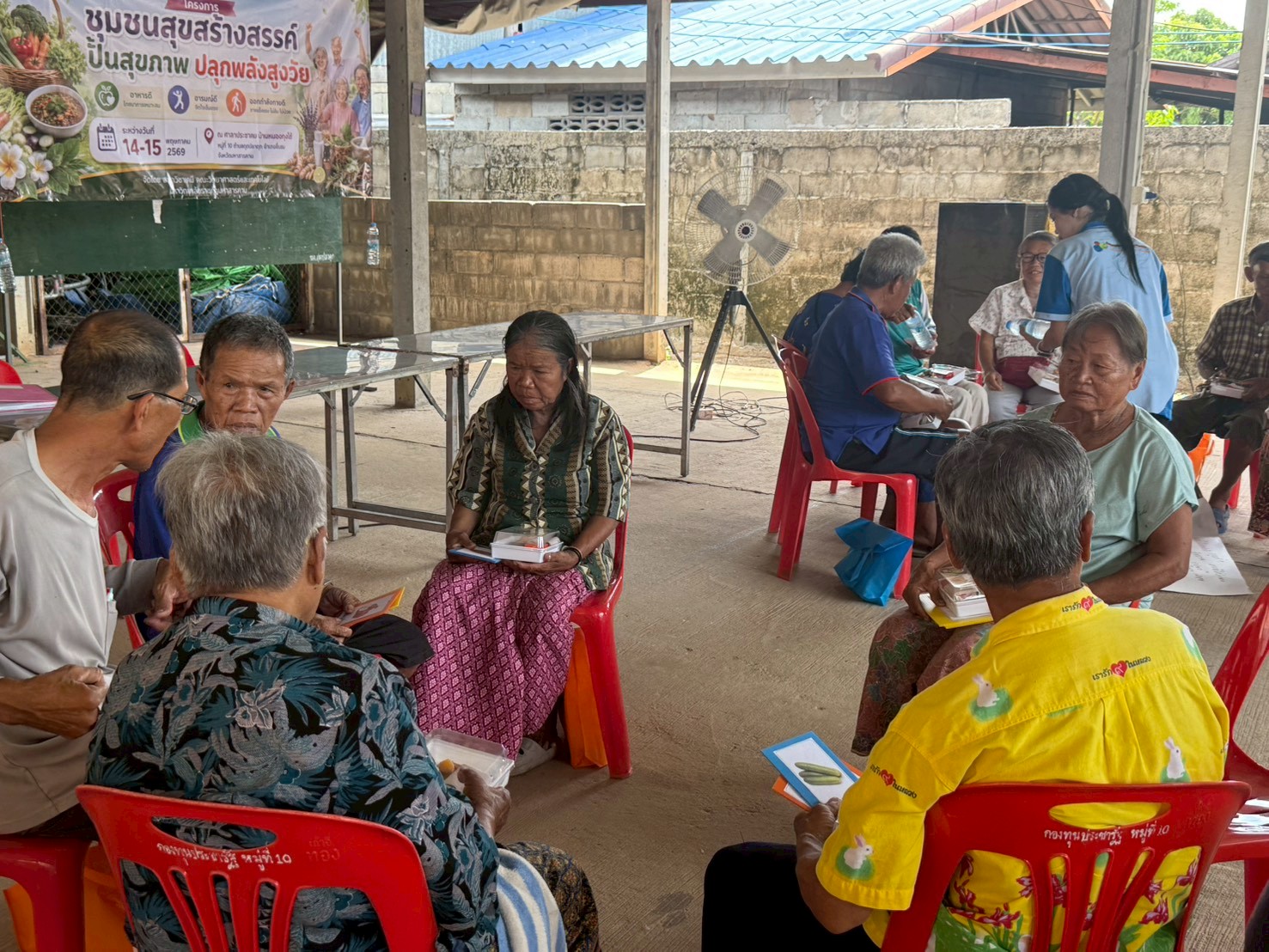
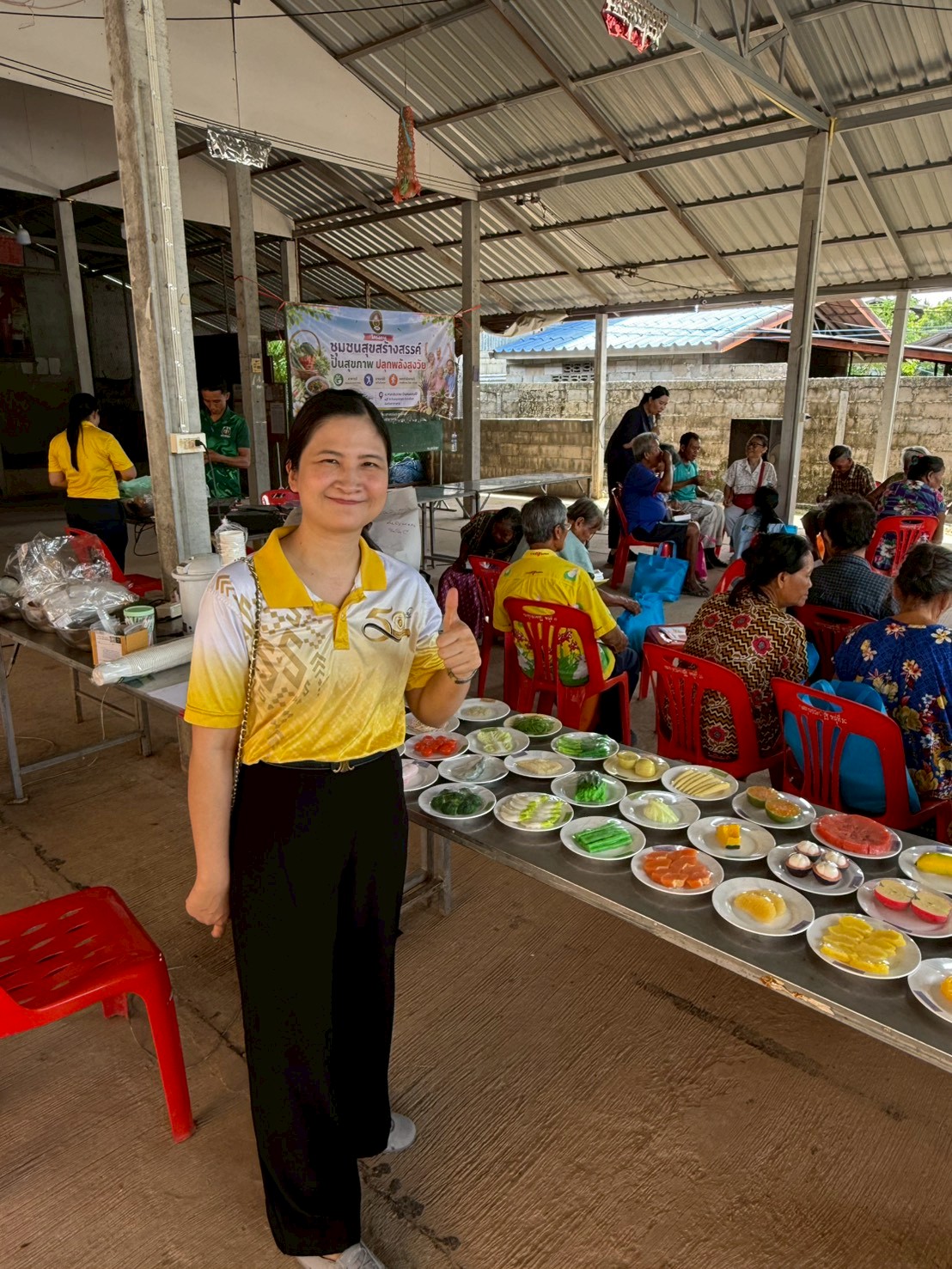
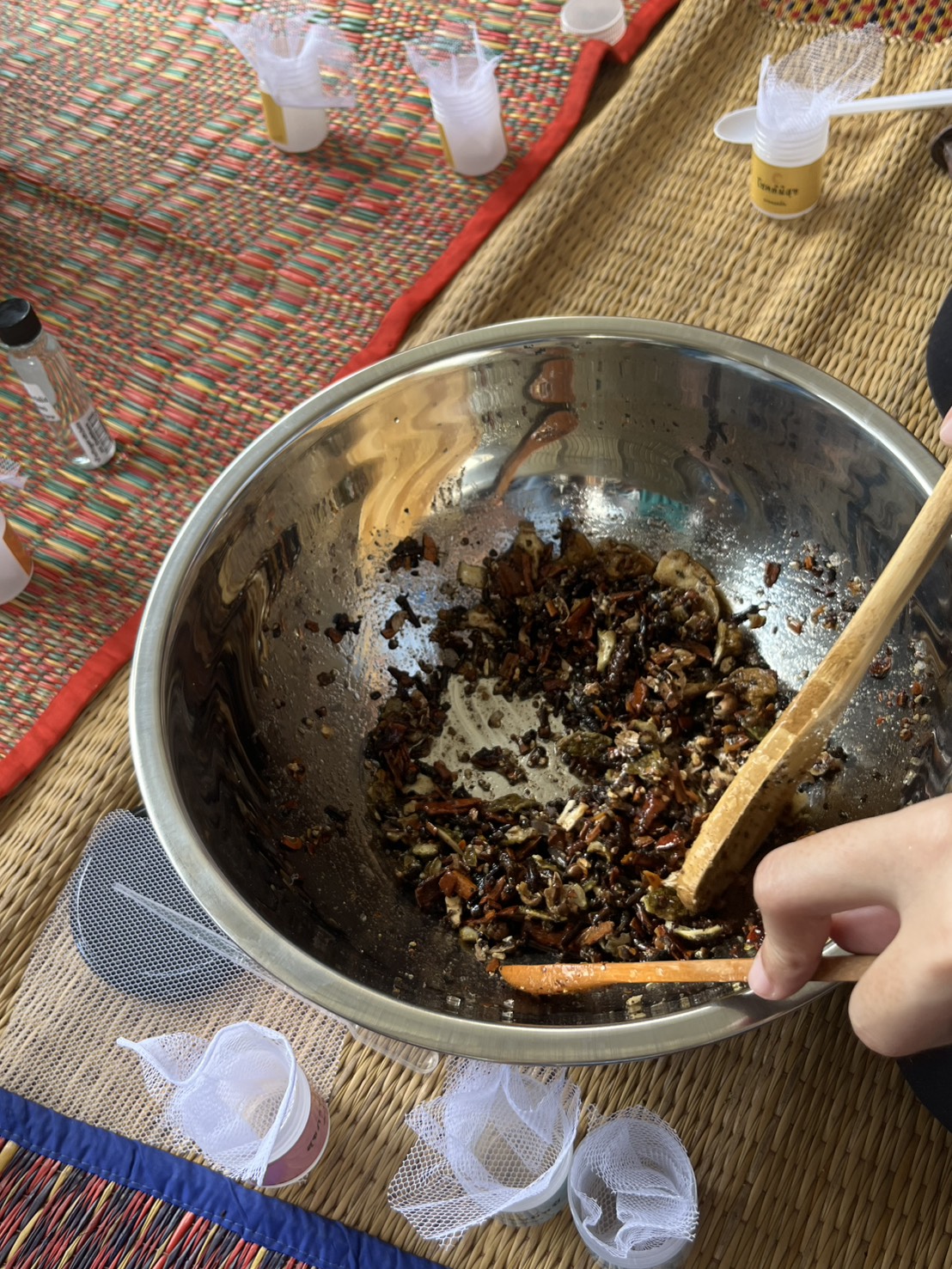
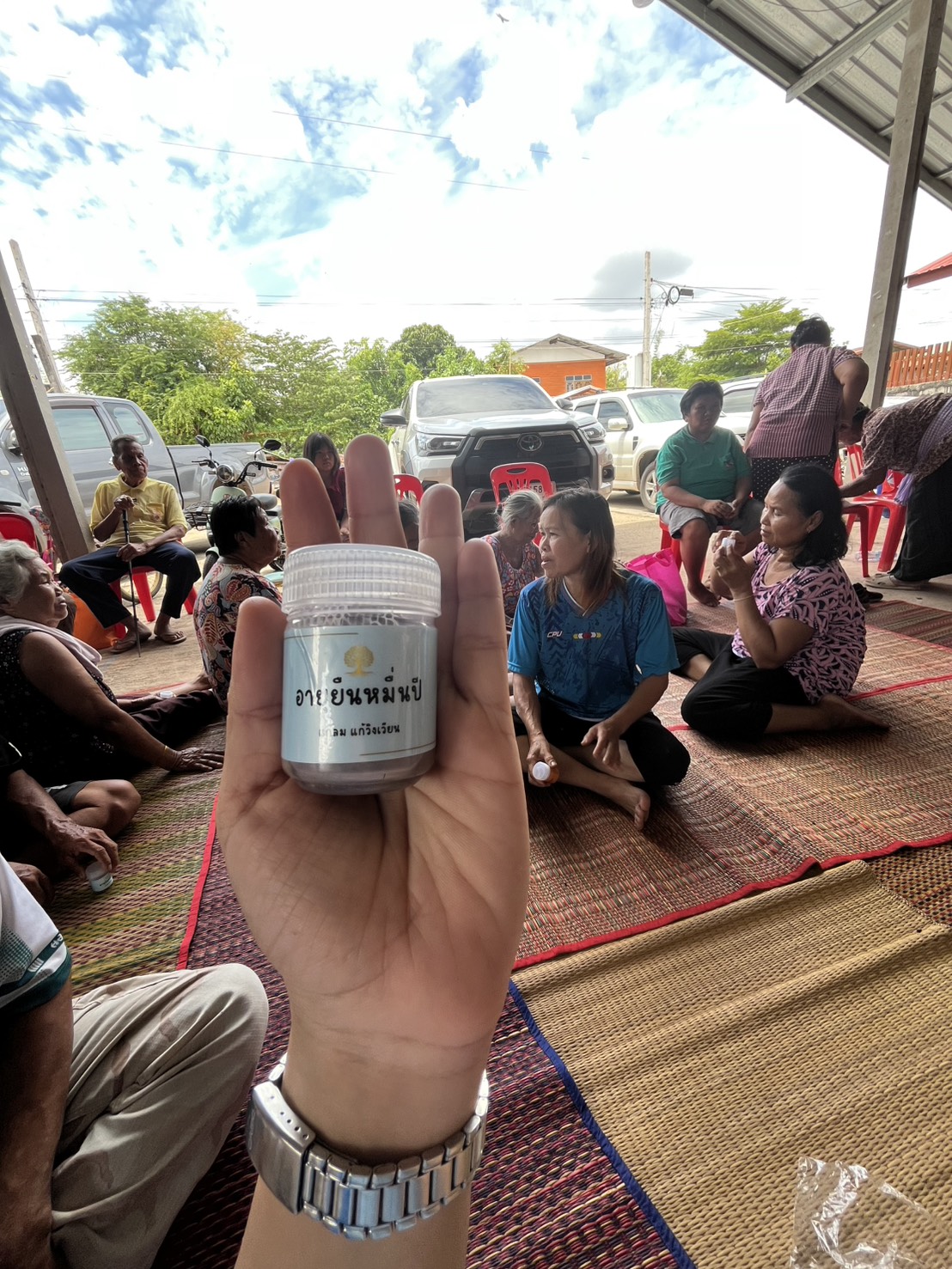
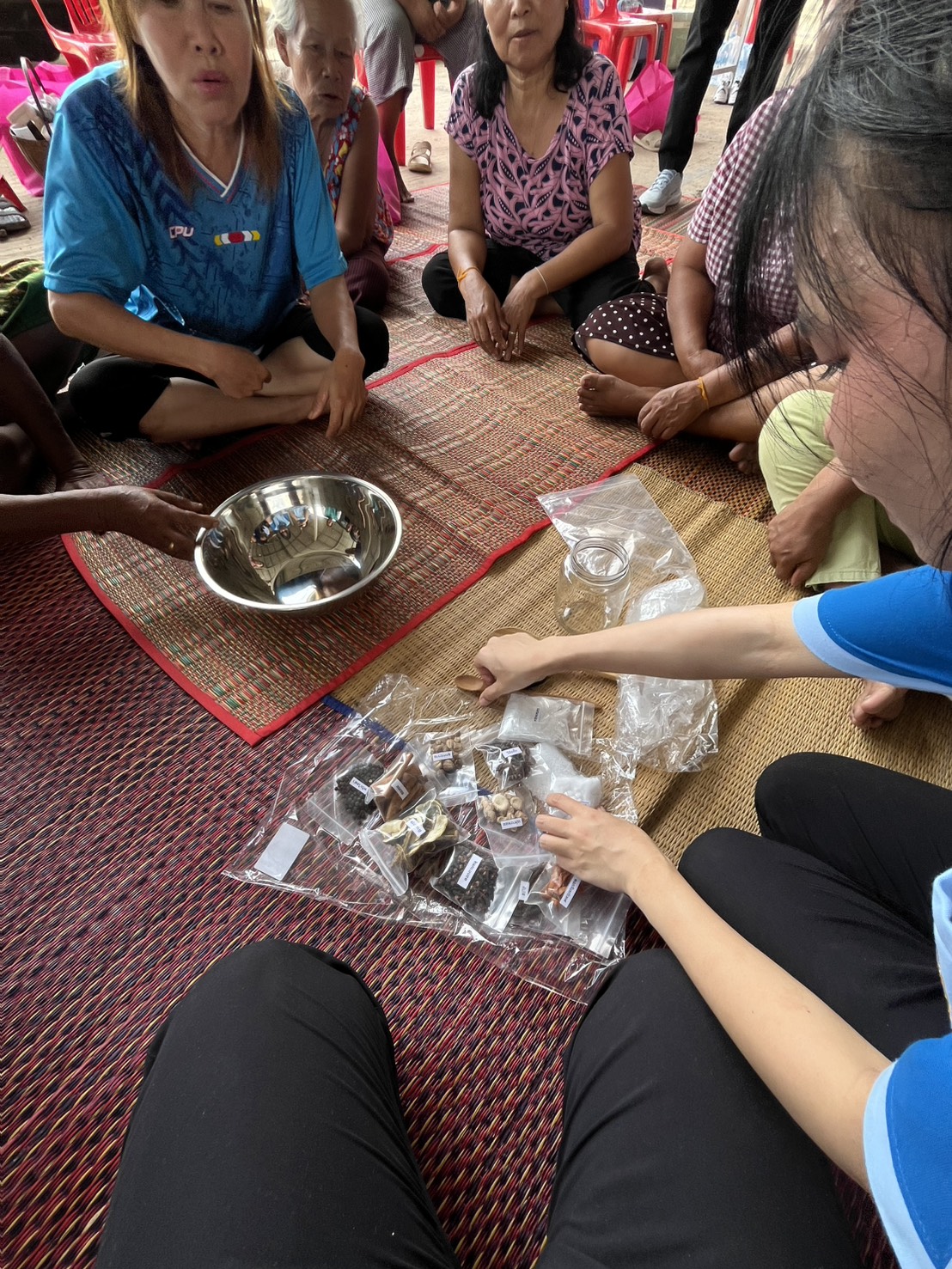
Students provided guidance and assistance to older adults during practical activities, including healthy menu analysis, appropriate physical exercise, and herbal inhaler preparation.
3. Supporting Intergenerational Learning
Students participated in knowledge and experience sharing with older adults, enabling them to gain firsthand understanding of the community's health context, lifestyles, needs, and local practices.
4. Participating in Data Collection and Project Evaluation
Students assisted with the distribution and collection of questionnaires, the collection of Pre-test/Post-test data, and the recording of participants' attendance and participation in project activities.
Roles of Lecturers and Staff Members
1. Planning and Supervising Project Implementation
Lecturers and staff members planned and supervised the project to ensure that its implementation was consistent with the project objectives and performance indicators.
2. Providing Knowledge and Expertise
They provided knowledge related to health promotion, herbal utilization, and healthy living practices appropriate for older adults.
3. Ensuring Safety During Activities
They supervised and provided safety guidance throughout the activities, particularly during physical exercise and the use of herbal materials.
4. Mentoring and Supporting Students in Fieldwork
Lecturers and staff members provided guidance, supervision, and support to students during their practical work and interactions with the community.
5. Participating in Data Collection, Analysis, and Reporting
They participated in data collection, analysis of project outcomes, and preparation of the project implementation report.
Outcomes of Participation
The participation of lecturers, staff members, and students contributed to the development of their practical skills in working with communities, while the community benefited from academic knowledge, technical support, and learning opportunities provided by the university. The project therefore fostered a two-way learning process among the university, students, and the community, strengthening collaboration between higher education and the local community and promoting sustainable community development.
โครงการส่งเสริมการมีส่วนร่วมของอาจารย์ บุคลากร และนักศึกษาในการดำเนินงานร่วมกับชุมชน ตั้งแต่การเตรียมการ การจัดกิจกรรม การสนับสนุนการเรียนรู้เชิงปฏิบัติการ การเก็บรวบรวมข้อมูล และการประเมินผล โดยมีผู้เข้าร่วมจากมหาวิทยาลัย ได้แก่ อาจารย์และบุคลากร จำนวน 12 คน และนักศึกษา จำนวน 20 คน ร่วมปฏิบัติงานกับกลุ่มผู้สูงอายุ จำนวน 35 คน รวมผู้เข้าร่วมโครงการทั้งสิ้น 67 คน
บทบาทของนักศึกษา
1. ร่วมเตรียมและจัดกิจกรรมการเรียนรู้ โดยช่วยจัดเตรียมสถานที่ วัสดุอุปกรณ์ เอกสาร และฐานกิจกรรมให้เหมาะสมกับผู้สูงอายุ
2. เป็นผู้ช่วยวิทยากรและผู้ดูแลฐานกิจกรรม โดยให้คำแนะนำและอำนวยความสะดวกแก่ผู้สูงอายุในการทำกิจกรรมเชิงปฏิบัติการ เช่น การวิเคราะห์เมนูสุขภาพ การออกกำลังกาย และการทำยาดมสมุนไพร
3. สนับสนุนการเรียนรู้ระหว่างวัย (Intergenerational Learning) ผ่านการแลกเปลี่ยนประสบการณ์ระหว่างนักศึกษาและผู้สูงอายุ ทำให้นักศึกษาได้เรียนรู้บริบทสุขภาพและวิถีชีวิตของชุมชนจากประสบการณ์จริง
4. มีส่วนร่วมในการเก็บรวบรวมข้อมูลและประเมินผลโครงการ เช่น การแจกและรวบรวมแบบสอบถาม การจัดเก็บข้อมูล Pre-test/Post-test และการบันทึกผลการเข้าร่วมกิจกรรม
บทบาทของอาจารย์และบุคลากร
1. วางแผนและกำกับการดำเนินโครงการให้เป็นไปตามวัตถุประสงค์และตัวชี้วัด
2. ถ่ายทอดองค์ความรู้ด้านการดูแลสุขภาพ การใช้สมุนไพร และการส่งเสริมสุขภาวะให้เหมาะสมกับกลุ่มผู้สูงอายุ
3. ควบคุมและให้คำแนะนำด้านความปลอดภัยระหว่างการทำกิจกรรม โดยเฉพาะกิจกรรมการออกกำลังกายและการใช้วัสดุสมุนไพร
4. ให้คำปรึกษาและดูแลนักศึกษาในการปฏิบัติงานจริงในพื้นที่
5. ร่วมเก็บข้อมูล วิเคราะห์ผล และจัดทำรายงานผลการดำเนินโครงการ
ผลที่เกิดขึ้น: การมีส่วนร่วมดังกล่าวทำให้นักศึกษาและบุคลากรได้พัฒนาทักษะการทำงานกับชุมชน ขณะที่ชุมชนได้รับองค์ความรู้และการสนับสนุนจากมหาวิทยาลัย เกิดกระบวนการเรียนรู้แบบสองทางระหว่าง “มหาวิทยาลัย–นักศึกษา–ชุมชน”
Project Continuity ความต่อเนื่องของโครงการ
The project was designed to ensure continuity beyond the completion of the project activities, with the aim of moving from short-term training toward the development of a “community-based health activity model that can be independently implemented by the community.” The model particularly emphasizes the 3A principles: Alimentation (Healthy Food), Activity (Exercise), and Affect (Emotional Well-being), which are appropriate for promoting healthy aging.
The approaches for ensuring project continuity include:
1. Continuous Application of the Activity Model in the Community
The community can apply the exercise model for older adults developed through the project to organize ongoing group health activities. The intensity and types of exercise can be appropriately adjusted according to the physical conditions and capabilities of older adults.
2. Further Development of Creative Activities for Mental Well-being
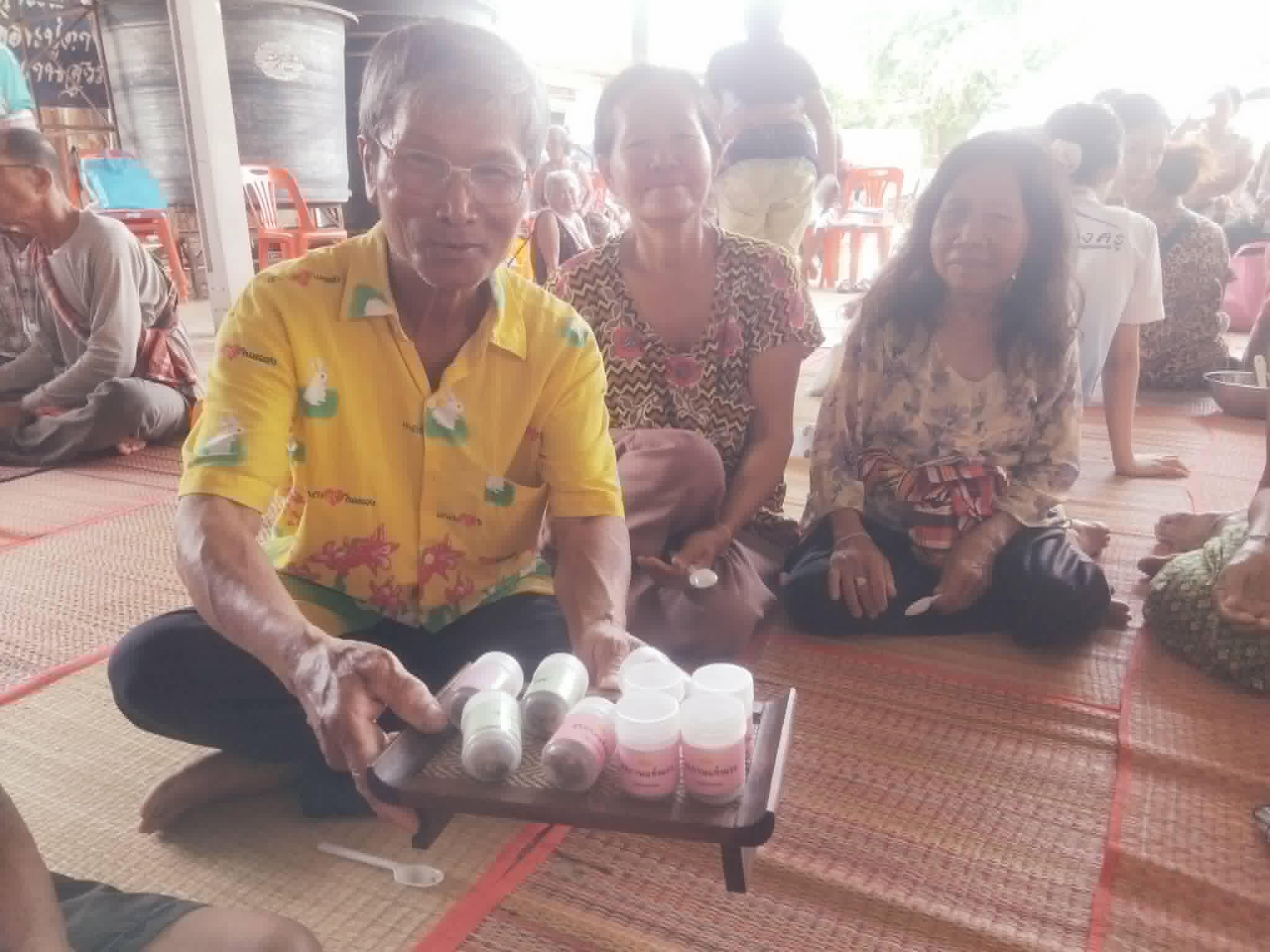
The herbal inhaler-making activity can be further utilized as a creative activity for older adults on various occasions. It can promote meaningful use of leisure time, social interaction, and the utilization of locally available medicinal herbs.
3. Development of Community Leaders and Knowledge-Sharing Mechanisms
Community leaders, Village Health Volunteers, and interested older adults can be encouraged to apply the knowledge gained from the project to share with other community members and to organize health-promoting activities within the community.
4. Post-Project Follow-up and Monitoring
A follow-up approach will be established to monitor the application of knowledge gained from the project, particularly in relation to dietary behaviors, physical activity, and emotional well-being. The findings will be used to assess the continuity of project outcomes and inform the development of future activities.
5. Expansion into Future Community Outreach Activities
The outcomes and experiences gained from the project can serve as a foundation for designing future academic outreach activities, such as the development of herbal products from local resources, the development of health promotion activity packages for older adults, and the establishment of a model for a healthy and sustainable community.
6. Integration with Teaching and Student Development
Experiences gained from working with the community can be incorporated as case studies into courses related to chemistry, natural products, health, or academic outreach. This approach will provide students with opportunities to learn from real-world community needs, problems, and contexts, while developing their skills in knowledge application, communication, teamwork, and community engagement.
โครงการได้รับการออกแบบให้สามารถดำเนินงานต่อเนื่องหลังสิ้นสุดกิจกรรม โดยมุ่งเปลี่ยนจากการอบรมระยะสั้นไปสู่การสร้าง “ต้นแบบกิจกรรมสุขภาพที่ชุมชนสามารถนำไปดำเนินการต่อได้ด้วยตนเอง” โดยเฉพาะองค์ความรู้ตามหลัก 3อ. ได้แก่ อาหาร ออกกำลังกาย และอารมณ์
แนวทางการดำเนินงานต่อเนื่องประกอบด้วย
1. การนำรูปแบบกิจกรรมไปใช้ในชุมชนอย่างต่อเนื่อง
ชุมชนสามารถนำรูปแบบการออกกำลังกายสำหรับผู้สูงอายุที่ได้จากโครงการไปประยุกต์ใช้ในการรวมกลุ่มทำกิจกรรมสุขภาพ โดยปรับความหนักและรูปแบบกิจกรรมให้เหมาะสมกับสภาพร่างกายของผู้สูงอายุ
2. การต่อยอดกิจกรรมสร้างสรรค์เพื่อสุขภาวะจิตใจ
กิจกรรมการทำยาดมสมุนไพรสามารถนำไปใช้เป็นกิจกรรมสร้างสรรค์สำหรับผู้สูงอายุในโอกาสต่าง ๆ เพื่อส่งเสริมการใช้เวลาว่างอย่างมีคุณค่า การมีปฏิสัมพันธ์ทางสังคม และการใช้ประโยชน์จากสมุนไพรในท้องถิ่น
3. การสร้างแกนนำและกลไกการถ่ายทอดความรู้ในชุมชน
ส่งเสริมให้ผู้นำชุมชน อาสาสมัครสาธารณสุขประจำหมู่บ้าน และผู้สูงอายุที่มีความสนใจ สามารถนำความรู้จากโครงการไปถ่ายทอดและจัดกิจกรรมให้กับสมาชิกกลุ่มอื่นได้
4. การติดตามผลหลังดำเนินโครงการ
มีแนวทางติดตามการนำความรู้ไปใช้หลังโครงการ โดยเฉพาะพฤติกรรมด้านอาหาร การออกกำลังกาย และการดูแลสุขภาวะจิตใจ เพื่อประเมินความต่อเนื่องของผลลัพธ์และใช้เป็นข้อมูลสำหรับการพัฒนาโครงการในระยะต่อไป
5. การต่อยอดสู่กิจกรรมบริการวิชาการในปีถัดไป
ผลจากการดำเนินโครงการสามารถใช้เป็นฐานข้อมูลในการออกแบบกิจกรรมระยะต่อไป เช่น การพัฒนาผลิตภัณฑ์สมุนไพรจากทรัพยากรท้องถิ่น การพัฒนาชุดกิจกรรมส่งเสริมสุขภาพผู้สูงอายุ และการสร้างต้นแบบชุมชนสุขภาวะ
6. การเชื่อมโยงกับการเรียนการสอนและการพัฒนานักศึกษา
ประสบการณ์จากพื้นที่สามารถนำกลับมาใช้เป็นกรณีศึกษาในรายวิชาที่เกี่ยวข้องกับเคมี ผลิตภัณฑ์ธรรมชาติ สุขภาพ หรือการบริการวิชาการ เพื่อให้นักศึกษาเรียนรู้จากปัญหาและบริบทจริงของชุมชน
Part 3: Challenges & Suggestions ส่วนที่ 3 ปัญหาอุปสรรค/ข้อเสนอแนะ
Problems & Obstacles ปัญหา/อุปสรรค
1. The limited time available for the activity meant that some participants required more time for practical training and experience sharing.
2. The high temperatures during the project led to fatigue among the elderly participants.
1. ระยะเวลาในการจัดกิจกรรมค่อนข้างจำกัด ทำให้ผู้เข้าร่วมบางส่วนต้องการเวลาในการฝึกปฏิบัติและแลกเปลี่ยนประสบการณ์เพิ่มเติม
2. สภาพอากาศในช่วงดำเนินโครงการมีอุณหภูมิสูง ส่งผลต่อความเหนื่อยล้าของผู้สูงอายุระหว่างการเข้าร่วมกิจกรรม
Improvement Guidelines แนวทางการปรับปรุง
1. Extend the duration of practical activities, adapt the format to a rotating learning base in small groups, and create a manual or digital resource for review and practice after the training.
2. Adjust the schedule so that strenuous activities are in the morning, provide a well-ventilated venue with cooling equipment, prepare drinking water and herbal drinks, and increase rest periods while closely monitoring the health of the elderly participants.
1. เพิ่มระยะเวลาในกิจกรรมเชิงปฏิบัติการ ปรับรูปแบบเป็นฐานการเรียนรู้แบบหมุนเวียนกลุ่มย่อย และจัดทำคู่มือหรือสื่อดิจิทัลสำหรับศึกษาทบทวนและฝึกปฏิบัติภายหลังการอบรม
2. ปรับกำหนดการให้กิจกรรมใช้แรงอยู่ในช่วงเช้า จัดสถานที่ที่มีอากาศถ่ายเทและมีอุปกรณ์คลายร้อน เตรียมน้ำดื่มและเครื่องดื่มสมุนไพร พร้อมเพิ่มช่วงพักและเฝ้าระวังสุขภาพผู้สูงอายุอย่างใกล้ชิด
Suggestions to University ข้อเสนอแนะต่อมหาวิทยาลัย
1. The project should be expanded to other communities in Maha Sarakham province to increase opportunities for the elderly to access knowledge on health promotion.
2. A set of activities and a manual for elderly health care should be developed in digital format so that participants can review and learn independently.
3. The development of herbal products from local wisdom should be further developed into standardized community products to create added value and income for the community.
1. ควรขยายผลโครงการไปยังชุมชนอื่นในจังหวัดมหาสารคาม เพื่อเพิ่มโอกาสให้ผู้สูงอายุเข้าถึงองค์ความรู้ด้านการส่งเสริมสุขภาพ
2. ควรพัฒนาชุดกิจกรรมและคู่มือการดูแลสุขภาพผู้สูงอายุในรูปแบบสื่อดิจิทัล เพื่อให้ผู้เข้าร่วมสามารถทบทวนและเรียนรู้ได้ด้วยตนเอง
3. ควรต่อยอดการพัฒนาผลิตภัณฑ์สมุนไพรจากภูมิปัญญาท้องถิ่นสู่ผลิตภัณฑ์ชุมชนที่มีมาตรฐาน เพื่อสร้างมูลค่าเพิ่มและรายได้ให้แก่ชุมชน