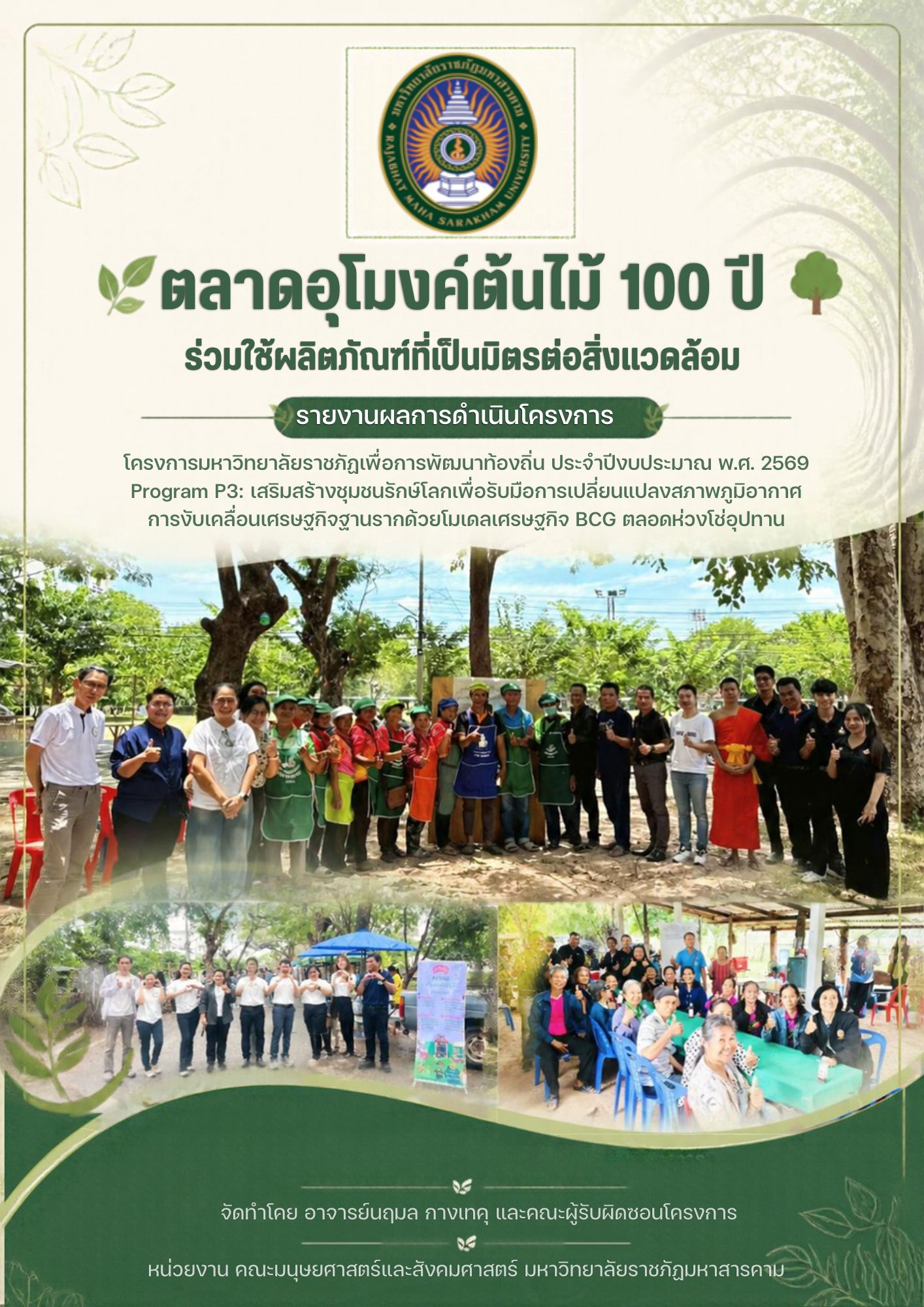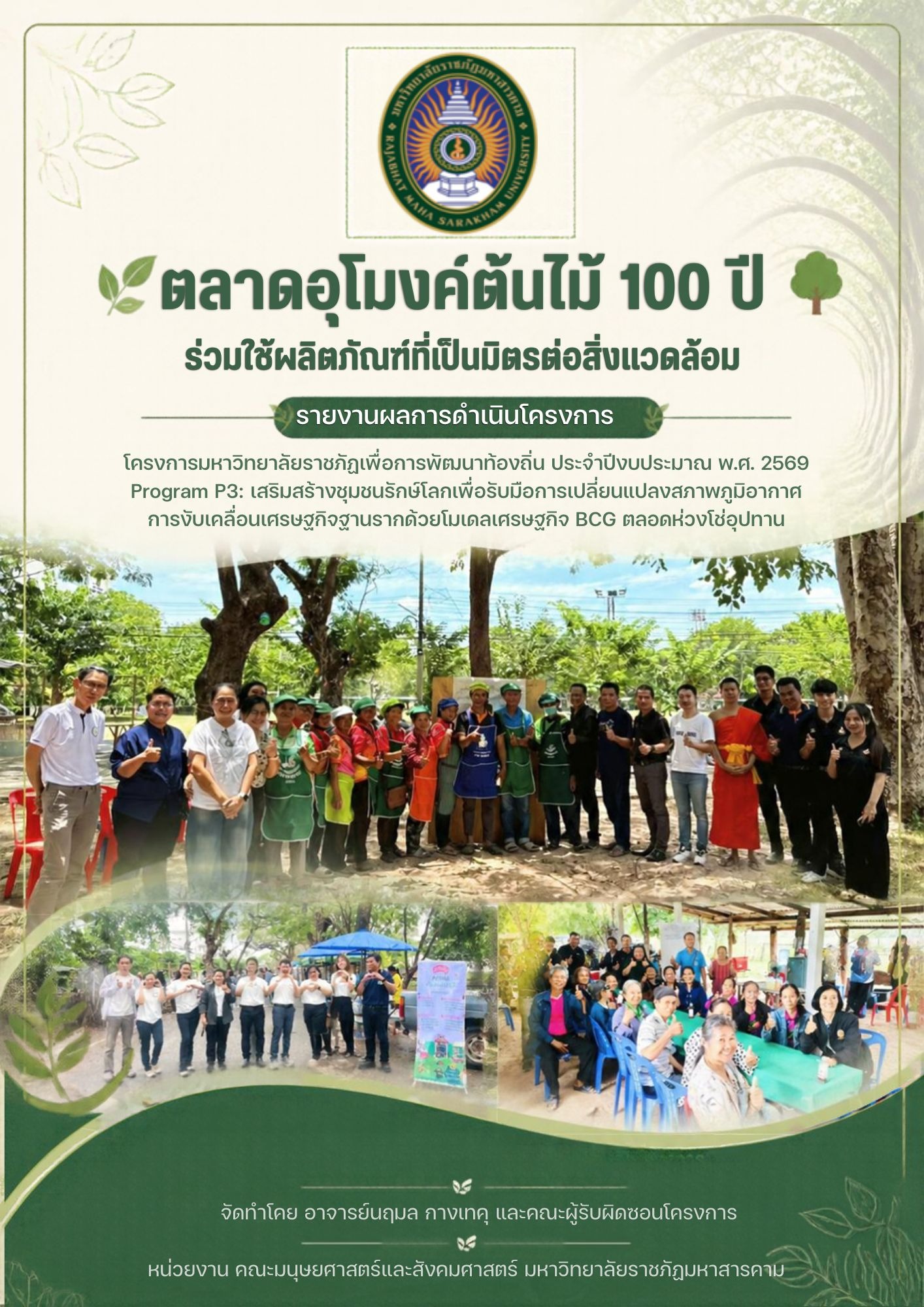
– October 12, 2026 12 ตุลาคม 2569
– 12 ตุลาคม 2569
Part 1: Project Details ส่วนที่ 1 รายละเอียดการดำเนินงาน
Objectives วัตถุประสงค์โครงการ
1. To create a space for the exchange of community-produced goods and student projects, grounded in biodiversity and environmental friendliness.
2. To establish a collaborative network for the development of eco-friendly products, involving local communities, relevant organizations, and the university.
3. To promote agricultural production systems and student work throughout the supply chain, based on the principles of biodiversity.
1. เพื่อสร้างพื้นที่ในการแลกเปลี่ยนผลผลิตและผลิตภัณฑ์ชุมชน และนักศึกษาบนฐานความหลากหลายทางชีวภาพและเป็นมิตรกับสิ่งแวดล้อม
2. เพื่อสร้างเครือข่ายความร่วมมือในการพัฒนาผลิตภัณฑ์ที่เป็นมิตรกับสิ่งแวดล้อมร่วมกับกับชุมชน หน่วยงานที่เกี่ยวข้อง และมหาวิทยาลัย
3. เพื่อส่งเสริมระบบการผลิตของเกษตรกรและผลงานของนักศึกษาตลอดห่วงโซ่อุปทาน (Supply Chain) บนฐานความหลากหลายทางชีวภาพ
Main Activities กิจกรรมหลัก
Upstream
1. Workshop: The Role of Universities in Local and Territorial Development
Midstream
1. Workshop: Building a Circular Economy and Production Wisdom Based on Eco-friendly Bio-resources
Downstream
1. Workshop: Extracting Lessons Learned and Summarizing Knowledge Outcomes
ต้นน้ำ
1. อบรมเชิงปฏิบัติการ บทบาทของมหาวิทยาลัยเพื่อท้องถิ่นกับการพัฒนาเชิงพื้นที่
กลางน้ำ
1. อบรมเชิงปฏิบัติการ การสร้าง เศรษฐกิจหมุนเวียนและภูมิปัญญาการผลิตจากฐานชีวภาพที่เป็นมิตรกับสิ่งแวดล้อม”
ปลายน้ำ
1. อบรมเชิงปฏิบัติการถอดบทเรียนและสรุปผลองค์ความรู้
Part 2: Outcomes & Impact ส่วนที่ 2 ผลลัพธ์และผลกระทบ
Outcomes ผลลัพธ์ที่เกิดขึ้น
1. A 100-year-old tunnel market driven by biodiversity 1 location
2. Environmentally friendly products 5 items
3. Circular economy system generating income 10 percent
1. ตลาดอุโมงค์ 100 ปี ที่ขับเคลื่อนบนฐานความหลากหลายทางชีวภาพ 1 แห่ง
2. ผลิตภัณฑ์ที่เป็นมิตรต่อสิ่งแวดล้อม 5 ชิ้น
3. ระบบเศรษฐกิจหมุนเวียน สร้างรายได้ ร้อยละ 10
Community & Social Impact ผลกระทบต่อชุมชน/สังคม
Economic: Establishes economic linkages spanning the upstream (producers of bio-based raw materials), midstream (processing and product development), and downstream (marketing and distribution) sectors; generates increased and stable income for the community through high-value products.
Social: Serves as a model space for the sale and exchange of eco-friendly products.
Environmental: Promotes the sustainable and conscientious use of resources.
Educational: Functions as a hub for knowledge exchange and learning, focused on driving an eco-friendly economy.
ด้านเศรษฐกิจ เกิดการเชื่อมโยงทางเศรษฐกิจตั้งแต่ต้นน้ำ (ผู้ผลิตวัตถุดิบชีวภาพ) กลางน้ำ (การแปรรูปและพัฒนาผลิตภัณฑ์) จนถึงปลายน้ำ (การตลาดและการจำหน่าย) /ชุมชนมีรายได้ที่เพิ่มขึ้นและมั่นคง จากผลิตภัณฑ์ที่มีมูลค่าสูง
ด้านสังคม เป็นพื้นที่ต้นแบบในการจำหน่ายแลกเปลี่ยนผลิตภัณฑ์ที่เป็นมิตรต่อสิ่งแวดล้อม
ด้านสิ่งแวดล้อม การใช้ทรัพยาการอย่างรู้คุณค่าและยั่งยืน
ด้านการศึกษา พื้้นที่ในการแลกเปลี่ยนเรียนรู้ในการขับเคลื่อนเศรษฐกิจที่เป็นมิตรกับสิ่งแวดล้อม
Student & Staff Participation การมีส่วนร่วมของนักศึกษา/บุคลากร
20 social engineer students
20 faculty members and staff
นักศึกษาวิศวกรสังคม จำนวน 20 คน
คณาจารย์บุคลากร จำนวน 20 คน
Project Continuity ความต่อเนื่องของโครงการ
The community has been using the Umong Market area for the exchange and sale of safe agricultural produce on a regular, monthly basis. To date, this has taken place 10 times, and the initiative will continue. ชุมชนใช้พื้นที่ตลาดอุโมงค์ ในการแลกเปลี่ยนซื้อขายสินค้าเกษตรปลอดภัย ต่อเนื่องเป็นประจำทุกเดือน จนถึงปัจจุบัน จำนวน 10 ครั้ง และจะดำเนินการต่อ
Part 3: Challenges & Suggestions ส่วนที่ 3 ปัญหาอุปสรรค/ข้อเสนอแนะ
Problems & Obstacles ปัญหา/อุปสรรค
3. Knowledge and Management Skills
3.1 Lack of academic knowledge for planning cultivation in a manner appropriate to the seasons and soil types.
3.2 Lack of skills for advanced product processing—for example, processing rice into cosmetic products or food preservation.
3.3 Internal group management challenges arising from differing viewpoints among the participating communities (Ban Khok Lam, Ban Sok Phara, Khok Phak Kut, and Ban Dong Kheng).
3. ด้านองค์ความรู้และทักษะการจัดการ
3.1 ขาดองค์ความรู้เชิงวิชาการในการวางแผนการเพาะปลูกให้เหมาะสมตามฤดูกาลและชุดดิน
3.2 ขาดทักษะการแปรรูปผลผลิตขั้นสูง เช่น การแปรรูปข้าวเป็นเวชสำอาง หรือการถนอมอาหาร
3.3 การบริหารจัดการภายในกลุ่มที่มีความเห็นแตกต่างกัน (บ้านโคกล่าม บ้านโสกภารา โคกผักกูด บ้านดงเค็ง)
Improvement Guidelines แนวทางการปรับปรุง
1) Integrate faculty members and students to share expertise in food processing, food preservation, and the development of high-value-added products—for instance, transforming wild fruits or rice into cosmetic or personal care products.
2) Organize workshops on packaging design and the attainment of community product standards (such as the Community Product Standard or FDA certification) to enhance the economic value and credibility of the goods.
3) Strengthen networks and develop markets.
4) Develop product quality control systems and a Participatory Guarantee System (PGS) to prevent the infiltration of conventional (non-organic) products into the organic market.
5) Facilitate community forums to foster mutual understanding and minimize internal conflict, while also encouraging on-site food processing or cooking at points of sale to prevent spoilage and ensure consumer safety.
1) บูรณาการคณาจารย์และนักศึกษาเข้าไปถ่ายทอดองค์ความรู้ด้านเทคโนโลยีการแปรรูปอาหาร การถนอมอาหาร และการพัฒนาผลิตภัณฑ์มูลค่าสูง เช่น การแปรรูปผลไม้ป่าหรือข้าวเป็นผลิตภัณฑ์เวชสำอาง
2) จัดอบรมเชิงปฏิบัติการด้านการออกแบบบรรจุภัณฑ์ (Packaging Design) และการสร้างมาตรฐานผลิตภัณฑ์ชุมชน (มผช. / อย.) เพื่อเพิ่มมูลค่าทางเศรษฐกิจและความน่าเชื่อถือให้แก่สินค้า
3) การสร้างความเข้มแข็งของเครือข่ายและการพัฒนาตลาด
4) พัฒนาระบบควบคุมคุณภาพสินค้าและระบบรับรองมาตรฐานแบบมีส่วนร่วม (Participatory Guarantee System - PGS) เพื่อป้องกันปัญหาการนำสินค้าทั่วไปมาปะปนในตลาดเกษตรอินทรีย์
5) ส่งเสริมการจัดเวทีประชาคมเพื่อสร้างความเข้าใจอันดีและลดความขัดแย้งภายในกลุ่ม พร้อมทั้งสนับสนุนให้มีการแปรรูปอาหารหรือปรุงสุก ณ จุดจำหน่ายเพื่อป้องกันปัญหาอาหารบูดเสียและสร้างความปลอดภัยแก่ผู้บริโภค
Suggestions to University ข้อเสนอแนะต่อมหาวิทยาลัย
Fostering sustainability through a Memorandum of Understanding (MOU) should involve strengthening collaboration among three sectors—the local community, government agencies, and the university—by formalizing an agreement and establishing a local working group. This group would drive the "100-Year Tree Tunnel Market" initiative, enabling the community to achieve self-reliance and manage the project independently in the long term. การสร้างความยั่งยืนผ่านบันทึกข้อตกลง (MOU) ควรยกระดับความร่วมมือ 3 ภาคส่วน (ชุมชน-หน่วยงาน-มหาวิทยาลัย) ให้มีข้อตกลงร่วมกันอย่างเป็นทางการ (MOU) และจัดตั้งคณะทำงานท้องถิ่นเพื่อขับเคลื่อน ตลาดอุโมงค์ต้นไม้ 100 ปี ให้ชุมชนสามารถพึ่งพาตนเองและบริหารจัดการต่อได้ในระยะยาว