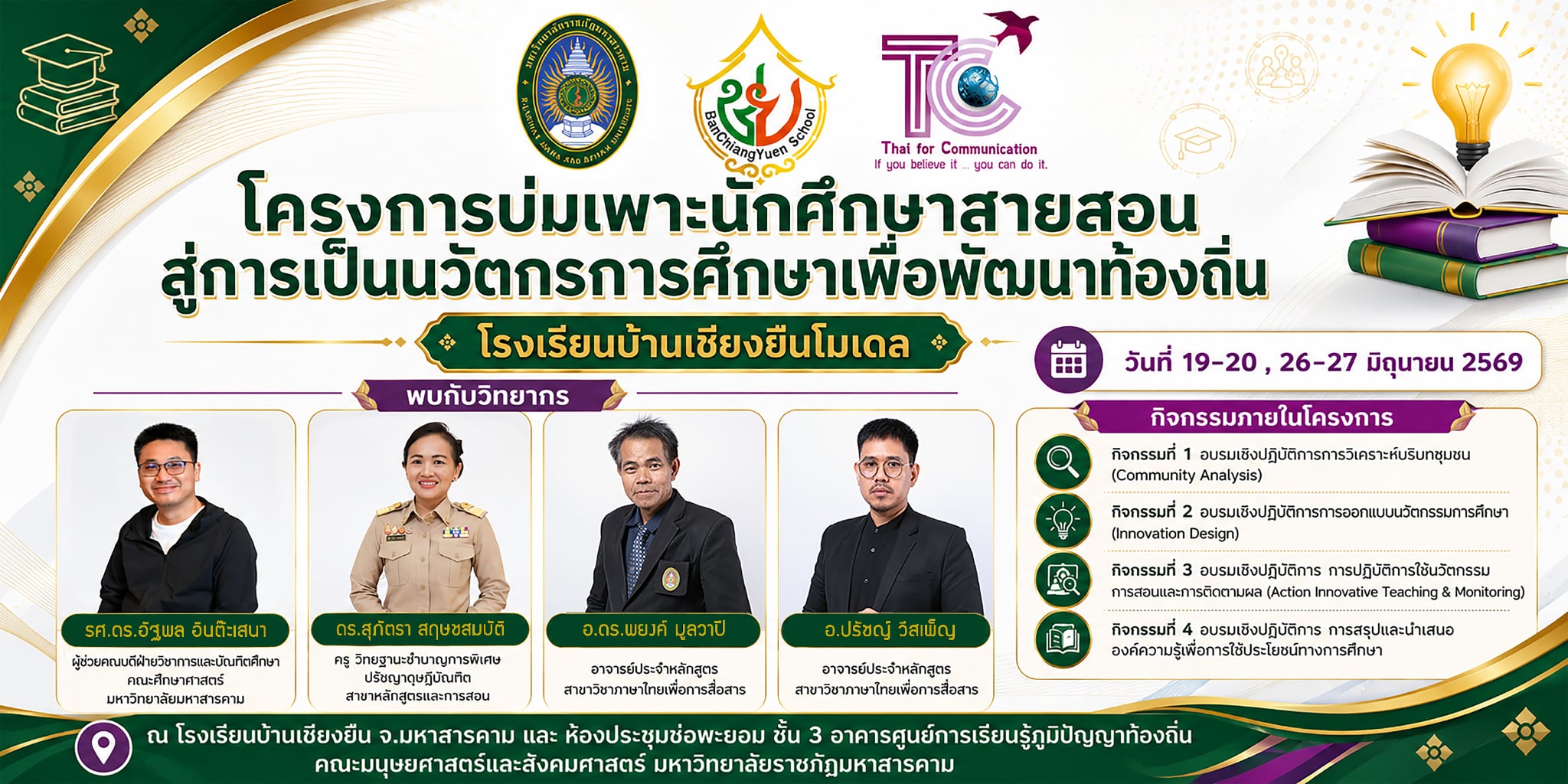
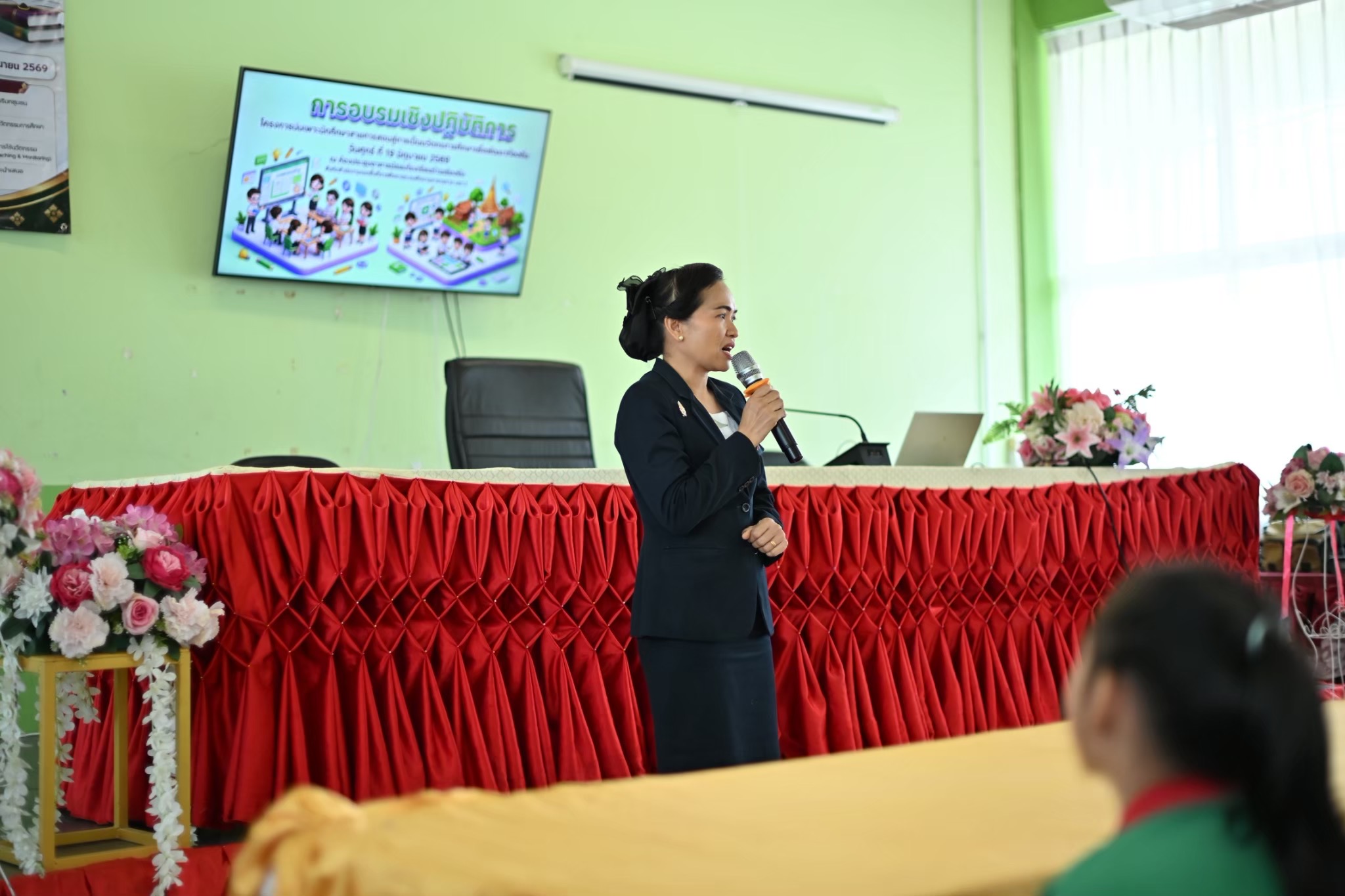
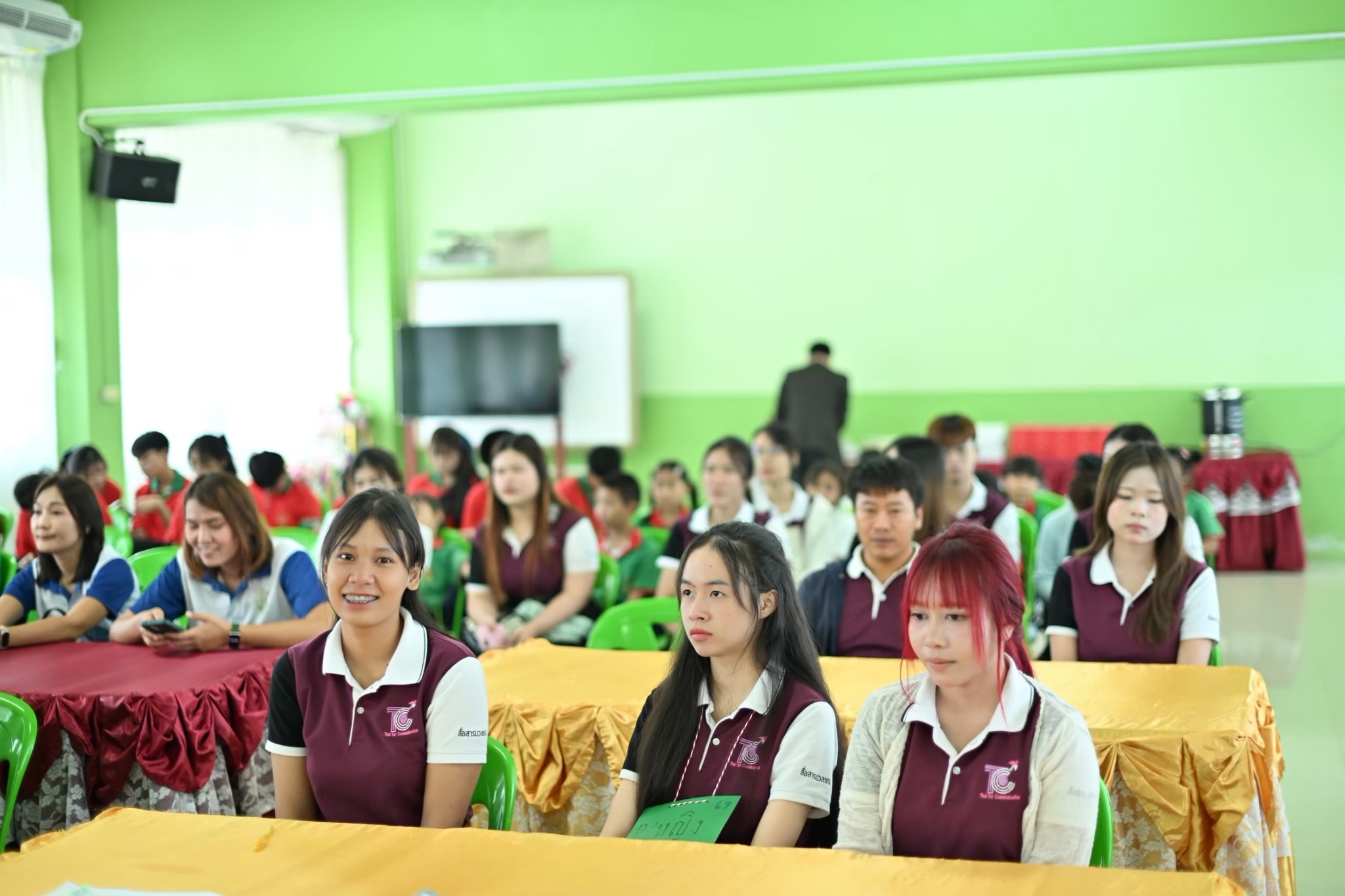
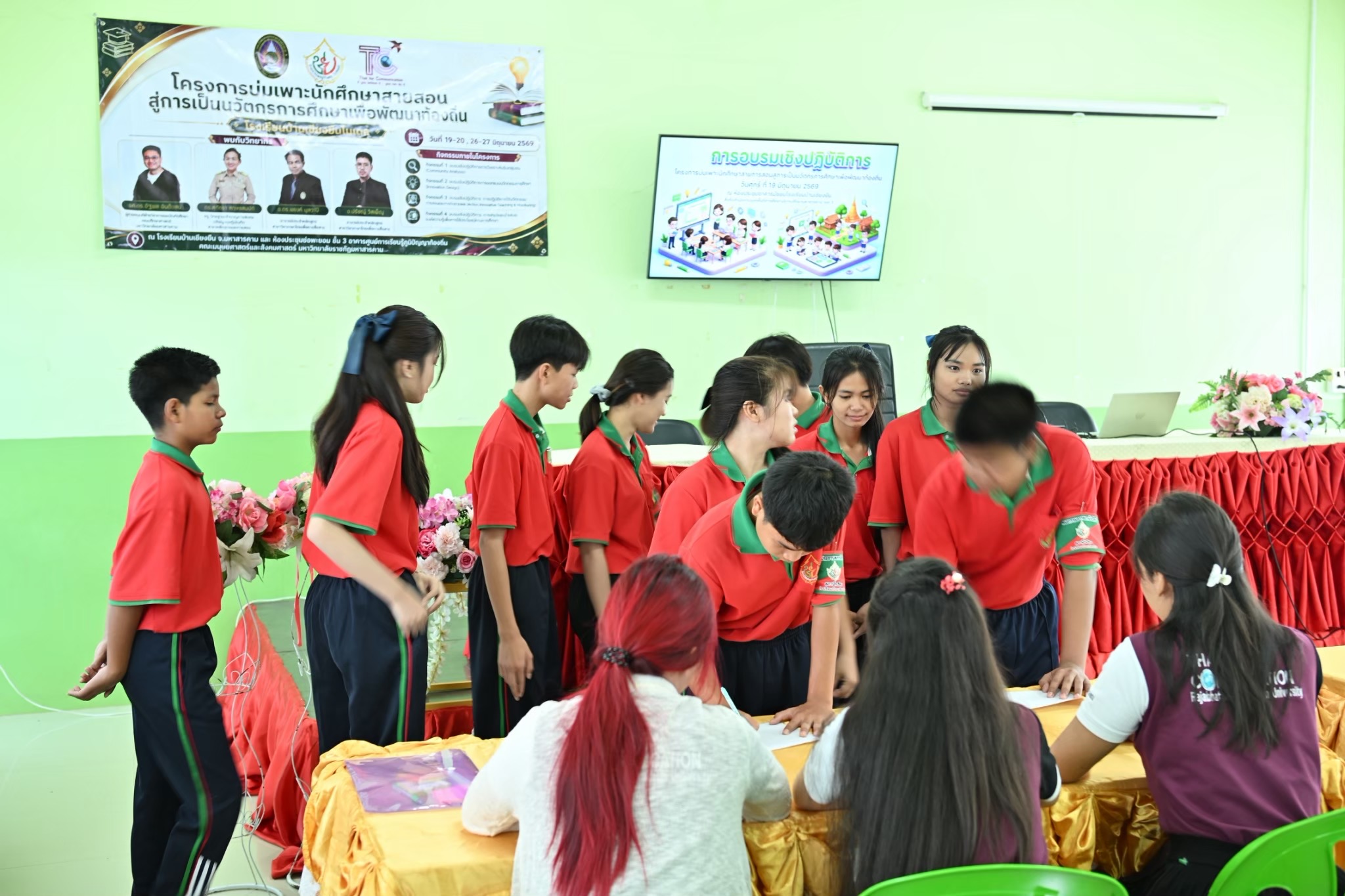
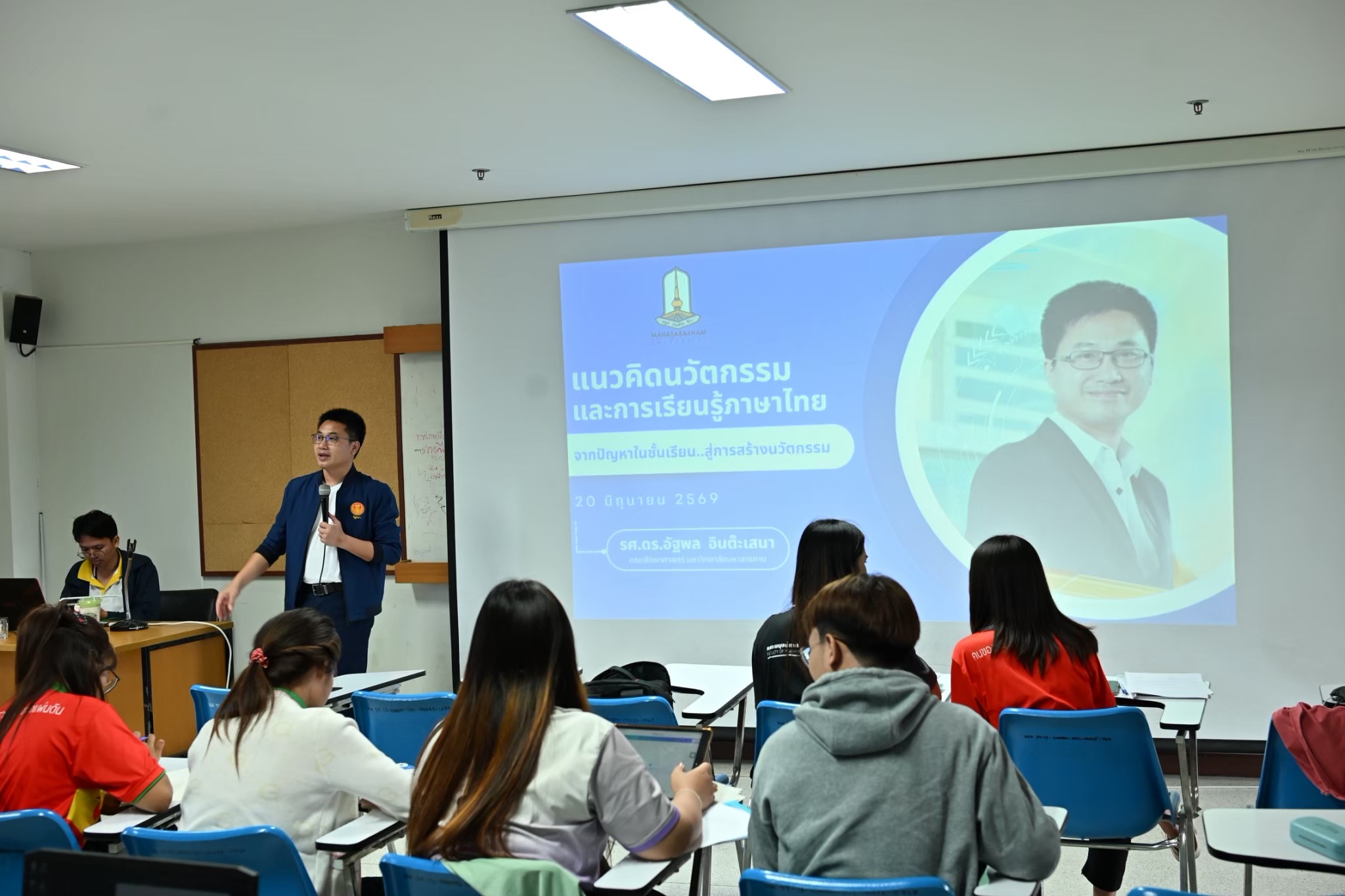
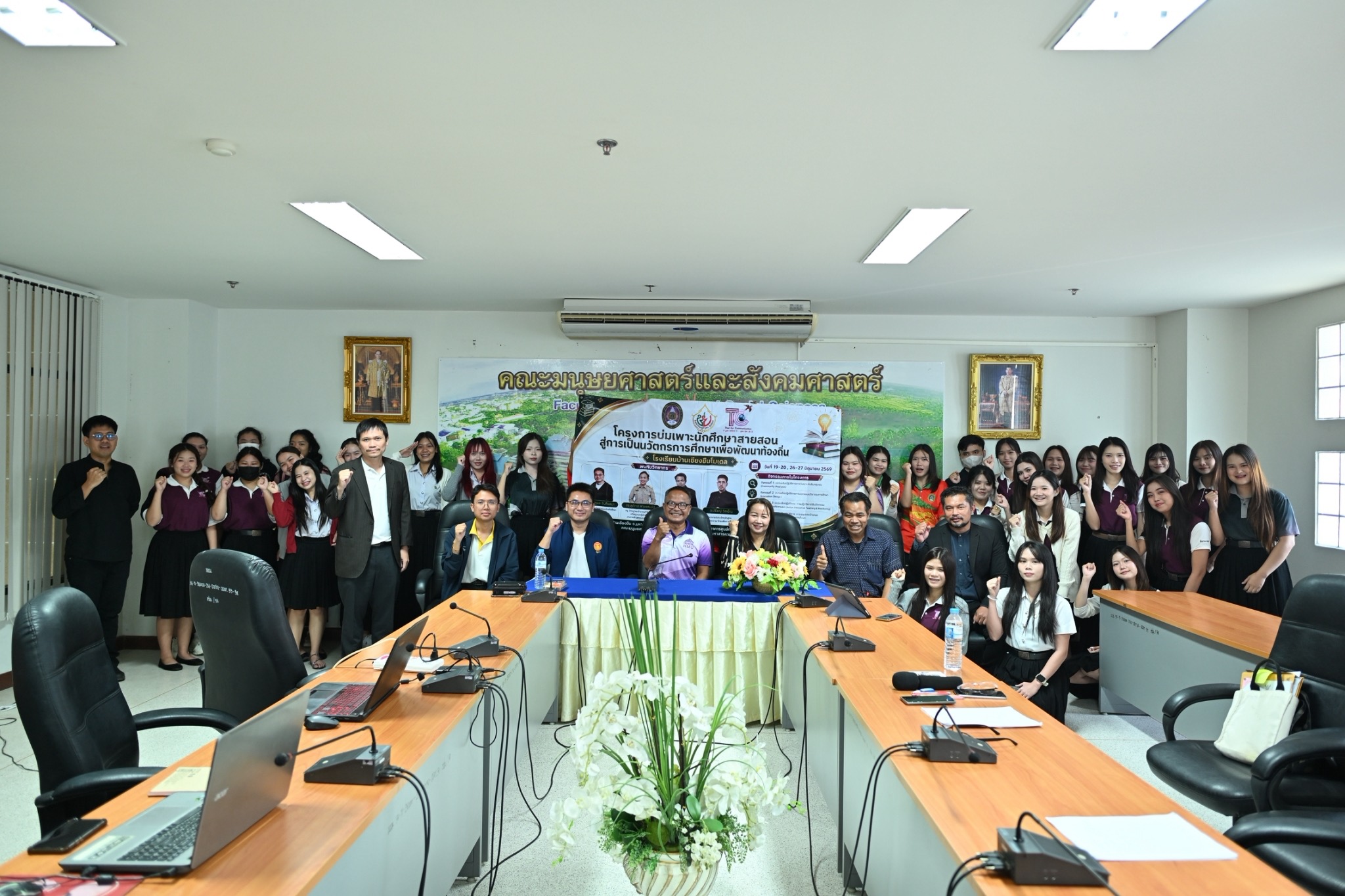
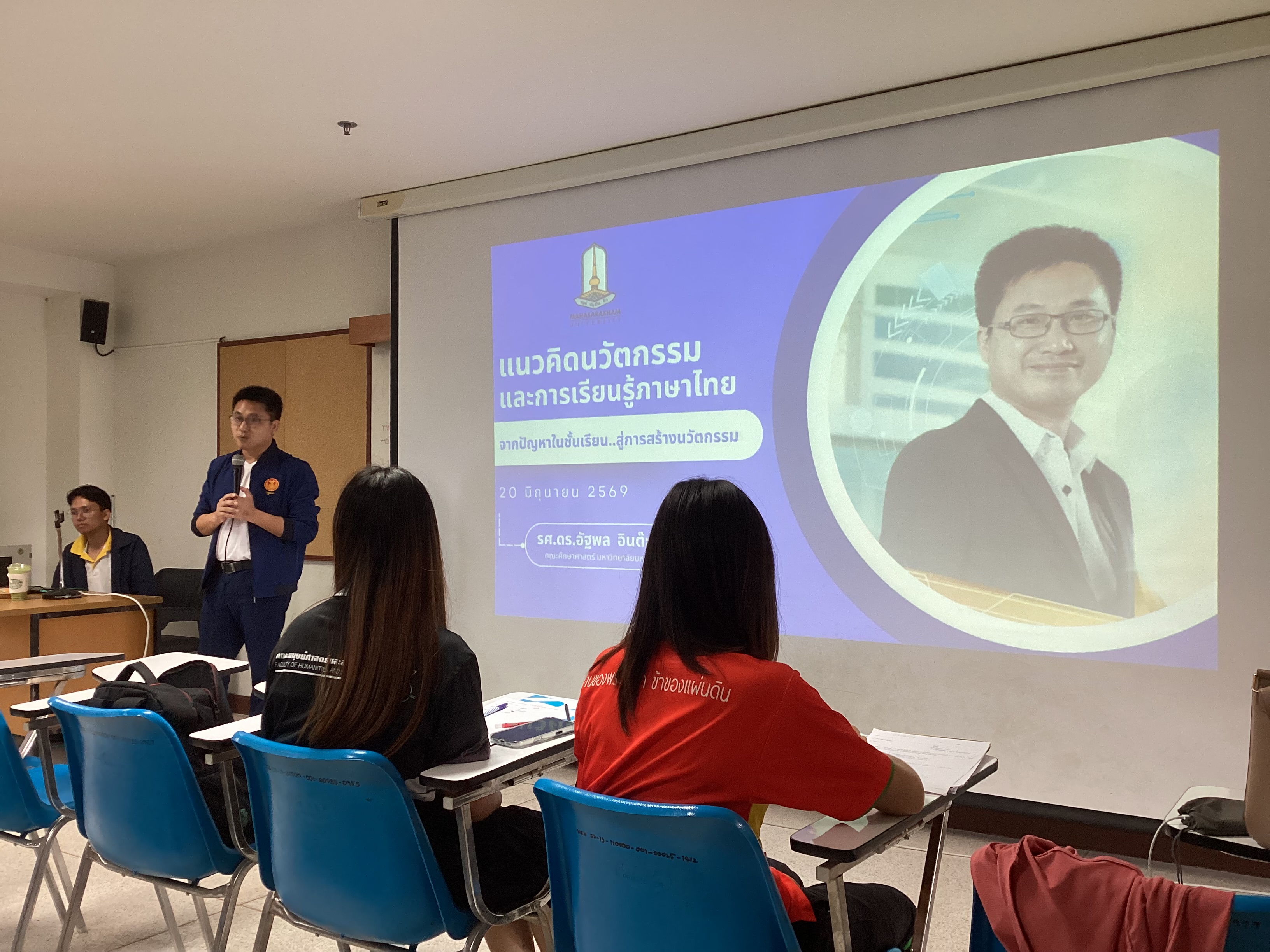
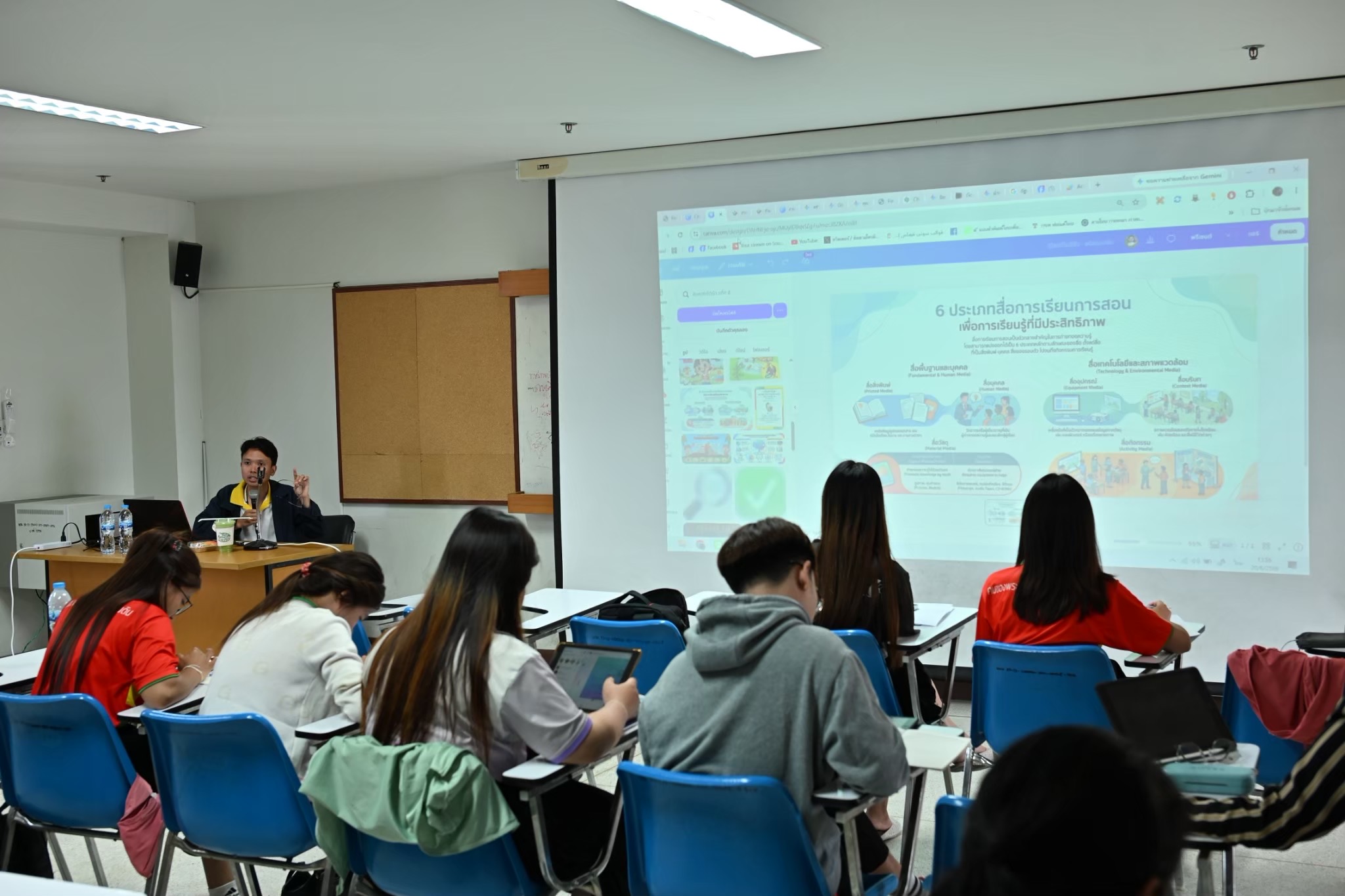
– June 27, 2026 19 มิถุนายน 2569
– 27 มิถุนายน 2569
Part 1: Project Details ส่วนที่ 1 รายละเอียดการดำเนินงาน
Objectives วัตถุประสงค์โครงการ
1. To cultivate students in the Bachelor of Arts program in Thai Language for Communication (Teaching Track) to become “teacher-developers” capable of applying research skills, design thinking, and digital technology to create educational innovations that address local development needs (specifically for the Ban Chiang Yuen School community).
2. To promote and develop teaching innovations for students at Ban Chiang Yuen School (an extended-opportunity school).
3. To enhance the academic achievement of students at Ban Chiang Yuen School (an extended-opportunity school).
1. เพื่อการบ่มเพาะนักศึกษาหลักสูตร ศศ.บ. สาขาภาษาไทยเพื่อการสื่อสาร (สายสอน) ให้มีสมรรถนะ “ครูนักพัฒนา” ที่สามารถประยุกต์ใช้ทักษะการวิจัย การคิดเชิงออกแบบ และเทคโนโลยีดิจิทัลในการสร้างสรรค์นวัตกรรมการศึกษาที่ตอบโจทย์การพัฒนาท้องถิ่น (ชุมชนโรงเรียนบ้านเชียงยืน)
2. เพื่อส่งเสริมพัฒนานวัตกรรมการสอนสำหรับนักเรียนโรงเรียนบ้านเชียงยืน (โรงเรียนขยายโอกาส)
3. เพื่อส่งเสริมผลสัมฤทธิ์ทางการเรียนสำหรับนักเรียนโรงเรียนบ้านเชียงยืน (โรงเรียนขยายโอกาส)
Main Activities กิจกรรมหลัก
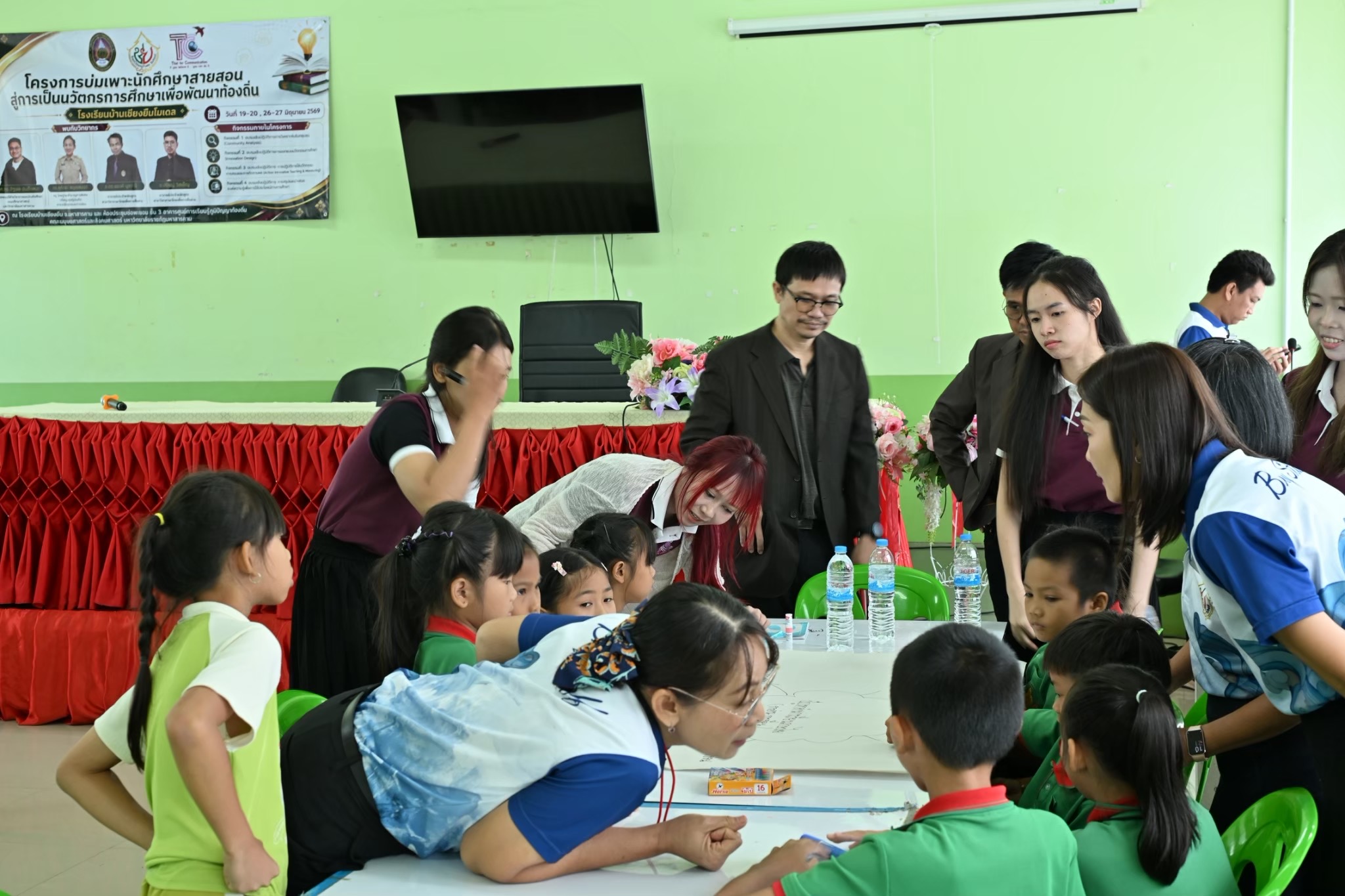
Activity 1: Workshop on Community Analysis to identify innovation challenges.
Activity 2: Workshop on Educational Innovation Design.
Activity 3: Workshop on the Implementation of Innovative Teaching and Monitoring.
Activity 4: Workshop on Synthesizing and Presenting Knowledge for Educational Application.
ดำเนินงานกิจกรรมที่ 1 อบรมเชิงปฏิบัติการการวิเคราะห์บริบทชุมชน (Community Analysis) เพื่อค้นหาโจทย์นวัตกรรม
ดำเนินงานกิจกรรมที่ 2 อบรมเชิงปฏิบัติการการออกแบบนวัตกรรมการศึกษา (Innovation Design)
ดำเนินงานกิจกรรมที่ 3 อบรมเชิงปฏิบัติการ การปฏิบัติการใช้นวัตกรรมการสอนและการติดตามผล (Action Innovative Teaching & Monitoring)
ดำเนินงานกิจกรรมที่ 4 อบรมเชิงปฏิบัติการ การสรุปและนำเสนอองค์ความรู้เพื่อการใช้ประโยชน์ทางการศึกษา
Part 2: Outcomes & Impact ส่วนที่ 2 ผลลัพธ์และผลกระทบ
Outcomes ผลลัพธ์ที่เกิดขึ้น
1. Students in the B.A. program in Thai Language for Communication (Teaching Track) possess the skills to develop innovations for solving real-world problems.
2. Students at Ban Chiang Yuen School gain new learning experiences.
3. The school and its teachers are equipped with new tools and approaches for instructional management.
1. นักศึกษาหลักสูตร ศศ.บ. สาขาวิชาภาษาไทยเพื่อการสื่อสาร (สายสอน) มีทักษะ (Skill) ในการสร้างนวัตกรรมเพื่อแก้ปัญหาจริง
2. นักเรียนโรงเรียนบ้านเชียงยืนได้รับประสบการณ์การเรียนรู้แบบใหม่
3. โรงเรียน/ครูประจำการมีเครื่องมือ/แนวทางใหม่ๆ ในการจัดการเรียนรู้
Community & Social Impact ผลกระทบต่อชุมชน/สังคม
Economic
1. Innovation that focuses on local vocational skills It may help create a career path for students.
2. Students who graduate become higher quality teachers (Human Capital)
Social aspect
1. Create a “model” for cooperation in sustainable development between universities and schools in the area..
2. Help reduce educational inequality for students in schools with expanded opportunities. (fragile group)
Education
1. The university has a "model" for cultivating students in teaching fields that are not directly related to education.
2. Teachers or students receive teaching and learning development with innovations appropriate to their needs.
Environmental
1. Innovations that students create or develop may contribute to the focus on solving waste problems. or conserve local resources
2. A collaborative learning society is born.
ด้านเศรษฐกิจ
1. นวัตกรรมที่มุ่งเน้นทักษะอาชีพท้องถิ่น อาจช่วยสร้างแนวทางอาชีพให้นักเรียน
2. นักศึกษาที่จบไปเป็นครูที่มีคุณภาพสูงขึ้น (Human Capital)
ด้านสังคม
1. สร้าง “โมเดล” ความร่วมมือในการพัฒนาที่ยั่งยืนระหว่างมหาวิทยาลัยและโรงเรียนในพื้นที่..
2. ช่วยลดความเหลื่อมล้ำทางการศึกษาให้กับนักเรียนในโรงเรียนขยายโอกาส (กลุ่มเปราะบาง)
ด้านการศึกษา
1. มหาวิทยาลัยได้ “โมเดล” การบ่มเพาะนักศึกษาสายสอนที่ไม่ใช่ครุศาสตร์โดยตรง
2. ครู หรือนักเรียนได้รับการพัฒนาการเรียนการสอนด้วยนวัตกรรมที่เหมาะสมตามความต้องการ
ด้านสิ่งแวดล้อม
1. นวัตกรรมที่นักศึกษาสร้างหรือพัฒนาอาจมีส่วนในการมุ่งเน้นการแก้ปัญหาขยะ หรืออนุรักษ์ทรัพยากรท้องถิ่นได้
2. เกิดสังคมการเรียนรู้ร่วมกัน
Student & Staff Participation การมีส่วนร่วมของนักศึกษา/บุคลากร
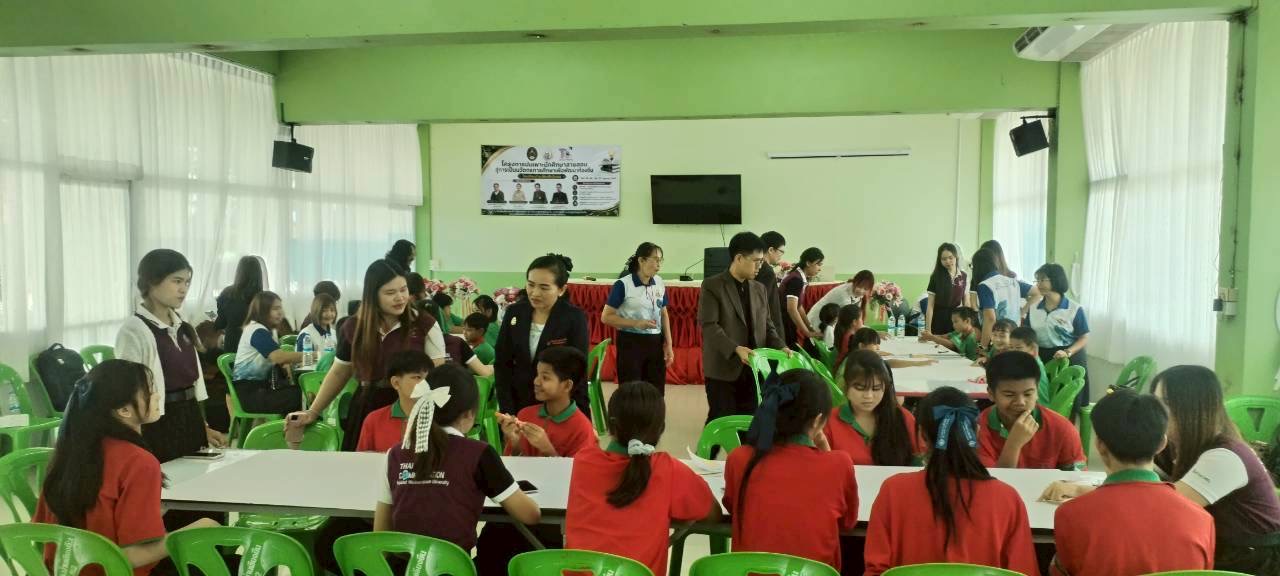
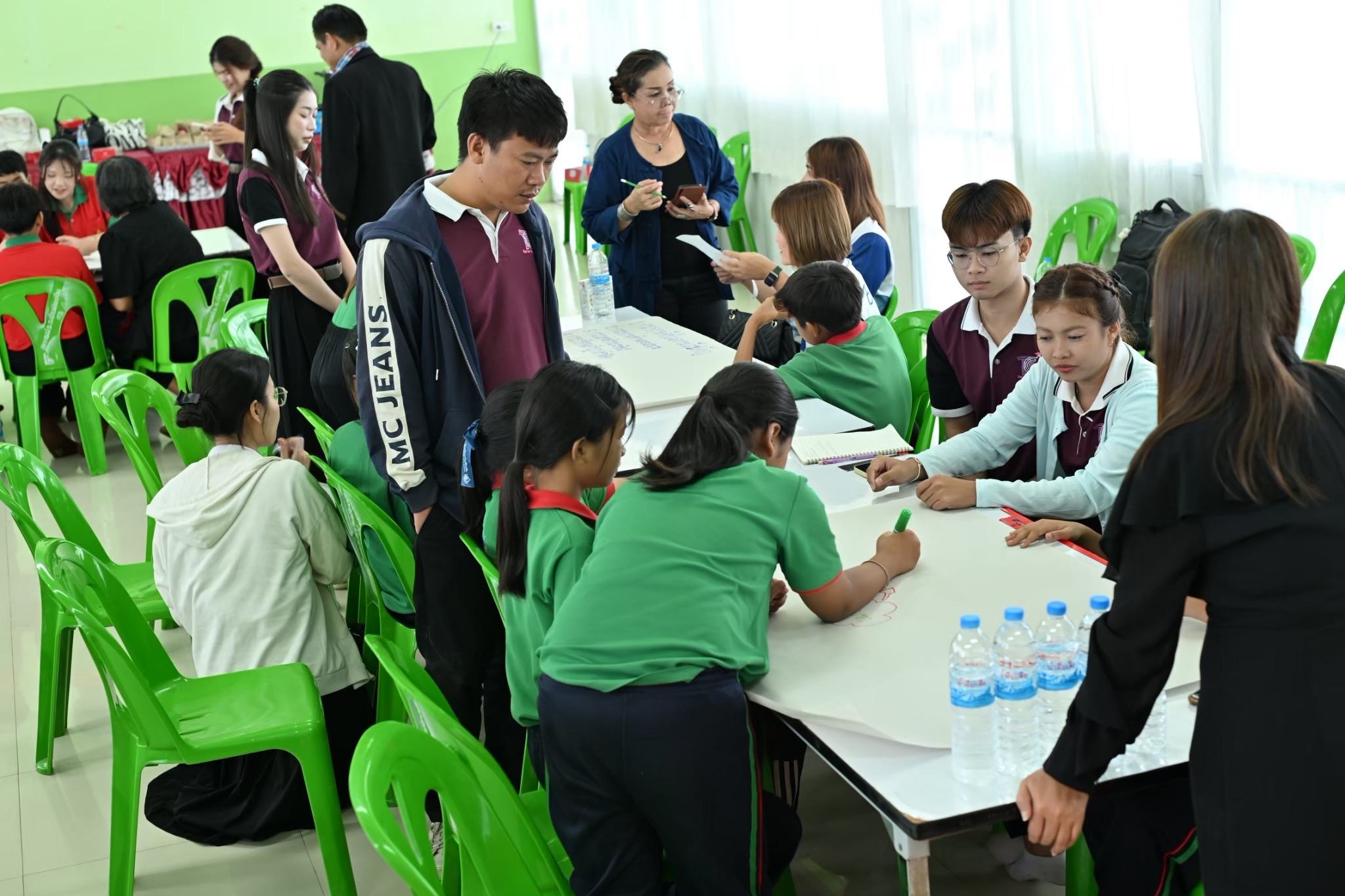
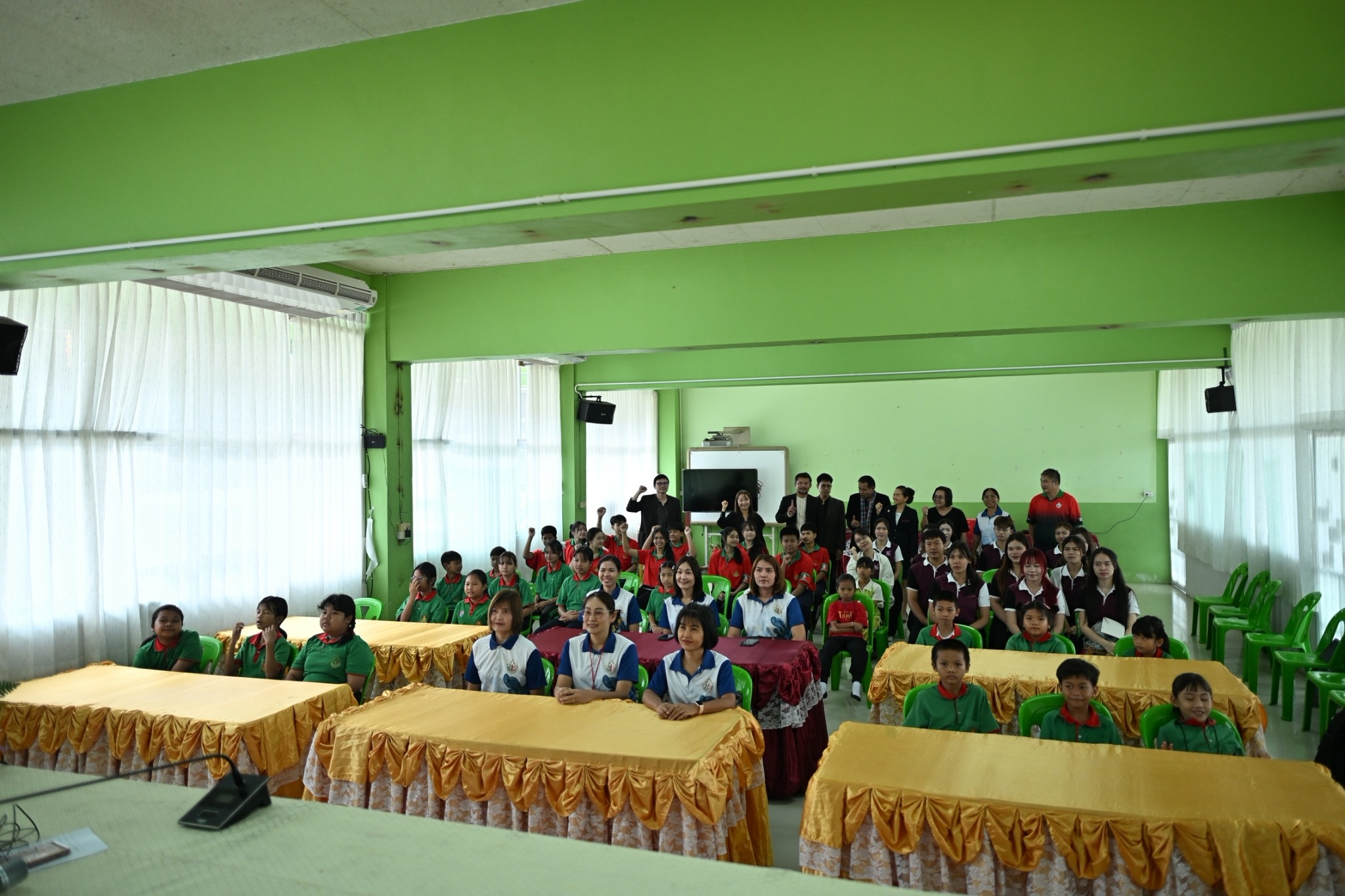
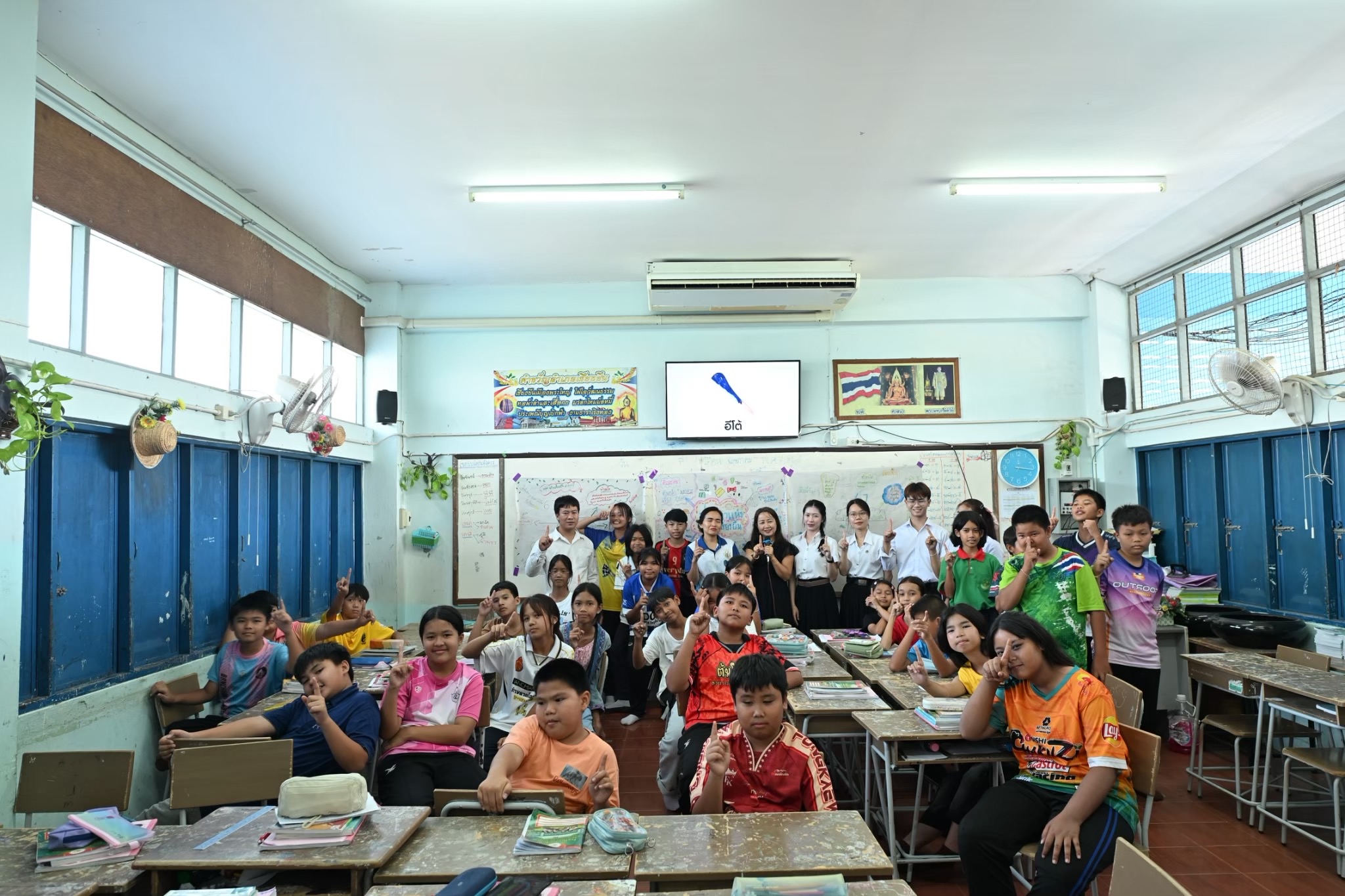
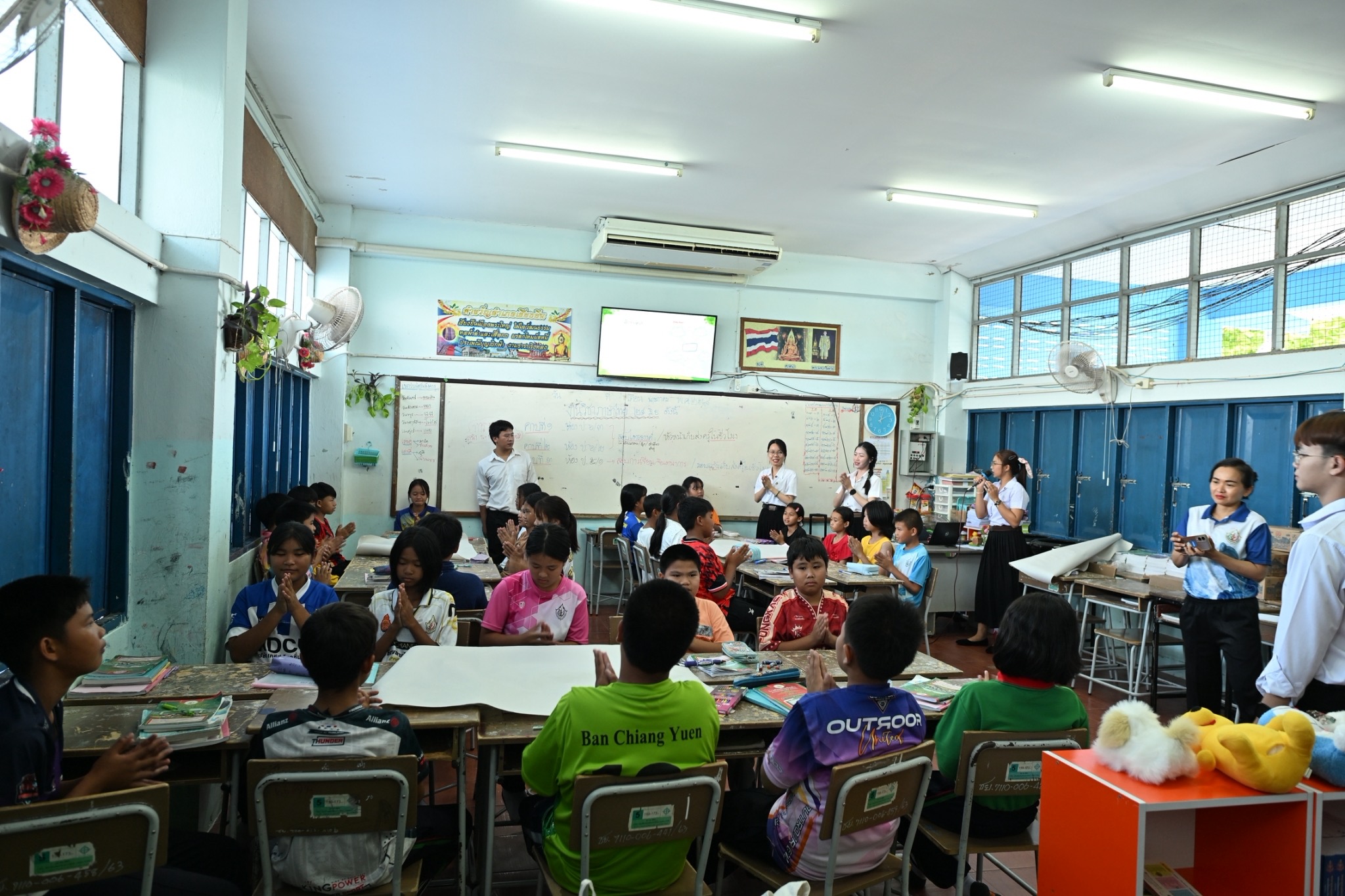
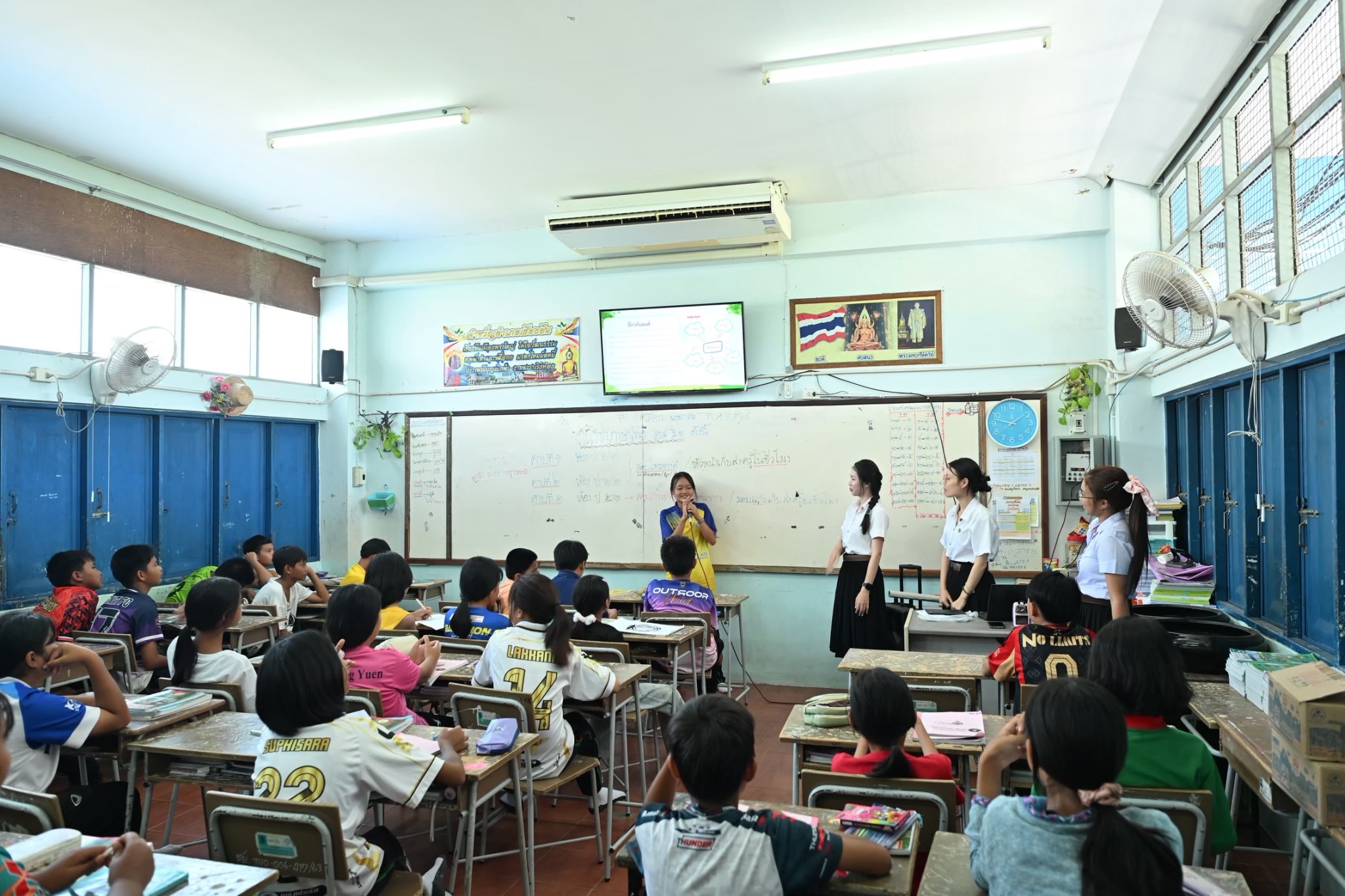
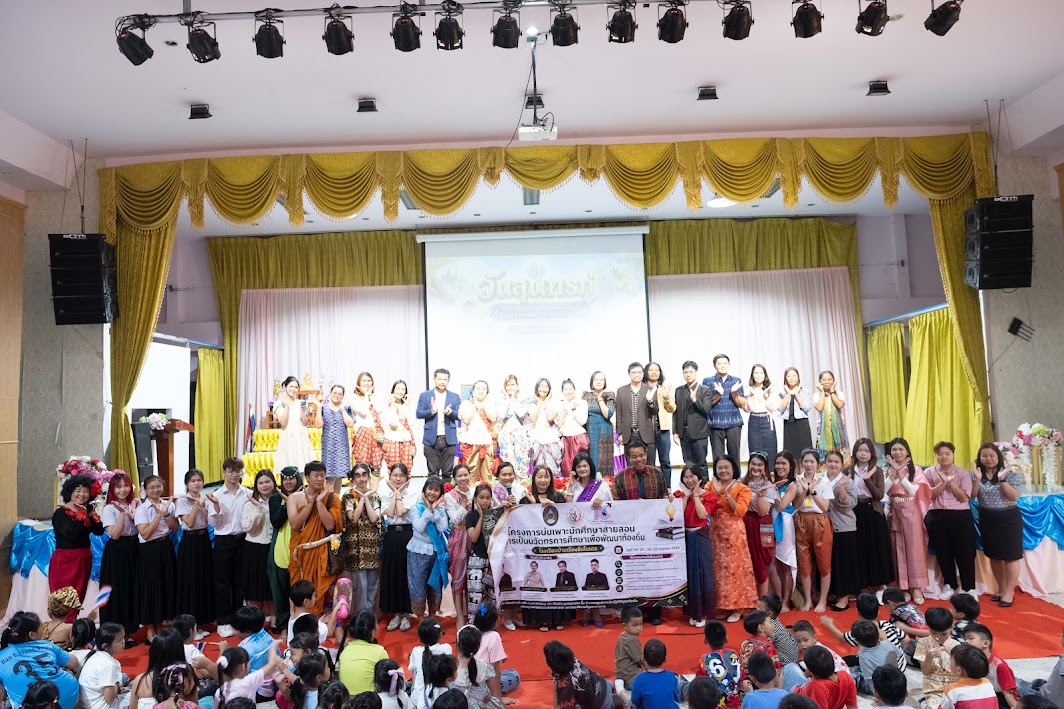
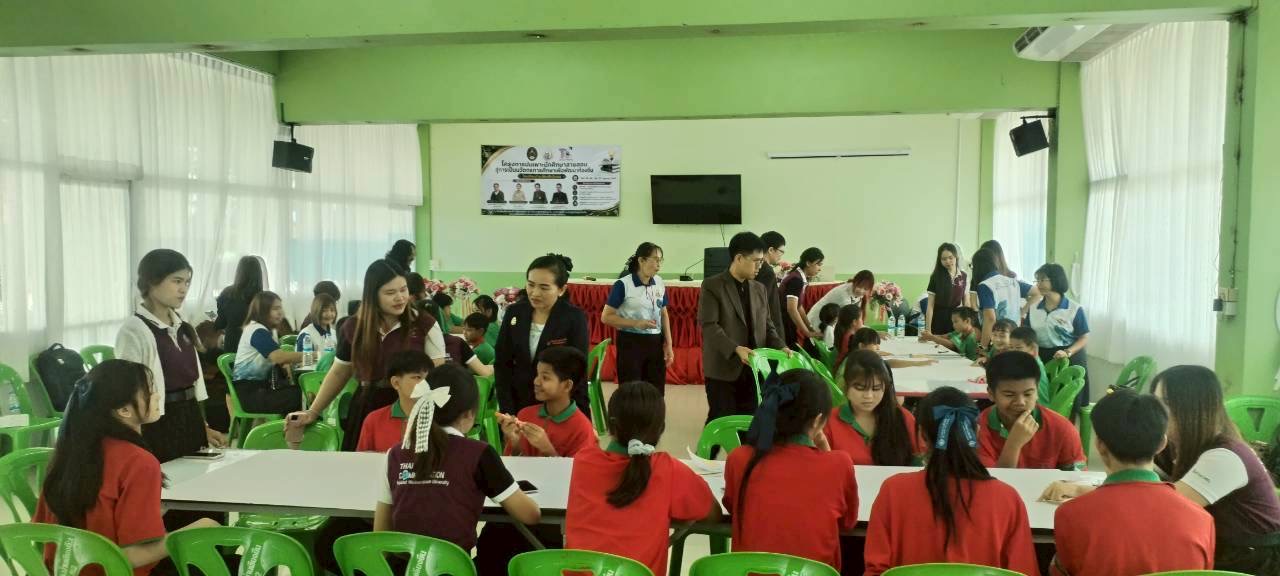
The project engaged a total of [75] participants. These included [40] pre-service teacher students from the B.A. Program in Thai for Communication, who were developed through the social engineering process. Among them, [15] core students, organized into three teams of five, analyzed pupils' Thai-language learning problems, then designed, developed, and piloted three Thai-language learning innovations in real classrooms. [Four] program lecturers served as the working committee and as mentors who closely supervised each team. From Ban Chiang Yuen School, [six] administrators and teachers took part in identifying learning problems, giving feedback, and observing classes through a co-creation process, while [25] pupils were the learners who used the innovations. Resource persons from Ban Chiang Yuen School, Mahasarakham University, and the Faculty of Humanities and Social Sciences contributed expertise across all four activities. โครงการมีผู้เข้าร่วมรวม [75] คน ประกอบด้วย นักศึกษาหลักสูตร ศศ.บ. สาขาวิชาภาษาไทยเพื่อการสื่อสาร (สายสอน) จำนวน [40] คน ซึ่งได้รับการพัฒนาด้วยกระบวนการวิศวกรสังคม โดยมีนักศึกษาแกนนำ [15] คน แบ่งเป็น 3 กลุ่ม กลุ่มละ 5 คน ทำหน้าที่วิเคราะห์ปัญหาการเรียนรู้ภาษาไทยของนักเรียน ออกแบบ พัฒนา และทดลองใช้สื่อนวัตกรรมการเรียนรู้ภาษาไทย 3 ชิ้นในห้องเรียนจริง อาจารย์ประจำหลักสูตร [4] คน ทำหน้าที่คณะทำงานและอาจารย์ที่ปรึกษา (Mentor) กำกับดูแลนักศึกษาอย่างใกล้ชิด ฝ่ายโรงเรียนบ้านเชียงยืนมีผู้บริหารและครู [6] คน ร่วมค้นหาโจทย์ ให้ข้อเสนอแนะ และร่วมสังเกตชั้นเรียน (Co-creation) และนักเรียน [25] คน เป็นผู้เรียนที่ได้ใช้นวัตกรรม นอกจากนี้ยังมีวิทยากรจากโรงเรียนบ้านเชียงยืน มหาวิทยาลัยมหาสารคาม และคณะมนุษยศาสตร์และสังคมศาสตร์ร่วมถ่ายทอดความรู้ตลอด 4 กิจกรรม
Project Continuity ความต่อเนื่องของโครงการ
The project produced the “Ban Chiang Yuen School Model,” a complete area-based framework for incubating pre-service teachers that runs from community context analysis and innovation design through classroom implementation to lesson-learned reflection. The three learning innovations, together with user manuals and lesson plans, were handed over to the school for continued use in Thai-language instruction, and the original digital files allow them to be revised and extended. The program plans to embed this process in its courses and in field experience for future cohorts, keep Ban Chiang Yuen School as an ongoing model site, and scale the model to other extended-opportunity schools in Maha Sarakham Province. It will also build on the three preliminary local issues identified during the project, with the continuing aim of raising pupils' RT, NT, and O-NET results. โครงการได้สร้าง “โรงเรียนบ้านเชียงยืนโมเดล” ซึ่งเป็นองค์ความรู้และกระบวนการบ่มเพาะนักศึกษาสายสอนแบบใช้พื้นที่เป็นฐาน (Area-based Learning) ครบวงจร ตั้งแต่การวิเคราะห์บริบทชุมชน การออกแบบนวัตกรรม การทดลองใช้ในชั้นเรียน จนถึงการถอดบทเรียน สื่อนวัตกรรม 3 ชิ้น พร้อมคู่มือการใช้และแผนการจัดการเรียนรู้ ได้ส่งมอบให้โรงเรียนใช้ต่อในการจัดการเรียนการสอนภาษาไทย และไฟล์ต้นฉบับดิจิทัลสามารถนำไปปรับปรุงต่อยอดได้ หลักสูตรมีแผนบูรณาการกระบวนการนี้เข้ากับรายวิชาและการฝึกประสบการณ์ของนักศึกษารุ่นต่อไป ใช้โรงเรียนบ้านเชียงยืนเป็นพื้นที่ต้นแบบต่อเนื่อง และขยายผลโมเดลสู่โรงเรียนขยายโอกาสอื่นในจังหวัดมหาสารคาม รวมทั้งต่อยอดจากประเด็นในพื้นที่ (Prelim) ที่ค้นพบ 3 ประเด็น เพื่อยกระดับผลการทดสอบ RT, NT และ O-NET อย่างต่อเนื่อง
Part 3: Challenges & Suggestions ส่วนที่ 3 ปัญหาอุปสรรค/ข้อเสนอแนะ
Problems & Obstacles ปัญหา/อุปสรรค
1. The project timeframe was short (four days of training and five days of media development), so classroom piloting was brief and long-term tracking of pupils' achievement was limited.
2. Piloting the innovations required the school's instructional time, so scheduling had to fit the teachers' core lesson plans and other school duties.
3. Students in the Thai for Communication program are not education-faculty students, so they needed additional grounding in learning design, assessment, and classroom action research.
4. Travel between the university and the school (about 40 km) and finding times that suited students, lecturers, and teachers posed logistical challenges.
1. ระยะเวลาดำเนินโครงการค่อนข้างสั้น (อบรม 4 วัน และพัฒนาสื่อ 5 วัน) ทำให้การทดลองใช้นวัตกรรมในชั้นเรียนทำได้เพียงช่วงสั้น และยังติดตามผลสัมฤทธิ์ระยะยาวของนักเรียนได้ไม่เต็มที่
2. การทดลองใช้นวัตกรรมต้องใช้เวลาเรียนของโรงเรียน จึงต้องจัดตารางให้สอดคล้องกับแผนการสอนหลักของครูและภารกิจของโรงเรียน
3. นักศึกษาหลักสูตรภาษาไทยเพื่อการสื่อสารไม่ใช่นักศึกษาครุศาสตร์โดยตรง จึงต้องเสริมพื้นฐานด้านการออกแบบการเรียนรู้ การวัดและประเมินผล และการวิจัยในชั้นเรียนเพิ่มเติม
4. การเดินทางระหว่างมหาวิทยาลัยกับโรงเรียน (ระยะทางประมาณ 40 กม.) และการจัดเวลาที่ตรงกันของนักศึกษา อาจารย์ และครู
Improvement Guidelines แนวทางการปรับปรุง
1. Extend the project to at least one full semester so the innovations can be piloted over several cycles and pre–post results measured more clearly.
2. Plan jointly with the school from the start of the semester and integrate the piloting into teachers' lesson plans so that core instructional time is not disrupted.
3. Provide preparatory training in learning design and assessment for students before fieldwork, and keep the system of one mentor per team.
4. Use online channels for follow-up, mentoring, and data collection to reduce travel demands.
1. ขยายระยะเวลาโครงการให้ครอบคลุมอย่างน้อย 1 ภาคเรียน เพื่อให้ทดลองใช้นวัตกรรมได้หลายรอบและวัดผลก่อน–หลังได้ชัดเจนขึ้น
2. วางแผนร่วมกับโรงเรียนตั้งแต่ต้นภาคเรียน และบูรณาการการทดลองใช้นวัตกรรมเข้ากับแผนการสอนของครู เพื่อไม่ให้กระทบเวลาเรียนหลัก
3. จัดอบรมเตรียมความพร้อมด้านการออกแบบการเรียนรู้และการวัดผลให้นักศึกษาก่อนลงพื้นที่ และคงระบบอาจารย์ที่ปรึกษา (Mentor) ประจำกลุ่ม
4. ใช้ช่องทางออนไลน์ในการติดตาม ให้คำปรึกษา และเก็บข้อมูล เพื่อลดภาระการเดินทาง
Suggestions to University ข้อเสนอแนะต่อมหาวิทยาลัย
1. Provide continuous, multi-year funding so the model can be refined and scaled to other schools in the area.
2. Promote collaboration between the Faculty of Humanities and Social Sciences and the Faculty of Education to strengthen the teaching competencies of pre-service teacher students.
3. Organize university-level forums to disseminate and exchange local educational innovations, and support publication of articles arising from the project.
4. Formalize the partnership with Ban Chiang Yuen School through a memorandum of understanding (MOU) and link it to the university's Big Data system for long-term monitoring.
1. สนับสนุนงบประมาณอย่างต่อเนื่องแบบหลายปี เพื่อให้โมเดลได้รับการพัฒนาและขยายผลสู่โรงเรียนอื่นในพื้นที่
2. ส่งเสริมความร่วมมือระหว่างคณะมนุษยศาสตร์และสังคมศาสตร์กับคณะครุศาสตร์ ในการพัฒนาสมรรถนะความเป็นครูของนักศึกษาสายสอน
3. จัดเวทีเผยแพร่และแลกเปลี่ยนนวัตกรรมการศึกษาเพื่อท้องถิ่นระดับมหาวิทยาลัย และสนับสนุนการตีพิมพ์บทความจากโครงการ
4. ยกระดับความร่วมมือกับโรงเรียนบ้านเชียงยืนเป็นบันทึกข้อตกลงความร่วมมือ (MOU) อย่างเป็นทางการ และเชื่อมโยงกับระบบ Big Data ของมหาวิทยาลัยเพื่อติดตามผลระยะยาว