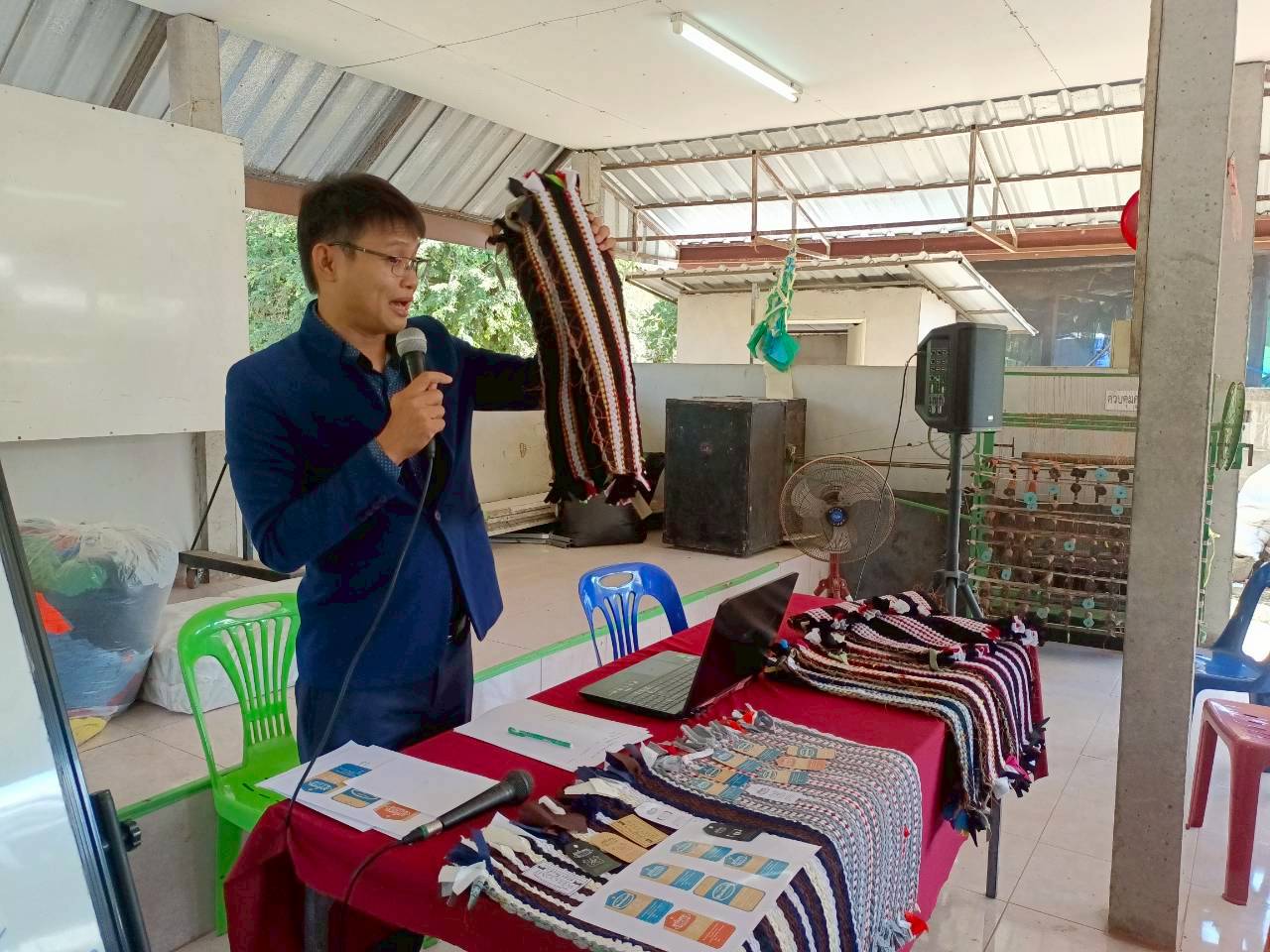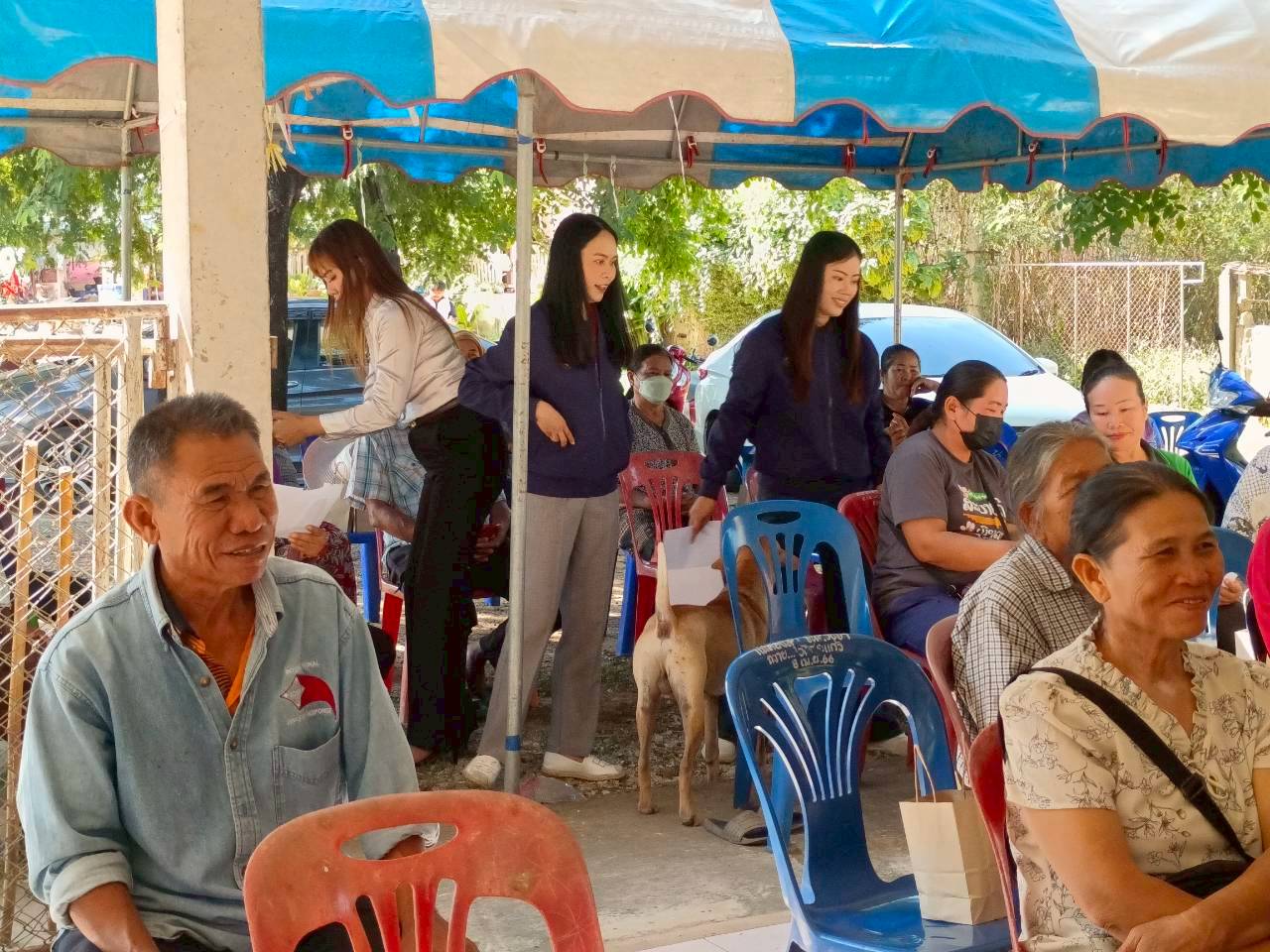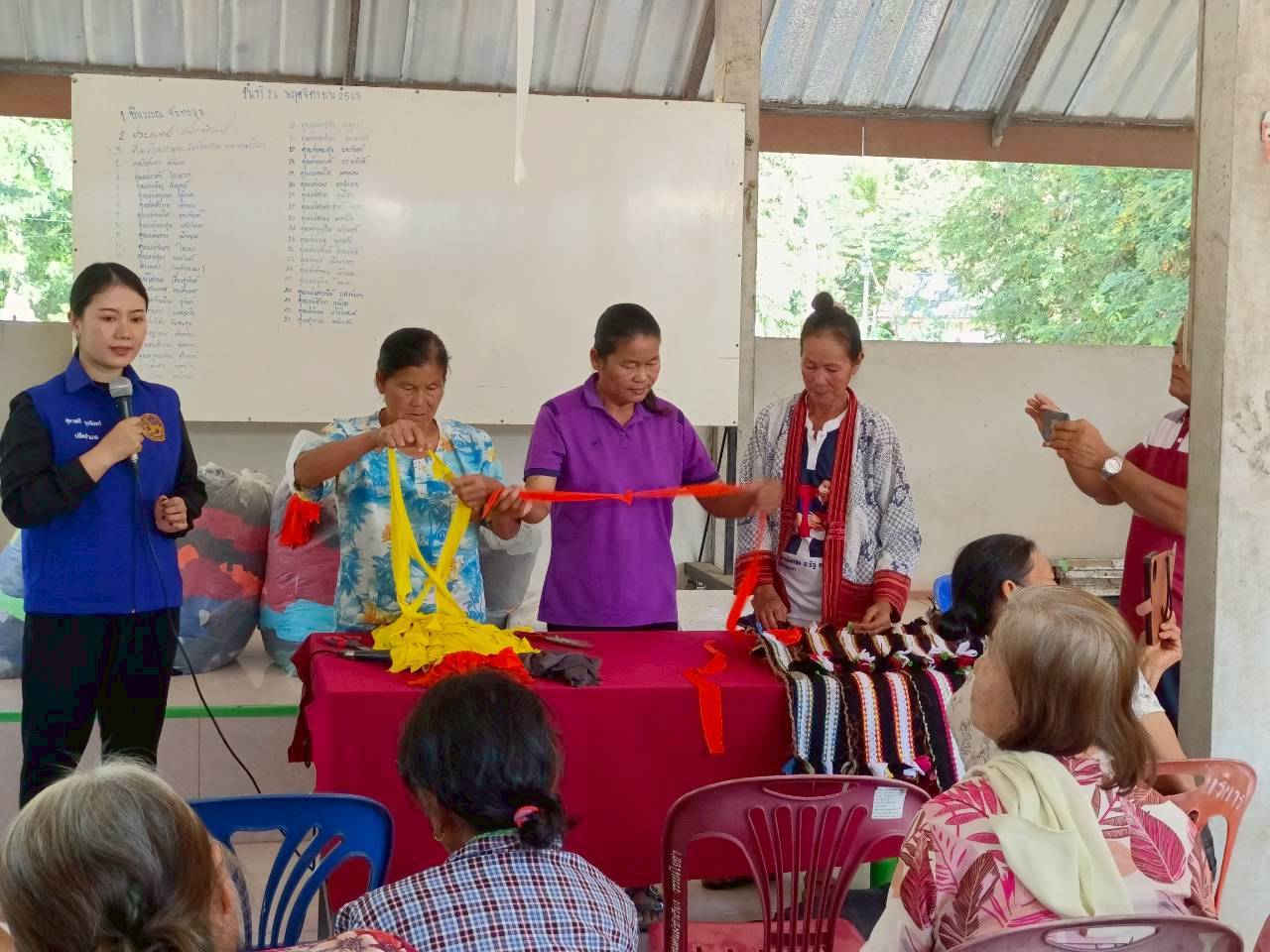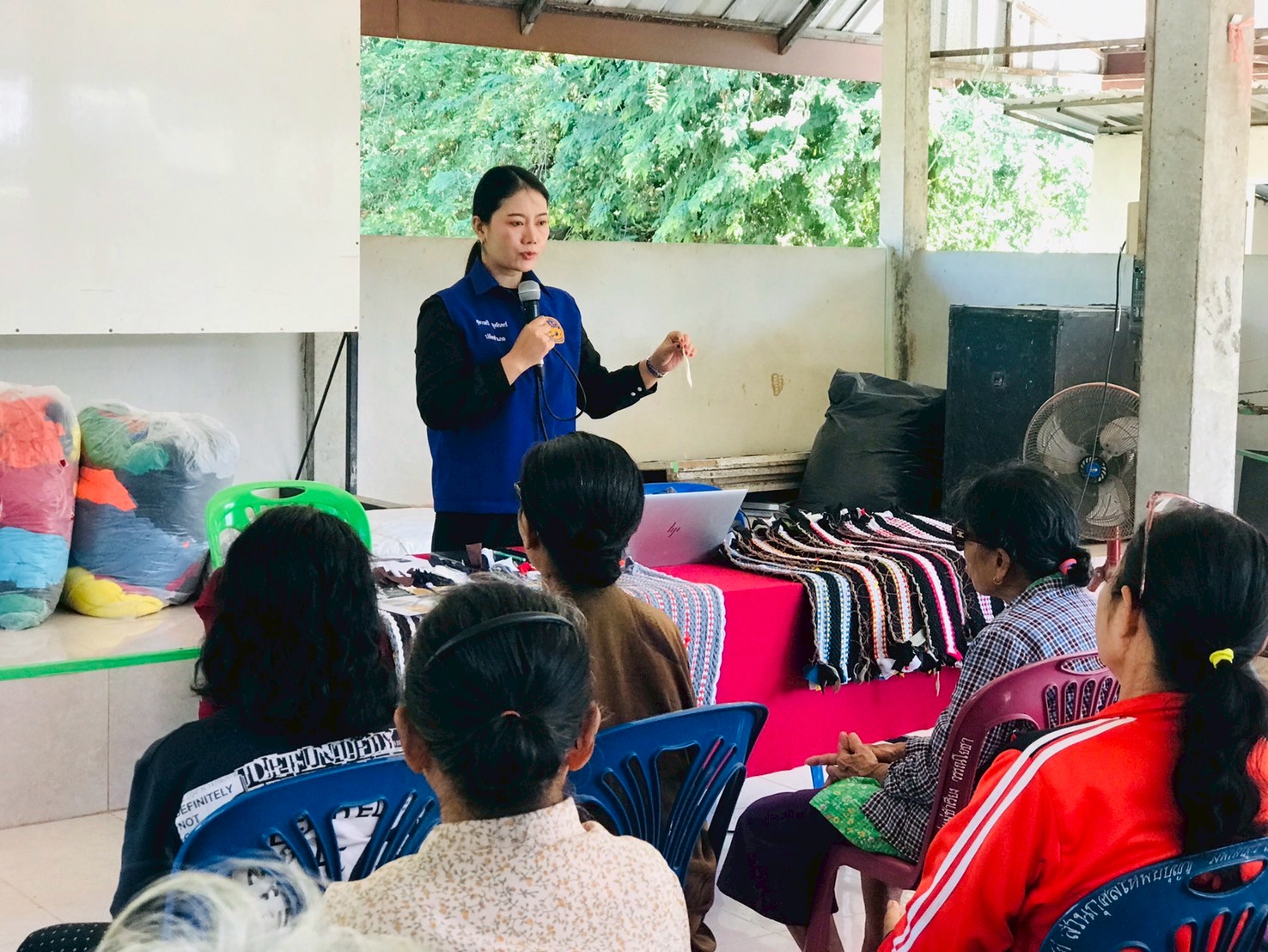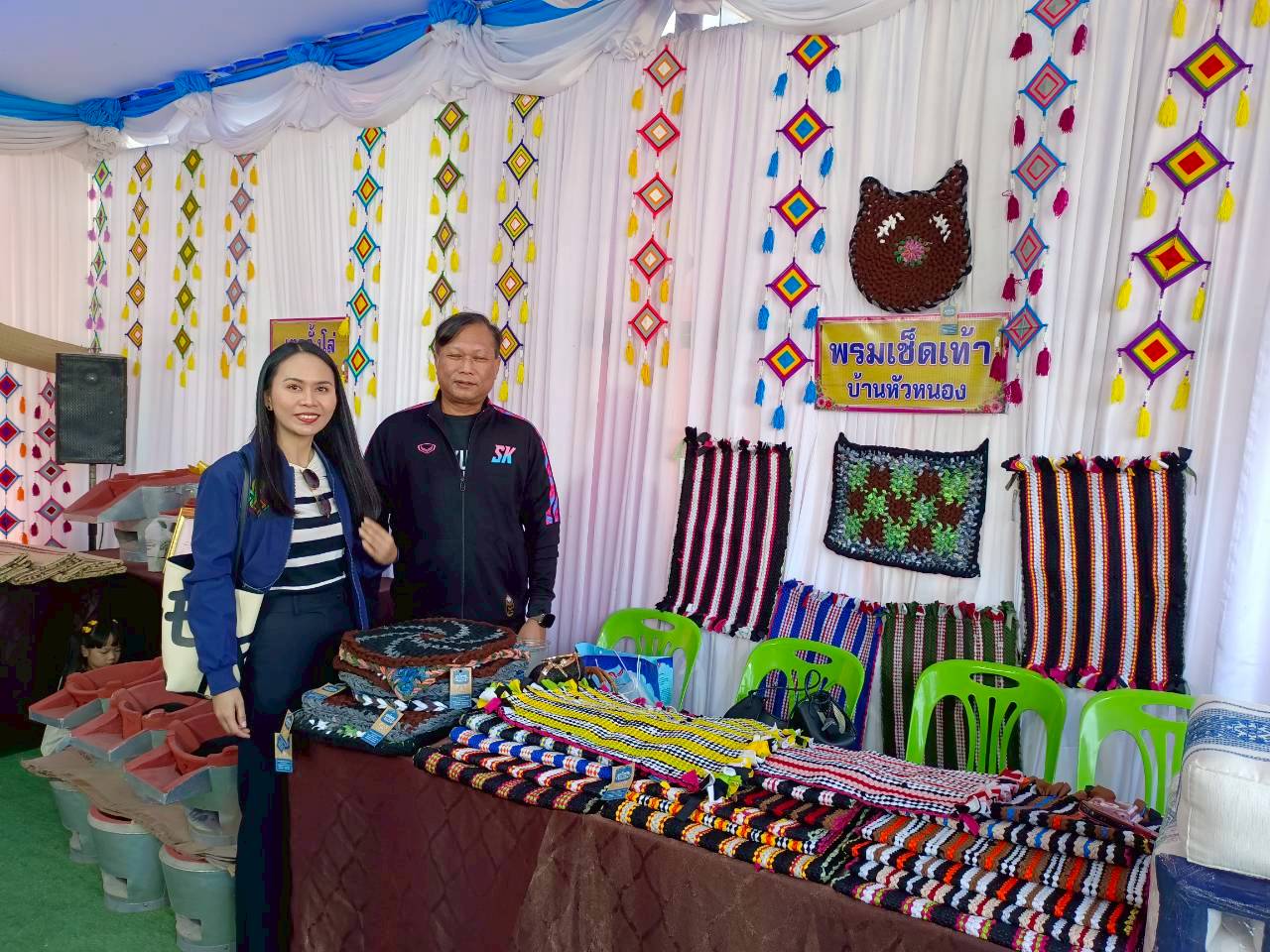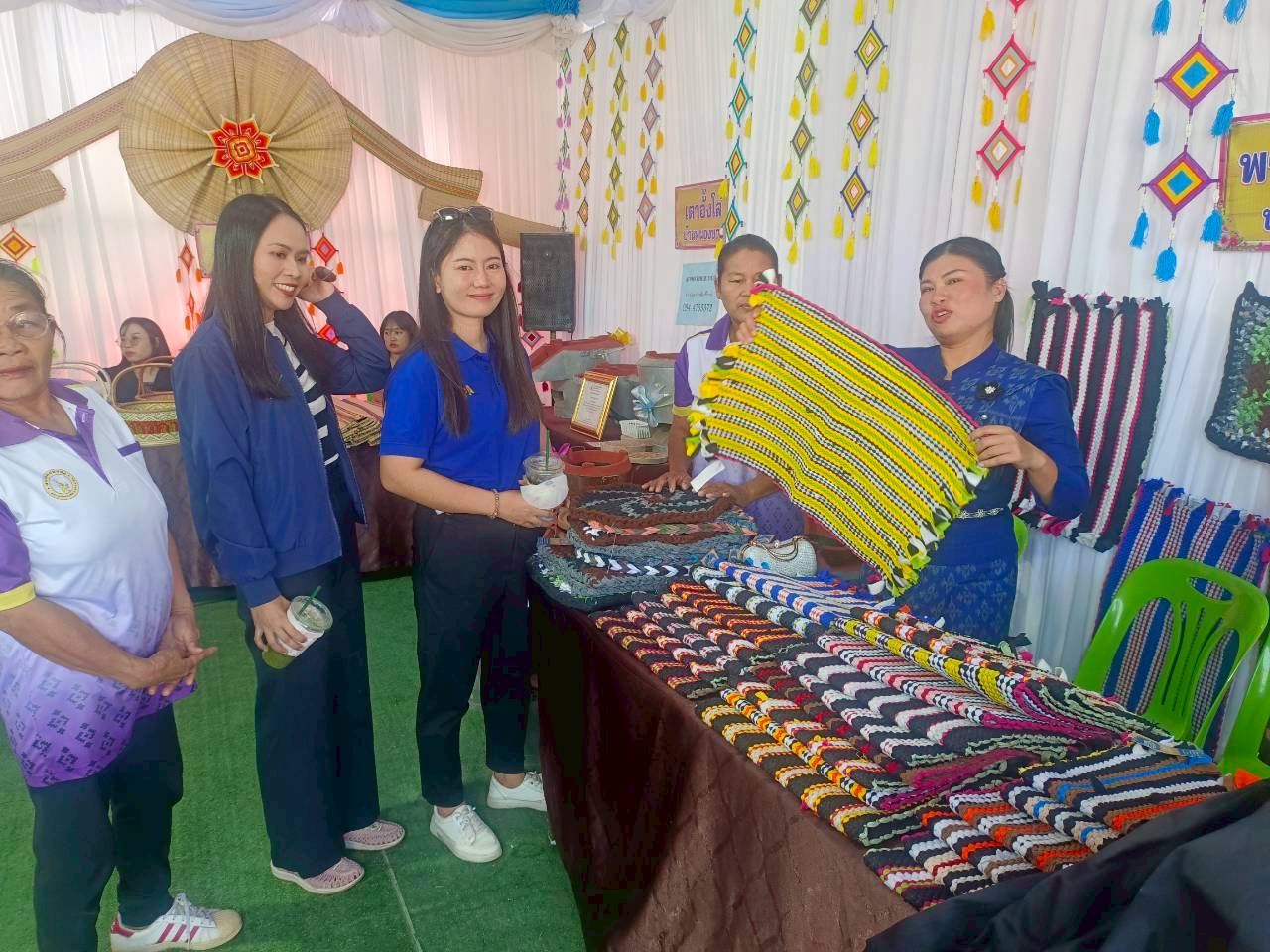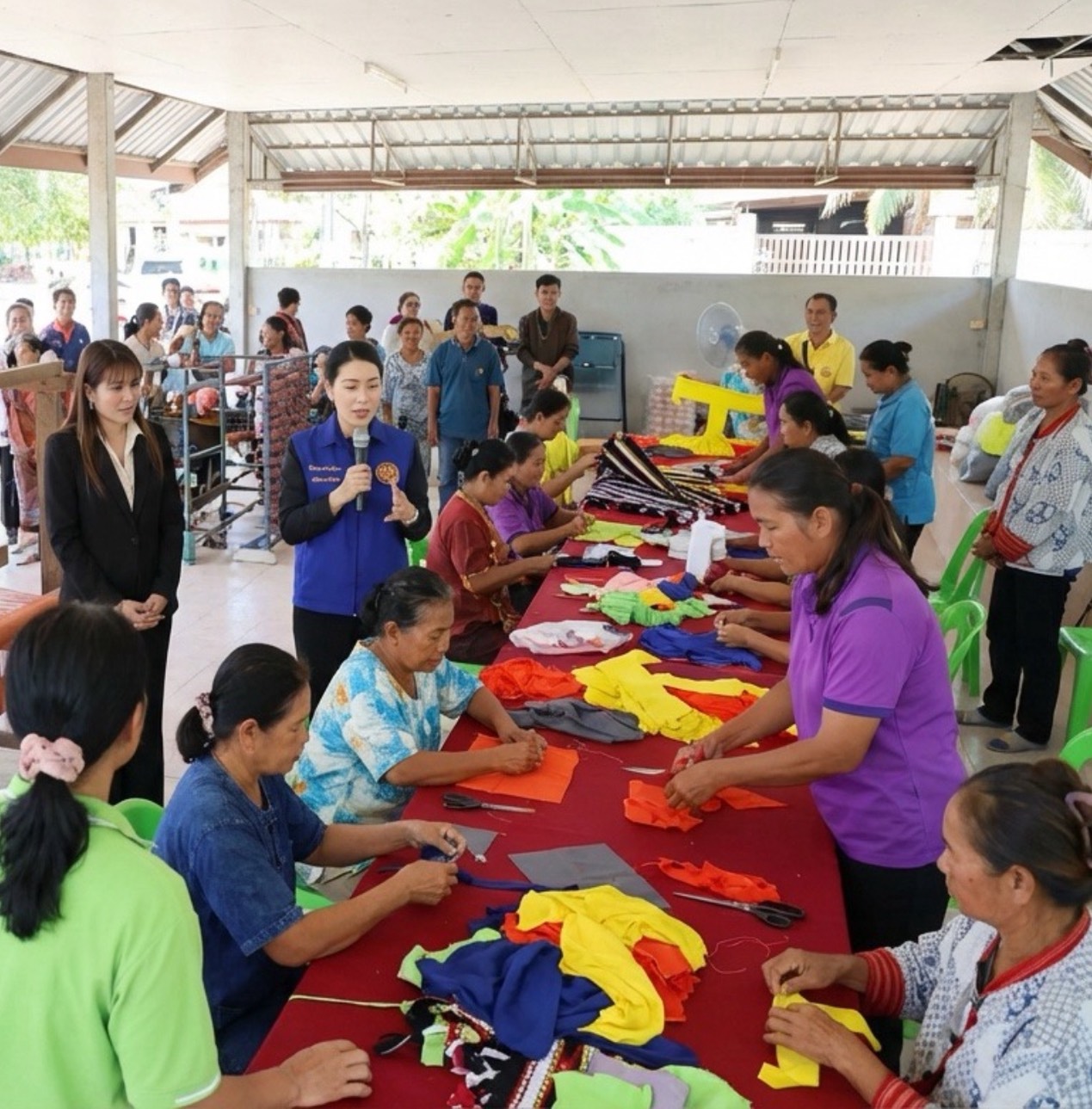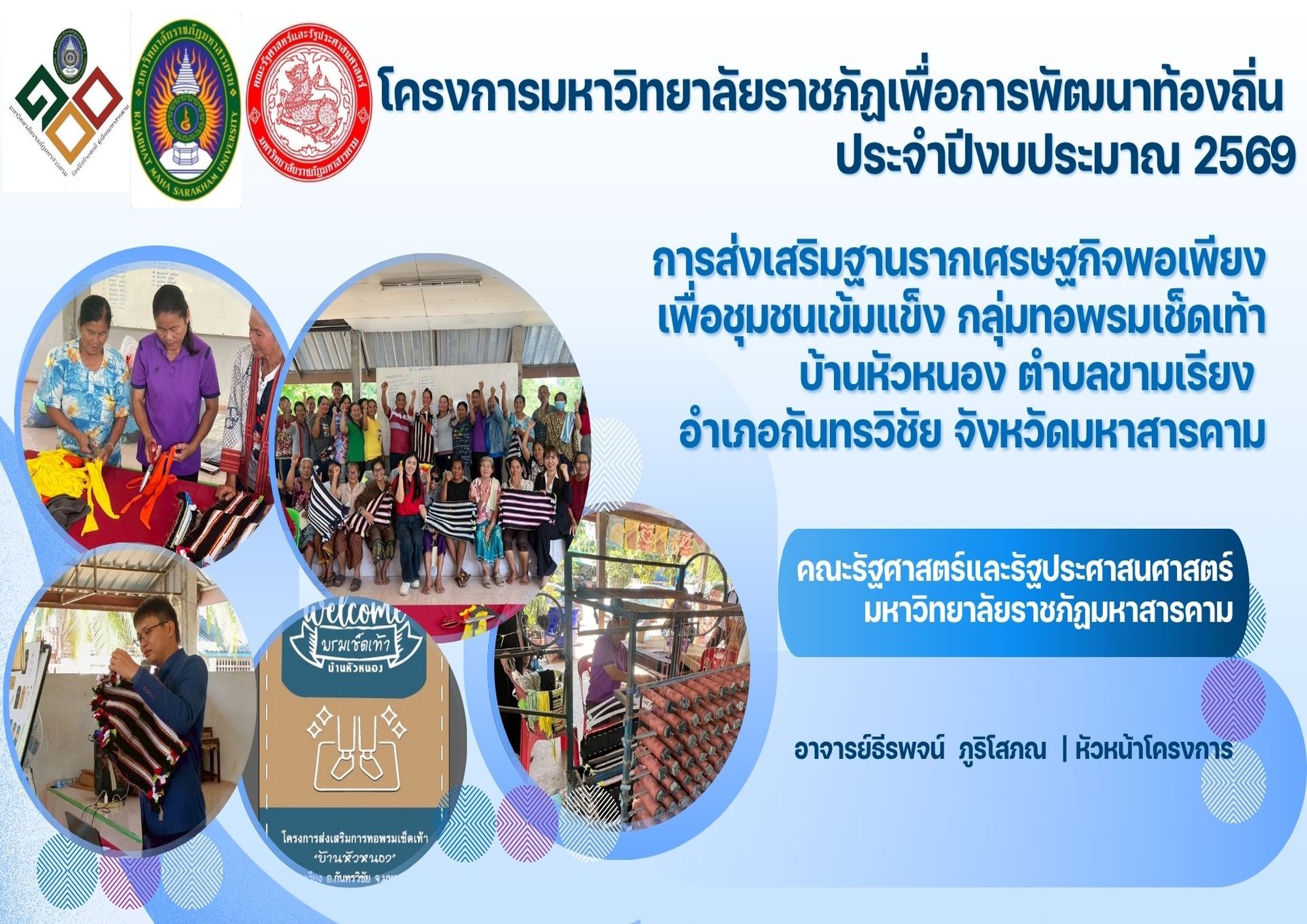
– December 12, 2568 1 ธันวาคม 3111
– 12 ธันวาคม 3111
Part 1: Project Details ส่วนที่ 1 รายละเอียดการดำเนินงาน
Objectives วัตถุประสงค์โครงการ
1. To develop the potential and skills of the doormat weaving group in weaving and adding value to the product.
2. To promote the grassroots economy and household income security through the creation of continuous and sustainable income from doormat weaving products.
3. To develop a strong group management and marketing system with standardized production and the ability to distribute products at both the community level and online markets.
4. To create a strong and sustainable community by promoting cooperation and unity among members, increasing knowledge and understanding of community development, and serving as a model for the development of other community products.
1 เพื่อพัฒนาศักยภาพและทักษะของกลุ่มทอพรมเช็ดเท้าในด้านการทอ และการสร้างมูลค่าเพิ่มให้กับผลิตภัณฑ์
2 เพื่อส่งเสริมเศรษฐกิจฐานรากและความมั่นคงทางรายได้ของครัวเรือน ผ่านการสร้างรายได้จากผลิตภัณฑ์ทอพรมเช็ดเท้าอย่างต่อเนื่องและยั่งยืน
3 เพื่อพัฒนาระบบการบริหารจัดการกลุ่มและการตลาด ให้มีความเข้มแข็ง มีมาตรฐานการผลิต และสามารถจัดจำหน่ายผลิตภัณฑ์ทั้งในระดับชุมชนและตลาดออนไลน์
4 เพื่อสร้างชุมชนเข้มแข็งและยั่งยืน โดยส่งเสริมความร่วมมือและความสามัคคีในกลุ่มสมาชิก เพิ่มความรู้ความเข้าใจในการพัฒนาชุมชน และเป็นต้นแบบในการพัฒนาผลิตภัณฑ์ชุมชนอื่น ๆ
Main Activities กิจกรรมหลัก
Activity 1: Promote and support knowledge sharing to upgrade community product standards.
Activity 2: Adding value to products.
Activity 3: Marketing, networking, and sustainable development.
Activity 4: Lessons learned and performance evaluation.
กิจกรรมที่ 1 ส่งเสริมและสนับสนุนองค์ความรู้ในการยกระดับมาตรฐานผลิตภัณฑ์ชุมชน
กิจกรรมที่ 2 การเพิ่มมูลค่าผลิตภัณฑ์
กิจกรรมที่ 3 การตลาด การสร้างเครือข่ายและการต่อยอดสู่ความยั่งยืน
กิจกรรมที่ 4 กิจกรรมถอดบทเรียน ประเมินผลการดำเนินงาน
Part 2: Outcomes & Impact ส่วนที่ 2 ผลลัพธ์และผลกระทบ
Outcomes ผลลัพธ์ที่เกิดขึ้น
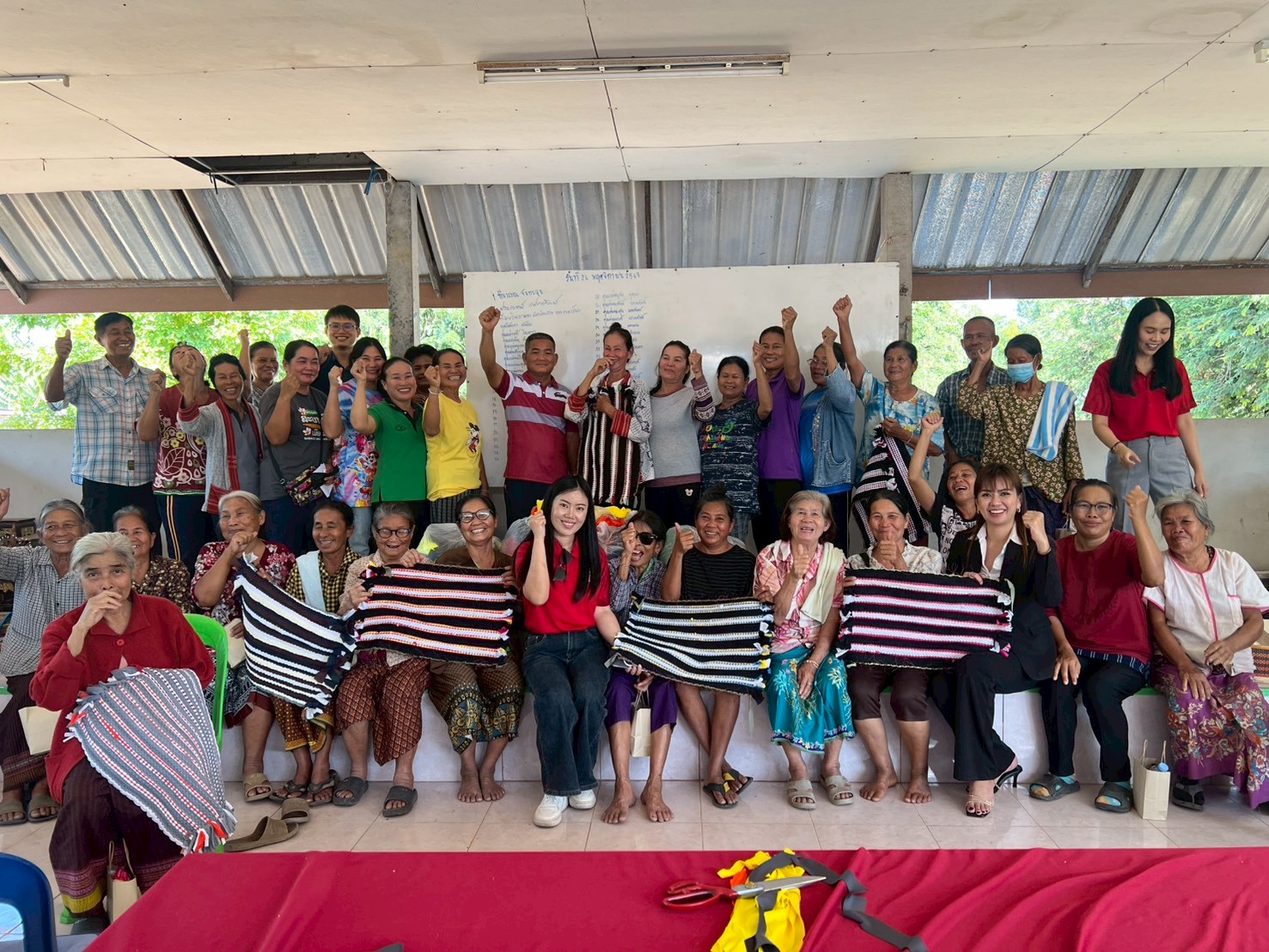
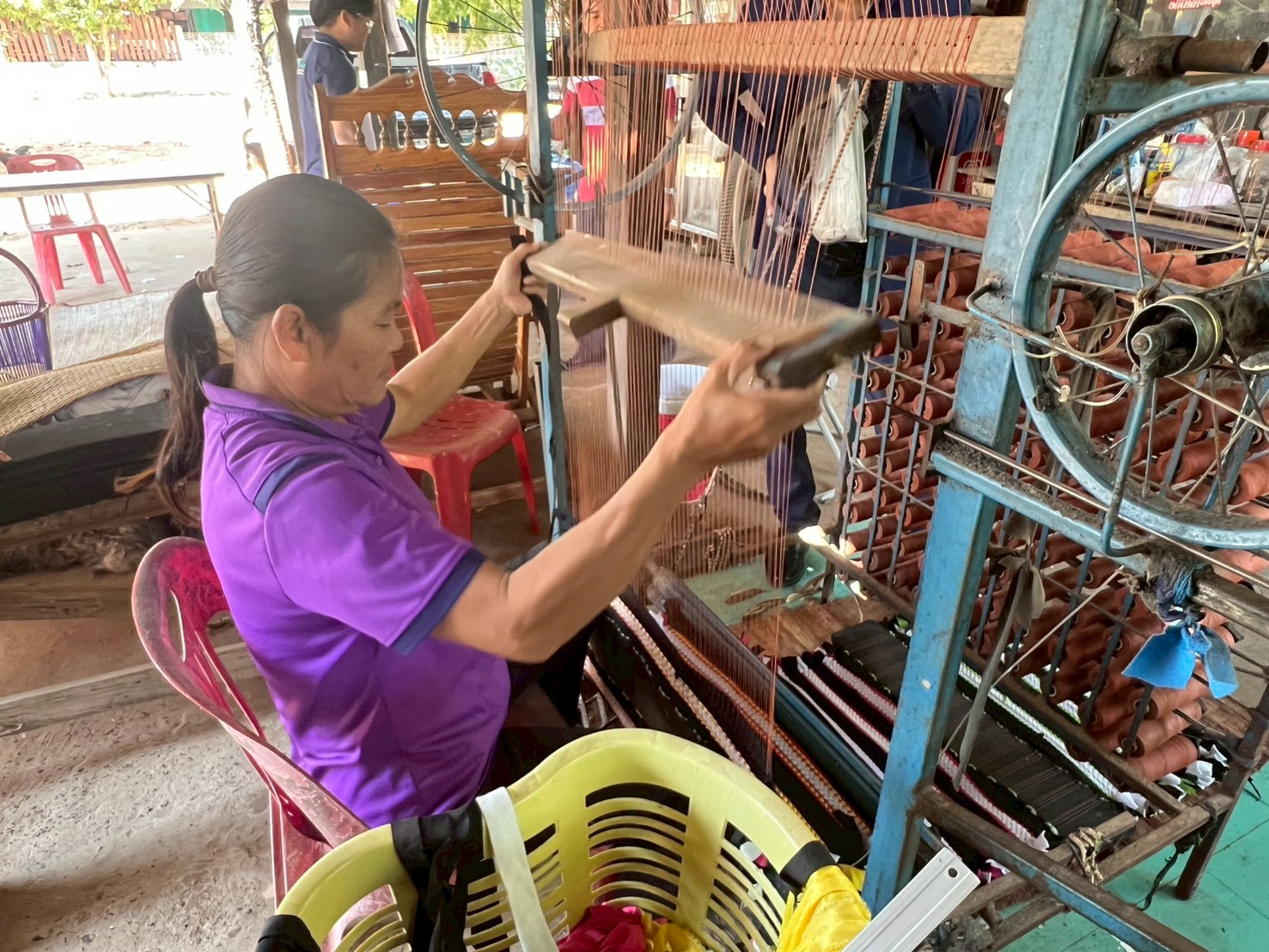
1. The group has 10 members with standardized carpet weaving and pattern design skills.
2. Members have created one prototype product ready for mass production and sale.
3. The group has one standardized production system with consistent quality control.
4. The group has two sales channels.
5. One research article.
1. สมาชิกกลุ่มมีทักษะการทอพรมและการออกแบบลวดลายที่ได้มาตรฐาน จำนวน 10 คน
2. สมาชิกสามารถสร้างผลิตภัณฑ์ต้นแบบที่พร้อมผลิตขายจริง จำนวน 1 รูปแบบ
3. กลุ่มมีระบบการผลิตที่ได้มาตรฐานและควบคุมคุณภาพได้อย่างสม่ำเสมอ จำนวน 1 รูปแบบ
4. กลุ่มมีช่องทางจำหน่าย จำนวน 2 ช่องทาง
5. บทความวิจัย จำนวน 1 บทความ
Community & Social Impact ผลกระทบต่อชุมชน/สังคม
1. Group members demonstrate increased unity and cooperation.
2. The community becomes stronger and more self-reliant.
3. It fosters community participation and strengthens social resilience.
4. It promotes pride in local wisdom.
1. สมาชิกกลุ่มมีความสามัคคีและความร่วมมือกันสูงขึ้น
2. ชุมชนมีความเข้มแข็ง สามารถพึ่งพาตนเองได้ด้วยตนเอง
3. สร้างการมีส่วนร่วมของคนในชุมชนและเสริมสร้างภูมิคุ้มกันทางสังคม
4. ส่งเสริมความภาคภูมิใจในภูมิปัญญาท้องถิ่น
Student & Staff Participation การมีส่วนร่วมของนักศึกษา/บุคลากร
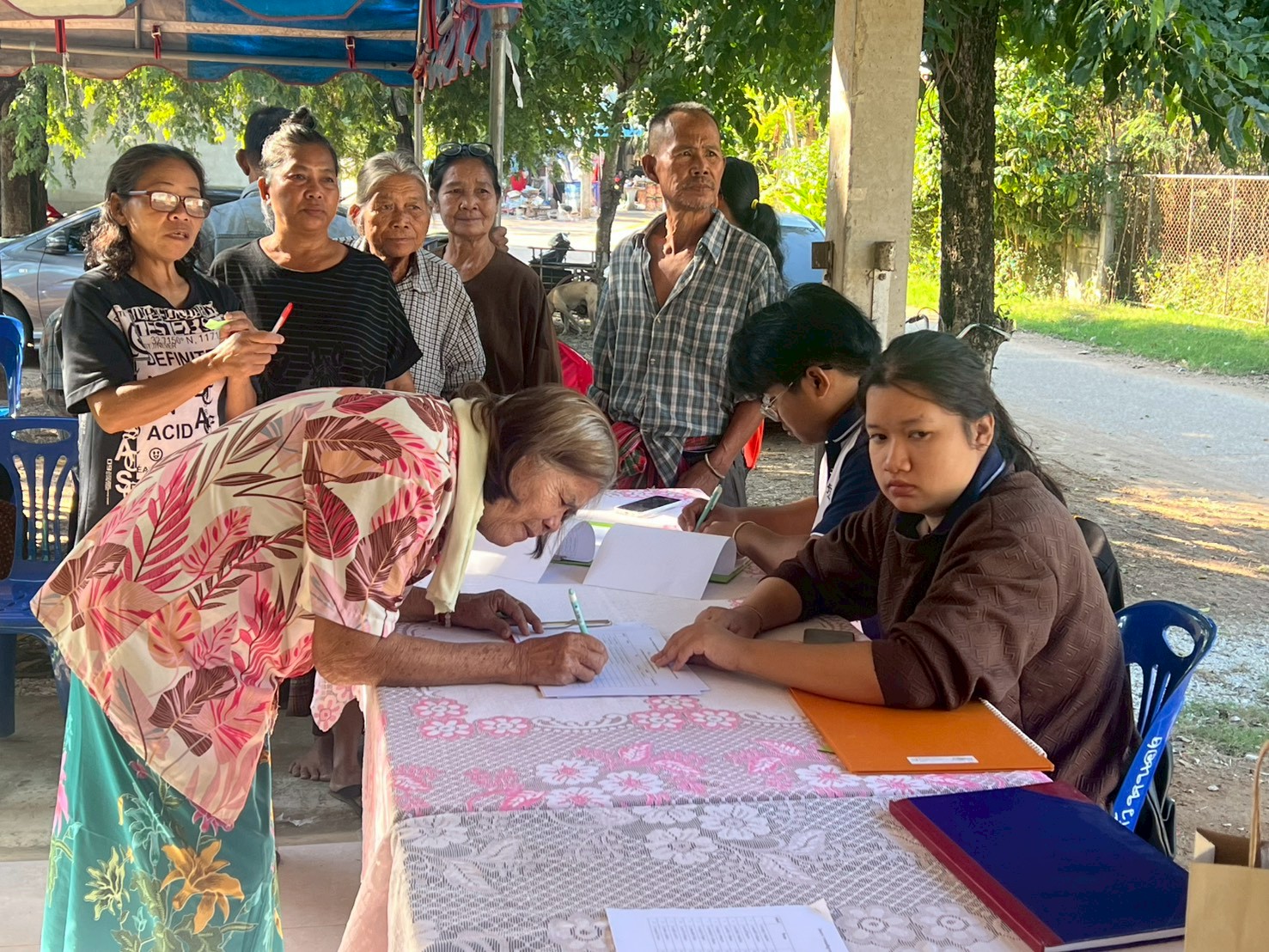
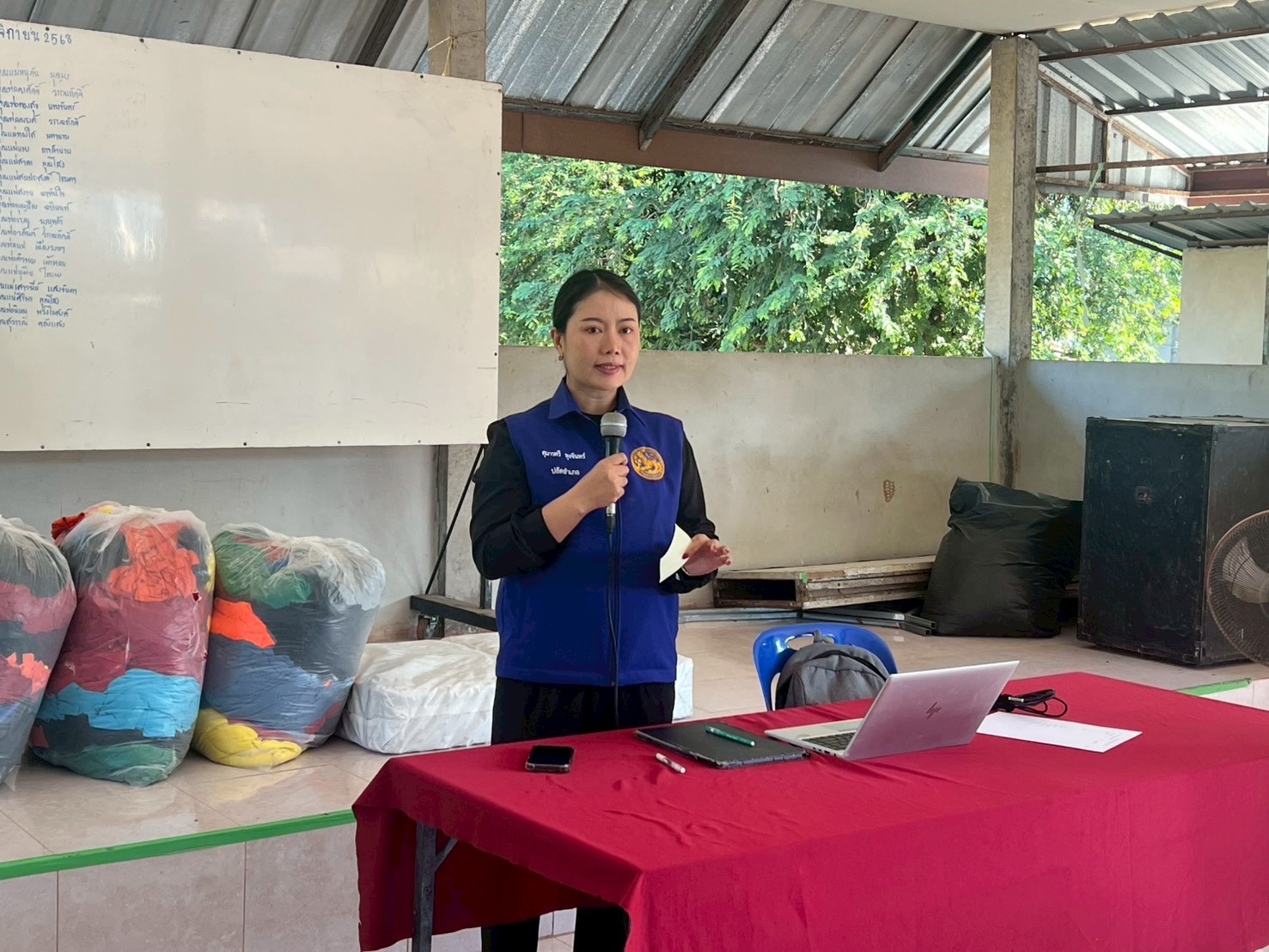
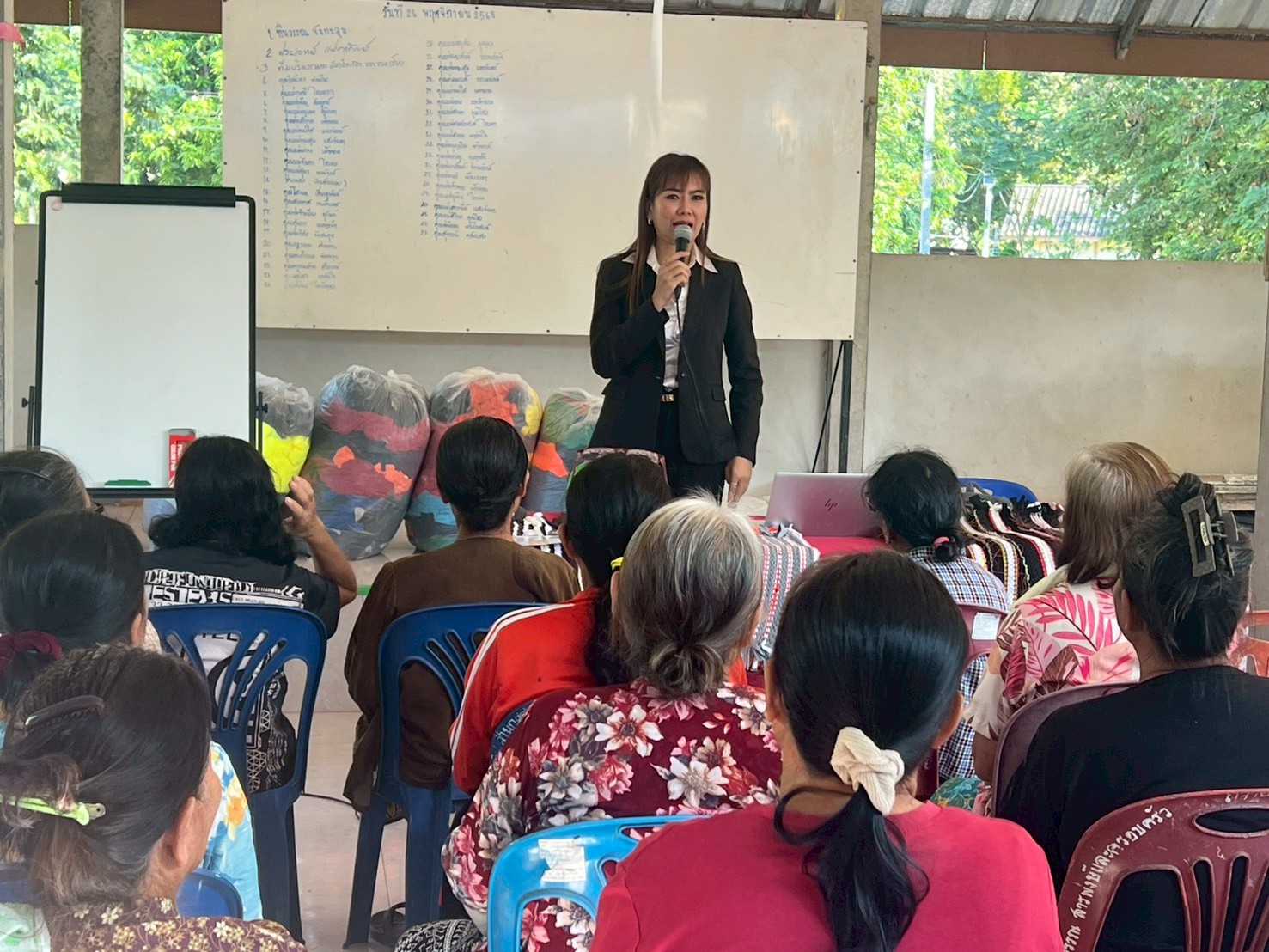
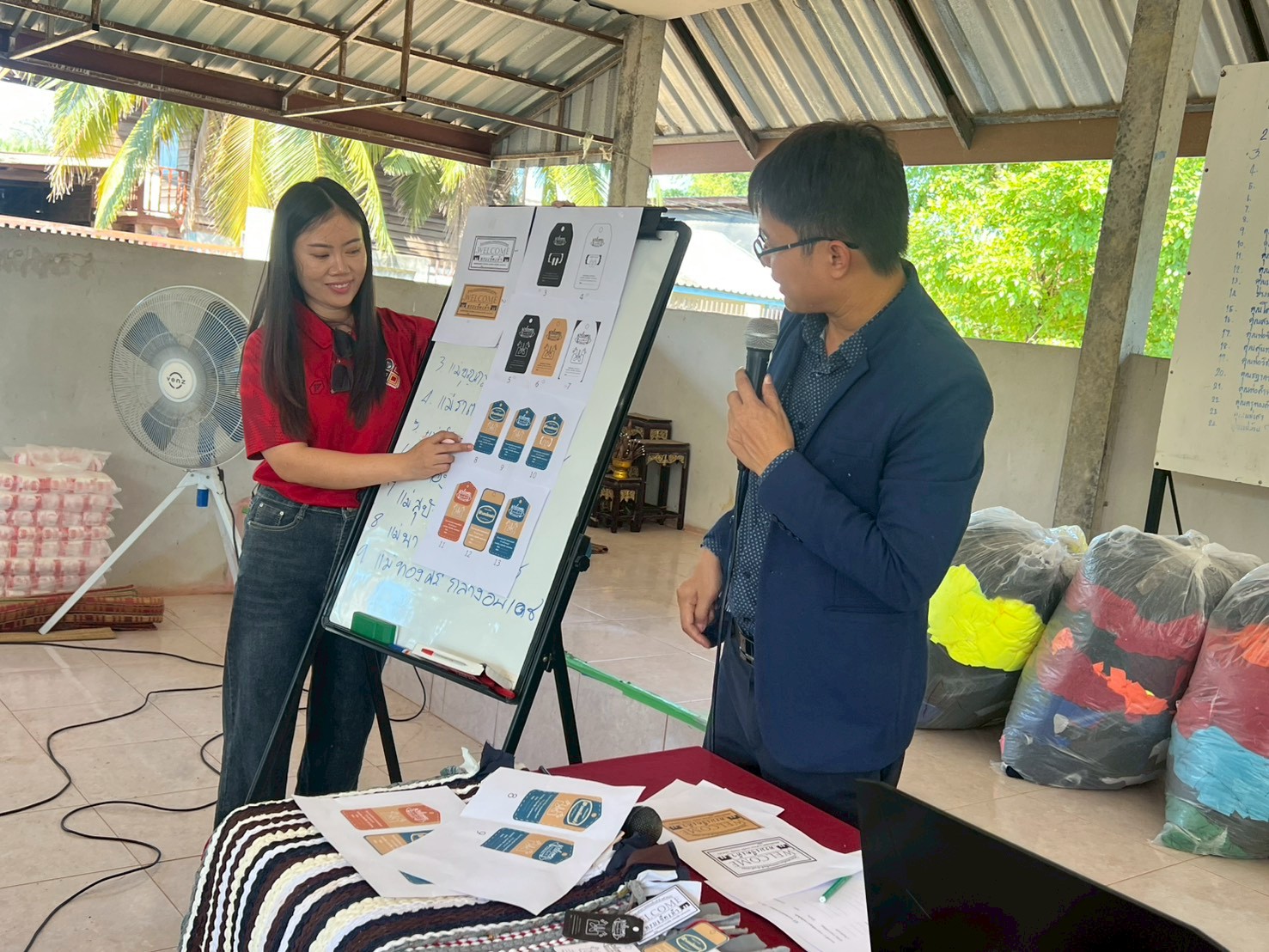
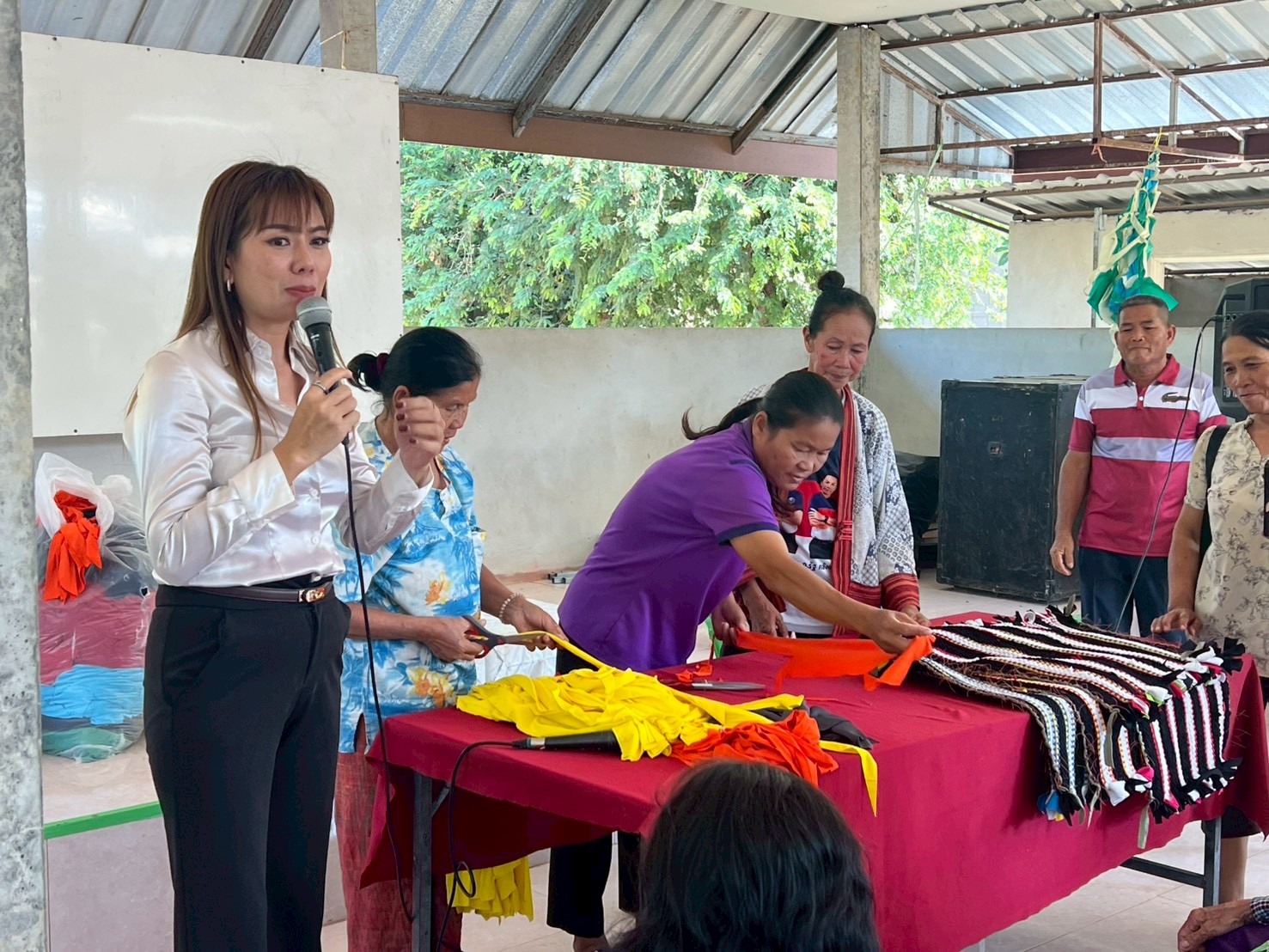
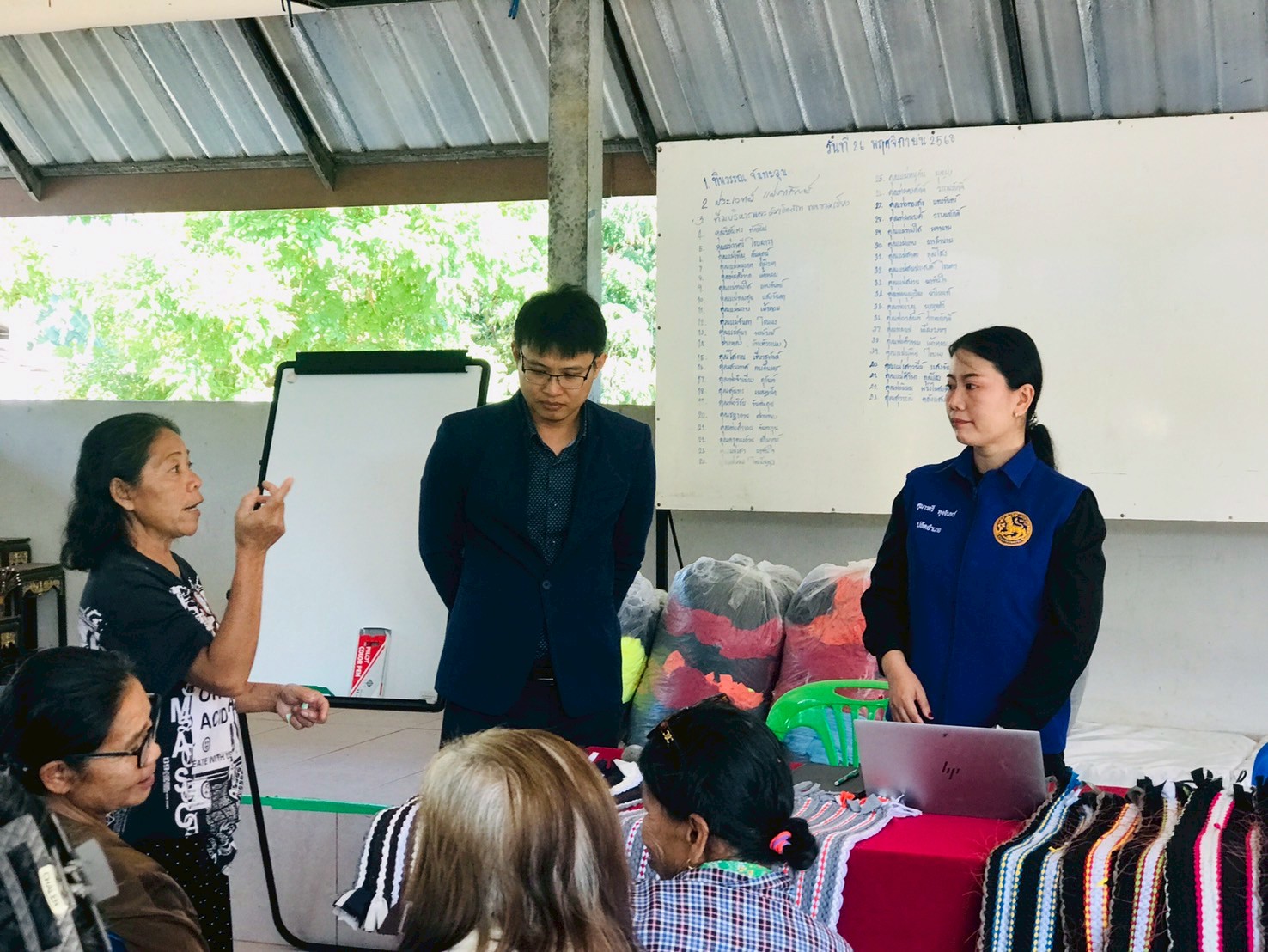
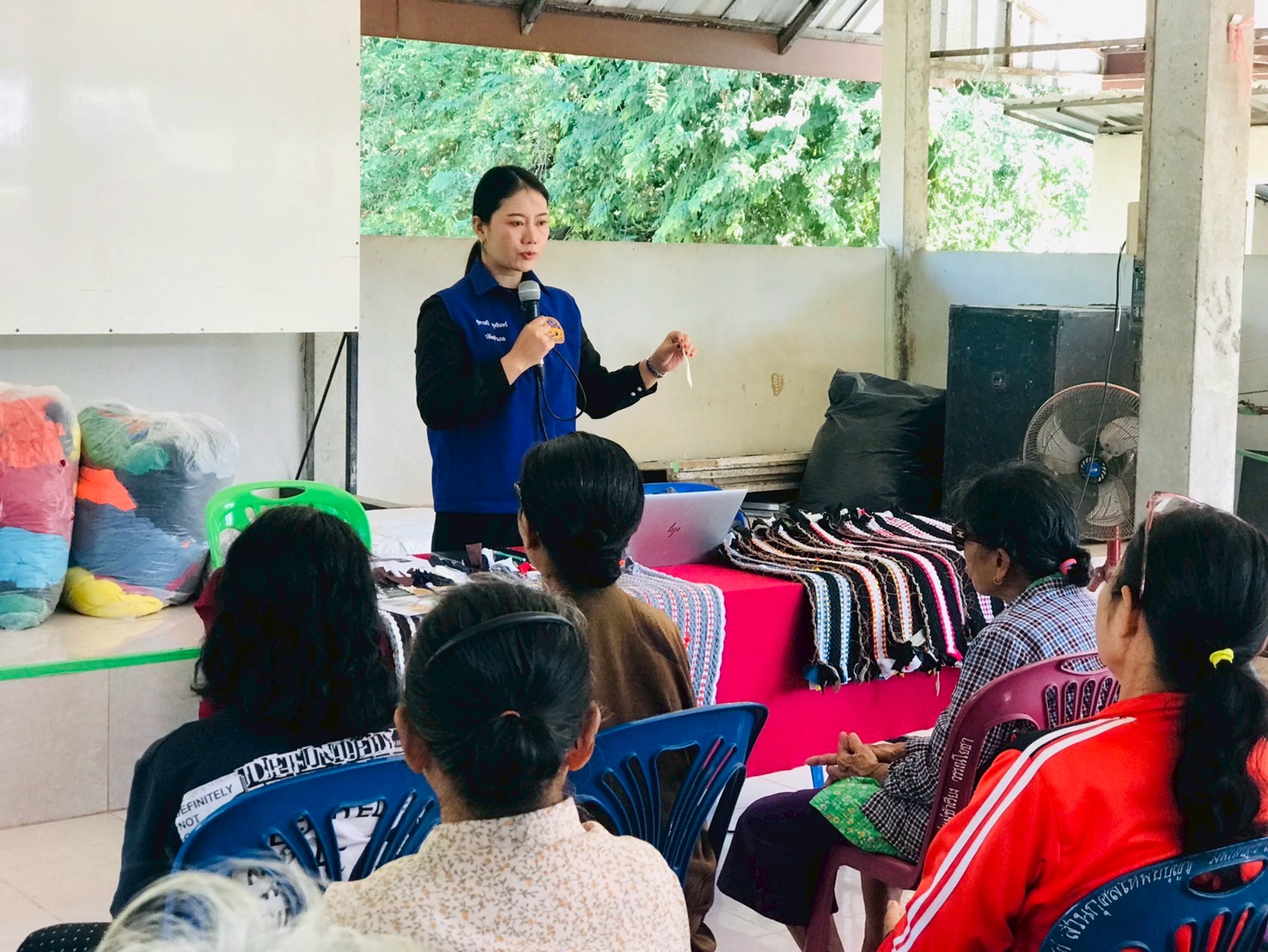
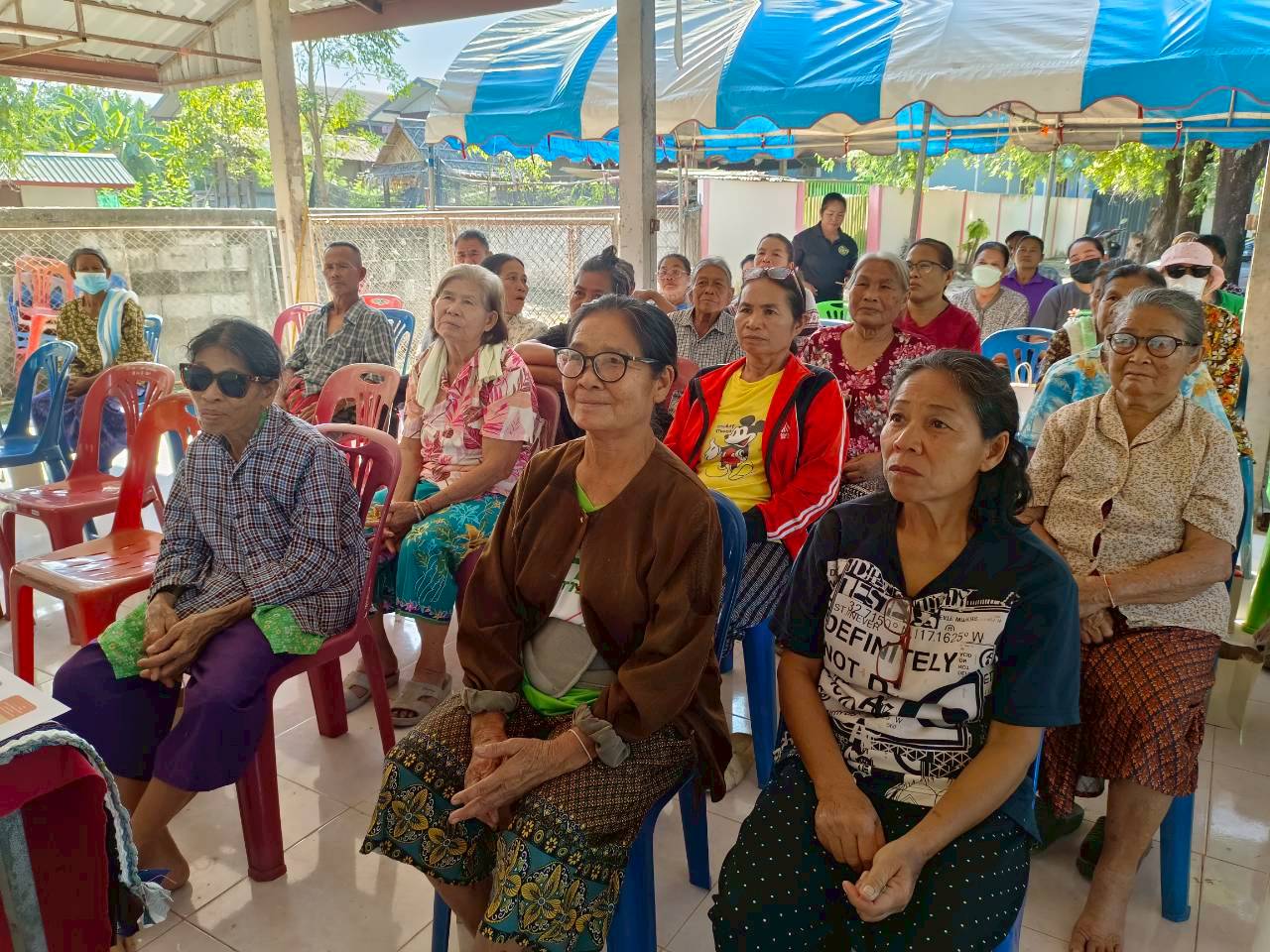
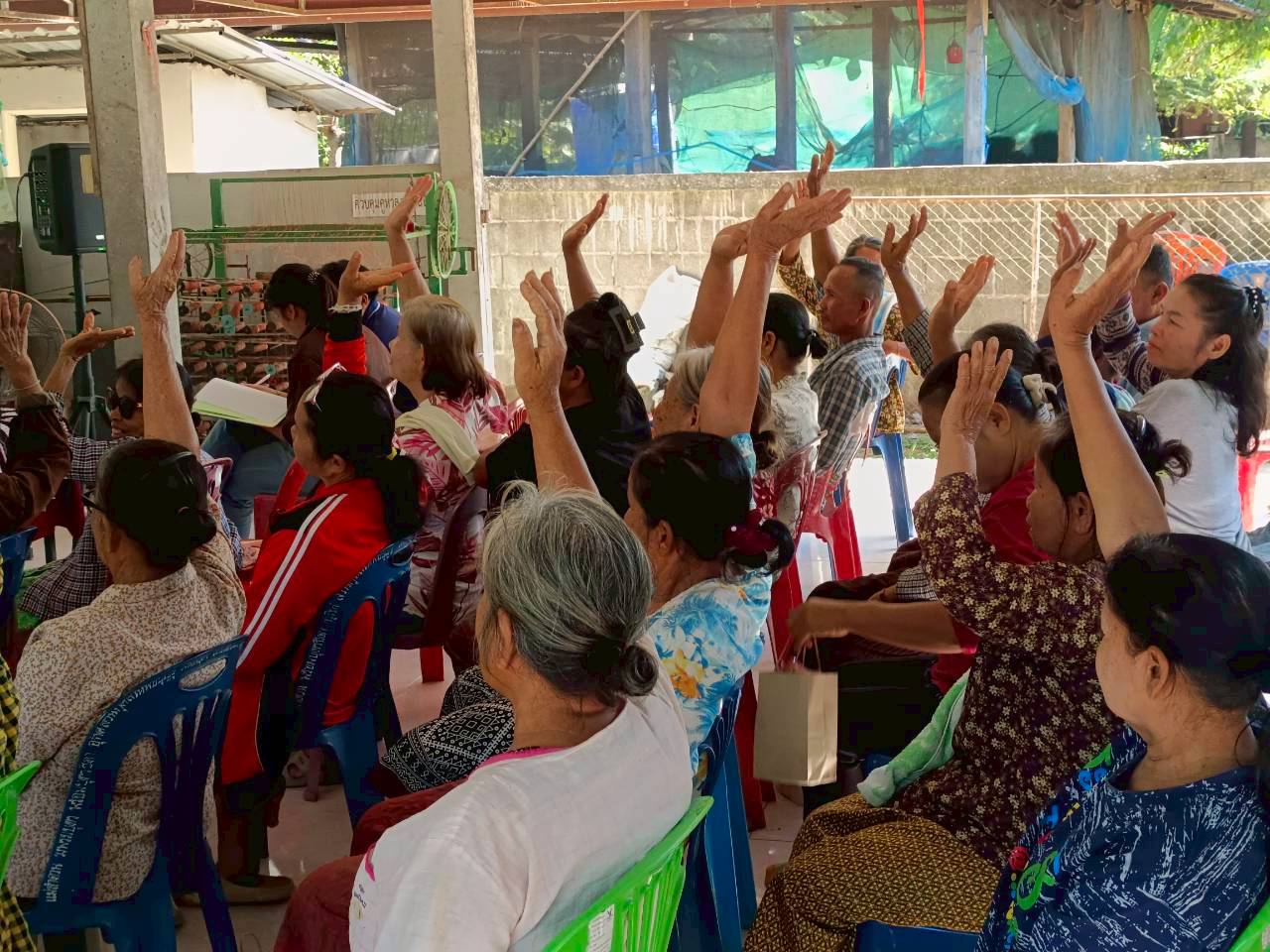
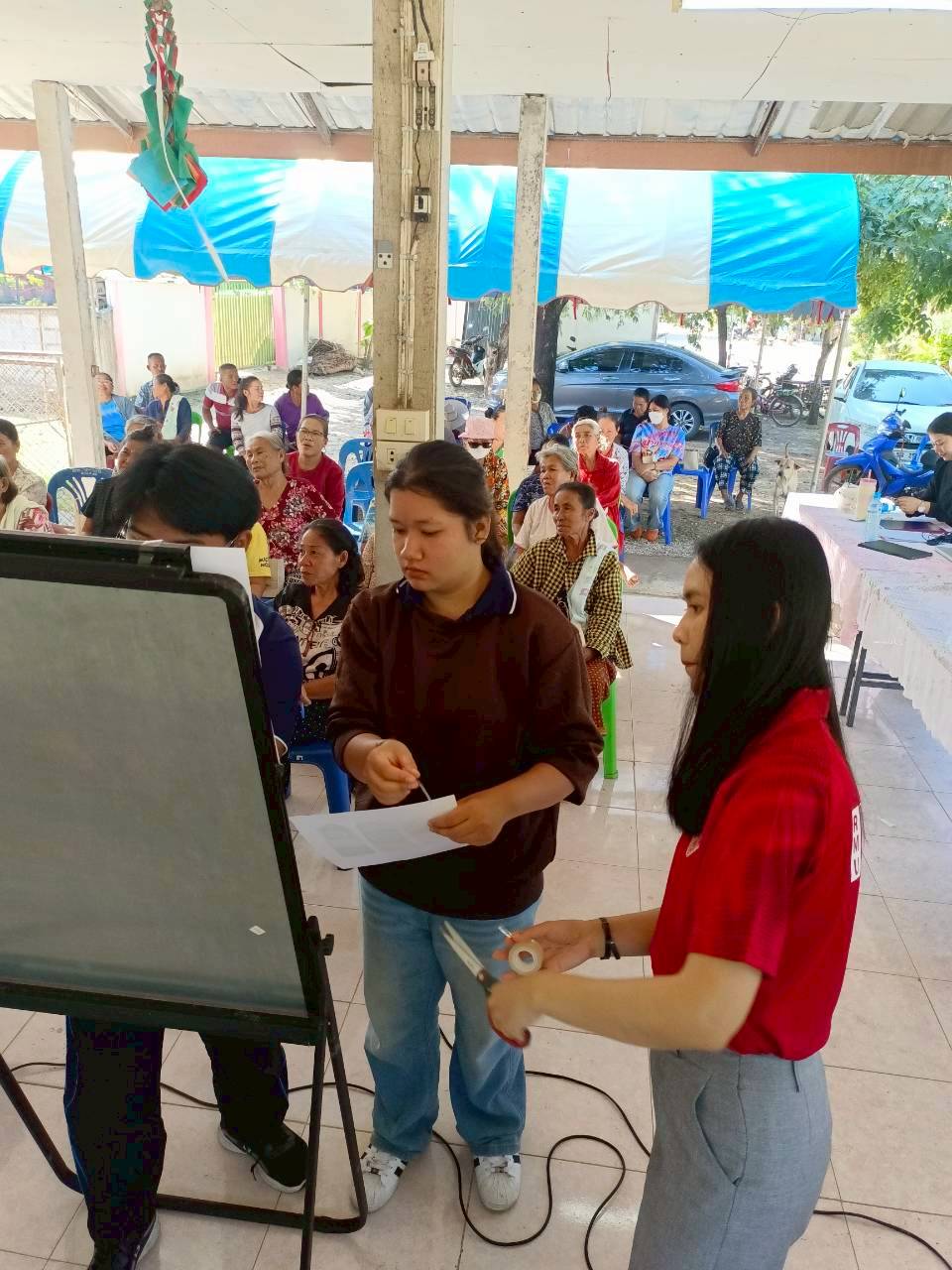
The project to promote a self-sufficient economy for community strengthening, specifically the doormat weaving group in Ban Hua Nong, Kham Riang Subdistrict, Kantharawichai District, Maha Sarakham Province, provided opportunities for students and personnel from the Faculty of Political Science and Public Administration, Maha Sarakham Rajabhat University, to participate in every stage of the project. This included community data collection, analysis of the group's problems and needs, activity planning, workshops, and project monitoring and evaluation. Students collaborated with faculty and community members to collect baseline data, design questionnaires, observe production processes, record project outcomes, and summarize learning outcomes. Faculty and staff played a crucial role as advisors, trainers, and coordinators between the university and the community. They contributed to curriculum development, transferred knowledge on product development, group management, online marketing, and the sufficiency economy concept, and provided guidance to ensure the group's efficient and sustainable operation. การดำเนินโครงการส่งเสริมฐานรากเศรษฐกิจพอเพียงเพื่อชุมชนเข้มแข็ง กลุ่มทอพรมเช็ดเท้าบ้านหัวหนอง ตำบลขามเรียง อำเภอกันทรวิชัย จังหวัดมหาสารคาม ได้เปิดโอกาสให้นักศึกษาและบุคลากรของคณะรัฐศาสตร์และรัฐประศาสนศาสตร์ มหาวิทยาลัยราชภัฏมหาสารคาม เข้ามามีส่วนร่วมในทุกขั้นตอนของการดำเนินงาน ตั้งแต่การสำรวจข้อมูลชุมชน การวิเคราะห์ปัญหาและความต้องการของกลุ่มอาชีพ การวางแผนกิจกรรม การจัดอบรมเชิงปฏิบัติการ ตลอดจนการติดตามและประเมินผลโครงการ โดยนักศึกษาได้ปฏิบัติหน้าที่ร่วมกับอาจารย์และชุมชนในการเก็บรวบรวมข้อมูลพื้นฐาน การจัดทำแบบสอบถาม การสังเกตกระบวนการผลิต การบันทึกข้อมูลผลการดำเนินงาน และการสรุปผลการเรียนรู้จากการดำเนินโครงการ และในส่วนของบุคลากรและคณาจารย์ มีบทบาทสำคัญในการเป็นที่ปรึกษา วิทยากรถ่ายทอดองค์ความรู้ และผู้ประสานงานระหว่างมหาวิทยาลัยกับชุมชน โดยร่วมพัฒนาหลักสูตรการอบรม ถ่ายทอดความรู้ด้านการพัฒนาผลิตภัณฑ์ การบริหารจัดการกลุ่ม การตลาดออนไลน์ และแนวคิดเศรษฐกิจพอเพียง ตลอดจนให้คำแนะนำในการพัฒนากลุ่มอาชีพให้สามารถดำเนินงานได้อย่างมีประสิทธิภาพและยั่งยืน
Project Continuity ความต่อเนื่องของโครงการ
Following the project's implementation, the Ban Hua Nong doormat weaving group was able to apply the acquired knowledge to continuously develop their products and operations. This included developing new product designs, adding value to their products, maximizing the use of local materials, and expanding sales channels through online platforms. This has increased market opportunities and generated continuous income for group members.
ภายหลังการดำเนินโครงการ กลุ่มทอพรมเช็ดเท้าบ้านหัวหนองสามารถนำองค์ความรู้ที่ได้รับไปประยุกต์ใช้ในการพัฒนาผลิตภัณฑ์และการดำเนินงานของกลุ่มอย่างต่อเนื่อง โดยมีการพัฒนารูปแบบผลิตภัณฑ์ใหม่ การเพิ่มมูลค่าสินค้า การใช้วัสดุในชุมชนให้เกิดประโยชน์สูงสุด และการขยายช่องทางการจำหน่ายผ่านสื่อออนไลน์ ซึ่งช่วยเพิ่มโอกาสทางการตลาดและสร้างรายได้ให้แก่สมาชิกกลุ่มอย่างต่อเนื่อง
มหาวิทยาลัยราชภัฏมหาสารคาม โดยคณะรัฐศาสตร์และรัฐประศาสนศาสตร์ มีแผนในการติดตามผลและให้คำปรึกษาแก่กลุ่มอย่างต่อเนื่อง รวมถึงบูรณาการกิจกรรมกับการเรียนการสอน การวิจัย และการบริการวิชาการ เพื่อสนับสนุนการพัฒนาศักยภาพของชุมชนในระยะยาว ตลอดจนส่งเสริมให้นักศึกษาและบุคลากรมีส่วนร่วมในการถ่ายทอดองค์ความรู้และพัฒนานวัตกรรมชุมชนร่วมกับกลุ่มอาชีพ
Part 3: Challenges & Suggestions ส่วนที่ 3 ปัญหาอุปสรรค/ข้อเสนอแนะ
Problems & Obstacles ปัญหา/อุปสรรค
1. Management Challenges: The Huai Nong doormat weaving group has a large number of members with diverse ages, experiences, and skills. This results in a lack of clarity in the division of responsibilities and internal management at times, causing delays in coordination and decision-making in some activities.
2. Time and Activity Participation Challenges: Most group members have personal and family responsibilities, preventing them from participating in all project activities as planned. This results in some members not being able to fully utilize the continuity of learning and skill development.
3. Member Skills and Readiness Challenges: Although most members have experience in doormat weaving, there are differences in skills in design, technology use, and online marketing. Therefore, knowledge transfer requires time and diverse methods to ensure that all members can learn and adapt thoroughly.
1. ปัญหาและอุปสรรคด้านการบริหารจัดการกลุ่ม กลุ่มทอพรมเช็ดเท้าบ้านหัวหนองมีสมาชิกจำนวนมากและมีความหลากหลายด้านอายุ ประสบการณ์ และทักษะ ทำให้การแบ่งหน้าที่ความรับผิดชอบและการบริหารจัดการภายในกลุ่มยังขาดความชัดเจนในบางช่วง ส่งผลให้การประสานงานและการตัดสินใจในบางกิจกรรมเกิดความล่าช้า
2. ปัญหาและอุปสรรคด้านเวลาและการเข้าร่วมกิจกรรม สมาชิกกลุ่มส่วนใหญ่มีภาระงานส่วนตัวและภาระครอบครัว ทำให้ไม่สามารถเข้าร่วมกิจกรรมของโครงการได้ครบทุกครั้งตามแผนที่กำหนด ส่งผลให้ระดับความต่อเนื่องในการเรียนรู้และการพัฒนาทักษะของสมาชิกบางส่วนยังไม่เต็มประสิทธิภาพ
3. ปัญหาและอุปสรรคด้านทักษะและความพร้อมของสมาชิก แม้ว่าสมาชิกส่วนใหญ่ จะมีประสบการณ์ด้านการทอพรมเช็ดเท้า แต่ยังมีความแตกต่างด้านทักษะการออกแบบ การใช้เทคโนโลยี และการตลาดออนไลน์ ทำให้การถ่ายทอดองค์ความรู้ต้องใช้เวลาและวิธีการที่หลากหลาย เพื่อให้สมาชิกทุกคนสามารถเรียนรู้และปรับตัวได้อย่างทั่วถึง
Improvement Guidelines แนวทางการปรับปรุง
1. Solutions for group management problems: Hold regular group committee meetings to clearly define the management structure, roles, responsibilities, and duties of members. Establish group rules or agreements to guide operations and decision-making, reducing duplication and delays in work.
2. Solutions for time and activity participation problems: Make activity formats more flexible, such as holding training sessions in smaller groups, setting times that suit members' schedules, and utilizing online resources or recorded lessons so that members who cannot attend in person can still learn and follow the content continuously.
3. Solutions for member skill and readiness problems: Organize knowledge transfer activities categorized according to members' abilities, using a learning-by-doing approach, and having core members mentor other members to enhance understanding and reduce skill gaps within the group.
1. แนวทางการแก้ไขปัญหาด้านการบริหารจัดการกลุ่ม จัดให้มีการประชุมคณะกรรมการกลุ่มอย่างสม่ำเสมอ เพื่อกำหนดโครงสร้างการบริหารจัดการ บทบาทหน้าที่ และความรับผิดชอบของสมาชิกอย่างชัดเจน พร้อมทั้งจัดทำระเบียบหรือข้อตกลงร่วมกันของกลุ่ม เพื่อใช้เป็นแนวทางในการดำเนินงานและการตัดสินใจร่วมกัน ลดความซ้ำซ้อนและความล่าช้าในการปฏิบัติงาน
2. แนวทางการแก้ไขปัญหาด้านเวลาและการเข้าร่วมกิจกรรม ปรับรูปแบบการจัดกิจกรรมให้มีความยืดหยุ่นมากขึ้น เช่น การจัดอบรมเป็นรอบย่อย การกำหนดช่วงเวลาที่เหมาะสมกับบริบทชีวิตของสมาชิก และการใช้สื่อออนไลน์หรือสื่อบันทึกการสอน เพื่อให้สมาชิกที่ไม่สามารถเข้าร่วมกิจกรรมในบางครั้งยังสามารถเรียนรู้และติดตามเนื้อหาได้อย่างต่อเนื่อง
3. แนวทางการแก้ไขปัญหาด้านทักษะและความพร้อมของสมาชิก จัดกิจกรรมถ่ายทอดองค์ความรู้โดยแบ่งระดับตามความสามารถของสมาชิก พร้อมใช้รูปแบบการเรียนรู้เชิงปฏิบัติ (Learning by Doing) และการให้สมาชิกแกนนำเป็นพี่เลี้ยงถ่ายทอดความรู้แก่สมาชิกคนอื่น เพื่อเสริมสร้างความเข้าใจและลดความเหลื่อมล้ำด้านทักษะภายในกลุ่ม
Suggestions to University ข้อเสนอแนะต่อมหาวิทยาลัย
- Universities should continuously support community development projects by allocating sufficient budget and resources so that communities can utilize the acquired knowledge to further develop and strengthen themselves sustainably.
- The integration of teaching, research, and academic service missions with community development should be promoted in a concrete manner, providing opportunities for students and personnel to gain practical work experience in the field to develop professional skills and contribute to society.
- Support should be given to developing digital marketing capabilities and branding for community products to increase sales channels and enhance the competitiveness of community occupational groups in the digital economy.
- The creation of collaborative networks between universities, government agencies, the private sector, and local administrative organizations should be promoted to jointly support product development, marketing, and the upgrading of community product standards.
-มหาวิทยาลัยควรสนับสนุนการดำเนินงานโครงการพัฒนาชุมชนอย่างต่อเนื่อง โดยจัดสรรงบประมาณและทรัพยากรที่เพียงพอ เพื่อให้ชุมชนสามารถนำองค์ความรู้ที่ได้รับไปพัฒนาต่อยอดและสร้างความเข้มแข็งได้อย่างยั่งยืน
-ควรส่งเสริมการบูรณาการพันธกิจด้านการเรียนการสอน การวิจัย และการบริการวิชาการเข้ากับการพัฒนาชุมชนอย่างเป็นรูปธรรม โดยเปิดโอกาสให้นักศึกษาและบุคลากรได้ลงพื้นที่ปฏิบัติงานจริง เพื่อพัฒนาทักษะวิชาชีพและสร้างประโยชน์แก่สังคม
-ควรสนับสนุนการพัฒนาศักยภาพด้านการตลาดดิจิทัลและการสร้างแบรนด์ผลิตภัณฑ์ชุมชน เพื่อเพิ่มช่องทางการจำหน่ายและยกระดับขีดความสามารถในการแข่งขันของกลุ่มอาชีพชุมชนในยุคเศรษฐกิจดิจิทัล
-ควรส่งเสริมการสร้างเครือข่ายความร่วมมือระหว่างมหาวิทยาลัย หน่วยงานภาครัฐ ภาคเอกชน และองค์กรปกครองส่วนท้องถิ่น เพื่อร่วมกันสนับสนุนการพัฒนาผลิตภัณฑ์ การตลาด และการยกระดับมาตรฐานสินค้าชุมชน