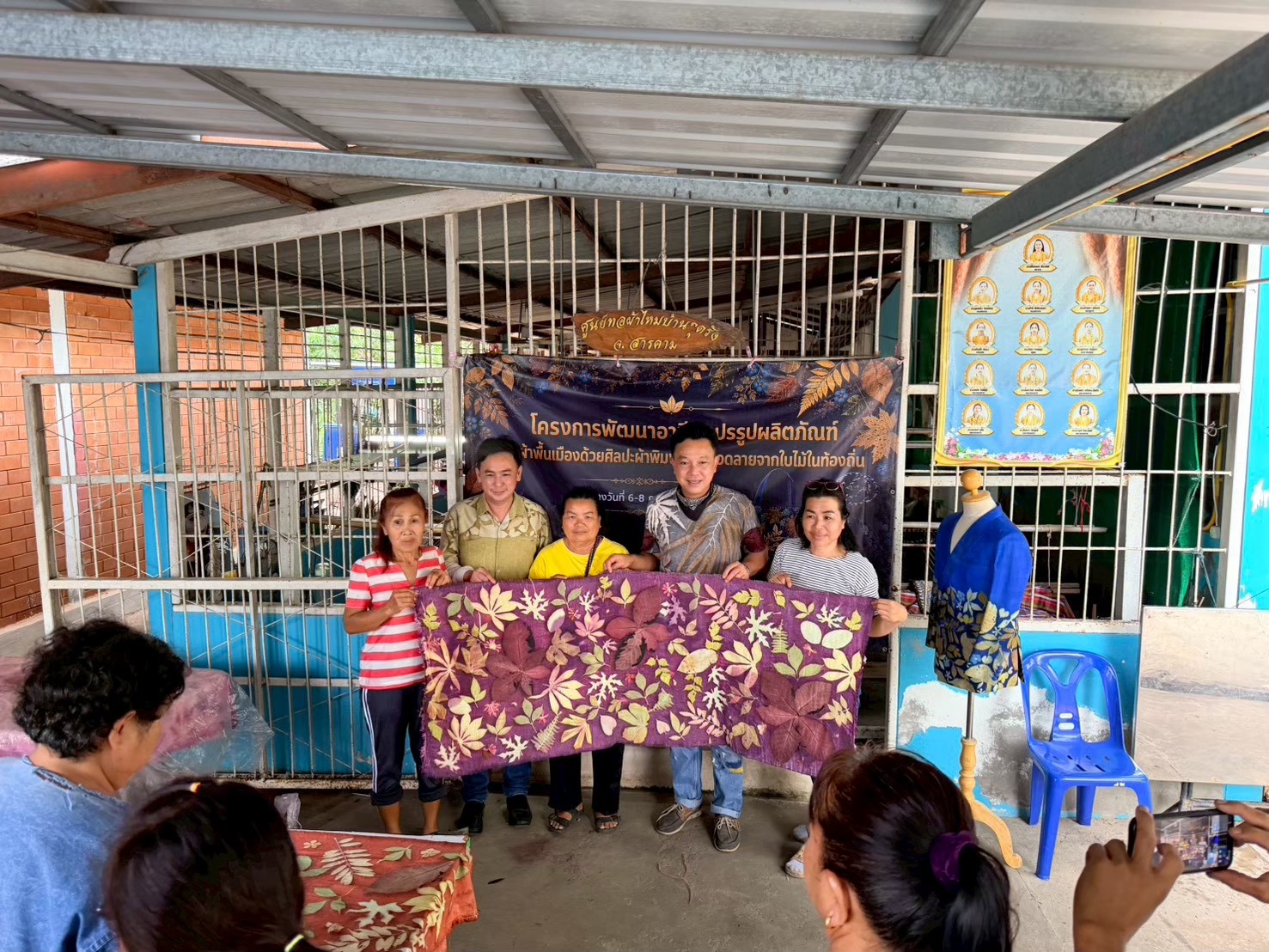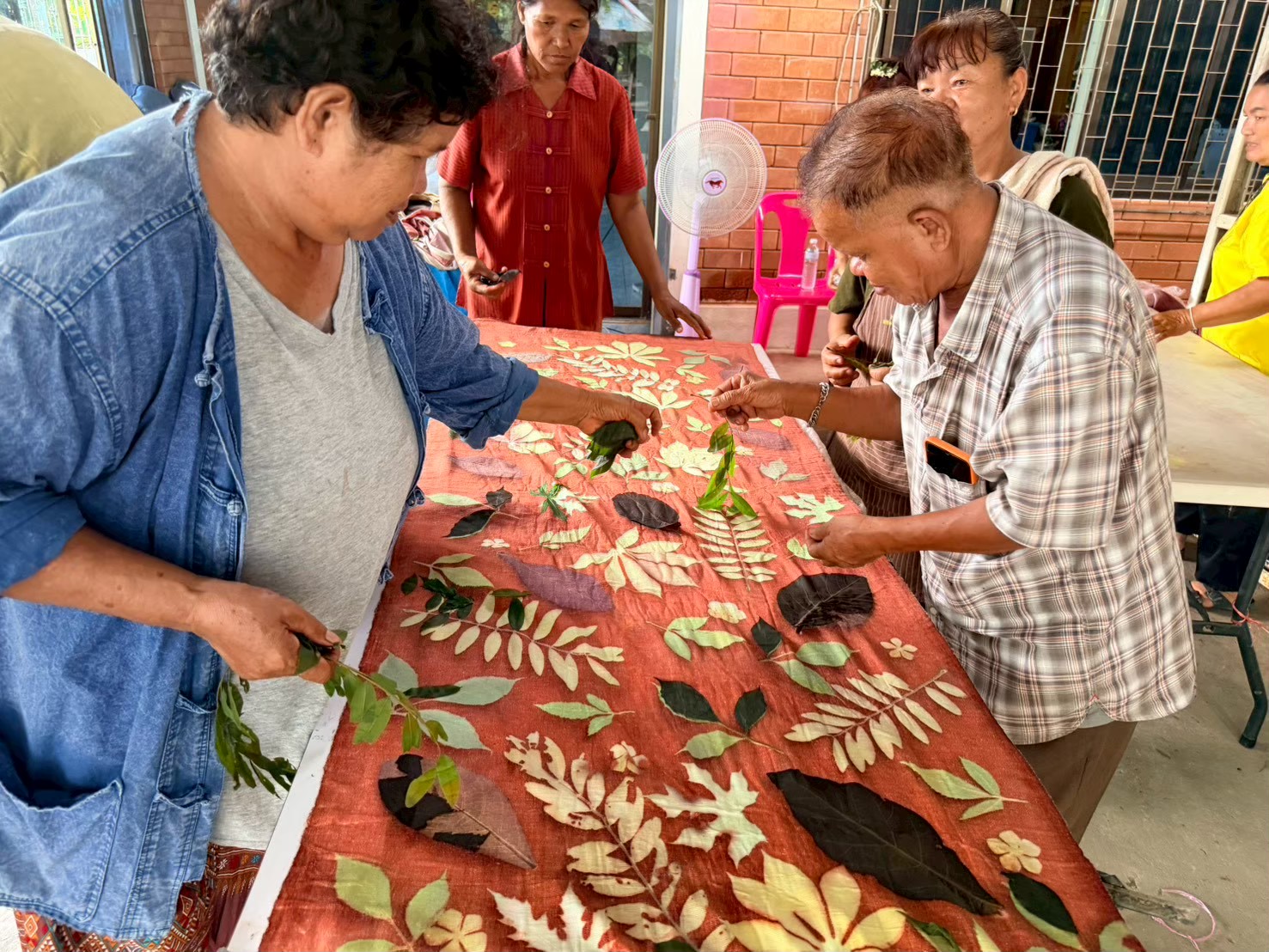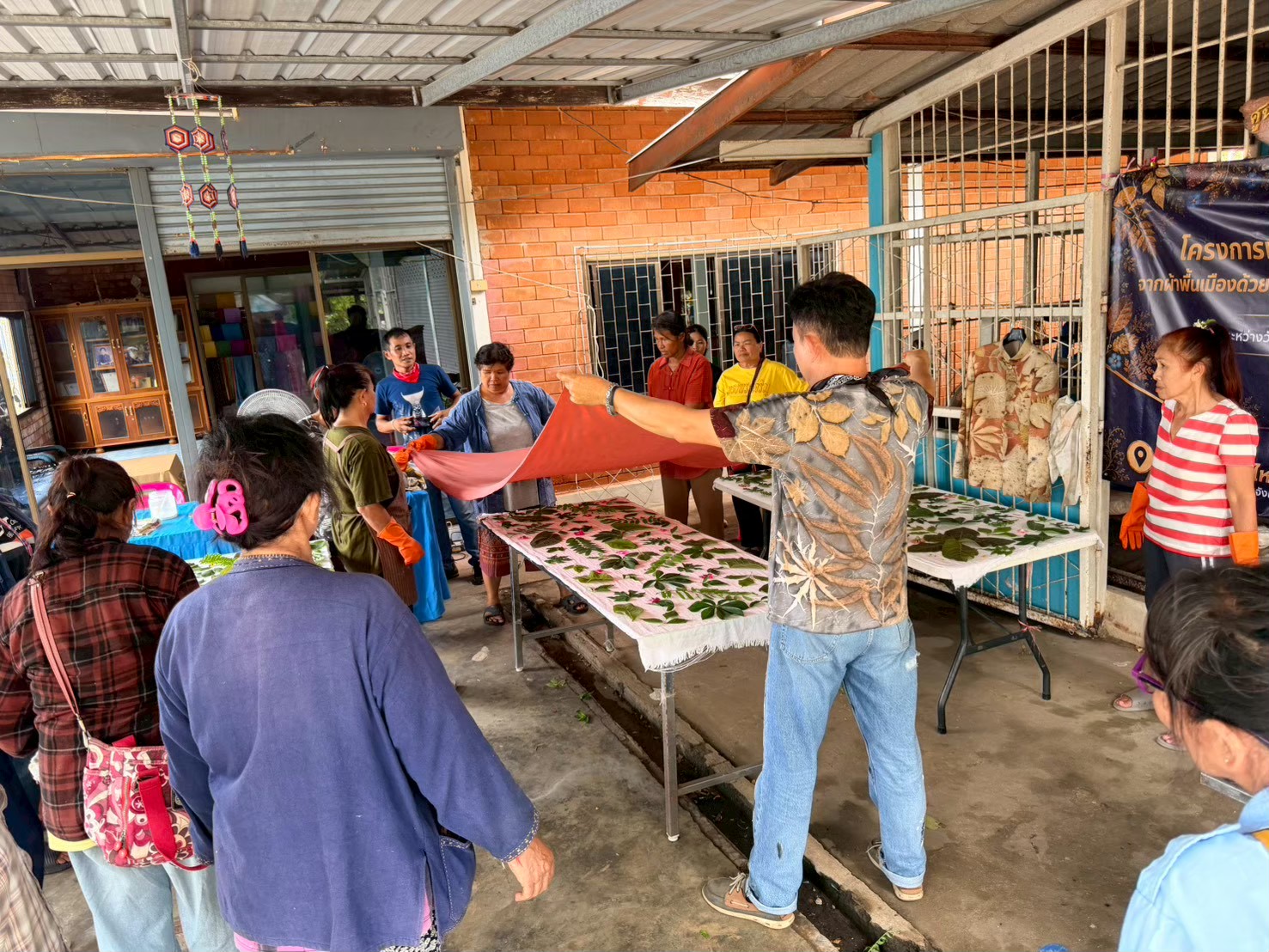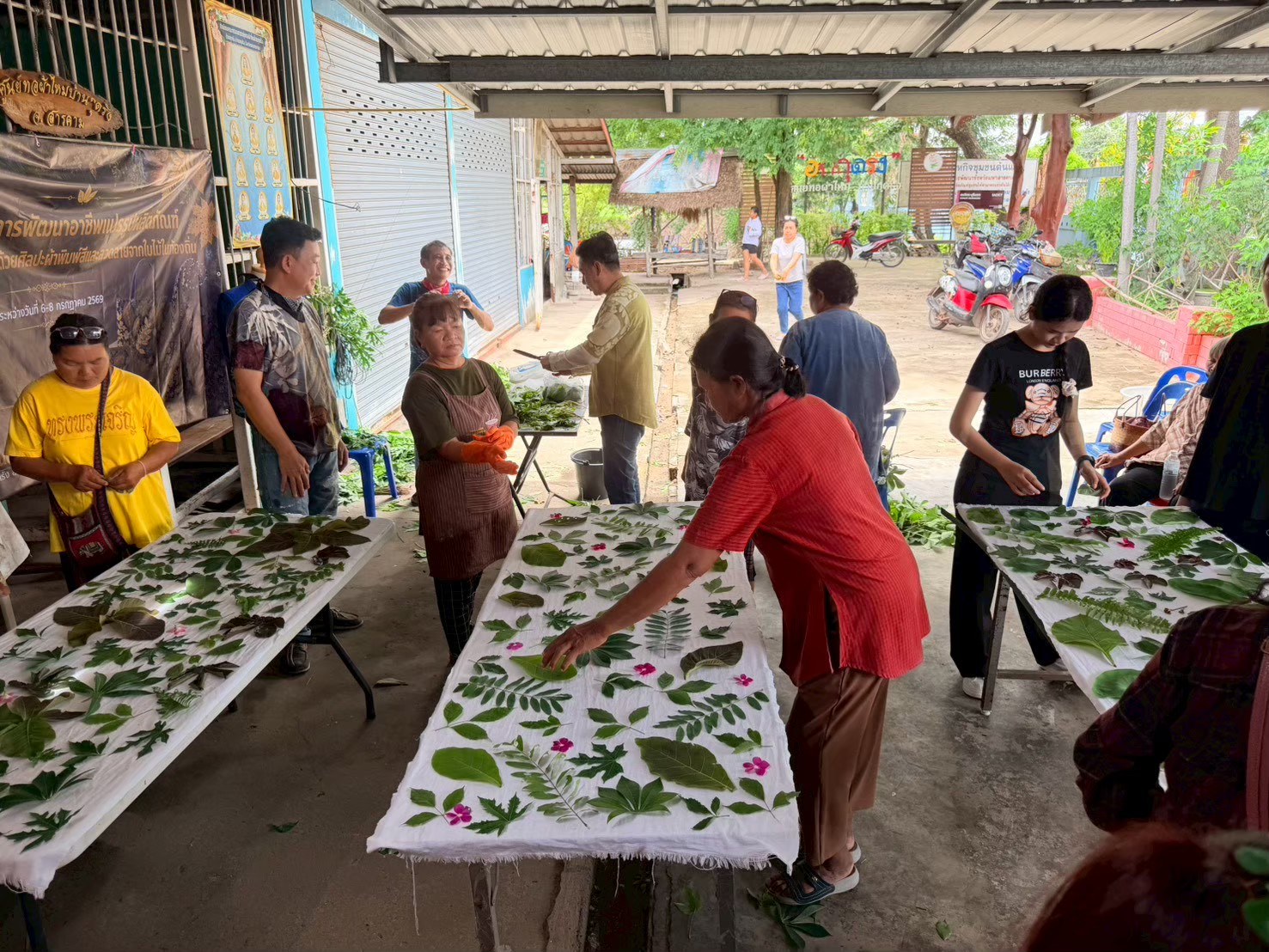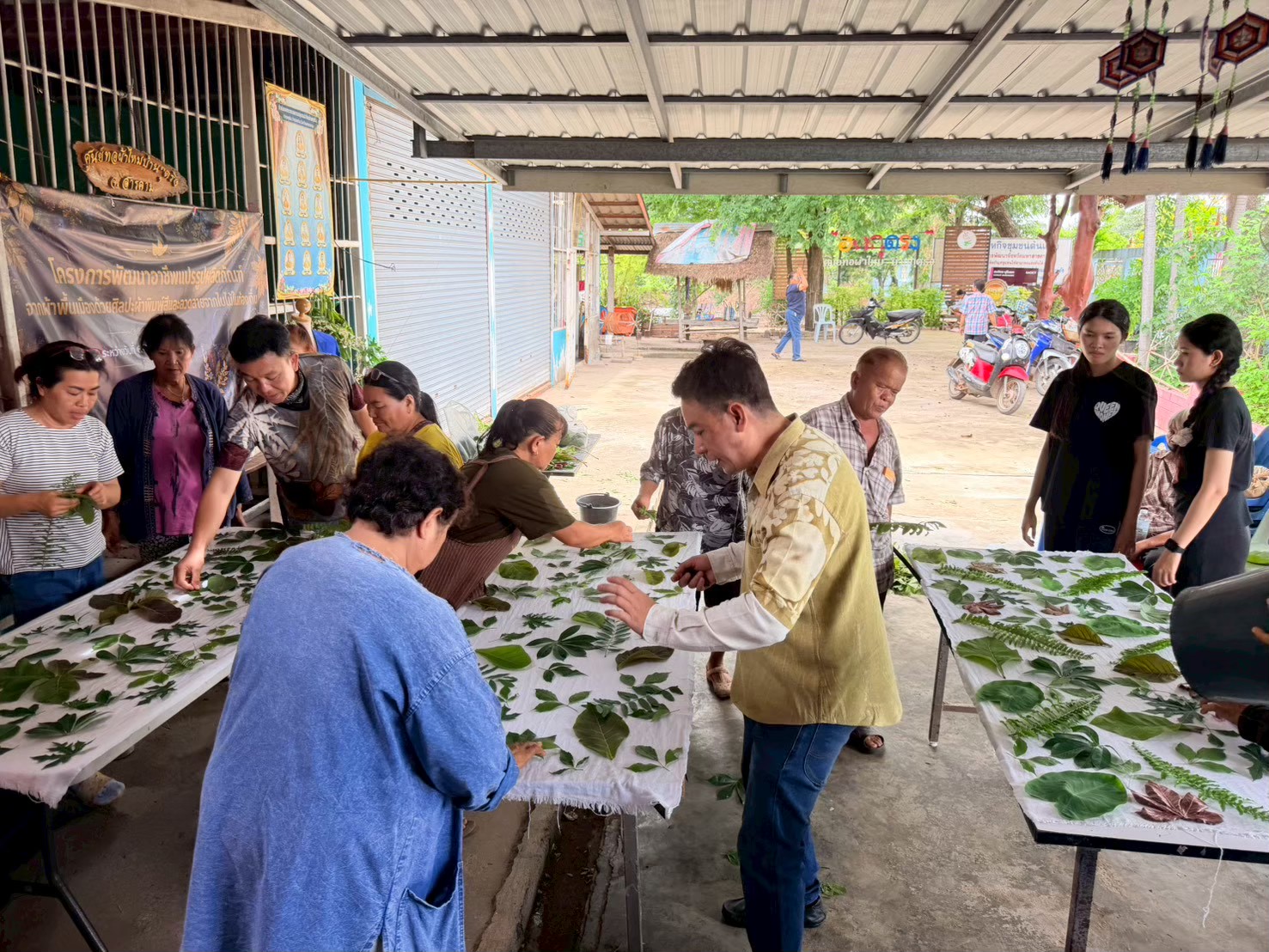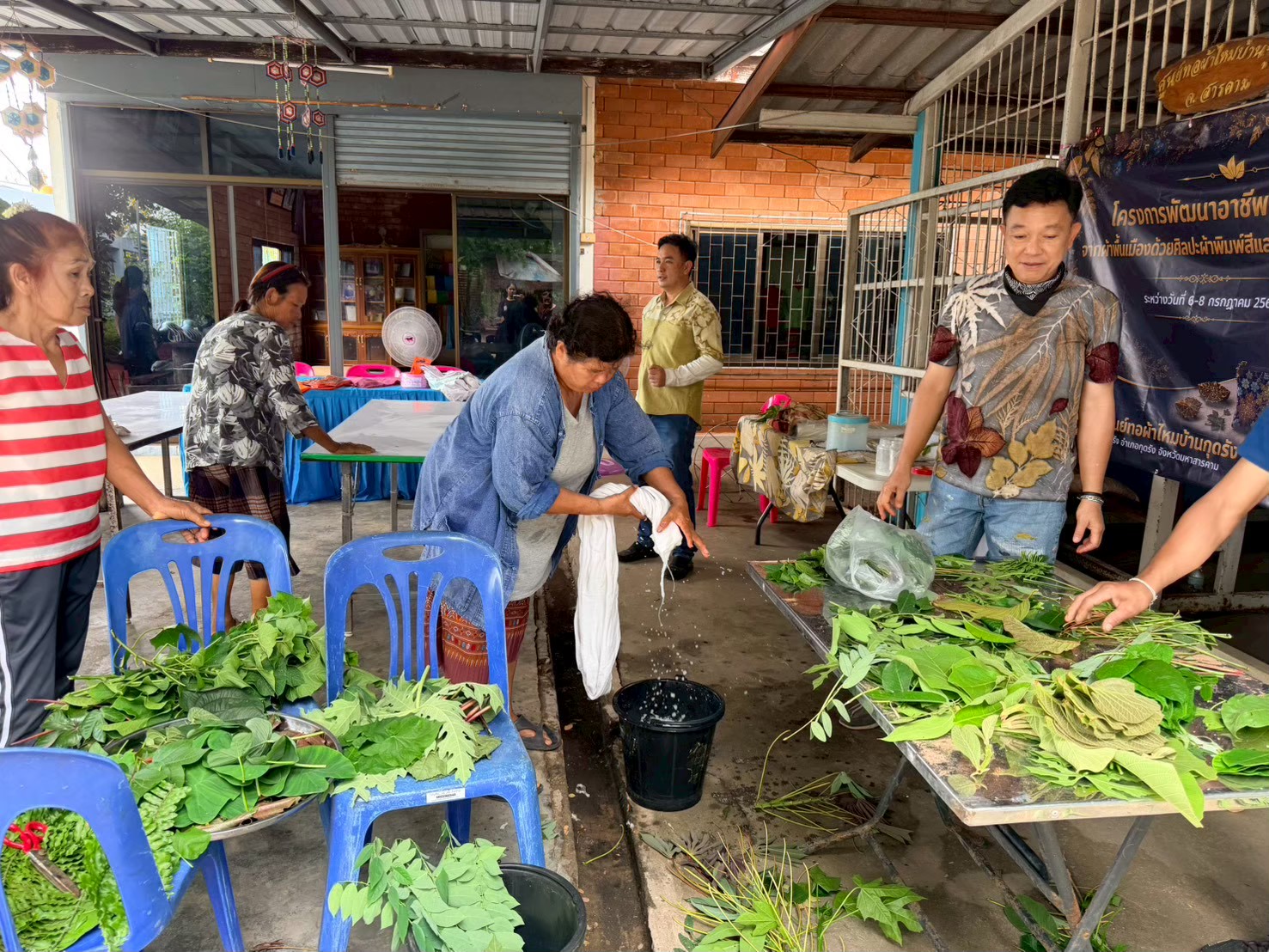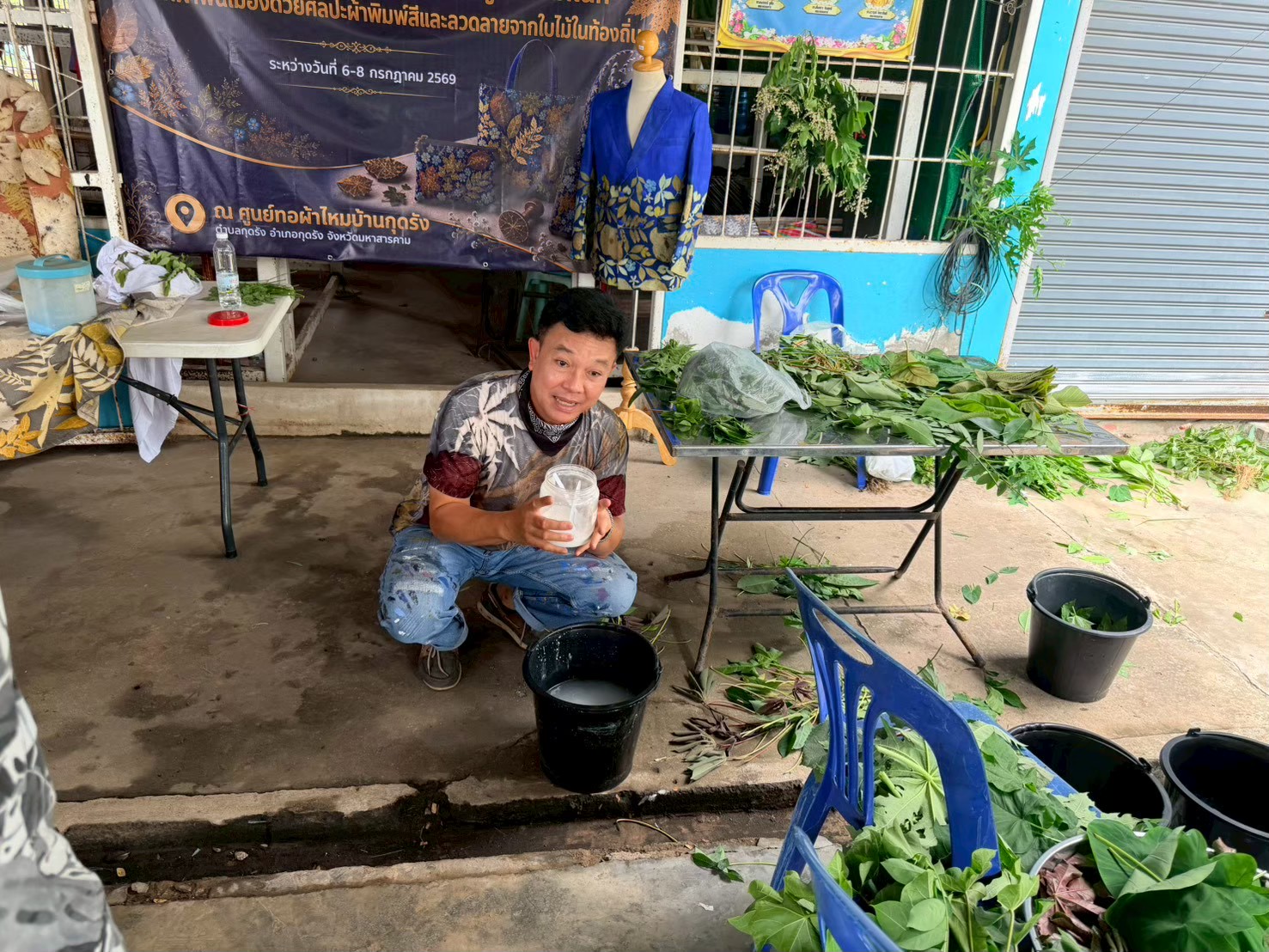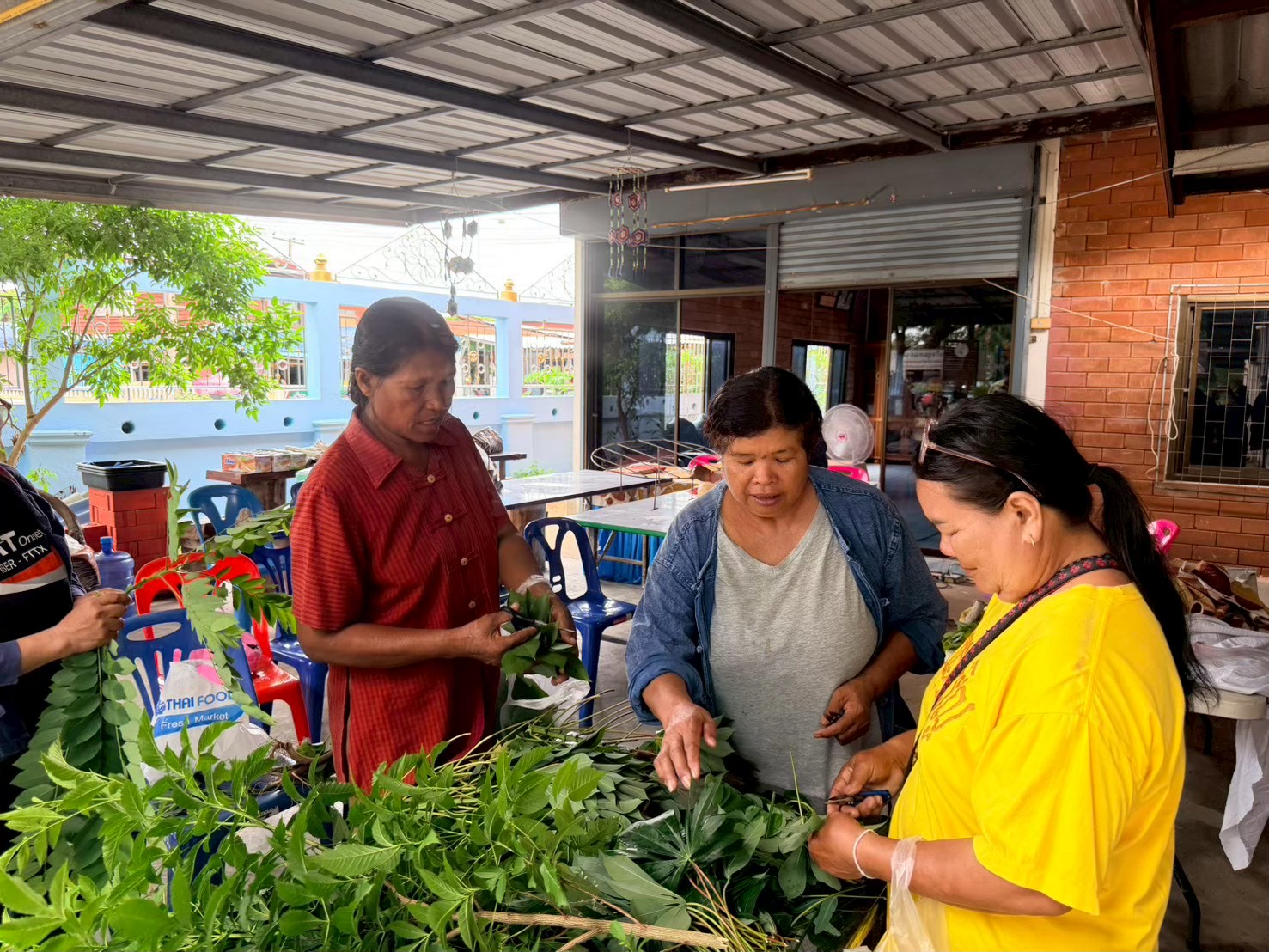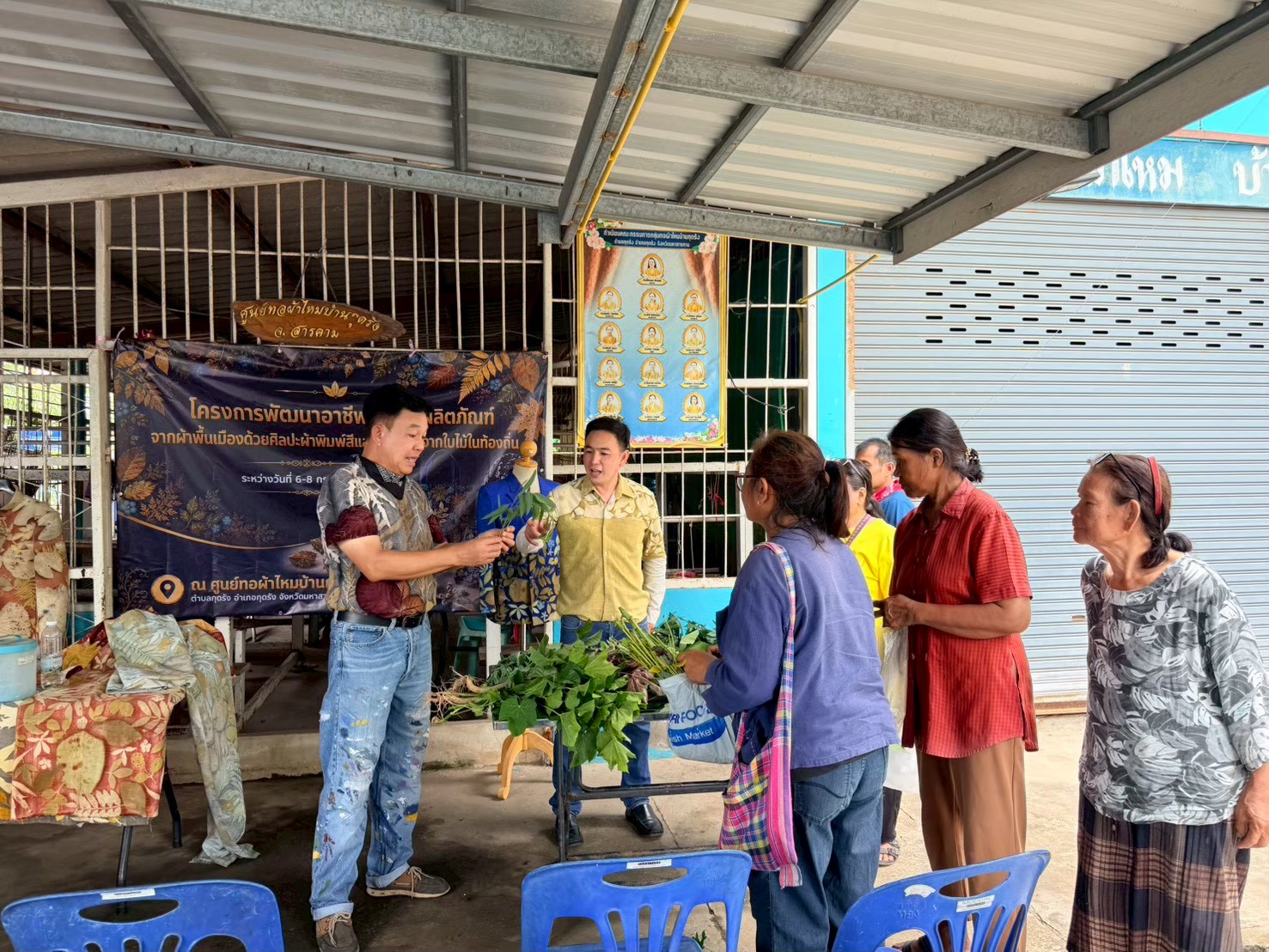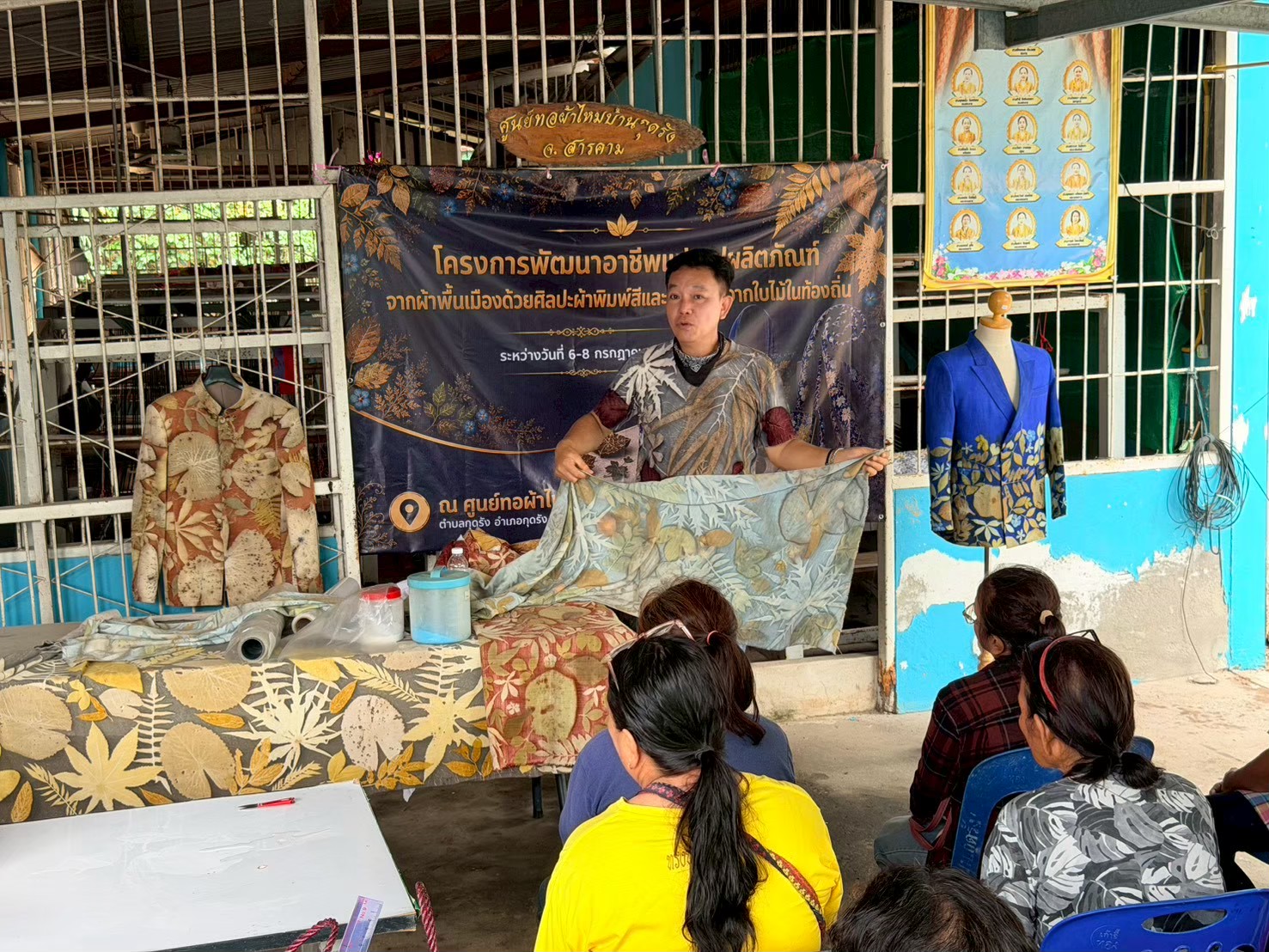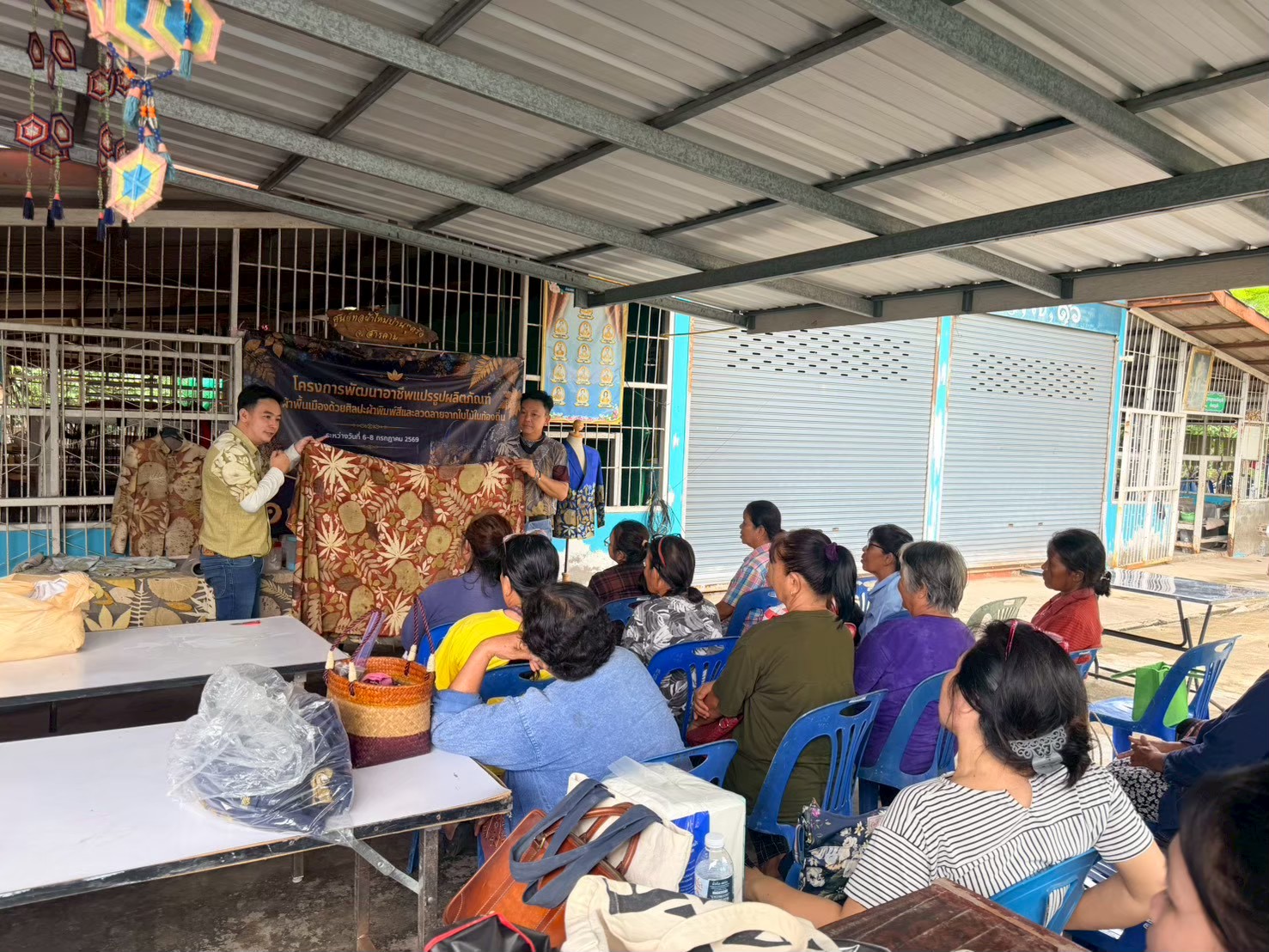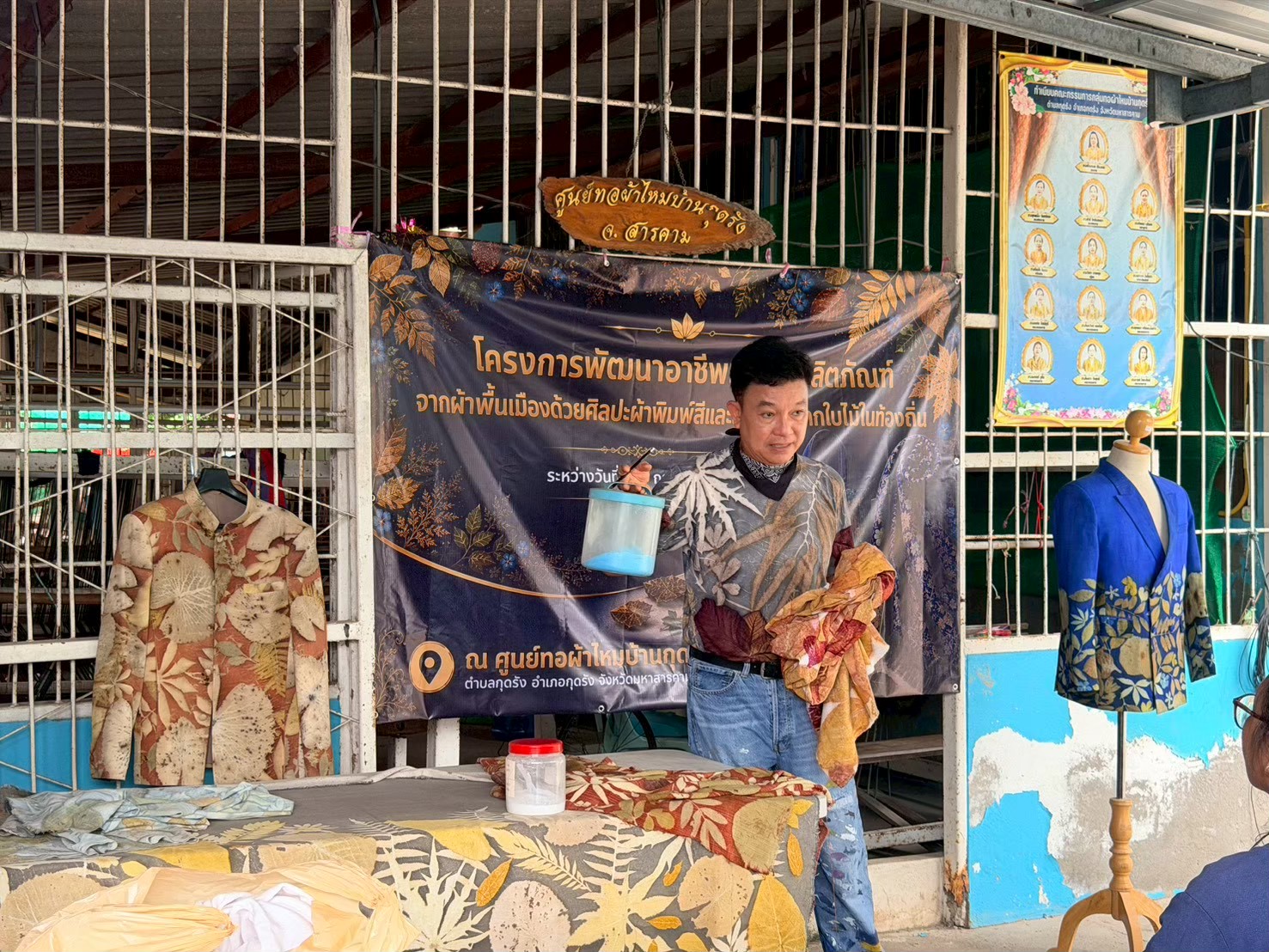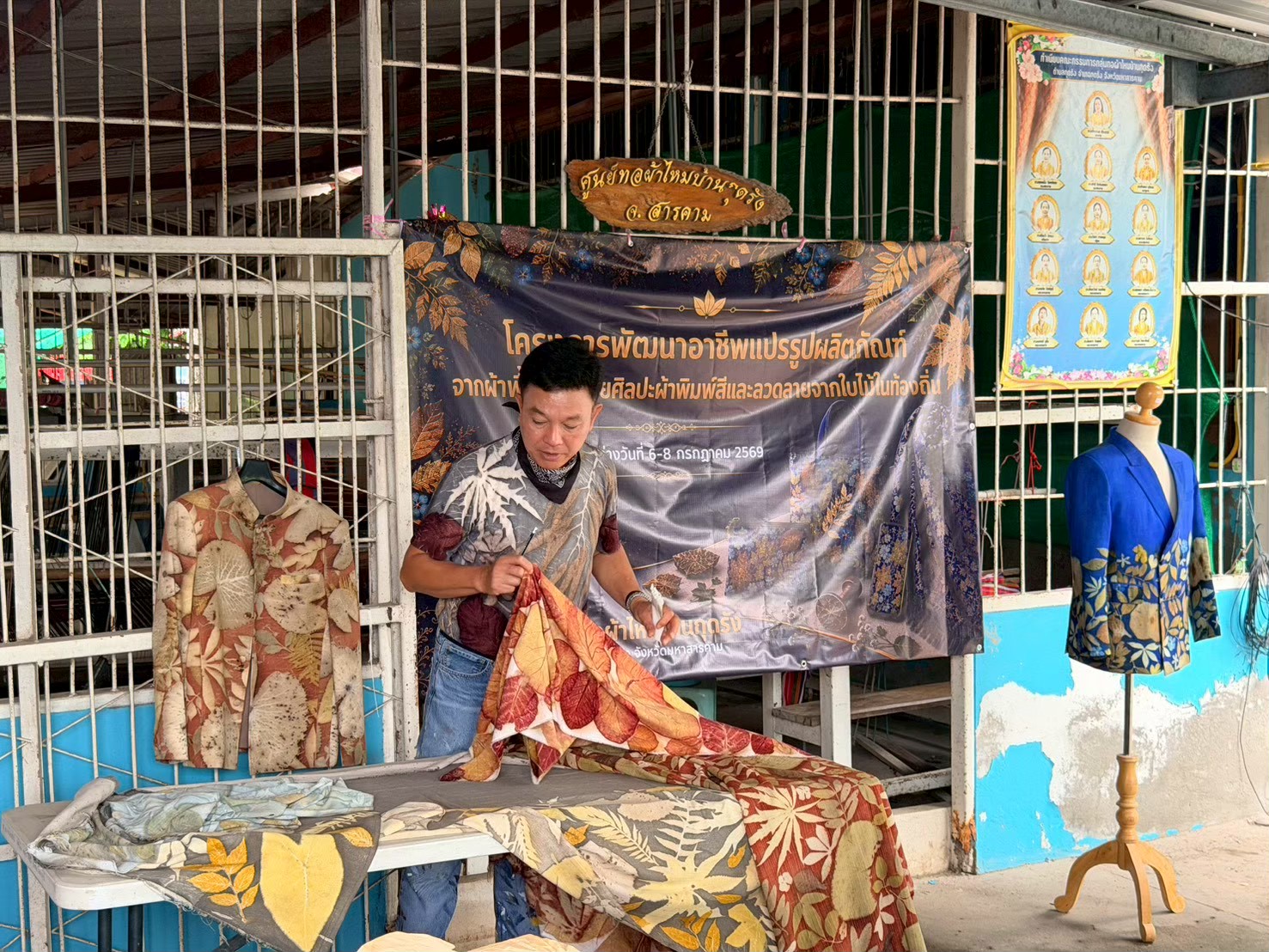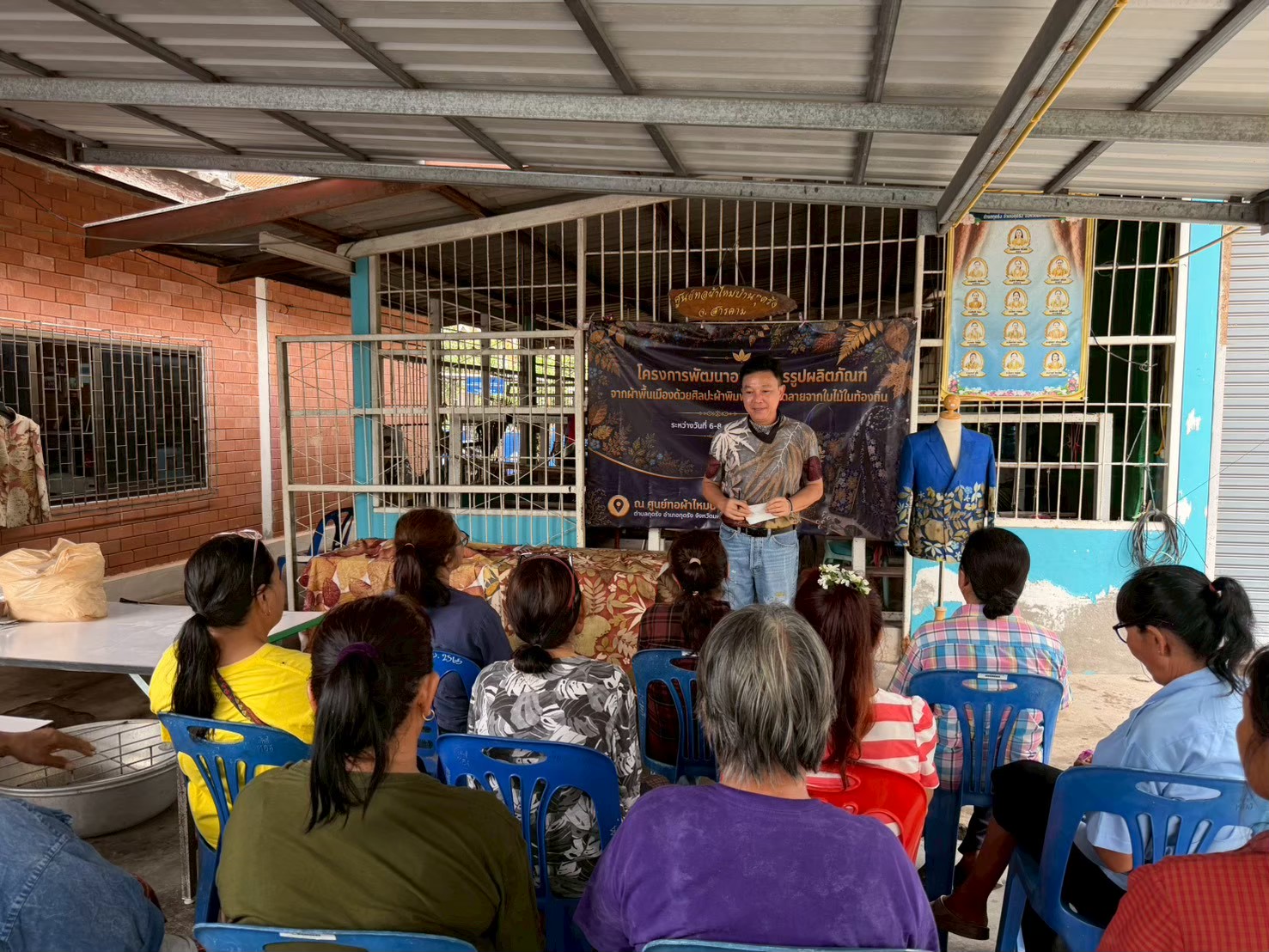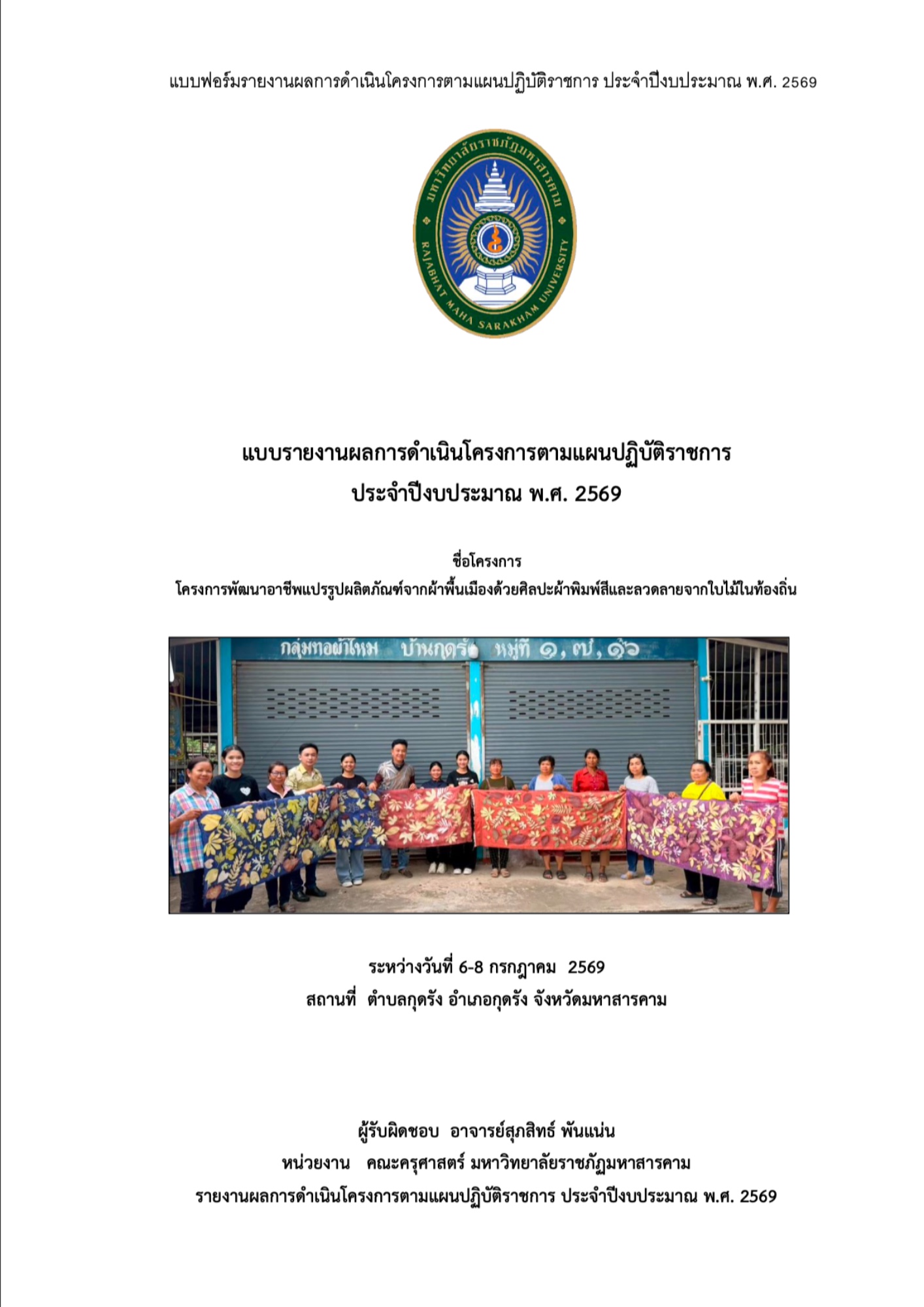
– July 8, 2026 6 กรกฎาคม 2569
– 8 กรกฎาคม 2569
Part 1: Project Details ส่วนที่ 1 รายละเอียดการดำเนินงาน
Objectives วัตถุประสงค์โครงการ
To develop participants’ readiness in physical, mental, social, and intellectual dimensions, enabling them to learn and understand ways of thinking, gain self-awareness, and recognize the value of themselves and their community, thereby leading to learning and skill development in accordance with their potential.
To develop participants’ occupational skills in fabric printing with natural colors and various patterns, creative product design based on the diversity of the community’s ecosystem, product processing, marketing, and entrepreneurship using fabric printed with colors from local leaves through modern innovation, so that these skills can serve as an alternative occupation.
To create occupations and income, and to reduce household expenses for participants’ families according to their potential.
1 เพื่อพัฒนาความพร้อมผู้ร่วมเรียนรู้ทั้งกาย ใจ สังคม และปัญญา เรียนรู้และเข้าใจวิธีคิด รู้จักตัวเอง เห็นคุณค่าของตนเองและชุมชนนำพาสู่การเรียนรู้และพัฒนาทักษะต่างๆได้อย่างสอดคล้องกับศักยภาพ
2 เพื่อพัฒนาผู้ร่วมเรียนรู้ในด้านทักษะอาชีพด้านการทำผ้าพิมพ์สีลวดลายต่างๆ การออกแบบผลิตภัณฑ์เชิงสร้างสรรค์บนฐานหลากหลายของระบบนิเวศน์ของชุมชน การแปรรูปผลิตภัณฑ์ การตลาด และการประกอบการจากผ้าพิมพ์สีจากใบ้ไม้ท้องถิ่นด้วยนวัตกรรมสมัยใหม่ ให้สามารถเป็นทางเลือกอาชีพได้
3 เพื่อสร้างอาชีพรายได้ และสามารถลดรายจ่ายให้กับครอบครัวผู้ร่วมเรียนรู้ได้ตามศักยภาพ
Main Activities กิจกรรมหลัก
Activity 1: Getting to Know Each Other: Planning, Preparing the Working Team, and Designing a Learning Process for the Art of Fabric Printing with Natural Colors and Patterns from Local Leaves, and Creating Learning Opportunities
Activity 2: Designing Leaf Patterns and Developing Skills in Production, Processing, Marketing, and Entrepreneurship of Fabric Printed with Natural Colors and Patterns from Local Leaves
Activity 3: Developing Skills in Production, Processing, Marketing, and Entrepreneurship of Fabric Printed with Natural Colors and Patterns from Local Leaves
กิจกรรมที่ 1 รู้จัก รู้ใจ วางแผนงานเตรียมความพร้อมคณะทำงานและออกแบบ
กระบวนการเรียนรู้ศิลปะผ้าพิมพ์สีและลวดลายจากใบไม้ในท้องถิ่นและสร้างโอกาสการเรียนรู้
กิจกรรมที่ 2 ออกแบบลวดลายจากใบไม้ พัฒนาทักษะการผลิต การแปรรูป การตลาด และการประกอบการผ้าพิมพ์สีและลวดลายจากใบไม้ท้องถิ่น
กิจกรรมที่ 2 พัฒนาทักษะการผลิต การแปรรูป การตลาด และการประกอบการผ้าพิมพ์สีและลวดลายจากใบไม้ท้องถิ่น
Part 2: Outcomes & Impact ส่วนที่ 2 ผลลัพธ์และผลกระทบ
Outcomes ผลลัพธ์ที่เกิดขึ้น
1.Participants, including students, lecturers, and local residents of Kut Rang District, Maha Sarakham Province, will receive capacity development to gain knowledge and occupational skills in local handicrafts, fabric printing with natural colors and patterns from local leaves, processing of fabric products, and marketing, and to advance toward becoming entrepreneurs according to their potential.
2.Participants, including students, lecturers, and local residents of Kut Rang District, Maha Sarakham Province, will gain increased income from local textile weaving handicrafts, fabric printing with natural colors and patterns from local leaves, and processing of local textile products, thereby helping to reduce unemployment.
3.An occupational network in local textile weaving handicrafts and local textile product processing will be established in the area, serving as a key driving force in developing a learning center for the community and neighboring subdistricts.
1. ผู้ร่วมเรียนรู้ นักศึกษา อาจารย์ และชาวบ้านในพื้นที่ อำเภอกุดรัง จังหวัดมหาสารคาม รับการพัฒนาศักยภาพเพื่อให้มีความรู้ ทักษะวิชาชีพด้านหัตถกรรมพื้นเมือง การพิมพ์สีลวดลายจากใบไม้ท้องถิ่น การแปรรูปผลิตภัณฑ์จากผ้า การตลาดและต่อยอดการเป็นผู้ประกอบการได้ตามศักยภาพ
2. ผู้ร่วมเรียนรู้ นักศึกษา อาจารย์ และชาวบ้านในพื้นที่ อำเภอกุดรัง จังหวัดมหาสารคามรู้มีรายได้เพิ่มขึ้นจากการทำหัตถกรรมการทอผ้าพื้นเมืองและการพิมพ์สีลวดลายจากใบไม้ท้องถิ่นและการแปรรูปผลิตภัณฑ์จากผ้าพื้นเมืองช่วยลดปัญหาการว่างงาน
3. เกิดเครือข่ายอาชีพด้านหัตถกรรมการทอผ้าพื้นเมืองและการแปรรูปผลิตภัณฑ์จากผ้าพื้นเมืองขึ้นในพื้นที่และเป็นกำลังสำคัญในการพัฒนาสู่การเป็นแหล่งเรียนรู้ในชุมชนและตำบลใกล้เคียง
Community & Social Impact ผลกระทบต่อชุมชน/สังคม
1. Economic Impact
Product development enables the community to generate increased income from the sale of value-added goods and products.
The community can expand its market to new customer groups through online channels and trade fairs, thereby strengthening the community economy.
Distinctive branding and packaging help differentiate the products and make them competitive in the market.
1. ผลกระทบด้านเศรษฐกิจ
• การต่อยอดผลิตภัณฑ์ทำให้ชุมชนสามารถ สร้างรายได้เพิ่มขึ้น จากการขายสินค้าและผลิตภัณฑ์ที่มีมูลค่าเพิ่ม
• สามารถขยายตลาดไปสู่กลุ่มลูกค้าใหม่ ผ่านช่องทางออนไลน์และงานแสดงสินค้า ส่งผลให้เศรษฐกิจชุมชนมีความเข้มแข็งมากขึ้น
• การสร้างแบรนด์และบรรจุภัณฑ์ที่โดดเด่นช่วยให้ สินค้ามีความแตกต่างและแข่งขันได้ในตลาด
Student & Staff Participation การมีส่วนร่วมของนักศึกษา/บุคลากร
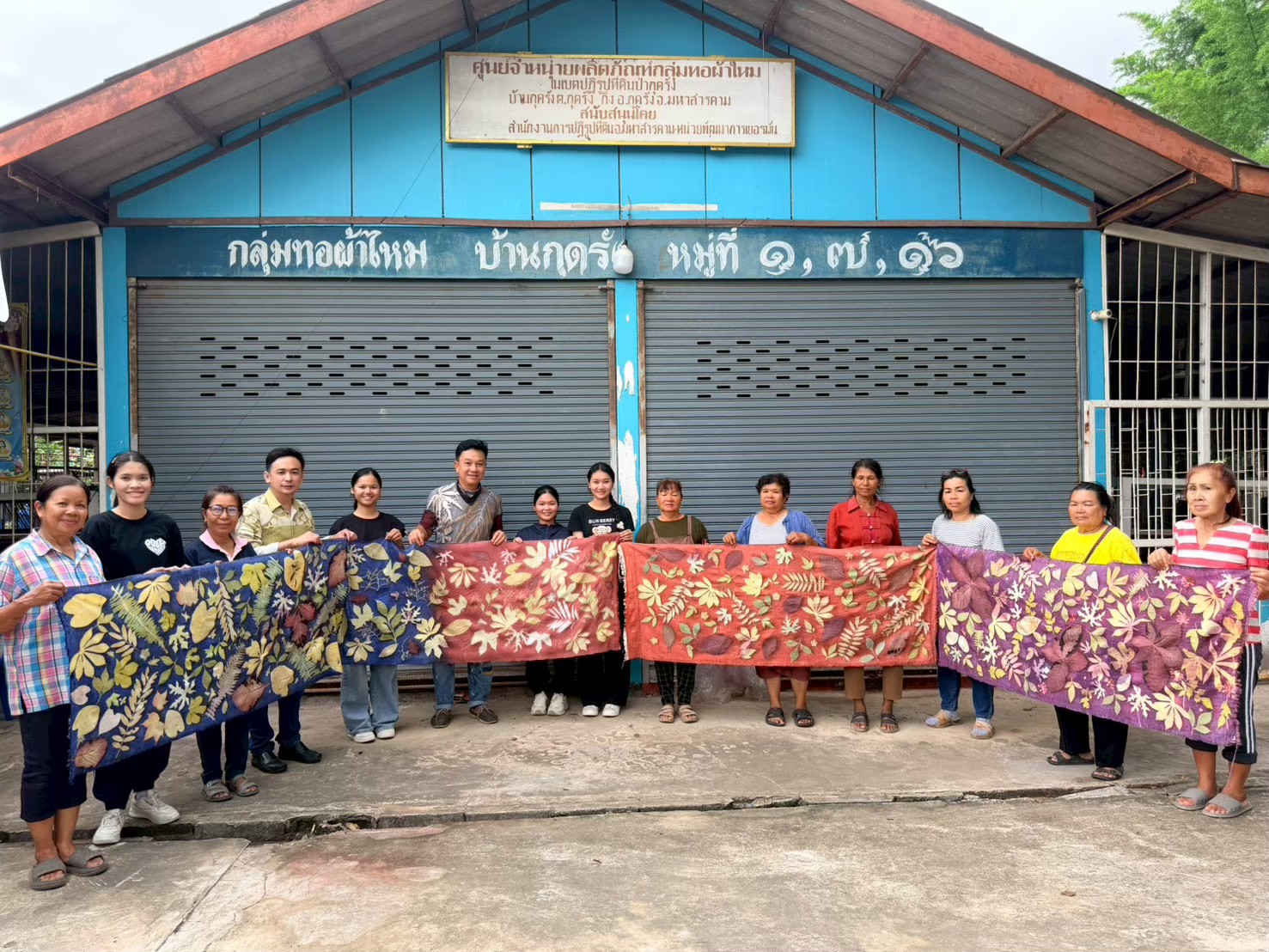
The project set a target of 25 participants from the university: 15 students from the Faculty of Education and 10 lecturers and staff members. The actual number of participants was 15, or 60 percent of the target. These were 10 students (66.67 percent of their target) and 5 lecturers and staff members (50 percent of their target), together making up 37.50 percent of all 40 participants. Residents of Kut Rang Subdistrict took part in greater numbers than targeted (25 against a target of 15), so total participation still met the overall target. Student and staff participation fell short because the activities were held during the first semester, when students and staff had teaching and learning commitments. In the next fiscal year, the activities should be built into courses taken by Faculty of Education students, and student roles should be clearly defined, for example as assistant trainers, mentors for occupational groups, and community data collectors, so that the student development indicators under the social engineering process can be achieved. โครงการกำหนดกลุ่มเป้าหมายจากมหาวิทยาลัยไว้ 25 คน ได้แก่ นักศึกษาคณะครุศาสตร์ 15 คน และอาจารย์และเจ้าหน้าที่ 10 คน มีผู้เข้าร่วมจริง 15 คน คิดเป็นร้อยละ 60 ของเป้าหมาย แบ่งเป็นนักศึกษา 10 คน (ร้อยละ 66.67) และอาจารย์และเจ้าหน้าที่ 5 คน (ร้อยละ 50) คิดเป็นร้อยละ 37.50 ของผู้เข้าร่วมทั้งหมด 40 คน ทั้งนี้ ชาวบ้านตำบลกุดรังเข้าร่วมมากกว่าเป้าหมาย (25 คน จากเป้าหมาย 15 คน) ยอดผู้เข้าร่วมโดยรวมจึงครบตามเป้าหมาย การเข้าร่วมของนักศึกษาและบุคลากรที่ต่ำกว่าเป้าหมายเกิดจากช่วงเวลาจัดกิจกรรมตรงกับภาคเรียนที่ 1 ซึ่งนักศึกษาและบุคลากรมีภารกิจด้านการเรียนการสอน ในปีงบประมาณต่อไป ควรบูรณาการกิจกรรมกับรายวิชาของนักศึกษาคณะครุศาสตร์ และกำหนดบทบาทของนักศึกษาให้ชัดเจน เช่น ผู้ช่วยวิทยากร พี่เลี้ยงกลุ่มอาชีพ และผู้เก็บข้อมูลชุมชน เพื่อให้บรรลุตัวชี้วัดด้านการพัฒนานักศึกษาตามกระบวนการวิศวกรสังคม
Project Continuity ความต่อเนื่องของโครงการ
This project builds on a community survey of Kut Rang Subdistrict that Rajabhat Maha Sarakham University conducted in 2025 (B.E. 2568). It also draws on the community’s existing assets: a cotton weaving group, a sewing learning center, local wisdom holders, and partner government agencies in the area. The work ran in three linked phases (upstream, midstream, and downstream), and 100 percent of the budget was disbursed as planned. However, by the end of the project the community enterprise group had not yet been established as targeted, only 6 of the 9 targeted support networks had formed, and marketing channels were still unclear. Some participants also still needed further hands-on practice. A second phase should therefore continue in the same area in fiscal year B.E. 2570 (2027), focusing on (1) follow-up and repeated skills training for the occupational group, (2) support for registering the community enterprise group in cooperation with the Kut Rang District Community Development Office, (3) product standards, branding, and packaging to reach OTOP status, and (4) integration with courses taken by Faculty of Education students, so that the community can run the work on its own in the long term. ความต่อเนื่องของโครงการ โครงการนี้ต่อยอดจากผลการสำรวจข้อมูลชุมชนตำบลกุดรังของมหาวิทยาลัยราชภัฏมหาสารคามในปี 2568 และสร้างบนทุนเดิมของชุมชน ได้แก่ กลุ่มทอผ้าฝ้าย ศูนย์การเรียนรู้การตัดเย็บ ปราชญ์ชาวบ้าน และภาคีเครือข่ายภาครัฐในพื้นที่ การดำเนินงานแบ่งเป็นระยะต้นน้ำ กลางน้ำ และปลายน้ำที่เชื่อมโยงกัน และเบิกจ่ายงบประมาณได้ครบร้อยละ 100 ตามแผน อย่างไรก็ตาม เมื่อสิ้นสุดโครงการยังไม่สามารถจัดตั้งกลุ่มวิสาหกิจชุมชนได้ตามเป้าหมาย เครือข่ายหนุนเสริมเกิดขึ้น 6 จาก 9 เครือข่าย และช่องทางการตลาดยังไม่ชัดเจน ประกอบกับผู้เข้าร่วมบางส่วนยังต้องการการฝึกปฏิบัติซ้ำ ดังนั้นในปีงบประมาณ พ.ศ. 2570 จึงควรดำเนินโครงการระยะที่ 2 ต่อเนื่องในพื้นที่เดิม โดยมุ่ง (1) ติดตามและฝึกทักษะซ้ำแก่กลุ่มอาชีพ (2) หนุนเสริมการจดทะเบียนกลุ่มวิสาหกิจชุมชนร่วมกับพัฒนากรอำเภอกุดรัง (3) พัฒนามาตรฐานผลิตภัณฑ์ ตราสินค้า และบรรจุภัณฑ์สู่ OTOP และ (4) บูรณาการกับรายวิชาของนักศึกษาคณะครุศาสตร์ เพื่อให้ชุมชนดำเนินงานได้ด้วยตนเองอย่างยั่งยืน
Part 3: Challenges & Suggestions ส่วนที่ 3 ปัญหาอุปสรรค/ข้อเสนอแนะ
Problems & Obstacles ปัญหา/อุปสรรค
1. Participant-Related Risk Factors
Inconsistent participation – Some participants may lack regularity in attending the training sessions.
2. Raw Material and Natural Resource Risk Factors
Inconsistent quality of natural materials – Leaves or natural dyes may yield different results each time.
3. Marketing and Occupational Development Risk Factors
Unclear marketing and distribution – Products may not generate income as targeted.
1. ปัจจัยเสี่ยงด้านผู้เข้าร่วมโครงการ
• ความไม่ต่อเนื่องของการเข้าร่วมโครงการ – ผู้เข้าร่วมบางส่วนอาจขาดความสม่ำเสมอในการฝึกอบรม
2. ปัจจัยเสี่ยงด้านวัตถุดิบและทรัพยากรธรรมชาติ
• คุณภาพของวัสดุธรรมชาติไม่คงที่ – ใบไม้หรือสีจากธรรมชาติอาจให้ผลลัพธ์แตกต่างกันในแต่ละครั้ง
3. ปัจจัยเสี่ยงด้านการตลาดและการต่อยอดอาชีพ
• การตลาดและการจำหน่ายไม่ชัดเจน – อาจทำให้ผลิตภัณฑ์ไม่สามารถสร้างรายได้ตามเป้าหมาย
Improvement Guidelines แนวทางการปรับปรุง
Plan continuous training and follow-up – to foster participants’ engagement and sense of responsibility.
Select and store natural materials appropriately – to ensure consistent quality of the printed fabric.
Develop a marketing plan and create new distribution channels – to reduce income-related risks and increase business opportunities.
• วางแผนการอบรมต่อเนื่องและติดตามผล – เพื่อสร้างความมีส่วนร่วมและความรับผิดชอบของผู้เข้าร่วม
• คัดเลือกและเก็บรักษาวัสดุธรรมชาติอย่างเหมาะสม – เพื่อให้คุณภาพของผ้าพิมพ์ลายคงที่
• พัฒนาแผนการตลาดและสร้างช่องทางจำหน่ายใหม่ – ลดความเสี่ยงด้านรายได้และเพิ่มโอกาสทางธุรกิจ
Suggestions to University ข้อเสนอแนะต่อมหาวิทยาลัย
1.Budget Management: The university should allocate and approve the budget so that funds can be disbursed from the first quarter of the fiscal year. This would allow activities to be spread throughout the year, give more time for hands-on practice, and avoid the community’s farming season.
2.Project Continuity: The university should provide multi-year funding (2–3 years) for the same area, including a budget for follow-up and support after the project ends, so that the community can develop into a community enterprise group that runs on its own.
3.Student and Staff Participation: The university should adopt a policy of integrating academic service projects into courses or co-curricular activities, and of counting participation as activity hours for students and as workload for staff. This would help students and staff take part as targeted under the social engineering process.
4.Monitoring and Evaluation System: The university should revise the project proposal and report forms so that every indicator matches, and set up a quarterly monitoring system. This would make sure that results are reported for every indicator and that data are fully recorded in the Rajabhat Big Data database.
5.Product and Marketing Enhancement: Relevant internal units, such as the business incubation unit or the Faculty of Management Science, should help develop product standards, branding, packaging, and distribution channels. The university should also provide space to sell community products at university events.
6.Expansion of Results: The university should promote Kut Rang Subdistrict as one of its arts and culture learning sites, and use the leaf printing knowledge to extend the work to other communities in Maha Sarakham Province.
1.ด้านการบริหารงบประมาณ ควรจัดสรรและอนุมัติงบประมาณให้เบิกจ่ายได้ตั้งแต่ไตรมาสแรกของปีงบประมาณ เพื่อให้กระจายกิจกรรมได้ตลอดปี เพิ่มเวลาฝึกปฏิบัติ และหลีกเลี่ยงช่วงฤดูการเกษตรของชุมชน
2.ด้านความต่อเนื่องของโครงการ ควรสนับสนุนงบประมาณแบบต่อเนื่องหลายปี (2–3 ปี) สำหรับพื้นที่เดิม โดยกำหนดงบติดตามและหนุนเสริมหลังสิ้นสุดโครงการ เพื่อให้ชุมชนพัฒนาสู่กลุ่มวิสาหกิจชุมชนที่ดำเนินงานได้ด้วยตนเอง
3.ด้านการมีส่วนร่วมของนักศึกษาและบุคลากร ควรมีนโยบายให้บูรณาการโครงการบริการวิชาการเข้ากับรายวิชาหรือกิจกรรมเสริมหลักสูตร และนับเป็นชั่วโมงกิจกรรมหรือภาระงานของบุคลากร เพื่อให้นักศึกษาและบุคลากรเข้าร่วมได้ครบตามเป้าหมายตามกระบวนการวิศวกรสังคม
2.ด้านระบบติดตามและประเมินผล ควรปรับแบบฟอร์มเสนอโครงการและรายงานผลให้ตัวชี้วัดตรงกันทุกข้อ และจัดให้มีระบบกำกับติดตามรายไตรมาส เพื่อให้รายงานผลครบทุกตัวชี้วัดและบันทึกข้อมูลลงฐานข้อมูล Big Data ราชภัฏได้ครบถ้วน
ด้านการยกระดับผลิตภัณฑ์และการตลาด ควรให้หน่วยงานภายในที่เกี่ยวข้อง เช่น หน่วยบ่มเพาะวิสาหกิจหรือคณะวิทยาการจัดการ ร่วมสนับสนุนการพัฒนามาตรฐานผลิตภัณฑ์ ตราสินค้า บรรจุภัณฑ์ และช่องทางจำหน่าย รวมทั้งเปิดพื้นที่จำหน่ายสินค้าชุมชนในงานของมหาวิทยาลัย
4.ด้านการขยายผล ควรผลักดันให้พื้นที่ตำบลกุดรังเป็นแหล่งเรียนรู้ด้านศิลปวัฒนธรรมของมหาวิทยาลัย และใช้องค์ความรู้การพิมพ์ลายจากใบไม้ขยายผลสู่ชุมชนอื่นในจังหวัดมหาสารคาม